Vegetos

(An International Journal of Plant Research & Biotechnology)
(eISSN: 2229-4473)
Antioxidant activity and phenolic profile of Tamarindus indica L. cell suspension cultures
*Article not assigned to an issue yet
Pérez-Hernández Francelvia, Buendía-González Leticia, Hernández-Jaimes Carmen, Bernabe-Antonio Antonio, García-Fajardo Jorge A., Orozco-Villafuerte Juan
Research Article | Published: 30 September, 2025
First Page: 0
Last Page: 0
Views: 468
Keywords: n Tamarindus indican , Cell suspension culture, Phenolic compounds, Antioxidant activity
Abstract
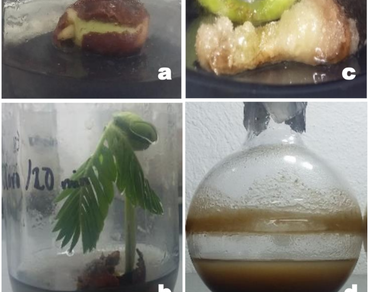
Tamarindus indica is a plant species widely used in the food industry, and phytochemical studies have revealed its potential as a source of antioxidant compounds present in its pulp, seeds, and leaves. This study aimed to establish in vitro cultures of T. indica for the production of phenols with antioxidant capacity. Seedlings from 30-day-old in vitro-germinated seeds served as explant sources and were cultured in Murashige and Skoog medium supplemented with plant growth regulators for 30 days. The highest callus induction rates were achieved in hypocotyls treated with 1.5 mg L− 1 2,4-D, 1.0 mg L− 1 BA with 1.0 mg L− 1 2,4-D, or 0.5 mg L− 1 TDZ. Cell suspension cultures were established from callus in medium supplemented with 0.5 mg L− 1 TDZ. Growth kinetics analysis revealed a growth rate of 0.187 d− 1 and a doubling time of 3.7 days. The maximum total phenol content in cell suspension extracts was 71.73 mg GAE g− 1 DW, which was 3-, 9-, and 17-fold higher than in leaves, seeds, and pulp of adult trees, respectively. Moreover, these extracts exhibited radical inhibition of 5.82 and 6.09 mmol TE g− 1 DW for ABTS and DPPH radicals, respectively, similar to the values obtained for leaves and seeds of adult trees. UPLC-ESI-MS analysis of the extracts led to the identification of flavonoids, including naringenin, catechin, procyanidin, kaempferol, eriodictyol, and atrovenetinone. This study represents the first report on the establishment of in vitro cultures of T. indica, which can serve as a valuable source of phenolic compounds with strong antioxidant activity and diverse bioactivities, applicable in the pharmaceutical, nutraceutical, and food industries.
References
Bayoï JR, Foundikou BY, Etoa F-X (2021) In vitro bioactive properties of the tamarind (Tamarindus indica) leaf extracts and its application for preservation at room temperature of an Indigenous roselle (Hibiscus sabdariffa)-based drink. J Agric Food Res 6:100241. https://doi.org/10.1016/j.jafr.2021.100241
Bhadoriya SS, Mishra V, Raut S, Ganeshpurkar A, Jain SK (2012) Anti-Inflammatory and antinociceptive activities of a hydroethanolic extract of Tamarindus indica leaves. Sci Pharm 80:685–700. https://doi.org/10.3797/scipharm.1110-09
Boots AW, Haenen GRMM, Bast A (2008) Health effects of quercetin: from antioxidant to nutraceutical. Eur J Pharmacol 585(2–3):325–337. https://doi.org/10.1016/j.ejphar.2008.03.008
Buchanan BB, Gruissem W, Jones RL (2000) Biochemistry and molecular biology of plants. American Society of Plants Physiologists, Maryland
Buendía-González L, Orozco-Villafuerte J, Cruz-Sosa F, Chávez-Ávila VM, Vernon-Carter EJ (2007) Clonal propagation of mesquite tree (Prosopis laevigata Humb. & Bonpl. Ex Willd. M.C. Johnston). I. Via cotyledonary nodes. In Vitro Cell Dev Biol Plant 43:260–266. https://doi.org/10.1007/s11627-007-9027-8
Burzynska-Pedziwiatr I, Bukowiecka-Matusiak M, Wojcik M, Machala W, Bienkiewicz M, Spolnik G, Danikiewicz W, Wozniak LA (2014) Dual stimulus-dependent effect of Oenothera paradoxa extract on the respiratory burst in human leukocytes: suppressing for Escherichia coli and phorbol myristate acetate and stimulating for formyl-methionyl-leucyl-phenylalanine. Oxide Med Cell Longev 764367. https://doi.org/10.1155/2014/764367
Byun E-B, Sung N-Y, Byun E-H, Song D-S, Kim J-K, Park J-H, Song B-S, Park S-H, Lee J-W, Byun M-W, Kim J-H (2013) The Procyanidin trimer C1 inhibits LPS-induced MAPK and NF-κB signaling through TLR4 in macrophages. Int Immunopharmacol 15:450–456. https://doi.org/10.1016/j.intimp.2012.11.021
Chmielewska-Kassassir M, Sobierajska K, Ciszewski WM, Bukowiecka-Matusiak M, Szczesna D, Burzynska-Pedziwiatr I, Wiczkowski W, Wagner W, Wozniak LA (2020) Polyphenol extract from evening primrose (Oenothera paradoxa) inhibits invasion properties of human malignant pleural mesothelioma cells. Biomolecules 10(11):1574. https://doi.org/10.3390/biom10111574
Chu LL, Pandey RP, Jung N, Jung HJ, Kim EH, Soh JK (2016) Hydroxylation of diverse flavonoids by CYP450 BM3 variants: biosynthesis of eriodictyol from naringenin in whole cells and its biological activities. Microb Cell Fact 15:135. https://doi.org/10.1186/s12934-016-0533-4
De la Rosa LA, Álvarez-Parrilla E, García-Fajardo JA (2019) Identificación de compuestos Fenólicos En extractos de almendra (Prunus dulcis) y Nuez Pecana (Carya illinoinensis) mediante cromatografía líquida Acoplada a espectrometría de Masas En tándem (HPLC-MS/MS). TIP Rev Espec Cienc Quím Biol 22:1–13. https://doi.org/10.22201/fesz.23958723e.2019.0.179
Dixon RA, Gonzales RA (1994) Plant Cell Culture: a practical approach. 2nd ed. Editorial Oxford. p 18–19
Dong L, Lou W, Wang J (2025) Naringenin cationic lipid-modified nanoparticles mitigate MASLD progression by modulation lipid homeostasis and gut microbiota. J Nanobiotechnol 23:168. https://doi.org/10.1186/s12951-025-03228-x
Elejalde GJI (2001) Estrés oxidativo, enfermedades y tratamientos antioxidantes. Med Interna 18(6):50–59
Fabre N, Rustan I, Hoffmann E, Quetin-Leclercq J (2001) Determination of flavone, flavonol, and Flavanone aglycones by negative ion liquid chromatography electrospray ion trap mass spectrometry. J Am Soc Mass Spectrom 12(6):707–715. https://doi.org/10.1016/S1044-0305(01)00226-4
Fan B, Parrot D, Blümel M, Labes A, Tasdemir D (2019) Influence of OSMAC-based cultivation in metabolome and anticancer activity of fungi associated with the brown Alga Fucus vesiculosus. Mar Drugs 17(1):67. https://doi.org/10.3390/md17010067
Fellegrini G, Ke R, Yang M, Rice-Evans C (1999) Screening of dietary carotenoids and carotenoid-rich fruit extracts for antioxidant activities applying 2, 2’’-azinobis (3-ethylenbenzothiazoline-6-sulfonic acid) radical cation) decolorization assay. In: Packer L (ed) Methods in enzymology. Oxidants and antioxidants, vol 299. Part A, New York, pp 379–389
Ferreira AFA, Cordeiro da Silva MS, Monteiro LNH, Faria GA, Boliani AC, Rodrigues MGF, Pereira FD (2019) Nodal segments and zygotic embryos in culture media for the in vitro propagation of tamarind. Comun Scient 10(4):438–447. https://doi.org/10.14295/CS.v10i4.3128
Ferreira AFA, Monteiro LNH, Rodrigues MGF, Oliveira NB, Boliani AC (2018) In vitro cultivation of Tamarindus indica L.: explants obtention and contamination in culture medium. Comun Scient 9(2):298–302. https://doi.org/10.14295/CS.v9i2.2602
Freire-Seijo M (2003) Aspectos básicos de La embriogénesis somática. Biotecnol Veg 3(4):195–209
Georgiev V, Pavlov A, Bley T (2007) Hairy root type plant in vitro systems as a promising tool in phytochemical production. Biotechnol Adv 25(5):518–557. https://doi.org/10.1007/s00253-007-0856-5
Gurib-Fakim A (2006) Medicinal plants: traditions of yesterday and drugs of tomorrow. Mol Aspects Med 27:1–93. https://doi.org/10.1016/j.mam.2005.07.008
Gutiérrez-Grijalva EP, Ambriz-Pére DL, Leyva-López N, Castillo-López RI, Heiedia JB (2016) Review: dietary phenolic compounds, health benefits and bioaccessibility. Arch Latinoam Nutr 66(2):87–100
Hu W, Zhong J (2001) Effect of bottom clearance of performance of airlift bioreactor in high-density culture of Panax Notiginseng cells. J Biosc Bioeng 92(4):389–392. https://doi.org/10.1263/jbb.92.389
Huang WW, Tsai SC, Peng SF, Lin MW, Chiang JH, Chiu YJ, Fushiya S, Tseng MT, Yang JS (2013) Kaempferol induces autophagy through AMPK and AKT signaling molecules and causes G2/M arrest via downregulation of CDK1/cyclin B in SK-HEP-1 human hepatic cancer cells. Int J Oncol 42:2069–2077. https://doi.org/10.3892/ijo. 2013.1909
Hussain H, John M, Al-Harrasi A, Shah A, Hassab Z, Abbas G, Rana UA, Green IR, Schulz B, Krohn K (2015) Phytochemical investigation and antimicrobial activity of an endophytic fungus Phoma sp. J King Saud Univ Sci 27(1):92–95. https://doi.org/10.1016/j.jksus.2014.08.001
Jaiswal SPK, Gulati A, Dahiya S (1998) Direct organogenesis in hypocotyls cultures of Tamarindus indica. Biol Plant 41(3):331–337
Jaiwal PK, Gulati A (1991) In vitro high frequency plant regeneration of a tree legume Tamarindus indica (L). Plant Cell Rep 10(12):569–573. https://doi.org/10.1007/BF00232513
Johnson J, Maher P, Hanneken A (2009) The favonoid, eriodictyol, induces long-term protection in ARPE-19 cells through its effects on Nrf2 activation and phase 2 gene expression. Invest Ophthalmol Vis Sci 50:2398–2406. https://doi.org/10.1167/iovs.08-2088
Jurikova T, Sochor J, Rop O, Mlcek J, Balla S, Szekeres L, Adam V, Kizek R (2012) Polyphenolic profile and biological activity of Chinese Hawthorn (Crataegus pinnatifida BUNGE) fruits. Molecules 17:14490–14509. https://doi.org/10.3390/molecules171214490
Kaminsky N, Hubert J, Guerin C, Mazlani M, Kotland A, Pozzobon V, Marant B, Mailhac H, Poigny S (2024) Deciphering the phytochemical potential of hemp hairy roots: A promising source of cannabisins and triterpenes as bioactive compounds. Molecules 29(23):5792. https://doi.org/10.3390/molecules29235792
Karale AR (2001) Tamarind. In: Parthasarathy VA, Bose TK, Deka PC, Das P, Mitra SK, Mohandas S (eds) Biotechnology of horticultural crops. Naya Prokash, Kolkata, pp 374–375
Kasote DM, Katyare SS, Hegde MV, Bae H (2015) Significance of antioxidant potential of plants and its relevance to therapeutic applications. Int J Biol Sci 11(8):982–991. https://doi.org/10.7150/ijbs.12096
Khatri P, Joshee N (2024) Somatic embryogenesis and shoot organogenesis in peanut cv. Gergia-12Y and successful transfer to the soil. PLoS ONE 19(12):e0315060. https://doi.org/10.1371/journal.pone.0315060
Kim SK, Kim SB, Lee SB, Kim K, Son SR, Choi EJ, Park BC, Hong E, Kim YA, Moon BS, Lee S (2025) Investigating the antioxidant and anti-inflammatory potential of Nypa fruticans: a multifaceted approach to skin protection and aging. Appl Biol Chem 68:6. https://doi.org/10.1186/s13765-024-00976-6
Lambert JD, Elias RJ (2010) The antioxidant and pro-oxidant activities of green tea polyphenols: a role in cancer prevention. Arch Biochem Biophys 501(1):65–72. https://doi.org/10.1016/j.abb.2010.06.013
Lee E-R, Kim J-H, Kang Y-J, Cho S-G (2007) The anti-apoptotic and anti-oxidant effect of eriodictyol on UV-induced apoptosis in keratinocytes. Biol Pharm Bull 30:32–37. https://doi.org/10.1248/bpb.30.32
Lin D, Xiao M, Zhao J, Li Z, Xing B, Li X, Kong M, Li L, Zhang Q, Liu Y, Chen H, Qin W, Wu H, Chen S (2016) An overview of plant phenolic compounds and their importance in human nutrition and management of type 2 diabetes. Molecules 21:1374. https://doi.org/10.3390/molecules21101374
Lv P, Yu J, Xu X, Lu T, Xu F (2019) Eriodictyol inhibits high glucose-induced oxidative stress and inflammation in retinal ganglial cells. J Cell Biochem 120:5644–5651. https://doi.org/10.1002/jcb.27848
Madamanchi NR, Vendrov A, Runge MS (2005) Oxidative stress and vascular disease. Arterioscler Thromb Vas Biol 25:29–38. https://doi.org/10.1161/01.ATV.0000150649.39934.13
Maiti R, Jana D, Das UK, Ghosh D (2004) Antidiabetic effect of aqueous extract of seed of Tamarindus indica in streptozotocin-induced diabetic rats. J Ethnopharmacol 92:85–91. https://doi.org/10.1016/j.jep.2004.02.002
Maldonado-Magaña A, Orozco-Villafuerte J, Buendía-González L, Estrada-Zúñiga ME, Bernabé-Antonio A, Cruz-Sosa F (2013) Establishment of cell suspension cultures of Prosopis laevigata (Humb. & Bonpl. Ex Willd). M.C. Johnst to determine the effect of zinc on the uptake and accumulation of lead. Rev Mex Ing Quím 12(3):489–498
Mayavel A, Padmanaban J, Nicodemus A, Nagarajan B, Bagathsingh C, Akshayasri M, Krishnan GR, Amaravel M (2025) Genetic variability and association analyses of morphological and biochemical traits in Tamarindus indica L. clones. Electron J Plant Breed 15(4):801–809. https://doi.org/10.37992/2024.1504.096
Mehta UJ, Krishnomurthy KV, Hazra S (2000) Regeneration of plants via adventitious bud formation from mature, zygotic embryo axis of tamarind (Tamarindus indica L). Curr Sci 78(10):1231–1234
Mendoza D, Cuaspud O, Arias JP, Ruiz O, Arias M (2018) Effect of salicylic acid and methyl jasmonate on the production of phenolic compounds in plant cell suspension cultures of Thevetia peruviana. Biotechnol Rep 19:e00273.https://doi.org/10.1016/j.btre.2018.e00273
Migliore L, Coppedè F (2009) Environmental-induced oxidative stress in neurodegenerative disorders and aging. Mutat Res 674(1–2):73–84. https://doi.org/10.1016/j.mrgentox.2008.09.013
Molyneux P (2004) The use of stable free radical diphenylpicrylhydrazyl (DPPH) for estimating antioxidant activity. Songklanakarin J Sci Technol 26(2):211–219
Monagas M, Garrido I, Lebrón-Aguilar R, Bartolome B, Gómez-Cordovés C (2007) Almond (Prunus dulcis(Mill.) D.A. Webb) skins as a potential source of bioactive polyphenols. J Agric Food Chem 55(21):8498–8507. https://doi.org/10.1021/jf071780z
Moqbel H, El Hawary SSE, Sokkar NM, El- Naggar EMB, El Boghdady N, El Halawany AM (2018) HPLC-ESI-MS/MS characterization of phenolics in Prunus amygdalus, cultivar Umm Alfahm and its antioxidant and hepatoprotective activity. Food Measure 12(2):808–819. https://doi.org/10.1007/s11694-017-9695-y
Mouradov A, Spangenberg G (2014) Flavonoids: a metabolic network mediating plants adaptation to their real estate. Front Plant Sci 5(620):1–16. https://doi.org/10.3389/fpls.2014.00620
Murashige T, Skoog F (1962) A revised medium for rapid growth and bioassay with tobacco tissue cultures. Physiol Plant 15:473–497. https://doi.org/10.1111/j.1399-3054.1962.tb08052.x
Namdeo AG (2007) Plant cell elicitation for production of secondary metabolites: A review. Phcog Rev 1(1):69–79
Nandakumar V, Singh T, Katiyar SK (2008) Multi-targeted prevention and therapy of cancer by proanthocyanidins. Cancer Lett 269:378–387. https://doi.org/10.1016/j.canlet.2008.03.049
Nakanishi S, Toki S, Saitoh Y, Tsukuda E, Kawahara K, Ando K, Matsuda Y (1995) Isolation of myosin light chain kinase inhibitors from microorganisms: dehydroaltenusin, altenusin, atrovenetinone, and cyclooctasulfur. Biosci Biotechnol Biochem 59(7):1333–1335. https://doi.org/10.1271/bbb.59.1333
Nakchat O, Nalinratana N, Meksuriyen D, Pongsamart S (2014) Tamarind seed coat extract restores reactive oxygen species through Attenuation of glutathione level and antioxidant enzyme expression in human skin fibroblasts in response to oxidative stress. Asian Pac J Trop Biomed 4(5):379–385. https://doi.org/10.12980/APJTB.4.2014C806
Nahmias Y, Goldwasser J, Casali M, van Poll D, Wakita T, Chung RT, Yarmush ML (2008) Apolipoprotein b-dependent hepatitis c virus secretion is inhibited by the grapefruit flavonoid naringenin. Hepatology 47:1437–1445. https://doi.org/10.1002/hep.22197
Nie Y, Stürzenbaum SR (2019) Proanthocyanidins of natural origin: molecular mechanisms and implications for disorder and aging-associated diseases. Adv Nutr 10:464–478. https://doi.org/10.1093/advances/nmy118
Ortega G (2013) Inducción al proceso de callogénesis in vitro a partir de cotiledones y ejes embriogénicos de semillas maduras de Guarango (Caesalpinia spinosa) como coadyuvante para su preservación en el Distrito Metropolitano de Quito. Dissertation, Universidad de Fuerzas Armadas ESPE Sede Sangolquí Ecuador
Paula FS, Kabeya LM, Kanashiro A, de Figueiredo ASG, Azzolini AECS, Uyemura SA, Lucisano-Valim YM (2009) Modulation of human neutrophil oxidative metabolism and degranulation by extract of Tamarindus indica L. fruit pulp. Food Chem Toxicol 47:163–170. https://doi.org/10.1016/j.fct.2008.10.023
Park CM, Song YS (2013) Luteolin and luteolin-7-O-glucoside inhibit lipopolysaccharide-induced inflammatory responses through modulation of NF-kappaB/AP-1/PI3K-Akt signaling cascades in RAW 264.7 cells. Nutr Res Pract 7(6):423–429. https://doi.org/10.4162/nrp.2013.7.6.423
Park S-J, Lee Y-H, Lee KH, Kim T-J (2013) Effect of eriodictyol on the development of atopic dermatitis-like lesions in ICR mice. Biol Pharm Bull 36(8):1375–1379. https://doi.org/10.1248/bpb.b13-00296
Praud D, Parpinel M, Guercio V, Bosetti C, Serraino D, Facchini G, Montella M, La Vecchia C, Rossi M (2018) Proanthocyanidins and the risk of prostate cancer in Italy. Cancer Causes Control 29:261268. https://doi.org/10.1007/s10552-018-1002
Puchooa D (2004) In vitro regeneration of lychee (Litchi chinensis Sonn). Afr J Biotechnol 3(11):576–584
Ramachandra RS, Ravishankar GA (2002) Plant cell cultures: chemical factories of secondary metabolites. Biotechnol Adv 20(2):101–153. https://doi.org/10.1016/S0734-9750(02)00007-1
Ramírez D, Agramonte D, Gutiérrez O, Barbón R, Pérez M, Collado R, Jiménez F (2003) Propagación in vitro de explantes de Teca obtenidos a partir de semillas. Biotecnol Veg 3(3):161–167
Razali N, Mat-Junit S, Abdul-Muthalib AF, Subramaniam S, Abdul-Aziz A (2012) Effects of various solvents on the extraction of antioxidant phenolics from the leaves, seeds, veins and skins of Tamarindus indica L. Food Chem 131(2):441–448. https://doi.org/10.1016/j.foodchem.2011.09.001
Reshi ZA, Ahmad W, Lukatkin AS, Javed SB (2023) From nature to lab: A review of secondary metabolite biosynthetic pathways, environmental influences, and in vitro approaches. Metabolites 13:895. https://doi.org/10.3390/metabo13080895
Sae-Lee N, Kerdchoechuen O, Laohakunjit N (2014) Enhancement of phenolics, Resveratrol and antioxidant activity by nitrogen enrichment in cell suspension culture of Vitis vinifera. Molecules 19(6):7901–7912. https://doi.org/10.3390/molecules19067901
Sangeetha S (2019) Luteolin in the management of type 2 diabetes mellitus. Curr Res Nutr Food Sci 7(2):393–398. https://doi.org/10.12944/CRNFSJ.7.2.09
Sekiguchi A, Motegi S-I, Fujiwara C, Yamazaki S, Inoue Y, Uchiyama A, Akai R, Iwawaki T, Ishikawa O (2019) Inhibitory effect of Kaempferol on skin fibrosis in systemic sclerosis by the suppression of oxidative stress. J Dermatol Sci 96:8–17. https://doi.org/10.1016/j.jdermsci.2019.08.004
Shiomi K, Matsui R, Isokazi M, Chiba H, Sugai T, Yamaguchi Y, Masuma R, Tomoda H, Chiba T, Yan H, Kitamura Y, Sugiura W, Ōmura S, Tanaka H (2005) Fungal Phenalenones inhibit HIV-1 integrase. J Antibiot 58(1):65–68. https://doi.org/10.1038/ja.2005.8
Sierra MI, Van der Heijden R, Van der Leer T, Verpoorte R (1992) Stability of alkaloid production in cell suspension cultures of Tabernaemontana divaricata during long-term subculture. Plant Cell Tiss Organ Cult 28(1):59–68. https://doi.org/10.1007/BF00039916
Škerget M, Kotnik P, Hadolin M, Rižner A, Simonič M, Knez Z (2005) Phenols, proanthocyanidins, flavones and flavonols in some plant materials and their antioxidant activities. Food Chem 89(2):191–198. https://doi.org/10.1016/j.foodchem.2004.02.025
Smith R (2012) Plant tissue culture: techniques and experiments. Academic Press Elsevier Londres, UK, p 208
Son SH, Choi SM, Lee YH, Choi KB, Yun SR, Kim JK, Park HJ, Kwon OW, Noh EW, Seon JH, Park YG (2000) Large-scale growth and taxane production in cell cultures of Taxus cuspidate (Japanese yew) using a novel bioreactor. Plant Cell Rep 19:628–633. https://doi.org/10.1007/s002990050784
Sudjaroen Y, Haubner R, Würtele G, Hull WE, Erben G, Spiegelhalder B, Changbumrung S, Basrch H, Owen RW (2005) Isolation and structure Elucidation of phenolic antioxidants from tamarind (Tamarindus indica L.) seeds and pericarp. Food Chem Toxicol 43(11):1673–1682. https://doi.org/10.1016/j.fct.2005.05.013
Szabados L, Mronginski LA, Roca WM (1991) Suspensiones celulares: descripción, manipulación y aplicaciones. In: Roca WM, Mroginski LA (eds) Cultivo de Tejidos En La Agricultura-Fundamento y aplicaciones. CIAT, Cali, Colombia, pp 173–210
Thiruvengadam M, Rekha K, Rajakumar G, Lee T-J, Kim S-H, Chung I-M (2016) Enhanced production of anthraquinones and phenolic compounds and biological activities in the cell suspension cultures of Polygonum multiflorum. Int J Mol Sci 17(11):1912. https://doi.org/10.3390/ijms17111912
Tril U, Fernández-López J, Pérez A, Viuda-Martos M (2014) Chemical, physicochemical, technological, antibacterial and antioxidant properties of rich-fibre powder extract obtained from tamarind (Tamarindus indica L). Ind Crop Prod 55:155–162. https://doi.org/10.1016/j.indcrop.2014.01.047
Uchenna UE, Shori AB, Baba AS (2018) Tamarindus indica seeds improve carbohydrate and lipid metabolism: an in vivo study. J Ayurveda Integr Med 9:258–265. https://doi.org/10.1016/j.jaim.2017.06.004
Verpoorte R, Contin A, Memelink J (2002) Biotechnology for the production of plant secondary metabolites. Phytochem Rev 1:13–25. https://doi.org/10.1023/A:1015871916833
Vicente O, Boscaiu M (2018) Flavonoids: antioxidant compounds for plant defence and for a healthy human diet. Not Bot Horti Agrobot Cluj-Na 46(1):14–21. https://doi.org/10.15835/nbha46110992
Wang J, Qian J, Yao L, Lu Y (2015a) Enhanced production of flavonoids by Methyl jasmonate elicitation in cell suspension culture of Hypericum perforatum. Bioresour Bioprocess 2(5):1–9. https://doi.org/10.1186/s40643-014-0033-5
Wang Q, Yang J, Zhang XM, Zhou L, Liao XL, Yang B (2015b) Practical synthesis of naringenin. J Chem Res 39:455–457. https://doi.org/10.3184/174751915X14379994045537
Wang S, Cao M, Xu S, Shi J, Mao X, Yao X, Liu C (2020) Luteolin alters macrophage polarization to inhibit inflammation. Inflammation 43(1):95–108. https://doi.org/10.1007/s10753-019-01099-7
Wilson SA, Roberts SC (2012) Recent advances towards development and commercialization of plant cell culture processes for the synthesis of biomolecules. Plant Biotechnol J 10(3):249–268. https://doi.org/10.1111/j.1467-7652.2011.00664.x
Wu M, Brown AC (2021) Applications of catechins in the treatment of bacterial infections. Pathogens 10(5):546. https://doi.org/10.3390/pathogens10050546
Xu S-Y, Yin S-S, Wang L, Zhong H, Wang H, Yu H-Y (2025) Insights into emerging mechanisms of ferroptosis: new regulators for cancer therapeutics. Cell Biol Toxicol 41(1):63. https://doi.org/10.1007/s10565-025-10010-0
Zang Y, Igarashi K, Li Y (2016) Anti-diabetic effects of Luteolin and Luteolin-7-O-glucoside on KK-Ay mice. Biosci Biotechnol Biochem 80(8):1580–1586. https://doi.org/10.1080/09168451.2015.1116928
Author Information
Facultad de Ciencias, Universidad Autónoma del Estado México, Toluca, México