Vegetos

(An International Journal of Plant Research & Biotechnology)
(eISSN: 2229-4473)
Chemical composition and biological activities of Mentha arvensis essential oil: in vitro and in silico studies
*Article not assigned to an issue yet
Ngu Truong Nhan, Hanh Dam Thi Bich, Nguyen Phuong Dai Nguyen, Nguyen Viet-An Thi, Lam Thuy Mi Pham, Nguyen Thi Kim An, Nguyen Phi Hung, Hoang Le Minh, To Dao Cuong, To Dao Cuong
Research Article | Published: 03 December, 2025
First Page: 0
Last Page: 0
Views: 347
Keywords: n Mentha arvensisn , Essential oil , GC-MS , Antioxidant , Antibacterial , Molecular docking
Abstract
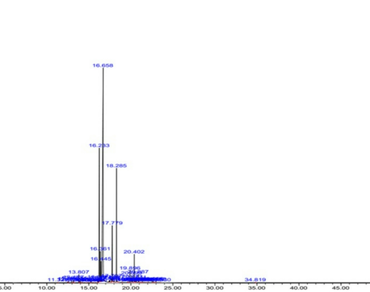
Mentha arvensis L. (wild mint) is a perennial herb widely used in traditional medicine to alleviate wind-heat symptoms such as colds, headaches, and skin eruptions. Although its essential oil has been investigated in several regions, no report has described the composition of M. arvensis cultivated in Dak Lak Province, Vietnam. In this study, gas chromatography–mass spectrometry (GC–MS) was employed to characterize the volatile constituents of the essential oil, and its biological activities were examined using antioxidant and antibacterial assays. The 2,2-diphenyl-1-picrylhydrazyl (DPPH) radical-scavenging test and agar disc diffusion method were used to evaluate antioxidant and antibacterial potential, respectively. Molecular docking simulations were further performed to assess the binding affinities of the major compounds toward the bacterial enzyme DNA gyrase subunit B (GyrB) from Escherichia coli. The essential oil yield was 0.75% (w/w, fresh weight), and 59 compounds were identified, with menthol (56.93%), menthone (15.90%), trans-carane (9.77%), and piperitone (6.22%) as the dominant components. The oil showed moderate antioxidant activity (IC50 = 89.36 ± 1.12 µg/mL) compared with ascorbic acid (IC50 = 44.12 ± 1.08 µg/mL) and exhibited no antibacterial effect against E. coli within the tested range (0.50–2.00 mg/mL). Molecular docking yielded weak-to-moderate interactions between the principal constituents and GyrB (– 5.608 to − 4.795 kcal/mol), consistent with limited standalone inhibitory potential. Overall, the essential oil of M. arvensis from Dak Lak presents a distinct chemical profile and moderate antioxidant potential, providing a foundation for future studies on its pharmacological and therapeutic applications.
References
Akram M, Uzair M, Malik NS, Mahmood A, Sarwer N, Madni A, Asif MA (2011) Mentha arvensis Linn.: a review article. J Med Plants Res 5(18):4499–4503
Aminudin NI, Ahmad R, Sabri N, Zolkifli RM, Mohamed S (2019) Antibacterial and antioxidant activities of extracts from Calophyllum ferrugineum and C. incrassatum. Malays J Anal Sci 23(4):637–647. https://doi.org/10.17576/mjas-2019-2304-09
Bakchi B, Krishna AD, Sreecharan E, Ganesh VBJ, Niharika M, Maharshi S, Puttagunta SB, Sigalapalli DK, Bhandare RR, Shaik AB (2022) An overview on applications of SwissADME web tool in the design and development of anticancer, antitubercular and antimicrobial agents: a medicinal chemist’s perspective. J Mol Struct 1259:132712. https://doi.org/10.1016/j.molstruc.2022.132712
Banerjee P, Kemmler E, Dunkel M, Preissner R (2024) ProTox 3.0: a webserver for the prediction of toxicity of chemicals. Nucleic Acids Res 52:W513–W520. https://doi.org/10.1093/nar/gkae303
Bisacchi GS, Manchester JI (2015) A new-class antibacterial—almost: lessons in drug discovery and development. A critical analysis of more than 50 years of effort toward ATPase inhibitors of DNA gyrase and topoisomerase IV. ACS Infect Dis 1(1):4–13. https://doi.org/10.1021/id500022g
Biswas NN, Saha S, Ali MK (2014) Antioxidant, antimicrobial, cytotoxic and analgesic activities of ethanolic extract of Mentha arvensis L. Asian Pac J Trop Biomed 4(10):792–797. https://doi.org/10.12980/APJTB.4.2014C1298
Bokhari N, Perveen K, Khulaifi MA, Kumar A, Siddiqui I (2016) In vitro antibacterial activity and chemical composition of essential oil of Mentha arvensis Linn. Leaves. J Essent Oil-Bear Plants 19(4):907–915. https://doi.org/10.1080/0972060X.2016.1184993
Clinical and Laboratory Standards Institute (CLSI) (2023) M07: methods for Dilution antimicrobial susceptibility tests for bacteria that grow aerobically, 12th edn. CLSI, Wayne, PA, USA
Collin F, Karkare S, Maxwell A (2011) Exploiting bacterial DNA gyrase as a drug target: current state and perspectives. Appl Microbiol Biotechnol 92(3):479–497. https://doi.org/10.1007/s00253-011-3557-z
Cos P, Vlietinck AJ, Berghe DV, Maes L (2006) Anti-infective potential of natural products: how to develop a stronger in vitro proof-of-concept. J Ethnopharmacol 106(3):290–302. https://doi.org/10.1016/j.jep.2006.04.003
Dar MA, Masoodi MH, Wali AF, Mir MA, Shapoo NS (2014) Antioxidant potential of methanol root extract of Mentha arvensis L. from Kashmir region. J Appl Pharm Sci 4(03):050–057. https://doi.org/10.7324/JAPS.2014.40311
Dey A, Mandal S (2022) Identification of potential therapeutics of Mentha essential oil content as antibacterial MDR agents against AcrAB-TolC multidrug efflux pump from Escherichia coli: an in Silico exploration. Mol Divers 26(4):1891–1905. https://doi.org/10.1007/s11030-022-10426-2
do Nascimento EMM, Rodrigues FFG, Campos AR, da Costa JGM (2009) Phytochemical prospection, toxicity and antimicrobial activity of Mentha arvensis (Labiatae) from Northeast of Brazil. J Young Pharm 1(3):210–212
Dos Santos CAL, Moreira AMT, da Silva Teles BR, Kamdem JP, AlAsmari AF, Alasmari F, Khan M, Barros LM, Ibrahim M (2024) Mentha arvensis oil exhibits repellent acute toxic and antioxidant activities in Nauphoeta cinerea. Sci Rep 14(1):21599. https://doi.org/10.1038/s41598-024-72722-3
European Committee on Antimicrobial Susceptibility Testing (EUCAST) (2022) Determination of minimum inhibitory concentrations (MICs) of antibacterial agents by broth microdilution, EUCAST Discussion Document E.DEF 9.3.
Gandova V, Fidan H, Iliev I, Lasheva V, Stankov S, Stoyanova A, Yavorov N (2023) Comparative analysis of antibacterial activity and physicochemical properties of peppermint and cornmint essential oils and their main compound menthol. J Chem Technol Metall 58(4):664–671. https://doi.org/10.59957/jctm.v58i4.99
Hanh DTB, Ngu TN, Bao PHT, Nguyen NPD, Trong PV, Loan LTT, Lam DT, Nguyen PH, Khuyen PTH, Truong PCH, Tran MH, Giap VD, To DC (2023) Chemical composition and biological activities of essential oil from Plectranthus amboinicus collected in Dak Lak. Vietnam Trop J Nat Prod Res 7(11):5203–5210. https://doi.org/10.26538/tjnpr/v7i11.25
Hussain AI, Anwar F, Nigam PS, Ashraf M, Gilani AH (2010) Seasonal variation in content, chemical composition and antimicrobial and cytotoxic activities of essential oils from four Mentha species. J Sci Food Agric 90(11):1827–1836. https://doi.org/10.1002/jsfa.4021
Itam A, Wati MS, Agustin V, Sabri N, Jumanah RA, Efdi M (2021) Comparative study of phytochemical, antioxidant, and cytotoxic activities and phenolic content of Syzygium aqueum. Sci World J 2021:5537597. https://doi.org/10.1155/2021/5537597
Khan K, Uddin R (2022) Integrated bioinformatics based subtractive genomics approach to Decipher the therapeutic function of hypothetical proteins from Salmonella Typhi XDR H-58 strain. Biotechnol Lett 44(2):279–298. https://doi.org/10.1007/s10529-021-03219-6
Kim SY, Han SD, Kim M, Mony TJ, Lee ES, Kim KM, Choi SH, Hong SH, Choi JW, Park SJ (2021) Mentha arvensis essential oil exerts anti-inflammatory in LPS-stimulated inflammatory responses via inhibition of ERK/NF-κB signaling pathway and anti-atopic dermatitis-like effects in 2,4-dinitrochlorobezene-induced BALB/c mice. Antioxidants (Basel) 10(12): 1941. https://doi.org/10.3390/antiox10121941
Kumar A, Shukla R, Singh P, Singh AK, Dubey NK (2009) Use of essential oil from Mentha arvensis L. to control storage moulds and insects in stored Chickpea. J Sci Food Agric 89:2643–2649. https://doi.org/10.1002/jsfa.3768
Lipinski CA (2000) Drug-like properties and the causes of poor solubility and poor permeability. J Pharmacol Toxicol Methods 44(1):235–249. https://doi.org/10.1016/s1056-8719(00)00107-6
Loi DT (2001) Medicinal plants and herbs of Vietnam. Medicine Publishing House, Hanoi
Makkar MK, Sharma S, Kaur H (2018) Evaluation of Mentha arvensis essential oil and its major constituents for fungitoxicity. J Food Sci Technol 55(9):3840–3844. https://doi.org/10.1007/s13197-018-3291-y
Manh HD, Tuyet OT (2020) Larvicidal and repellent activity of Mentha arvensis L., essential oil against Aedes aegypti. Insects 11(3):198. https://doi.org/10.3390/insects11030198
Mihajlov L, Veličkovska SK, Letia GN, Podeab PV, Mirhosseinic H (2019) Isolation, chemical composition, antioxidant and antimicrobial potential of essential oil from Mentha arvensis L. organically planted from Macedonia. Riv Ital Sostanze Grasse 96(3):151–160
Moi LD, Cu LD, Hoi TM, Thai TH, Ban NK (2002) Fiona resources with essential oil in Vietnam, vol 2. Agriculture Publishing House, Hanoi
Nazzaro F, Fratianni F, De Martino L, Coppola R, De Feo V (2013) Effect of essential oils on pathogenic bacteria: mechanisms of action and resistance. Front Microbiol 4:146. https://doi.org/10.3389/fmicb.2013.00146
Panday AK, Rai MK, Acharya D (2008) Chemical composition and antimycotic activity of the essential oils of corn mint (Mentha arvensis L.) and lemon grass (Cymbopogon flexuosus) against human pathogenic fungi. Pharm Biol 41(6):421–425. https://doi.org/10.1076/phbi.41.6.421.17825
Peixoto ITA, Furlanetti VF, Anibal PC, Duarte MCT, Höfling JF (2003) Potential Pharmacological and toxicological basis of the essential oil from Mentha spp. Rev Ciênc Farm Básica Apl 30(3):235–239
Pl’uchtová M, Gervasi T, Benameur Q, Pellizzeri V, Grulova D, Campone L, Sedlák V, Cicero N (2018) Antimicrobial activity of two Mentha species essential oil and its dependence on different origin and chemical diversity. Nat Prod Commun 13(8):1051–1054. https://doi.org/10.1177/1934578X1801300832
Quoc LPT (2022) Physicochemical properties, chemical components, and antibacterial activity of the essential oil from Mentha arvensis L. leaves. Uchenye Zap. Kazan. Univ., Seriya Estestv. Nauki. 2022; 164(1):36–45. https://doi.org/10.26907/2542-064X.2022.1.36-45
Sarker SD, Nahar L, Kumarasamy Y (2007) Microtitre plate-based antibacterial assay incorporating resazurin as an indicator of cell growth, and its application in the in vitro antibacterial screening of phytochemicals. Methods 42(4):321–324. https://doi.org/10.1016/j.ymeth.2007.01.006
Seung EL, Chun GP, Moon SC, Jin KK (2002) Antimicrobial activity of essential oils from Mentha arvensis L. var. piperascens Malivaud and Agastache rugosa O. Kuntze on Escherichia coli and Salmonella typhimurium. Korean. J Med Crop Sci 10(3):206–211
Soković MD, Vukojević J, Marin PD, Brkić D, Vajs V, van Griensven LJLD (2010) Antibacterial effects of essential oils of commonly consumed plants: note on synergy relative to single major components. Molecules 15(11):7532–7546. https://doi.org/10.3390/molecules15117532
Spencer AC, Zhang H, Schuster BM, Maxwell A, Bush K (2023) DNA gyrase as a target for quinolones. Microbiol Mol Biol Rev 87(1):e00044–e00022. https://doi.org/10.1128/mmbr.00044-22
Thiam A, Cissokho PS, Sanchare CH, Fauconnier ML (2021) Activités antioxydante et ínexticide d’huiles essentielles de Mentha arvensis L. du Sénégal. Int J Biol Chem Sci 15(3):966–975. https://doi.org/10.4314/ijbcs.v15i3.10
Tran BT, Nguyen TH, Truong TC, Phan XBM, Nguyen TTM, Hoang QC, Vu XT (2021) Evaluation of chemical composition and some biological activities of mint essential oil (Mentha arvensis L.) cultivated in Vietnam. J Sci Technol 63(7):26–30. https://doi.org/10.31276/VJST.63(7).26-30
Varma J, Dubey NK (2001) Efficacy of essential oils of Caesulia axillaris and Mentha arvensis against some storage pests causing biodeterioration of food commodities. Int J Food Microbiol 68(3):207–210. https://doi.org/10.1016/S0168-1605(01)00506-2
Author Information
Tay Nguyen University, Dak Lak, Vietnam