Vegetos

(An International Journal of Plant Research & Biotechnology)
(eISSN: 2229-4473)
Community composition and reproductive phenology of plants across vertical strata in Sal forests of North Gorakhpur Division, India
*Article not assigned to an issue yet
Research Article | Published: 26 May, 2026
First Page: 0
Last Page: 0
Views: 75
Keywords: Conservation, Distribution, Flowering, Fruiting, Pollination, Survival
Abstract
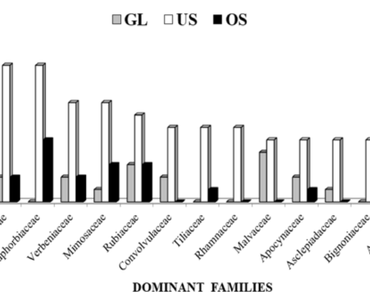
Reproductive phenology examines the timing of key reproductive events in plants, including flowering, fruiting, and seed dispersal. These events significantly impact species' success, survival, and distribution within ecosystems. Field visits were made to record qualitative aspects of reproductive phenological traits at monthly intervals from April, 2020 to March, 2023 across different vertical strata. In the Sal dominated forests of north-eastern Uttar Pradesh, a rich biodiversity has been documented, with 367 identified species spanning 262 genera and 83 families. Notably, families such as Papilionaceae, Asteraceae, and Euphorbiaceae play crucial roles in these forests. Species distribution is uneven across forest strata, with the understorey being more species-rich than the overstorey. Chi-square (χ2) analysis of species distribution in the Sal forest revealed that many families show significant strata preference (p < 0.05). Families with high χ2 (Asteraceae 19.1, Moraceae 15.6, Euphorbiaceae 11.4) are strongly stratified, moderate χ2 (Solanaceae 5.4, Malvaceae 4.7) show partial preference, while low χ2 (Flacourtiaceae 2, Zingiberaceae 1) are nearly uniform, reflecting distinct ecological stratification. Most species (74%) are perennials, exhibiting distinct reproductive cycles. Flowering occurs predominantly in summer, with inflorescence types including cymes, panicles, and solitary flowers. Small-sized flowers are common, with white and yellow being the most frequently observed colours. These floral traits influence pollination dynamics, affecting plant reproductive success. This study provides valuable insights into plant phenology, helping to understand how reproductive timing shapes community structure and ecosystem functioning. Such knowledge is crucial for conservation and sustainable management of Sal forests, particularly in the face of climate change and habitat disturbances.
References
Albor C, Ashman T-L, Stanley A, Martel C, Arceo-Gómez G (2022) Flower colour and flowering phenology mediate plant–pollinator interaction assembly in a diverse co-flowering community. Funct Ecol 36:2456–2468. https://doi.org/10.1111/1365-2435.14142
Arnold SEJ, Le Comber SC, Chittka L (2009) Flower color phenology in European grassland and woodland habitats, through the eyes of pollinators. Isr J Plant Sci 57:211–230. https://doi.org/10.1560/IJPS.57.3.211
Bawa KS, Kang H, Grayum MH (2003) Relationships among time, frequency, and duration of flowering in tropical rain forest trees. Am J Bot 90(6):877–887. https://doi.org/10.3732/ajb.90.6.877
Bawa KS (1983) Patterns of flowering in tropical plants. In: Jones CE, Little RJ (eds) Handbook of experimental pollination biology. Van Norstrand Reinhold, New York, pp 394–410
Bhat DM, Murali KS (2001) Phenology of understorey species of tropical moist forest of Western Ghats region of Uttara Kannada district in South India. Curr Sci 81(7):799–805
Borchert R, Renner SS, Calle Z, Navarrete D, Tye A, Gautier L, Spichiger R, Hildebrand P (2005) Photoperiodic induction of synchronous flowering near the Equator. Nature. https://doi.org/10.1038/nature03259
Boyle WA, Bronstein JL (2012) Phenology of tropical understory trees: patterns and correlates. Rev Biol Trop 60(4):1415–1430. https://doi.org/10.15517/rbt.v60i4.2050
Byers DL (2017) Studying plant–pollinator interactions in a changing climate: A review of approaches. Appl Plant Sci 5(6):1700012. https://doi.org/10.3732/apps.1700012
Champion HG, Seth SK (1968) General silviculture for India. Publication Branch, Department of Printing and Stationary Government of India, Delhi
Couralet C, Van den Bulcke J, Ngoma I, Van Acker J, Beeckman H (2013) Phenology in functional groups of Central African rainforest trees. J Trop for Sci 25(3):361–374
David JP, Murugan BS, Manakadan R (2012) Seasonality in fruiting of fig and non-fig species in a tropical dry evergreen forest in Sriharikota Island, Southern India. Trop Ecol 53:1–13
Duputie A, Rutschmann A, Ronce O, Chuine I (2015) Phenological plasticity will not help all species adapt to climate change. Glob Change Biol 21:3062–3073. https://doi.org/10.1111/gcb.12914
Dutta G, Devi A (2015) Phenology and population structure of six tree species in tropical forest of Assam, Northeast India. Trop Ecol 56(3):393–399
Fenner M (1998) The phenology of growth and reproduction in plants. Perspect Plant Ecol Evol Syst 1(1):78–91. https://doi.org/10.1078/1433-8319-00053
Forrest J, Miller-Rushing AJ (2010) Toward a synthetic understanding of the role of phenology in ecology and evolution. Philos Trans R Soc Lond B Biol Sci 365:3101–3112. https://doi.org/10.1098/rstb.2010.0145
Gautam KH, Devoe NN (2006) Ecological and anthropogenic niches of sal (Shorea robusta Gaertn. F.) forest and prospects for multiple-product forest management—a review. Forestry 79(1):81–101. https://doi.org/10.1093/forestry/cpi063
Harder LD, Barrett SCH (eds) (2006) Ecology and evolution of flowers. Oxford University Press
Hegland SJ, Nielsen A, Lazaro A, Bjerknes AL, Totland Ø (2009) How does climate warming affect plant-pollinator interactions? Ecol Lett 12:184–195. https://doi.org/10.1111/j.1461-0248.2008.01269.x
Hereford J, Schmitt J, Ackerly DD (2017) The seasonal climate niche predicts phenology and distribution of an ephemeral annual plant, Mollugo verticillate. J Ecol 105(5):1323–1334. https://doi.org/10.1111/1365-2745.12739
Janzen DH (1967) Synchronization of sexual reproduction of trees within the dry season in Central America. Evolution 21:620–637
Kudo G, Ida TY (2013) Early onset of spring increases the phenological mismatch between plants and pollinators. Ecology 94:2311–2320. https://doi.org/10.1890/12-2003.1
Kumar R, Saikia P (2018) Floristic analysis and dominance pattern of sal (Shorea robusta C.F. Gaertn) forests in Ranchi, Jharkhand, eastern India. J for Res 31(2):415–427. https://doi.org/10.1007/s11676-018-0829-9
Monahan WB, Rosemartin A, Gerst KL, Fisichelli NA, Ault T, Schwartz MD, Gross JE, Weltzin JF (2016) Climate change is advancing spring onset across the U.S. National Park System. Ecosphere 7:e01465. https://doi.org/10.1002/ecs2.1465
Moore LM, Lauenroth WK (2017) Differential effects of temperature and precipitation on early‐ vs. late‐flowering species. Ecosphere 8(5):1–18. https://doi.org/10.1002/ecs2.1819
Morellato PC, Leitão-Filho HF (1996) Reproductive phenology of climbers in a Southeastern Brazilian forest. Biotropica 28(2):180–191. https://doi.org/10.2307/2389073
Murali KS, Sukumar R (1994) Reproductive phenology of a tropical dry forest in Mudumalai, southern India. J Ecol 82:759–767
Nanda A, Suresh HS, Krishnamurthy YL (2014) Phenology of a tropical dry deciduous forest of Bhadra Wildlife Sanctuary, southern India. Ecol Process 3:1. https://doi.org/10.1186/2192-1709-3-1
Nandy S, Ghosh S, Singh S (2021) Assessment of sal (Shorea robusta) forest phenology and its response to climatic variables in India. Environ Monit Assess 193:616. https://doi.org/10.1007/s10661-021-09356-9
Ollerton J, Lack AJ (1992) Flowering phenology: an example of relaxation of natural selection? Trends Ecol Evol 7:274–276. https://doi.org/10.1016/0169-5347(92)90175-B
Pandey SK, Shukla RP (2003) Plant diversity in managed sal (Shorea robusta Gaertn.) forests of Gorakhpur, India: species composition, regeneration and conservation. Biodivers Conserv 12:2295–2319. https://doi.org/10.1023/A:1024589230554
Pandey SK, Pande S, Mishra AK, Shukla RP (2024) Assessment of plant diversity in sal forest of north Gorakhpur forest division, India. Vegetos. https://doi.org/10.1007/s42535-024-00967-4
Parihar SS, Pathak PS (2006) Flowering phenology and seed biology of selected tropical perennial grasses. Trop Ecol 47:81–87
Pei NC, Kress WJ, Chen Bu F, Erickson DL, Wong KM, Zhang JL, Ye WH, Huang ZL, Dian-Xiang Zhang DX (2015) Phylogenetic and climatic constraints drive flowering phenological patterns in a subtropical nature reserve. J Plant Ecol 8(2):187–196. https://doi.org/10.1093/jpe/rtv009
Primack RB, Gallinat AS (2017) Insights into grass phenology from herbarium specimens. New Phytol 213(4):1567–1568. https://doi.org/10.1111/nph.14439
Putz FE (1979) A seasonality in Malaysian tree phenology. Malay for 42:1–24
Rafferty NE, CaraDonna PJ, Burkle LA, Amy M, Bronstein JL (2013) Phenological overlap of interacting species in a changing climate: an assessment of available approaches. Ecol Evol 3(9):3183–3193. https://doi.org/10.1002/ece3.668
Ralhan PK, Khanna RK, Singh SP, Singh JS (1985) Phenological characteristics of the shrub layer of Kumaun Himalyan forests. Vegetatio 63:113–119. https://doi.org/10.1007/BF00044061
Ram J, Singh SP, Singh JS (1988) Community level phenology of grassland above treeline in Central Himalaya. Arct Alp Res 20:325–332. https://doi.org/10.2307/1551264
Raunkiaer C (1934) The life forms of plants and statistical plant geography. Oxford University Press, London
Van Schaik CP, Terborgh JW, Wright SJ (1993) The phenology of tropical forests: adaptive significance, and consequences for primary consumers. Annn Rev Ecol Syst 24:353–377. https://doi.org/10.1146/annurev.es.24.110193.002033
Shukla RP, Ramakrishnan PS (1982) Phenology of trees in a sub-tropical humid forest in north-eastern India. Vegetatio 49:103–109. https://doi.org/10.1007/BF00052764
Singh KP, Kushwaha CP (2005) Emerging paradigms of tree phenology in dry tropics. Curr Sci 89:964–975
Singh KP, Kushwaha CP (2006a) Diversity of flowering and fruiting phenology of trees in a tropical deciduous forest in India. Ann Bot 97(2):265–276. https://doi.org/10.1093/aob/mcj028
Singh KP, Kushwaha CP (2006b) Diversity of flowering and fruiting phenology of trees in a tropical deciduous forest in India. Ann Bot 97:265–276. https://doi.org/10.1093/aob/mcj028
Sparks T, Menzel A (2013) Plant phenology changes and climate change. Encyclopedia of biodiversity. Academic Press, New York, pp 103–108
Srivastava TN (1976) Flora Gorakhpurensis. Today and Tomorrow’s Printers and Publishers, New Delhi
Wang X, Morin X, Zhang J, Chen G, Mao L, Chen Y, Song Z, Du Y, Ma K (2023) Geographical patterns and determinants in plant reproductive phenology duration. Front Plant Sci 14:1199316. https://doi.org/10.3389/fpls.2023.1199316
Zar J (2007) Biostatistical analysis. Pearson Education, London, p 663
Author Information
Department of Botany, Government PG College, Bina, India