Vegetos

(An International Journal of Plant Research & Biotechnology)
(eISSN: 2229-4473)
Comparative genetic diversity assessment of chickpea wilt fungus, Fusarium oxysporum f. sp. ciceris using SCoT and SRAP markers
*Article not assigned to an issue yet
Mullachery Sruthy, Mane Shyamsunder S., Ingle Sunil T., Jadhav Pravin V.
Research Articles | Published: 30 June, 2026
First Page: 0
Last Page: 0
Views: 39
Keywords: Bioinformatics, Chickpea wilt, Genetic diversity, SCoT, SNP and SRAP
Abstract
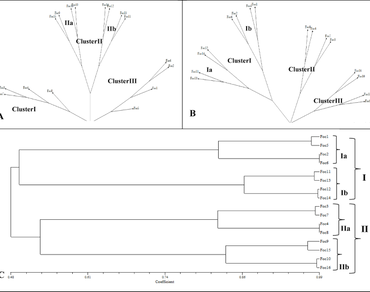
The dynamics of shift in pathogen population can be determined by analysing the degree of gene flow and genetic divergence. The diversity of sixteen single spore isolates of Fusarium oxysporum f. sp. ciceris (Foc) collected from eight different states of India such as Maharashtra(2), Uttar Pradesh(2), Madhya Pradesh(2), Haryana(2), Gujarat(2), Rajasthan(2), Andhra Pradesh(2) and Karnataka(2) were assessed using twenty five SCoT (Start Codon Target) and thirty SRAP (Sequence Related Amplified Polymorphism) markers. Mapping of isolates clustered them according to their geographical origin, which indicated role of geographical area in genetic diversity. Although, both SCoT and SRAP were found to exhibit comparable results in marker and genetic diversity parameters analysis, SRAP (PIC-0.40; polymorphism-86.56%) stands out as a bit superior than SCoT (PIC-0.37; polymorphism-84.70%). Mapping of isolates through dendrograms and PCoA clustered them according to their geographical origin, indicating that regional environmental factors strongly influence genetic diversity. Moderate degree of genetic differentiation (Gst:0.08) and significant gene flow (Nm: 5.75) were observed, suggesting pathogen’s inherent ability to evolve under environmental stress and overcome host resistance. Bioinformatics study of monomorphic allele sequences showed Single Nucleotide Polymorphism (SNP) among them and all coded for an extra cellular serine rich protein.
References
Achari SR, Mann RC, Sharma M et al (2023) Diagnosis of Fusarium oxysporum f. sp. ciceris causing Fusarium wilt of chickpea using loop-mediated isothermal amplification (LAMP) and conventional end-point PCR. Sci Rep 13:2640. https://doi.org/10.1038/s41598-023-29730-6
Arvayo-Ortiz RM, Esqueda M, Acedo-Felix E, Sanchez A, Gutierrez A (2011) Morphological variability and races of Fusarium oxysporum f. sp. ciceriss associated with chickpea (Cicer arietinum) crops. Am J Agricultural Biol Sci 6:114–121. https://doi.org/10.3844/ajabssp.2011.114.121
Bayraktar H, Turkkan M, Dolar FS (2010) Characterization of Fusarium oxysporum f. sp. cepae from onion in Turkey based on vegetative compatibility and rDNA RFLP analysis. J Phytopathol 158:691–697. https://doi.org/10.1111/j.1439-0434.2010.01685.x
Baysal O, Siragusa M, Ikten H, Polat I, Gumrukcu E, Yigit F, da Silva JAT (2009) Fusarium oxysporum f. sp. lycopersici races and their genetic discrimination by molecular markers in West Mediterranean region of Turkey. Physiol Mol Plant Pathol 74:68–75. https://doi.org/10.1016/j.pmpp.2009.09.008
Bhatt P, Rakhashiya P, Thaker V (2020) Molecular marker development from ISSR for fungal pathogens of Mangifera indica L. Indian Phytopathol 73:257–265. https://doi.org/10.1007/s42360-020-00211-4
Borsting C, Morling N (2013) Single-nucleotide polymorphisms. Encyclopedia Forensic Sci 233–238. https://doi.org/10.1002/9780470061589.fsa1113
Botstein D, White RL, Skalnick MH, Davies RW (1980) Construction of a genetic linkage map in man using restriction fragment length polymorphism. Am J Hum Genet 32:314–331
Caballo C, Madrid E, Gil J, Chen W, Rubio J, Millan T (2019) Candidate gene expression profiling during wilting in chickpea caused by Fusarium oxysporum f. sp. ciceriss race 5 in chickpea. Mol Breeding 39:16. https://doi.org/10.1371/journal.pone.0224212
Chaudhary A, Murukesan A, Kumari A et al (2025) Biomolecular and computational insights into Fusarium oxysporum f.sp. ciceriss infection in chickpea: a review. Discover Agric 3:178. https://doi.org/10.1007/s44279-025-00278-5
Cieplak M, Nucia A, Ociepa T, Okon S (2022) Virulence structure and genetic diversity of Blumeria graminis f. sp. avenae from different regions of Europe. Plants 11:1358. https://doi.org/10.3390/plants11101358
Collard BC, Mackill DJ (2009) Start codon targeted polymorphism: a simple, novel DNA marker technique for generating gene-targeted markers in plants. Plant Mol Biology Rep 27:86–93. https://doi.org/10.1007/s11105-008-0060-5
De Riek J, Calsyn E, Everaert I, Van Bockstaele E, De Loose M (2001) AFLP-based alternatives for the assessment of distinctness, uniformity and stability of sugar beet varieties. Theor Appl Genet 103:1254–1265. https://doi.org/10.1007/s001220100710
Dean R, Van Kan JA, Pretorius ZA et al (2012) The Top 10 fungal pathogens in molecular plant pathology. Mol Plant Pathol 13:414–430. https://doi.org/10.1111/j.1364-3703.2011.00783.x
Dinolfo MI, Castanares E, Stenglein SA (2014) SRAP as an informative molecular marker to study the Fusarium poae genetic variability. J Phytopathol 163:657–663. https://doi.org/10.1111/jph.12301
Dubey SC, Singh SR, Singh B (2010) Morphological and pathogenic variability of Indian isolates of Fusarium oxysporum f. sp. ciceriss causing chickpea wilt. Archives Phytopathol Plant Prot 43:174–190. https://doi.org/10.1080/03235400802021108
Earl DA, vonHoldt BM (2012) Structure harvester: a website and program for visualizing structure output and implementing the Evanno method. Conserv Genetic Resour 4:359–361. https://doi.org/10.1007/s12686-011-9548-7
Edgar RC (2004) MUSCLE: multiple sequence alignment with high accuracy and high throughput. Nucleic Acids Res. 2004;32(5):1792-1797. https://doi.org/10.1093/nar/gkh340
Evanno G, Regnaut S, Goudet J (2005) Detecting the number of clusters of individuals using the software STRUCTURE: a simulation study. Mol Ecol 14:2611–2620
Ghany AA, Zaki EA (2003) Isolation, characterization, and phylogenetic analysis of copia-like retrotransposons in the Egyptian cotton Gossypium barbadense and its progenitors. Afr J Biotechnol 2:165–168. https://doi.org/10.5897/AJB2003.000-1034
Gogoi B, Wann SB, Saikia SP (2020) Comparative assessment of ISSR, RAPD, and SCoT markers for genetic diversity in Clerodendrum species of North East India. Mol Biol Rep 47:7365–7377. https://doi.org/10.1007/s11033-020-05792-x
Hammer O, Harper DAT, Ryan PD (2001) PAST: paleontological statistics software package for education and data analysis. Palaeontologia Electronica 4:9
Haware M (1990) Fusarium wilt and other important diseases of chickpea in the Mediterranean area. Agricultural Food Sci 9:61–64
Jaccard P (1908) Nouvelles recherches sur la distribution forale. Bull de la Societe Vaudoise des Sci Nat 44:223–270
Jendoubi W, Bouhadida M, Boukteb A, Béji M, Kharrat M (2017) Fusarium Wilt Affecting Chickpea Crop. Agriculture 7:1–16. https://doi.org/10.3390/agriculture7030023
Jimenez-Díaz RM, Basallote-Ureba MJ, Rapoport H (1989) Vascular wilt diseases of plants. In: Tjamos EC and Beckman C (eds) Springer, pp.113–121
Kajal Jankar, Mane SS, Ingle ST, Jadhav PV, Marawar MW (2024) Genetic diversity assessment of Foccausing chickpea wilt as revealed by the URP and SRAP marker. Int J Adv Biochem Res 8(6):383–390. https://doi.org/10.33545/26174693.2024.v8.i6e.1340
Kumar P, Dubey S, Akhtar J, Kiran R, Nair K, Bhati H (2020) Genetic diversity and population structure analysis of Colletotrichum capsici isolates using SRAP and URP markers. Indian J Plant Prot 48:64–73
Li G, Quiros C (2001) Sequence-related amplified polymorphism (SRAP), a new marker system based on a simple PCR reaction: Its application to mapping and gene tagging in Brassica. Theor Appl Genet 103:455–461. https://doi.org/10.1007/s001220100570
Liu N, Liu ZL, Gong G, Zhang M, Wang X, Zhou Y et al (2015) Virulence structure of Blumeria graminis f. sp. tritici and its genetic diversity by ISSR and SRAP profiling analyses. PLoS ONE 10. https://doi.org/10.1371/journal.pone.0130881
Long JC, Caceres JF (2009) The SR protein family of splicing factors: master regulators of gene expression. Biochem J 417:15–27. https://doi.org/10.1042/BJ20081501
Longya A, Talumphai S, Jantasuriyarat C (2020) Morphological characterization and genetic diversity of rice blast fungus, Pyricularia oryzae, from Thailand Using ISSR and SRAP Markers. J Fungi 6:38. https://doi.org/10.3390/jof6010038
Lucchi CD, Stevanato P, Hanson LE, Mc. Grath M et al (2021) Molecular markers for improving control of soil borne pathogen Fusarium oxysporum in sugarbeet. Euphytica 213:71
Machenahalli S, Jingade P, Giri MS, Huded AKC et al (2021) Cross infection and molecular characterization of Colletotrichum spp. infecting coffee and black pepper. Physiol Mol Plant Pathol 113. https://doi.org/10.1016/j.pmpp.2021.101600
Merga B, Haji J (2019) Economic importance of chickpea: Production, value, and world trade. Cogent Food Agric 5:1. https://doi.org/10.1080/23311932.2019.1615718
Michielse CB, Rep M (2009) Pathogen profile update: Fusarium oxysporum. Mol Plant Pathol 10:311–324. https://doi.org/10.1111/j.1364-3703.2009.00538.x
Moncada A, Jimenez-Dı́az R, Artes E (2009) Vegetative compatibility groups in Fusarium oxysporum f. sp. ciceriss and F. oxysporum non-pathogenic to chickpea. J Phytopathol 157:729–735. https://doi.org/10.1111/j.1439-0434.2009.01562.x
Montakhabi MK, Bonjar GHS, Talebi R (2020) Mating type profiling and SSR-based genetic diversity analysis of Iranian Foccausing wilt in chickpea. Int J Agric Biology 23:1101–1106
Muhire BM, Varsani A, Martin DP (2014) SDT: a virus classifcation tool based on pairwise sequence alignment and identity calculation. PLoS ONE 9:e108277. https://doi.org/10.1371/journal.pone.0108277
Murodova SM, Bozorov TA, Aytenov IS, Ochilov BO, Qulmamatova DE, Salakhutdinov IB, Isokulov MZ, Khalillaeva GO, Azimova LA, Meliev SK (2024) Uncovering Fusarium Species Associated with Fusarium Wilt in Chickpeas (Cicer arietinum L.) and the Identification of Significant Marker–Trait Associations for Resistance in the International Center for Agricultural Research in the Dry Areas’ Chickpea Collection Using SSR Markers. Agronomy 14(9):1943. https://doi.org/10.3390/agronomy14091943
Olivieri F, Godoy AV, Escande A, Casalongue CA (1998) Analysis of intercellular washing fluids of potato tubers and detection of increased proteolytic activity upon fungal infection. Physiol Plant 104:232–238. https://doi.org/10.1034/j.1399-3054.1998.1040211.x
Pandey MK, Gautami B, Jayakumar T, Sriswathi M, Upadhyaya HD et al (2012) Highly informative genic and genomic SSR markers to facilitate molecular breeding in cultivated groundnut (Arachis hypogaea). Plant Breeding 131:139–147. https://doi.org/10.1111/j.1439-0523.2011.01911.x
Peakall R, Smouse PE (2012) GenAlEx 6.5: genetic analysis in Excel. Population genetic software for teaching and research-an update. Bioinformatics 28:2537–2539. https://doi.org/10.1093/bioinformatics/bts460
Polat I, Baysal O, Mercati F et al (2014) Characterization of Pseudoperonospora cubensis isolates from Europe and Asia using ISSR and SRAP molecular markers. Eur J Plant Pathol 139:641–653. https://doi.org/10.1007/s10658-014-0420-y
Powell W, Morgante M, Andre C, Hanafey M, Vogel J, Tingey S, Rafalski AJ (1996) The utility of RFLP, RAPD, AFLP and SSR (microsatellite) markers for germplasm analysis. Mol Breeding 2:225–238. https://doi.org/10.1007/BF00564200
Prevost A, Wilkinson MJ (1999) A new system of comparing PCR primers applied to ISSR fngerprinting of potato cultivars. Theor Appl Genet 98:107–112. https://doi.org/10.1007/s001220051046
Pritchard K, Stephens M, Donnelly P (2000) Inference of population structure using multilocus genotype data. Genetics 155:945–959. https://doi.org/10.1093/genetics/155.2.945
Puhalla JE (1985) Classifcation of strains of Fusarium oxysporum on the basis of vegetative compatibility. Can J Bot 63:179–183. https://doi.org/10.1139/b85-020
Rafzadeh A, Koohi-Dehkordi M, Sorkheh K (2018) Molecular insights of genetic variation in milk thistle (Silybum marianum [L.] Gaertn.) populations collected from southwest Iran. Mol Biol Rep 45:601–609.
Reshma RS, Das DN (2021) Molecular markers and its application in animal breeding. Advances in Animal Genomics. Academic Press. Pp.123–140. https://doi.org/10.1016/B978-0-12-820595-2.00009-6
Rohlf FJ (1998) NTSYS-pc- Numerical taxonomy and multivariate analysis system version 2.02. Applied Biostatistics Inc, Setauket, NewYork
Saabale P, Dubey S (2014) Pathogenicity and vegetative compatibility grouping among Indian populations of Fusarium oxysporum f. sp. ciceriss causing chickpea wilt. Phytoparasitica 42:465–473. https://doi.org/10.1007/s12600-014-0383-8
Sharma M, Sengupta A, Ghosh R et al (2016) Genome wide transcriptome profling of Fusarium oxysporum f. sp. ciceriss conidial germination reveals new insights into infection-related genes. Sci Rep 6:37353. https://doi.org/10.1038/srep37353
Smith JSC, Chin EC, Shu H, Smith OS, Wall SJ, Senior ML, Mitchell SE, Kresovich S, Ziegle J (1997) An evaluation of the utility of SSR loci as molecular markers in maize (Zea mays L.) comparisons with data from RFLPs and pedigree. Theor Appl Genet 95:163–173. https://doi.org/10.1007/s001220050544
Soren KR, Gangwar P, Khatterwani P, Chaudhary R, Datta S (2016) Genetic diversity assessment of Fusarium oxysporum f. sp ciceriss isolates of Indian chickpea fields as revealed by the SRAP marker system. J Environ Biol 37:1291–1297
Subramanya S, Soregaon CD, Lal D, Ravikumar RL (2023) Development of CAPS marker linked to H2 Locus of Fusarium wilt resistance in chickpea. Legume Res 46:1326–1331. https://doi.org/10.18805/LR-4433
Tantasawat P, Trongchuen J, Prajongjai T, Seehalak W, Jittayasothorn Y (2011) Variety identifcation and comparative analysis of genetic diversity in yard long bean (Vigna unguiculata spp. sesquipedalis) using morphological characters, SSR and ISSR analysis. Sci Hort 124:204–216
Varshney RK, Beier U, Khlestkina EK, Kota R, Korzun V, Graner A, Borner A (2007) Single nucleotide polymorphisms in rye (Secale cereale L.): discovery, frequency, and applications for genome mapping and diversity studies. Theor Appl Genet 114:1105–1116. https://doi.org/10.1007/s00122-007-0504-6
Wang L, Guan R, Zhangxiong L, Chang R, Qiu L (2006) Genetic diversity of Chinese cultivated soybean revealed by SSR markers. Crop Sci 46:1032–1038. https://doi.org/10.2135/cropsci2005.0051
Wright S (1969) Evolution and genetics of populations: The theory of gene frequencies. Chicago Univ. Press, Chicago, USA
Author Information
Department of Plant Pathology, Akola, India