Comparative study on techno-functional properties in popped millets and pseudocereals

*Article not assigned to an issue yet

, , ,


Research Articles | Published:

E-ISSN: 2229-4473.
Website: www.vegetosindia.org
Pub Email: contact@vegetosindia.org
DOI: 10.1007/s42535-026-01816-2
First Page: 0
Last Page: 0
Views: 8

Keywords: Millets, Pseudocereal, Popping, Starch band, Protein band, Lipid band


Abstract


Popping grains is an effective processing technique that enhances the functional and nutritional properties of cereals and pseudocereals, thereby improving digestion and nutrient bioavailability. The study focused on nine samples of millets and pseudocereals, i.e. Amaranth (AMR), Quinoa (QUI), Pearl millet (PM), Foxtail millet (FOM), Barnyard millet (BYM), Little millet (LM), Finger millet (FIM), Browntop millet (BTM), and Kodo millet (KM), to analyse the popping quality changes. The analysis includes physiochemical & functional properties, pasting properties using a rheometer, and structural changes observed using FTIR, XRD, and SEM. The popping yield, which was approximately 50% for the majority of millets (AMR, PM, FOM, FIM) and pseudocereals (KM) utilised, served as an indicator of improved popping quality. The study revealed that the range of arithmetic mean and geometric mean increments was approximately 100%. The changes in the starch band (1039/1014 index, 1047/1018 index, 995/1018 index, 996/1014 index), protein band (1640/996 index, 1540/996 index), lipid band (1740/996 index, 2920/996 index, 2850/996 index), and crystallinity (percent) of popped and unpopped samples as determined by XRD and FTIR demonstrated a decrease in crystallinity leading to increased amorphous starch structures. Among the nine investigated varieties, AMR and FIM have shown superior results, demonstrating the highest water absorption capacity (115.7% and 123.7%, respectively), optimal expansion characteristics, and uniform microstructures suitable for multiple food applications.

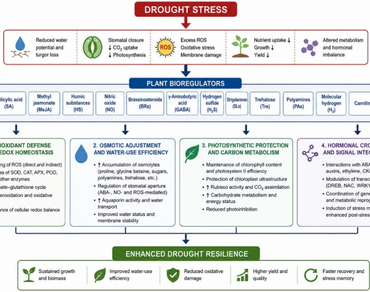
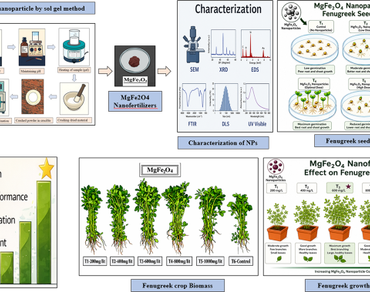
Graphical Abstract

Millets, Pseudocereal, Popping, Starch band, Protein band, Lipid band


References


Achten E, Schütz D, Fischer M, Fauhl-Hassek C, Riedl J, Horn B (2019) Classification of grain maize (Zea mays L.) from different geographical origins with FTIR spectroscopy—A suitable analytical tool for feed authentication? Food Anal Methods 12(10):2172–2184. https://doi.org/10.1007/s12161-019-01558-9


Almeida RLJ, Santos NC, Feitoza JVF, da Silva GM, Muniz deS, da Silva Eduardo CE, R., de Almeida Mota MM (2022) Effect of heat-moisture treatment on the thermal, structural and morphological properties of Quinoa starch. Carbohydr Polym Technol Appl 3:100192. https://doi.org/10.1016/j.carpta.2022.100192


Aruna M, Parimalavalli R (2022) Influence of acid on isolation of starch from pearl millet (underutilized crop) and its characteristics. Mater Today: Proc. https://doi.org/10.1016/j.matpr.2022.04.650


Cabrera-Ramírez AH, Gaytán-Martínez M, Gonzáles-Jasso E, Ramírez-Jiménez AK, Velázquez G, Villamiel M, Morales-Sánchez E (2023) Flours from popped grains: Physicochemical, thermal, rheological, and techno-functional properties. Food Hydrocolloids 135:108129. https://doi.org/10.1016/j.foodhyd.2022.108129


Contreras-Jiménez B, Torres-Vargas OL, Rodríguez-García ME (2019) Physicochemical characterization of quinoa (Chenopodium quinoa) flour and isolated starch. Food Chem 298:124982. https://doi.org/10.1016/j.foodchem.2019.124982


Cueto M, Farroni A, Rodríguez SD, Schoenlechner R, Schleining G, del Pilar Buera M (2018) Assessing changes in enriched maize flour formulations after extrusion by means of FTIR, XRD, and chemometric analysis. Food Bioprocess Technol 11(8):1586–1595. https://doi.org/10.1007/s11947-018-2113-6


Eke-Ejiofor J, Okoye C (2018) Nutrient composition, lipid profile and sensory properties of cereal bar made from locally available cereals and nuts. Int J Biotechnol Food Sci 6(1):1–8. https://doi.org/10.24925/turjaf.v11i4.651-656.5369


Garud SR, Lamdande AG, Tavanandi HA, Mohite NK, Nidoni U (2022) Effect of physicochemical properties on popping characteristics of selected pearl millet varieties. J Sci Food Agric 102(15):7370–7378. https://doi.org/10.1002/jsfa.12104


Godrich J, Rose P, Muleya M, Gould J (2023) The effect of popping, soaking, boiling and roasting processes on antinutritional factors in chickpeas and red kidney beans. Int J Food Sci Technol 58(1):279–289. https://doi.org/10.1007/s13197-023-05758-4


Kaur H, Oberoi HK, Ganapathy KN, Bhardwaj R (2023) Effect of popping and malting processing techniques on physiochemical, antinutrients and antioxidant properties of millets flour. J Food Sci Technol 60(9):2370–2384. https://doi.org/10.1007/s13197-023-05758-4


Kora AJ (2019) Applications of sand roasting and baking in the preparation of traditional Indian snacks: nutritional and antioxidant status. Bull Natl Res Centre 43(1):1–11. https://doi.org/10.1186/s42269-019-0199-2


Kumar K, Chandra S, Samsher NC, Singh J, Kumar M (2017) Functional properties of food commodities (wheat, kidney bean, cowpea, turnip, cauliflower) flours. Int J Crop Sci, 5, 1199–1202. https://www.chemijournal.com/archives/2017/vol5issue6/PartQ/5-6-121-838.pdf


Lin H, Bean SR, Tilley M, Peiris KHS, Brabec D (2021) Qualitative and quantitative analysis of sorghum grain composition including protein and tannins using ATR-FTIR spectroscopy. Food Anal Methods 14(2):268–279. https://link.springer.com/article/https://doi.org/10.1007/s12161-020-01874-5


Ma M, Zhang Y, Chen X, Li H, Sui Z, Corke H (2020) Microwave irradiation differentially affect the physicochemical properties of waxy and non-waxy hull-less barley starch. J Cereal Sci 95:103072. https://doi.org/10.1016/j.ijbiomac.2021.11.007


Panda D, Sailaja NH, Padhan B, Lenka K (2020) Sprouting-associated changes in nutritional and physico-functional properties of indigenous millets from Koraput, India. Proceedings of the national academy of sciences, India section B: biological sciences, 90(1), 79–86. https://link.springer.com/https://doi.org/10.1007/s40011-019-01085-x


Park J, Sung JM, Choi YS, Park JD (2021) pH-dependent pasting and texture properties of rice flour subjected to limited protein hydrolysis. Food Hydrocolloids 117:106754. https://doi.org/10.1016/j.foodhyd.2021.106754


Raungrusmee S, Shrestha S, Sadiq MB, Anal AK (2020) Influence of resistant starch, xanthan gum, inulin and defatted rice bran on the physicochemical, functional and sensory properties of low glycemic gluten-free noodles. LWT 126:109279. https://doi.org/10.1016/j.lwt.2020.109279


Serna-Saldivar SO (2022) Popcorn and Other Puffed Grains. Snack Foods. CRC, pp 201–220. https://www.amazon.in/Snack-Foods-Processing-Innovation-Nutritional-ebook/dp/B09V3H3VH5


Sharma V, Kaur M, Sandhu KS, Kaur S, Nehra M (2021) Barnyard millet starch cross-linked at varying levels by sodium trimetaphosphate (STMP): Film forming, physico-chemical, pasting and thermal properties. Carbohydr Polym Technol Appl 2:100161. https://doi.org/10.1016/j.carpta.2021.100161


Shavandi M, Javanmard M, Basiri A (2022) Novel popping through infrared: Effect on some physicochemical properties of popcorn (Zea Mays L. var. Everta) LWT 155:112955. https://doi.org/10.1016/j.lwt.2021.112955


Shen YJ, Hou X, Yuan JQ, Wang SF, Zhao CH (2020) Thermal cracking characteristics of high-temperature granite suffering from different cooling shocks. Int J Fract 225(2):153–168. https://doi.org/10.1016/j.tafmec.2023.104099


Swarnakar AK, Mohapatra M, Das SK (2022) A review on processes, mechanisms, and quality influencing parameters for puffing and popping of grains. J Food Process Preserv 46(10):e16891. https://doi.org/10.1111/jfpp.16891


Wani IA, Andrabi SN, Sogi DS, Hassan I (2020) Comparative study of physicochemical and functional properties of flours from kidney bean (Phaseolus vulgaris L.) and green gram (Vigna radiata L.) cultivars grown in Indian temperate climate. Legume Sci 2(1):e11. https://doi.org/10.1016/j.lwt.2013.02.006


Yadav GP, Dalbhagat CG, Mishra HN (2022) Effects of extrusion process parameters on cooking characteristics and physicochemical, textural, thermal, pasting, microstructure, and nutritional properties of millet-based extruded products: A review. J Food Process Eng 45(9):e14106. https://doi.org/10.1111/jfpe.14106


Zapana F, de Bruijn J, Vidal L, Melín P, González ME, Cabrera G, Bórquez R (2020) Physical, chemical and nutritional characteristics of puffed quinoa. Int J Food Sci Technol 55(1):313–322. https://doi.org/10.1111/ijfs.14290


Zhou X, Li J, Zhang J, Deng F, Chen Y, Zhou P, Li D (2022) Bioaugmentation mechanism on humic acid formation during composting of food waste. Sci Total Environ 830:154783. https://doi.org/10.1016/j.scitotenv.2022.154783


Author Information


Centre of Food Technology, University of Allahabad, Prayagraj, India