Vegetos

(An International Journal of Plant Research & Biotechnology)
(eISSN: 2229-4473)
Dissecting genetic variability and trait interrelationship in open condition under heat stress in tomato (Solanum lycopersicum L.) for fruit yield and seed production
*Article not assigned to an issue yet
Varun B. H., Singh Rajinder, Jindal S. K., Singh Jyoti, Verma Nirankar
Research Articles | Published: 30 June, 2026
First Page: 0
Last Page: 0
Views: 27
Keywords: Tomato, Heat stress tolerance, Pollen viability, Correlation and path analysis
Abstract
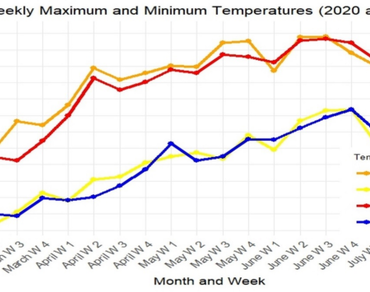
Tomato is sensitive to high temperature which effects vegetative as well as reproductive behavior. The present study was conducted in 2020 and 2021 using 76-diverse tomato genotypes, during summer months in Ludhiana, Punjab conditions where temperature is persistently high i.e., more than 35 °C which is detrimental for tomato production. The genotypes were evaluated based on 17 traits which included vegetative, reproductive and biochemical traits. Genetic parameters (PCV, GCV, heritability, genetic-advance), and multivariate analysis (correlation and path-analysis) were used to assess the diversity and trait association of the genotypes. Paired-ANOVA showed significant differences among genotypes for all traits, confirming ample genetic variability. High heritability coupled with high genetic-advance for pollen viability, number of fruits, and fruit yield per plant, suggesting additive gene action. Pollen-viability reduced considerably in the susceptible genotypes where the viability reduced to less than 60% contrastingly tolerant genotypes retained more than 80% viability. These findings provide critical insights for breeders to develop heat-resilient genotypes through targeted selection and genetic improvement strategies. Correlation showed that fruit yield and seed yield was strongly and positively associated with number of fruits (r = 0.35), pollen viability (r = 0.20) and seed yield (r = 0.33), while negatively correlated with number of days to anthesis (r = – 0.25) and dry matter content (r = – 0.18), indicating the advantage of early flowering during heat stress. Path-analysis showed that number of fruits (0.50) and number of seeds (0.35) had positive association with fruit and seed yield while days to anthesis showed strong negative effects, confirming that reproductive efficiency traits are the most reliable targets for improving yield in heat-stressed tomato.
References
Alsamir M, Ahmad NM (2020) An overview of heat stress in tomato (Solanum lycopersicum L.). Saudi J Biol Sci 27(6):1654–1663. https://doi.org/10.1016/j.sjbs.2020.03.088
Ara A, Narayan R, Ahmed N, Khan SH (2009) Genetic variability and selection parameters for yield and quality attributes in tomato. Indian J Hortic 66:73–78
Bita CE, Gerats T (2013) Plant tolerance to high temperature in a changing environment: Scientific fundamentals and production of heat stress-tolerant crops. Front Plant Sci 4:273. https://doi.org/10.3389/fpls.2013.00273
Bollier N, Prudent M, Lecompte F, Causse M, Génard M (2023) Various tomato cultivars display contrasting morphological and reproductive responses under heat stress. Front Plant Sci 14:1278608. https://doi.org/10.3389/fpls.2023.1278608
Camejo D, Rodríguez P, Morales MA, Dell’Amico JM, Torrecillas A, Alarcón JJ (2016) High temperature effects on tomato pollen viability and yield. Hortic Sci 43:33–41. https://doi.org/10.1016/j.jplph.2004.07.014
Dewey DR, Lu KH (1959) A correlation and path-coefficient analysis of components of crested wheatgrass seed production. Agron J 51:515–518
FAOSTAT (2005) FAOSTAT database. http://faostat.fao.org/
Graci S, Barone A (2024) Tomato plant response to heat stress: a focus on candidate genes for yield-related traits. Front Plant Sci 14:1245661. https://doi.org/10.3389/fpls.2023.1245661
John AA, Kumari P, Singh AK, Sharma S, Kumar R (2024) Physiological and molecular basis of heat stress tolerance in tomato. Indian J Agricultural Res Adv online publication. https://doi.org/10.18805/IJARe.A-6264
Kakubari S, Takada K, Kobori M, Watanabe M (2020) Determination of lycopene concentration in fresh tomatoes by spectrophotometric method: Collaborative study. J AOAC Int 103(6):1619–1625. https://doi.org/10.1093/jaoacint/qsaa073
Kaur M, Singh R, Kumar A, Singh N (2021) Genetic variability and correlation analysis in cauliflower under abiotic stress conditions. Vegetable Sci 48(2):205–211. https://doi.org/10.12944/CARJ.13.2.16
Khan Q, Wang Y, Xia G, Zhang Y, Shahid MA, Ali S, Abbas A, Hussain S, Iqbal MM (2024) Deleterious effects of heat stress on the tomato, its innate responses and potential preventive strategies in the realm of emerging technologies. Plants 13(10):1373. https://doi.org/10.3390/plants13101373
Kumar V, Singh AK, Yadav RK (2023) Genetic variability, heritability and character association studies in tomato (Solanum lycopersicum L.) under protected conditions. Vegetos 36(4):1123–1131
Lee K, Lee HG, Kim SH (2022) Comprehensive understanding of selecting traits for heat tolerance in tomato. Agronomy 12(4):834. https://doi.org/10.3390/agronomy12040834
Li Q, Xu H, Xu J, Liu W, Gao Y, Liu H (2000) Lycopene in tomatoes: Its stability, bioavailability, and health benefits. Nutrition 54:11–21. https://doi.org/10.1080/07388550091144212
Miller G, Khalefa A, Beasley J, Sincik M, Ozkaynak E, Mutschler MA (2021) Contrasting processing tomato cultivars unlink yield and pollen viability under heat stress. AoB Plants 13(4):plab046. https://doi.org/10.1093/aobpla/plab046
Müller F, Rieu I (2017) Tomato anther and pollen development under high temperature. Plant Reprod 30(2):85–97. https://doi.org/10.1007/s00497-017-0301-4
Namdev SK, Dongre R (2018) Correlation and path analysis in tomato. Res J Agricultural Sci 9:588–590. https://doi.org/10.13140/RG.2.2.30347.44326
Osei-Bonsu I, Amoatey HM, Nyadanu D, Akromah R, Klu GYP, Adi EB (2022) Assessing the heat stress tolerance potential of tomato lines under poly-house and open-field conditions. Cogent Food Agric 8(1):2115665. https://doi.org/10.1080/23311932.2022.2115665
Panthee DR, Gardner RG, Davis DW (2018) Heritability of flower number and fruit set under heat stress in tomato. HortScience 53(9):1294–1299. https://doi.org/10.21273/HORTSCI13189-18
Patel H, Meena OP, Sharma P, Kumawat K (2022) Correlation and path coefficient analysis for yield and quality traits in tomato (Solanum lycopersicum L). Vegetos 35(3):645–653
R Core Team (2024) R: A language and environment for statistical computing. R Foundation for Statistical Computing. https://www.R-project.org/
Raman S, Kumari S, Singh P (2023) Different methods used for determination of vitamin C: A review. Int J Curr Microbiol Appl Sci 12(9):185–194
Sharma P, Dhillon NS, Kumar V, Kumar P (2019) Correlation and path analysis for yield and its contributing traits in tomato (Solanum lycopersicum L.) under the protected environment. J Pharmacognosy Phytochemistry 1:447–450
Sharma P, Kumari S, Sharma D, Kumar R (2025) Genetic variability studies in tomato (Solanum lycopersicum L.) from pomato grafts. Vegetos 38(1):364–372. https://doi.org/10.1007/s42535-024-00836-0
Singh S, Sharma P, Choudhary R (2020) Genetic variability, heritability and genetic advance in tomato under heat stress. J Plant Stress Physiol 26(1):45–52
Stokes M, Heslop-Harrison J, Farnham G (2024) Screening methods for thermotolerance in pollen. Plant Physiol Biochem 213:109009. https://doi.org/10.1016/j.plaphy.2024.109009
Thamburaj S, Singh N (2015) Vegetables, tuber crops and spices. ICAR Publication, New Delhi
Xu J, Wolters-Arts M, Mariani C, Huber H, Rieu I (2017) Heat stress affects vegetative and reproductive performance and trait correlations in tomato (Solanum lycopersicum). Euphytica 213:156. https://doi.org/10.1007/s10681-017-1949-6
Author Information
Department of Vegetable Science, Punjab Agricultural University, Ludhiana, India