Vegetos

(An International Journal of Plant Research & Biotechnology)
(eISSN: 2229-4473)
Diversity and distribution of macrofungi in North-Western Himalayan region
*Article not assigned to an issue yet
Research Article | Published: 13 November, 2025
First Page: 0
Last Page: 0
Views: 410
Keywords: Macro fungi, Diversity, Edible, Non-edible, Ecosystem
Abstract
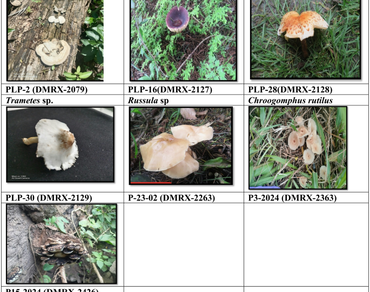
A comprehensive survey was conducted over 3 years (2022–2025) across Kangra, Mandi, and Hamirpur districts in Himachal Pradesh, North-Western Himalayas, to assess the diversity and distribution of macrofungi. A total of 119 specimens were collected from varied ecological niches, including forest litter, decaying wood, and soil substrates. Of these, 33 specimens were deposited at the Directorate of Mushroom Research, Solan, with 7 receiving accession numbers. Identified taxa encompassed both edible species (e.g., Ganoderma lucidum, Russula spp., Clitocybe nuda, Chroogomphus rutilus) and non-edible taxa (e.g., Trametes spp., Gymnopus spp.), demonstrating significant taxonomic and functional diversity. The distribution patterns correlated with environmental variables such as altitude, temperature, and substrate composition. Edible species exhibited bioactive compounds including β-glucans and polysaccharides with noted immunomodulatory and antioxidant properties, emphasizing their medicinal and nutraceutical potential. Non-edible macrofungi contributed to ecosystem functions like organic matter decomposition and nutrient cycling. This study provides essential baseline data on macrofungal biodiversity in the Himalayan region, emphasizing the need for molecular characterization and bioactivity profiling to harness their pharmaceutical and ecological benefits sustainably.
References
Atri NS, Sharma S, Sharma YP (2022) Diversity and ecology of macrofungi in Himalayan forest ecosystems. Mycosphere 13(2):105–120. https://doi.org/10.1007/978-981-13-8487-5_20
Atri NS, Lakhanpal TN, Manjit K (2007) Wild edible mushrooms of north-western Himalaya. In: Mushroom diversity in India. Indian Botanical Society, pp 1–15. https://doi.org/10.1007/978-981-13-8487-5_20
Boa E (2004) Wild edible fungi: a global overview of their use and importance to people. Non-Wood Forest Products No. 17, FAO, Rome
Kreisel H (1992) A preliminary survey of the genus Lycoperdon. Feddes Repert 103(1–2):1–8
Kumari M, Atri NS, Sharma YP (2022) Indigenous knowledge and utilization of wild edible fungi by tribal communities of Himachal Pradesh. J Ethnobiol Ethnomed 18(1):44. https://doi.org/10.48130/SIF-2022-0015
Muszyńska B, Łojewski M, Rojowski J, Opoka W, Sułkowska-Ziaja K (2023) Bioactive compounds in edible and medicinal mushrooms. Acta Pol Pharm Drug Res 80(2):273–285
Negi VS, Pant KC (2010) Ethno-mycological studies in the Garhwal Himalaya, India. Int J Biodivers Conserv 2(5):89–95
Phillips R (2006) Mushrooms. Pan Macmillan, London
Author Information
Department of Plant Pathology, College of Agriculture, Chaudhary Sarwan Kumar Himachal Pradesh Krishi Vishvavidyalya, Palampur, India