Vegetos

(An International Journal of Plant Research & Biotechnology)
(eISSN: 2229-4473)
Evaluation of phytochemicals, antioxidant and antibacterial activities of Lasiococca comberi Haines leaf extracts
*Article not assigned to an issue yet
Mohanta Sandeep Kumar, Parida Gyanajeet, Mahakur Bhaswatimayee, Das Prabhat Kumar, Bedaprabha Aryaputri, Madkami Sanjay Kumar, Bhadra Abanikanta, Singh Nihar Ranjan, Barik Durga Prasad, Parida Gyanajeet
Research Articles | Published: 04 September, 2026
First Page: 0
Last Page: 0
Views: 64
Keywords: DPPH, Human pathogenic bacteria, n Lasiococca comberin , Phytochemicals, Threatened
Abstract
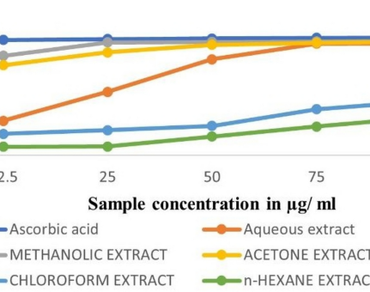
Lasiococca comberi, a member of the Euphorbiaceae family, is a threatened tree species found in the Eastern Ghats of India. This study aimed to screen for various phytochemical constituents in L. comberi leaf extracts, measure antioxidant activities and evaluate antibacterial properties of leaf extracts against various bacterial strains. Phytochemical analysis of fractionated extracts of L. comberi leaves using different solvents, such as aqueous, methanol, acetone, chloroform, and n-hexane, revealed the presence of alkaloids, flavonoids, cardiac glycosides, phenols, tannins, saponins, anthraquinones, quinones, coumarins, and resins. The quantitative analysis of phytochemicals showed that the amount of phenol (252.01 ± 0.95 mg/g gallic acid equivalent) and flavonoid (321.53 ± 1.33 mg/g quercetin equivalent) is highest in the methanolic leaf extract. For antioxidant activity analysis, the DPPH free radical scavenging method was used. The methanolic and acetone leaf extracts at concentrations above 25 µg/ml, and the aqueous extract at concentrations above 75 µg/ml, showed significant antioxidant activity. The antimicrobial activity analysis of crude extracts was done by measuring the zone of inhibition using the well-diffusion method. Two gram-negative bacterial strains, namely Vibrio cholerae, Salmonella typhi, and two gram-positive bacterial strains, namely Streptococcus pyogenes and Streptococcus mutans, have been used to investigate the antibacterial properties of L. comberi leaf extracts. The acetone extract had the best inhibitory activity against the bacterial strains. The acetone leaf extract showed the highest inhibition zone (18.67 ± 0.33 mm) against the Streptococcus mutans. The current findings of this analysis could be helpful for the use of L. comberi leaves in health care practices.
References
Ahmad S, Zahiruddin S, Parveen B, Basist P, Parveen A, Gaurav PR, Ahmad M (2021) Indian medicinal plants and formulations and their potential against COVID-19- preclinical and clinical research. Front Pharmacol 11:578970. https://doi.org/10.3389/fphar.2020.578970
Ahmadullah M, Nayar MP (1999) Red data book of Indian plants (Peninsular India). Botanical Survey of India
Altemimi A, Lakhssassi N, Baharlouei A, Watson DG, Lightfoot DA (2017) Phytochemicals: extraction, isolation, and identification of bioactive compounds from plant extracts. Plants 6(4):42. https://doi.org/10.3390/plants6040042
Anusiyasri S, Hemavathi D, Kumar SV, Kumar ST (2025) Comparative evaluation of maceration and Soxhlet extraction techniques using acetone and aqueous acetone: a comprehensive study on the extractive yield of Azadirachta indica and Terminalia chebula. World J Pharm Res 14(18):771–784
Appa FE, Tobi CHB, Suprapti K, Bakri NF, Barus AA, Pratiwi ME (2025) Quantitative analysis of flavonoid content, total phenolic and toxicity test of extract Smilax rotundifolia leaves from Papua. Jurnal Biol Papua 17(1):29–36. https://doi.org/10.31957/jbp.4539
Bargah RK (2015) Preliminary test of phytochemical screening of crude ethanolic and aqueous extract of Moringa pterygosperma Gaertn. J Pharmacogn Phytochem 4(1):7–9
Barik SK, Tiwari ON, Adhikari D, Singh PP, Tiwary R, Barua S (2018) Geographic distribution pattern of threatened plants of India and steps taken for their conservation. Curr Sci 114(3):470–503. https://doi.org/10.18520/cs/v114/i03/470-503
Boubker A, El Ouardi A, El Kamli T, El Hamidi A, Kaicer M, Kichou F, Ameur N, Errafii K, Aakame RB, Sifou A (2025) Phytochemical analysis, antioxidant and antibacterial activities, minerals element profiling, and identification of bioactive compounds by UPLC-HRMS Orbitrap in four aromatic and medicinal plants. Molecules 30(6):1279. https://doi.org/10.3390/molecules30061279
Cong-Hau N, Thanh-Nho N, Anh-Dao LT, Nhon-Duc L (2021) Spectrophotometric determination of total flavonoid contents in tea products and their liquors under various brewing conditions. Malays J Anal Sci 25(5):740–750
Dai J, Mumper RJ (2010) Plant phenolics: extraction, analysis and their antioxidant and anticancer properties. Molecules 15(10):7313–7352
Das U, Datta P, Behera B (2025) Identification of major threats of climate change, hazards, and anthropogenic activities on biodiversity conservation in the Buxa Tiger Reserve, India. Environ Manag 75(1):3–20. https://doi.org/10.1007/s00267-024-01998-y
Das M, Gogoi BJ, Bora A, Raju NL (2026) Phytochemical analysis, in-vitro anti-oxidant, anti-diabetic, and antibacterial activities of leaf extracts of Hippophae salicifolia from North East India. Food Wellness 2(1):100040. https://doi.org/10.1016/j.foodw.2026.100040
Dash SS, Mao AA (2022) Status, issues and challenges of biodiversity: higher plants. Biodiversity in India: status, issues and challenges 25–44.
Devi R, Kumar M, Kaur M, Dehar PS, Akhtar S, Lal S, Kumar S (2024) Lasiococca comberi Haines.: a threatened medicinal tree of India. Medico Biowealth of India 14:28–34
Do QD, Angkawijaya AE, Tran-Nguyen PL, Huynh LH, Soetaredjo FE, Ismadji S, Ju YH (2014) Effect of extraction solvent on total phenol content, total flavonoid content, and antioxidant activity of Limnophila aromatica. J Food Drug Anal 22:296–302. https://doi.org/10.1016/j.jfda.2013.11.001
Ebrahimzadeh MA, Pourmorad F, Bekhradnia AR (2008) Iron chelating activity, phenol and flavonoid content of some medicinal plants from Iran. Afr J Biotechnol 7(18):3188–3192
Eloff JN (2019) Avoiding pitfalls in determining antimicrobial activity of plant extracts and publishing the results. BMC Complement Altern Med 19(1):106
Fioroni N, Mouquet-Rivier C, Meudec E, Cheynier V, Boudard F, Hemery Y, Laurent-Babot C (2023) Antioxidant capacity of polar and non-polar extracts of four African green leafy vegetables and correlation with polyphenol and carotenoid contents. Antioxidants (Basel) 12(9):1726. https://doi.org/10.3390/antiox12091726
Jiao D, Zhang Y, Guo W, Liu S, Su P, Huang L (2026) Cardiac glycosides: structural diversity, chemical ecology, bioactivity, and artificial synthesis. Nat Prod Rep 43(1):167–199
Kamila PK, Panda PC (2019) Large-scale vegetative propagation of Lasiococca comberi by air layering. J Trop for Sci 31(1):37–42
Kamila PK, Ray A, Sahoo A, Nayak S, Mohapatra PK, Panda PC (2017) Physicochemical characteristics of the Lasiococca comberi Haines seeds. Nat Prod Res 32(19):2352–2355. https://doi.org/10.1080/14786419.2017.1408091
Liebelt DJ, Jordan JT, Doherty CJ (2019) Only a matter of time: the impact of daily and seasonal rhythms on phytochemicals. Phytochem Rev 18:1409–1433. https://doi.org/10.1007/s11101-019-09617-z
Ogbuagu OO, Mbata AO, Balogun OD, Oladapo O, Ojo OO, Muonde M (2022) Novel phytochemicals in traditional medicine: isolation and pharmacological profiling of bioactive compounds. Int J Med All Body Health Res 3(1):63–67. https://doi.org/10.54660/IJMBHR.2022.3.1.63-71
Ojong C, Besong SA, Aryee ANA (2026) Solvent-based extraction recovers phytochemicals from medicinal plants demonstrating anticancer and chemopreventive potential: a review. Molecules 31(7):1202. https://doi.org/10.3390/molecules31071202
Packirisamy S, Gunam V, Mahendra J, Rajendran D, Rajagopal P (2023) Preliminary phytochemical screening and antioxidant properties of methanolic root extract of Picrorhiza kurroa. Res J Pharm Technol 16(9):4266–4270
Panda PC, Kumar S, Singh JP, Gajurel P, Kamila PK, Kashung S, Kulloli RN, Singh PP, Adhikari D, Barik SK (2018) Improving macropropagation and seed germination techniques for conservation of threatened species. Curr Sci 114(3):562–566
Patel JS, Salim M, Patel P (2023) Phytochemical study of some weeds of family Euphorbiaceae. J Med Plants Stud 11(6):26–28
Ponce A, Flores-Maldonado C, Contreras RG (2025) Cardiac glycosides: from natural defense molecules to emerging therapeutic agents. Biomolecules 15(6):885. https://doi.org/10.3390/biom15060885
Prakash N, Ragavan B (2009) Phytochemical observation and antibacterial activity of Cyperus esculentus L. Anc Sci Life 28(4):16–20
Raju R, Prakash T, Rahul R, Poonangadu SS, Kumar SS, Sonaimuthu P, Capili JT (2021) Phytochemical analysis of three common medicinal plants (Gliricidia sepium, Melothria pendula, and Pithecellobium dulce) in the Philippines. Sch Acad J Biosci 9(3):84–88
Rani JJ, Das K, Sahu JK, Thakur S, Sharma S, Kumar S (2025). Pharmacological evaluation and prediction of pharmaceutical potential of Lasiococca comberi Haines: A threatened medicinal tree. Acta fytotechn zootechn, 28(4):394–404. https://doi.org/10.15414/afz.2025.28.04.394-404
Rout SK, Lenka J, Panda N, Panda S, Kar B, Sahoo S (2026) Effects of extraction methods and solvent polarity on bioactivity potential of Citrus aurantifolia (key lime) peel extracts. CyTA - J Food 24(1):2629107. https://doi.org/10.1080/19476337.2026.2629107
Saikh JR, Patil MK (2020) Qualitative test for preliminary phytochemical screening: an overview. Int J Chem Stud 8(2):603–608
Satya PM, Suman J, Narendra K, Srinivas K, Srilakshmi BJ, Lakshmi C, Satya A (2015) Phytochemical and pharmacological evaluation of Euphorbiaceae family plant leaves- Acalypha indica L., Croton bonplandianum Baill. MJPMS 4(3):17–22
Sharma K, Kaur R, Kumar S, Saini RK, Sharma S, Pawde SV, Kumar V (2023) Saponins: a concise review on food related aspects, applications and health implications. Food Chem Adv 2:100191. https://doi.org/10.1016/j.focha.2023.100191
Shi P, Du W, Wang Y, Teng X (2018) Total phenolic, flavonoid content, and antioxidant activity of bulbs, leaves, and flowers made from Eleutherine bulbosa (Mill.) Urb. Food Sci Nutr 7(1):148–154
Shraim AM, Ahmed TA, Rahman MM, Hijji YM (2021) Determination of total flavonoid content by aluminum chloride assay: a critical evaluation. LWT 150:111932. https://doi.org/10.1016/j.lwt.2021.111932
Sudarshan SM, Chintalapani S, Narasu ML (2019) Phytochemical analysis and determination of antibacterial and anticancer activities of Suaeda monoica. Asian J Pharm Clin Res 12(12):91–96
Vafadar A, Tajbakhsh A, Hosseinpour-Soleimani F, Savardshtaki A, Hashempur MH (2024) Phytochemical-mediated efferocytosis and autophagy in inflammation control. Cell Death Discov 10:493. https://doi.org/10.1038/s41420-024-02254-2
Waller GR, Nowacki EK (1978) Environmental influences on alkaloid production. In: Alkaloid Biology and Metabolism in Plants. Springer, Boston. https://doi.org/10.1007/978-1-4684-0772-3_3
Wasihun Y, Habteweld HA, Ayenew KD (2023) Antibacterial activity and phytochemical components of leaf extract of Calpurnia aurea. Sci Rep 13:9767. https://doi.org/10.1038/s41598-023-36837-3
Yadav RNS, Agarwala M (2011) Phytochemical analysis of some medicinal plants. J Phytol 3(12):10–14
Yan Y, Li X, Zhang C, Lv L, Gao B, Li M (2021) Research progress on antibacterial activities and mechanisms of natural alkaloids: a review. Antibiotics 10(3):318. https://doi.org/10.3390/antibiotics10030318
Zhang YJ, Gan RY, Li S, Zhou Y, Li AN, Xu DP, Li HB (2015) Antioxidant phytochemicals for the prevention and treatment of chronic diseases. Molecules 20(12):21138–21156. https://doi.org/10.3390/molecules201219753
Author Information
Department of Botany, Ravenshaw University, Cuttack, India