Vegetos

(An International Journal of Plant Research & Biotechnology)
(eISSN: 2229-4473)
Genotoxic potential of aqueous extracts of Leucas aspera (Willd.) link: insights from Allium cepa and Vicia faba assays
*Article not assigned to an issue yet
Karmakar Kanika, Chakraborty Manisankar, Adhikari Supriya, Basu Surochita
Research Article | Published: 26 May, 2026
First Page: 0
Last Page: 0
Views: 75
Keywords: n Leucas asperan , n Allium cepa test, n Vicia faba assay, Chromosomal aberrations, Micronuclei, Genotoxicity
Abstract
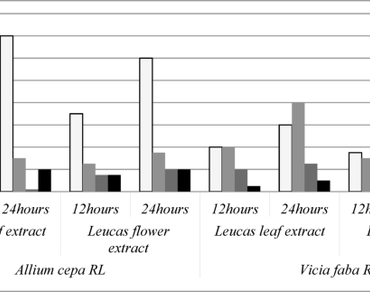
Leucas aspera is renowned for its versatile therapeutic efficacy as traditional medicine. Aqueous extracts of the plant are used in diverse herbal formulations to treat a spectrum of ailments. The prophylactic components-phenols, terpenes, flavonoids, steroids, alkaloids and glycosides; lend it antimalarial, anti-inflammatory, antioxidant, antimicrobial and anticancer properties. However, plant extract-based medicines can often be potentially phytotoxic, this makes genotoxicity assessment of Leucas aqueous extracts essential. Two widely recommended bioassays-the Allium cepa test and the Vicia faba assay were employed to investigate genotoxicity. The criteria for evaluating genotoxicity include alterations in root growth (RG) morphology, alterations in Mitotic Index (MI), abundance of chromosomal aberrations (CA), nuclear aberrations (NA), micronuclei (MN), in extract treated cells. Changes in RG, MI, CA, MN in Allium and Vicia treated with aqueous leaf and flower extract of Leucas were analyzed from a comparative viewpoint, supported by statistical analyses. Significant decrease in RG along with diminution in MI, abundance of CA, NA and MN in treated and F1 cells of both Allium and Vicia; demonstrate genotoxicity of the plant extract. Allium cepa test appeared more sensitive with higher diminution in RG, MI, and higher abundance of aberrations and F1MN. Allium cepa test proved statistically more significant than Vicia faba assay. Allium cepa test proved more sensitive and statistically significant than Vicia faba assay for the genotoxicity end points. The aqueous extract of Leucas aspera is potentially genotoxic, emphasizing the need for safety and toxicity assessment before cautious application in therapeutic contexts.
References
Antil R, Singh L, Gahlawat DK, Dahiya P (2020) Antimicrobial, phytochemical and antioxidant potential of Lamiaceae family plant: Leucas aspera (Willd.) Linn. Plant Arch 20:616–630
Arya SK, Mukherjee A (2013) Sensitivity of Allium cepa and Vicia faba towards cadmium toxicity. J Soil Sci Plant Nutr 14(2):447–458
Bagavan A, Rahuman AA, Kamaraj C, Kaushik NK, Mohanakrishnan D, Sahal D (2011) Antiplasmodial activity of botanical extracts against Plasmodium falciparum. Parasitol Res 108(5):1099–1109
Basu S, Tripura K (2021) Differential sensitivity of Allium cepa L. and Vicia faba L. to aqueous extracts of Cascabela thevetia (L.) Lippold. S Afr J Bot 139:67–78
Bonciu E, Firbas P, Fontanetti CS, Wusheng J, Karaismailoğlu MC (2018) An evaluation for the standardization of the Allium cepa test as cytotoxicity and genotoxicity assay. Caryologia 71:191–209
Bora D, Mehmud S, Das KK, Medhi H (2016) Report on folklore medicinal plants used for female health care in Assam (India). Int J Herb Med 4(6):04–13
Chetia J, Saikia LR (2020) Phytochemical analysis of Leucas aspera (Willd.) Link from Dibrugarh. J Sci Res 64(2):96–103
Chew AL, Jessica JJA, Sasidharan S (2012) Antioxidant and antibacterial activity of different parts of Leucas aspera. Asian Pac J Trop Biomed 2(3):176–180
Das SN, Patro VJ, Dinda SC (2012) Ethnobotanical survey of genus Leucas. Phcog Rev 6:100–106
Ene EE, Osuala CL (1990) The mutagenic potentials of water extract of Borreria filiformis (Hiern) Hatch and Dalz. and Vinca rosea Linn. Niger J Bot 3:35–40
Firbas P, Amon T (2014) Chromosome damage studies in the onion plant Allium cepa L. Caryologia 67(1):25–35
Fiskesjö G (1985) The Allium cepa test as a standard in environmental monitoring. Hereditas 102:99–112
Gadano AB, Gumi AA, Carballo MA (2006) Argentina folk medicine: genotoxic effects of Chenopodiaceae family. J Ethnopharmacol 103:246–251
Gani A (2003) Medicinal plants of Bangladesh: chemical constituents and uses. Asiatic Society of Bangladesh, Dhaka, pp 215–216
Gilbert B, Alves LF (2003) Synergy in plant medicines. Curr Med Chem 10:13–20
Grant WF, Salamone MF (1994) Comparative mutagenicity of chemicals selected for test in the International Program on Chemical Safety’s collaborative study on plant systems. Mutat Res 310(2):187–209
Hiremath S, Pradeep JA (2022) Leucas aspera Spreng (Dronapushpi): a review. J Ayurveda Holist Med 8(1):48–54
Hossan ANMF, Zaman F, Barman MR, Khatoon S, Zaman M, Khatun F, Mosaiab T, Mostafa F, Sintaha M, Jamal F, Rahmatullah M (2011) Antinociceptive activity of Xanthium indicum J. Koenig ex Roxb. leaves and Leucas aspera (Willd.) Link whole plants. Adv Nat Appl Sci 5(2):214–217
Kapur SK, Sarin YK (1984) Medico-botanic survey of medicinal and aromatic plants of Katra Valley (Jammu & Kashmir), India. Indian Drugs 21:4–10
Kihlman BA (1975) Root tips of Vicia faba for the study of the induction of chromosomal aberrations. Mutat Res 31:401–412
Kundu LM, Ray S (2017) Mitotic abnormalities and micronuclei inducing potentials of colchicine and Clerodendrum viscosum leaf extracts in Allium cepa. Caryologia 70(1):7–14
Latha B, Rumaisa Y, Soumya CK, Shahul S, Sadhiya N (2013) Phytochemical studies on Leucas aspera. J Chem Pharm Res 5(4):222–228
Leme DM, Marin-Morales MA (2009) Allium cepa test in environmental biomonitoring: a review. Mutat Res 682:71–81
Ma TH, Xu Z, Xu C, McConnell H, Rabago EV (1995) The improved Allium/Vicia root tip micronucleus assay for clastogenicity of environmental pollutants. Mutat Res 334:185–195
Mominul IAKM, Kato-Noguchi H (2012) Allelopathic potentiality of medicinal plant Leucas aspera. Int J Sustain Agric 4(1):01–07
Mominul IAKM, Ohno O, Suenaga K, Kato-Noguchi H (2014) Two novel phytotoxic substances from Leucas aspera. J Plant Physiol 171:877–883
Nefic H, Musanovic J, Metovic A, Kurteshi K (2013) Chromosomal and nuclear alterations in root tip cells of Allium cepa L. induced by alprazolam. Med Arch 67:388–392
Oyedare BM, Bakare AA, Akinboro A (2009) Genotoxicity assessment of water extracts of Ocimum gratissimum, Morinda lucida and Citrus medica using the Allium cepa assay. Bol Latinoam Caribe Plant Med Aromat 8(2):103
Paes-Leme AA, Motta ES, de Mattos JCP, Dantas FJS, Bezerra RJA (2005) Assessment of Aloe vera genotoxic potential. J Ethnopharmacol 102:197–201
Panda BB, Sahu UK (1985) Induction of abnormal spindle function and cytokinesis inhibition in Allium cepa by fensulfothion. Cytobios 42:147–155
Parimaladevi ST, David RC, Sudha V, Brindha P (2014) GC–MS analysis and in vitro cytotoxicity and antioxidant studies on Leucas aspera. Asian J Chem 26:3675–3678
Patil N, Somashekar HS, Reddy SK, Nayak V, Narendranath S, Bairy KL (2014) Anti-inflammatory activity of Leucas aspera leaves in rats. Int J Pharm Pharm Sci 6:715–719
Prajapati MS, Patel MS, Modi K, Shah MB (2010) Leucas aspera: a review. Phcog Rev 4(7):85–87
Prasadacharyulu CHS (2014) Medicinal plants as sources of herbal medicines. Int J Ayur Herb Med 4(3):1509–1519
Pushpangadan P, Atal CK (1984) Ethno-medico-botanical investigations in Kerala. J Ethnopharmacol 11:59–77
Rahman MA, Islam MS (2013) Antioxidant, antibacterial and cytotoxic effects of Leucas aspera. Asian Pac J Trop Biomed 3(4):273–279
Rahman MS, Sadhu SK, Hasan CM (2007) Preliminary antinociceptive, antioxidant and cytotoxic activities of Leucas aspera root. Fitoterapia 78:552–555
Rai V, Agarwal M, Agnihotri AK, Khatoon S, Rawat AK, Mehrotra S (2005) Pharmacognostical evaluation of Leucas aspera. Nat Prod Sci 11:109–114
Rank J, Nielsen MH (1997) Allium cepa anaphase–telophase chromosome aberration assay. Mutat Res 390:121–127
Sadhu SK, Okuyama E, Fujimoto H, Ishibashi M (2006) Diterpenes from Leucas aspera. J Nat Prod 69:988–994
Samuelsson G, Farah MH, Claeson P, Hagos M, Thulin M, Hedberg O (1992) Inventory of plants used in traditional medicine in Somalia. J Ethnopharmacol 37:47
Shanmugam S, Manikandan K, Rajendran K (2009) Ethnomedicinal survey in Tamil Nadu. Ethnobot Leafl 13:189–194
Sharma AK, Sharma A (1980) Chromosomal technique: theory and practice, 3rd edn. Butterworths, London
Sheela A, Thoppil JE (2017) Evaluation of cytotoxicity of the aqueous leaf extract of Pogostemon heyneanus Benth. (Java patchouli). Biotropia 24:28–34
Singh MP, Gindha GS (2017) Leucas aspera: a perfect poor man’s remedy. J Pharmacogn Phytochem 6(1):275–277
Smaka-Kincl V, Stegnar P, Lovka M, Toman MJ (1996) Evaluation of water quality using the Allium test. Mutat Res 368:177–179
Sponchiado G, Adam ML, Silva CD, Soley BS, de Mello-Sampayo C (2016) Quantitative genotoxicity assays for medicinal plants. J Ethnopharmacol 178:289–296
Sudhakar R, Gowda KNN, Venu G (2001) Mitotic abnormalities induced by industrial effluents. Cytologia 66:235–239
Sumitha KV, Thoppil JE (2016) Genotoxicity assessment of two common curing weeds: Hyptis suaveolens (L.) Poir. and Leucas indica (L.) R. Br. Cytotechnology 68:1513–1527
Suruthi M, Sivabalakrishnan S, Yuvasri G, Ragunathan R, Johney J (2016) Antioxidant and anticancer activity of Leucas aspera. Res J Life Biol Pharm Chem Sci 2:1–9
Tambe VD, Tambe VB, Jadhav RS (2016) Diuretic and laxative properties of Leucas aspera. Asian J Pharm Clin Res 9(4):118–121
Tarkowska JA (1971) Antimitotic action of Nerium oleander glycosides. Hereditas 67:205–212
Udo IJ, Akpan GA, Esenowo IK (2014) Cytotoxic effects of five medicinal plants on mitosis in Allium cepa root tips. Curr Res J Biol Sci 6(2):71–75
Üstündağ Ü, Macar O, Kalefetoğlu MT (2023) Effect of Melissa officinalis L. leaf extract on manganese-induced cyto-genotoxicity in Allium cepa L. Sci Rep 13:22110
Venkatesan C, Sarathi M, Balasubramanian G et al (2014) Antivenom activity of triterpenoid from Leucas aspera. Hum Exp Toxicol 33(4):336–359
Wang H, Chen Y, Wang L, Liu Q, Yang S, Wang C (2023) Advancing herbal medicine through robust quality control. Front Pharmacol 14:1265178. https://doi.org/10.3389/fphar.2023.1265178
Wierzbicka M (1999) Effect of lead on the cell cycle in Allium cepa. Protoplasma 207:186–194
Wu L, Yi H, Yi M (2010) Assessment of arsenic toxicity using Allium/Vicia assays. J Hazard Mater 176:952–956
Author Information
Department of Botany, Tripura University, Suryamaninagar, Agartala, India