Vegetos

(An International Journal of Plant Research & Biotechnology)
(eISSN: 2229-4473)
Green-synthesized ZnO nanoparticles for sustaining cucumber performance under extreme thermal conditions in high-altitude uncontrolled greenhouses
*Article not assigned to an issue yet
Kaymak Haluk Ç., Kul Raziye, Tira?ci Serpil, Nadaro?lu Hayrunnisa
Research Articles | Published: 14 October, 2026
First Page: 0
Last Page: 0
Views: 127
Keywords: ZnO foliar application, Cucumber, Sustainable agriculture, Yield, Nutrition
Abstract
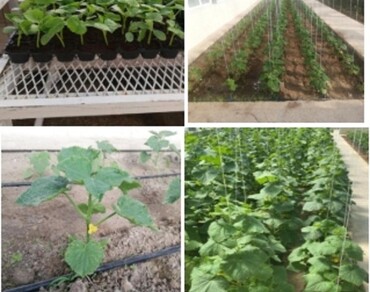
This study aimed to evaluate the dose-dependent effect of green synthesized ZnO nanoparticles (NPs) on the performance of cucumber (Cucumis sativus L.) under extreme thermal conditions (peaking at 52.1 °C and exceeding 35 °C for 3.1 to 7.6 h) in uncontrolled high-altitude greenhouses. The experiment was conducted according to a fully randomized experimental design with three replicates, each containing 20 plants. The effect of ZnO NP application was evaluated using foliar spray applications at four different concentrations (0, 25, 50, and 75 mg L?1 ZnO). The applications significantly affected yield, fruit length, number of fruits per plant, fruit weight, dry matter content, pH, Zn, Ca, and Fe. The results showed that ZnO NP applications significantly increased yield, fruit length, number of fruits per plant, and fruit weight in comparison with control. Highest ZnO NP concentration (75 mg L?1) gave the best results regarding productivity with a 34% increase in yield and a 28% increase in the number of fruits per plant. Parallel improvements were also seen in morphological parameters, with 75 mg L?1 ZnO application increasing fruit length by 13% and average fruit weight by 8% compared to the control. On the other hand, 75 mg L?1 ZnO NP altered the nutrient uptake balance, increasing fruit Zn and Ca by 106% and 30% respectively, and decreasing Fe by 43%. In conclusion, green synthesized ZnO nanoparticles effectively stabilize performance and maintain nutrient status in cucumbers at extreme temperatures, serving as a sustainable strategy for enhancing crop resilience in high-altitude, uncontrolled greenhouses.
References
Abou El-Nasr MK, Hassan KM, Abd-Elhalim BT, Kucher DE, Rebouh NY, Ansabayeva A, Abdelkader M, Ali MAA, Nasser MA (2025) The emerging roles of nanoparticles in managing the environmental stressors in horticulture crops—a review. Plants 14:2192. https://doi.org/10.3390/plants14142192
Abou El-Nasr MK, Hassan KM, Abdelhamid AN, Abdelkader M, Nasser MA, Abdul-Hafeez EY, Ali MAA (2026) Sustainable production of solanaceous vegetable crops under climate change: the role of nanoparticles in enhancing abiotic stress adaptation. Sustainability 18:2456
Ahmed R, Uddin MK, Quddus MA, Samad MYA, Hossain MM, Haque ANA (2023) Impact of foliar application of zinc and zinc oxide nanoparticles on growth, yield, nutrient uptake and quality of tomato. Horticulturae 9(2):162. https://doi.org/10.3390/horticulturae9020162
Astafurova TP, Burenina AA, Suchkova SA, Zotikova ABP, Kulizhskiy SP, Morgalev Y (2017) Influence of ZnO and Pt nanoparticles on cucumber yielding capacity and fruit quality. Nano Hybrids Compos 13:142–148. https://doi.org/10.4028/www.scientific.net/NHC.13.142
Azameti MK, Imoro AWM (2023) Nanotechnology: a promising field in enhancing abiotic stress tolerance in plants. Crop Design 2(2):100037. https://doi.org/10.1016/j.cropd.2023.100037
Azmat A, Tanveer Y, Yasmin H et al (2022) Coactive role of zinc oxide nanoparticles and plant growth promoting rhizobacteria for mitigation of synchronized effects of heat and drought stress in wheat plants. Chemosphere 297:133982. https://doi.org/10.1016/j.chemosphere.2022.133982
Chaudhary S, Devi P, HanumanthaRao B et al (2022) Physiological and molecular approaches for developing thermotolerance in vegetable crops: a growth, yield and sustenance perspective. Front Plant Sci 13:878498. https://doi.org/10.3389/fpls.2022.878498
El-Ramady H, Prokisch J, El-Mahrouk ME, Bayoumi YA, Shalaby TA, Brevik EC, Solberg SØ (2024) Nano-food farming approaches to mitigate heat stress under ongoing climate change: a review. Agriculture 14:656. https://doi.org/10.3390/agriculture14050656
El-Remaly E (2023) Morphological, physio-biochemical, and molecular indications of heat stress tolerance in cucumber. Sci Rep 13:18729
Ergin S, Aydogan C, Turhan E (2021) Physiological effects of high temperature stress in some cucurbit plants. Curr Trends Nat Sci 10(19):235–245. https://doi.org/10.47068/ctns.2021.v10i19.031
Francisco MD, Fernandes-Silva P, Duraes L, Romeiro A, Alvarez-Torrellas S, Almendros P (2024) Influence of the application of different zinc oxide nanoparticles on a lettuce crop grown in an acidic Mediterranean soil. Horticulturae 10(7):681. https://doi.org/10.3390/horticulturae10070681
Garza-Alonso CA, Juárez-Maldonado A, González-Morales S et al (2023) ZnO nanoparticles as potential fertilizer and biostimulant for lettuce. Heliyon. https://doi.org/10.1016/j.heliyon.2022.e12787
Ge H, Zhang F (2019) Growth-promoting ability of Rhodopseudomonas palustris G5 and its effect on induced resistance in cucumber against salt stress. J Plant Growth Regul 38(1):180–188. https://doi.org/10.1007/s00344-018-9825-8
Guzel Deger A, Çevik S, Kahraman O, Turunc E, Yakin A, Binzet R (2025) Effects of green and chemically synthesized ZnO nanoparticles on Capsicum annuum under drought stress. Acta Physiol Plant 47(2):17. https://doi.org/10.1007/s11738-025-03767-8
Hacisalihoglu G, Kochian LV (2003) How do some plants tolerate low levels of soil zinc? Mechanisms of zinc efficiency in crop plants. New Phytol 159(2):341–350. https://doi.org/10.1046/j.1469-8137.2003.00826.x
Hassan NS, Salah El Din TA, Hendawey MH, Borai IH, Mahdi AA (2018) Magnetite and zinc oxide nanoparticles alleviated heat stress in wheat plants. Curr Nanomater 3(1):32–43. https://doi.org/10.2174/2405461503666180619160923
Hong J, Wang L, Sun Y et al (2016) Foliar applied nanoscale and microscale CeO2 and CuO alter cucumber (Cucumis sativus) fruit quality. Sci Total Environ 563:904–911. https://doi.org/10.1016/j.scitotenv.2015.08.029
Imtiaz M, Alloway BJ, Shah KH et al (2003) Zinc nutrition of wheat: II: interaction of zinc with other trace elements. Asian J Plant Sci. https://doi.org/10.3923/ajps.2003.156.160
IPCC (2023) Summary for policymakers. In: Lee H, Romero J (eds) Climate change 2023: synthesis report. Contribution of working groups I, II and III to the sixth assessment report of the Intergovernmental Panel on Climate Change. IPCC, Geneva, pp 1–34. https://doi.org/10.59327/IPCC/AR6-9789291691647.001
Jayara AS, Dangwal A, Kumar R, Pandey P (2025) Utilization of nanotechnology for mitigation of drought and heat stress in crop plants. In: Dubey R, Pathak H, Chakrabarti B, Singh S, Gupta DK, Harit RC (eds) Drought and heat stress in agriculture: implications, mitigation and policy approaches. Springer Nature Singapore, pp 315–328. https://doi.org/10.1007/978-981-96-5735-3_13
Kareem HA, Hassan MU, Zain M et al (2022a) Nanosized zinc oxide (n-ZnO) particles pretreatment to alfalfa seedlings alleviate heat-induced morpho-physiological and ultrastructural damages. Environ Pollut 303:119069
Kareem HA, Saleem MF, Saleem S et al (2022b) Zinc oxide nanoparticles interplay with physiological and biochemical attributes in terminal heat stress alleviation in mungbean (Vigna radiata L.). Front Plant Sci 13:842349
Kaymak HÇ, Güvenç ? (2003) The effect of planting times on the growth and yield of cucumber grown in a high tunnel in Erzurum conditions. Atatürk Univ J Agric Fac 34(4):317–319
Kumari A, Tapwal A, Kumar A (2024) Influence of nanoparticles in orchestrating plant growth and development. Nanotechnology: agriculture, environment and health. Springer Nature, Singapore, pp 75–92
Li S, Liu J, Wang Y et al (2021) Comparative physiological and metabolomic analyses revealed that foliar spraying with zinc oxide and silica nanoparticles modulates metabolite profiles in cucumber (Cucumis sativus L.). Food Energy Secur 10:e269. https://doi.org/10.1002/fes3.269
Mertens D (2005) Plants preparation of laboratory sample. In: Horwitz W, Latimer GW (eds) Official methods of analysis, 18th edn, ch 3. AOAC International Suite, Gaithersburg, pp 1–2
Mertens D (2005) Metal in plants and pet foods. In: Horwitz W, Latimer GW (eds) Official methods of analysis, 18th edn, ch 3. AOAC International Suite, Gaithersburg, pp 3–4
Minello LVP, Kuntzler SG, Berghahn E, Dorneles LT, Ricachenevsky FK, Sperotto RA (2025) Nanotechnology-driven biofortification of Fe, Zn, and Se in edible plants. J Nanobiotechnol 23:669. https://doi.org/10.1186/s12951-025-03746-8
Mondal S, Karmakar S, Panda D et al (2023) Crucial plant processes under heat stress and tolerance through heat shock proteins. Plant Stress 10:100227. https://doi.org/10.1016/j.stress.2023.100227
Nadaroglu H, Onem H, Alayli Gungor A (2017) Green synthesis of Ce2O3 NPs and determination of its antioxidant activity. IET Nanobiotechnol 11:411–419. https://doi.org/10.1049/iet-nbt.2016.0138
Nejatian A, Al Rawahy M, Niane AA et al (2024) Renewable energy and net house integration for sustainable cucumber crop production in the Arabian Peninsula: Extending growing seasons and reducing resource use. J Sustain Res. https://doi.org/10.20900/jsr20240038
Palangi V, Macit M, Nadaroglu H, Taghizadeh A (2022) Effects of green-synthesized CuO and ZnO nanoparticles on ruminal mitigation of methane emission to the enhancement of the cleaner environment. Biomass Convers Biorefin. https://doi.org/10.1007/s13399-022-02775-9
Parveen N, Khan AH, Tahir M et al (2023) Understanding heat tolerance in vegetables: Physiological and molecular insights, and contemporary genomic approaches for enhancing heat stress resilience. J Hortic Sci 18(2):245
Prokisch J, Ferroudj A, Labidi S, El-Ramady H, Brevik EC (2024) Biological nano-agrochemicals for crop production as an emerging way to address heat and associated stresses. Nanomaterials (Basel) 14:1253. https://doi.org/10.3390/nano14151253
Qi M, Liu Y, Li T (2013) Nano-TiO2 improve the photosynthesis of tomato leaves under mild heat stress. Biol Trace Elem Res 156(1):323–328. https://doi.org/10.1007/s12011-013-9833-2
Qin Q, Wang QL, Adeel M, Li Z, Liu XY, Zhang T, Rui Y (2026) Multidimensional regulation mechanism and research progress of nanofertilizers on vegetable quality. J Agric Food Chem 74:127–144. https://doi.org/10.1021/acs.jafc.5c11405
Ruttkay-Nedecky B, Krystofova O, Nejdl L, Adam V (2017) Nanoparticles based on essential metals and their phytotoxicity. J Nanobiotechnol 15(1):33. https://doi.org/10.1186/s12951-017-0268-3
Seleiman MF, Al-Selwey WA, Ibrahim AA, Shady M, Alsadon AA (2023) Foliar applications of ZnO and SiO2 nanoparticles mitigate water deficit and enhance potato yield and quality traits. Agronomy 13(2):466. https://doi.org/10.3390/agronomy13020466
Shalaby TA, Abd-Alkarim E, El-Aidy F et al (2021) Nano-selenium, silicon and H2O2 boost growth and productivity of cucumber under combined salinity and heat stress. Ecotoxicol Environ Saf 212:111962. https://doi.org/10.1016/j.ecoenv.2021.111962
Shoukat A (2025) Nanofertilizers and stress management: emerging opportunities for climate-resilient farming. Agrobiol Rec 22:73–88. https://doi.org/10.47278/journal.abr/2025.050
Shoukat A, Pitann B, Zafar MM, Farooq MA, Haroon M, Nawaz A, Wahab SW, Saqib ZA (2024) Nanotechnology for climate change mitigation: enhancing plant resilience under stress environments. J Plant Nutr Soil Sci 187:604–620. https://doi.org/10.1002/jpln.202300295
Toprak S, Co?kun ÖF (2026) Heat stress mitigation by zinc oxide nanoparticles in pepper and watermelon. BMC Agric 2(2):e2. https://doi.org/10.1186/s44399-025-00024-8
Ul-haq R, Kausar A, Hussain S et al (2023) Zinc oxide nanoparticles as potential hallmarks for enhancing drought stress tolerance in wheat seedlings. Plant Physiol Biochem 195:341–350. https://doi.org/10.1016/j.plaphy.2023.01.014
Uresti-Porras JG, Cabrera-de la Fuente M, Benavides-Mendoza A, Sandoval-Rangel A, Zermeño-González A, Cabrera RI, Ortega-Ortíz H (2021) Foliar application of zinc oxide nanoparticles and grafting improves the bell pepper (Capsicum annuum L.) productivity grown in NFT system. Notulae Botanicae Horti Agrobotanici Cluj-Napoca 49(2):12327. https://doi.org/10.15835/nbha49212327
Yu B, Yan S, Zhou H et al (2018) Overexpression of CsCaM3 improves high temperature tolerance in cucumber. Front Plant Sci 9:797. https://doi.org/10.3389/fpls.2018.00797
Zhao X, Nishimura Y, Fukumoto Y, Li J (2011) Effect of high temperature on active oxygen species, senescence and photosynthetic properties in cucumber leaves. Environ Exp Bot 70:212–216. https://doi.org/10.1016/j.envexpbot.2010.09.005
Zhao L, Peralta-Videa JR, Rico CM et al (2014) CeO2 and ZnO nanoparticles change the nutritional qualities of cucumber (Cucumis sativus). J Agric Food Chem 62(13):2752–2759. https://doi.org/10.1021/jf405476u
Zhao Q, Qin M, Lang S, Qin M, Liu L, Li Q, Zhang D, Li L (2025) Concentration-dependent effects of foliar ZnO nanoparticles on growth and nutrient use in young crabapple plants. Horticulturae 11:1535. https://doi.org/10.3390/horticulturae11121535
Ghani MI, Saleem S, Rather SA, Rehmani MS, Alamri S, Rajput VD, Kalaji HM, Saleem N, Sial TA, Liu M (2022) Foliar application of zinc oxide nanoparticles: An effective strategy to mitigate drought stress in cucumber seedling by modulating antioxidant defense system and osmolytes accumulation. Chemosphere 289:133202 https://doi.org/10.1016/j.chemosphere.2021.133202
Zhao L, Sun Y, Hernandez-Viezcas JA, Servin AD, Hong J, Niu G, Peralta-Videa JR, Duarte-Gardea M, Gardea-Torresdey JL (2013) Influence of CeO? and ZnO nanoparticles on cucumber physiological markers and bioaccumulation of Ce and Zn: a life cycle study. J Agric Food Chem 61(49):11945–11951 https://doi.org/10.1021/jf404328e
Wan J, Wang R, Bai H, Wang Y, Xu J (2020) Comparative physiological and metabolomics analysis reveals that single-walled carbon nanohorns and ZnO nanoparticles affect salt tolerance in Sophora alopecuroides. Environmental Science: Nano 7(10):2968–2981 https://doi.org/10.1039/D0EN00582G
López-Vargas E, Ortega-Ortíz H, Cadenas-Pliego G, De Alba Romenus K, Cabrera de la Fuente M, Benavides-Mendoza A, Juárez-Maldonado A (2018) Foliar application of copper nanoparticles increases the fruit quality and the content of bioactive compounds in tomatoes. Applied Sciences 8:1020 https://doi.org/10.3390/app8071020
Suriyaprabha R, Karunakaran G, Yuvakkumar R, Prabu P, Rajendran V, Kannan N (2012) Growth and physiological responses of maize (Zea mays L.) to porous silica nanoparticles in soil. Journal of Nanoparticle Research 14(12):1294 https://doi.org/10.1007/s11051-012-1294-6
Author Information
Department of Horticulture, Agricultural Faculty, Atatürk University, Erzurum, Turkey