Vegetos

(An International Journal of Plant Research & Biotechnology)
(eISSN: 2229-4473)
Histo-anatomical studies on induced water stress with virus infection on xylem tissues of okra (Abelmoschus esculentus L. Moench) cultivars
*Article not assigned to an issue yet
Ayeh Kwadwo Owusu, Amadu Ayisha Marfo, Poku Samuel Aduse, Asamoah Frederick Karikari, Elegba Wilfred, Azu Elaine, Nunekpeku Wonder, Appiah Andrews Sarkodie, Azu Elaine, Azu Elaine
Research Articles | Published: 04 July, 2026
First Page: 0
Last Page: 0
Views: 26
Keywords: Water stress, Morphology, Histo-analytical, Xylem, Vascular bundle
Abstract
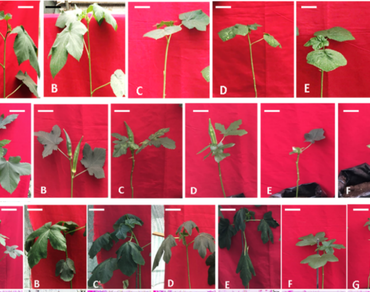
Human-induced climate change and its associated drought will continue to reduce crop productivity causing food insecurity. Thus, the effect of drought on economically important food crops is worth studying. We therefore studied the effect of water stress with or without virus infection on three okra cultivars using morphological and histo-anatomical examinations of xylem tissues. Plants inoculated with viruses were subjected to normal watering, moderate watering and severe drought; non-virus inoculated plants served as controls. Leaf tissues of virus-treated, and non-treated plants were prepared for histo-anatomical studies. After pretreatment preparations, thin sections (5 µm) of the embedded leaf tissues were cut using a microtome, stained with haematoxylin and micrographed using a bright field microscope. Leaves of water stressed plants showed varying morphological effects ranging from drooping to reduced leaf size. The histo-analytical examination revealed that water stress significantly (P < 0.001, F = 47.15) decreased the size of the xylem tissues in all three cultivars compared to the controls. The size of the xylem was further decreased when the leaves were inoculated with the virus. The size of ‘Rafiki’ and ‘Essoumtem’ xylem tissues indicates that they were least sensitive to the water stress applied and could be considered drought-tolerant cultivars for use in okra improvement programmes.
References
Amadu AM, Appiah AS, Ayeh KO (2023) Differential biotic and abiotic induced stress levels confer varying morphological responses in okra (Abelmoschus esculentus L. Moench) cultivars. Asian J Biol Sci 16(3):302–321. https://doi.org/10.3923/ajbs.2023.302.321
Aranjuelo I, Molero G, Erice G, Avice JC, Nogués S (2010) Plant physiology and proteomics reveals the leaf response to drought in alfalfa (Medicago sativa L.). J Exp Bot 62:111–123. https://doi.org/10.1093/jxb/erq249
Ashraf M, Harris PJC (2013) Photosynthesis under stressful environments: an overview. Photosynthetica 51:163–190. https://doi.org/10.1007/s11099-013-0021-6
Gemede HF, Ratta N, Haki GD, Woldegiorgis AZBF (2015) Nutritional quality and health benefits of okra (Abelmoschus esculentus): a review. J Food Process Technol 6:6. https://doi.org/10.11648/j.ijnfs.20150402.22
Guda M, Taher M, Almayahi B (2019) Anatomical characteristics of vascular bundles associated with heat tolerance in Phragmites australis. An Univ Oradea Fasc Biol XXVI(2):136–139
Hemantaranjan A (2018) Molecular physiology of abiotic stresses in plant productivity. Scientific Publishers, Jothpur
Hosseini MS, Samsampour D, Ebrahimi M, Abadía J, Khanahmadi M (2018) Effect of drought stress on growth parameters, osmolyte contents, antioxidant enzymes and glycyrrhizin synthesis in licorice (Glycyrrhiza glabra L.) grown in the field. Phytochemistry 156:124–134. https://doi.org/10.1016/j.phytochem.2018.08.018
Hull R (2009) Mechanical inoculation of plant viruses. Curr Protoc Microbiol 13(1):16B-B26
Jagdale SS, Joshi RS (2018) Enemies with benefits: mutualistic interactions of viruses with lower eukaryotes. Adv Virol 163(4):821–830
Jež-Krebelj A, Rupnik-Cigoj M, Stele M, Chersicola M, Pompe-Novak M, Sivilotti P (2022) The physiological impact of GFLV virus infection on grapevine water status: first observations. Plants Basel 11(2):161. https://doi.org/10.3390/plants11020161
Kappagantu M, Collum TD, Dardick C, Culver JN (2020) Viral hacks of the plant vasculature: The role of phloem alterations in systemic virus infection. Annu Rev Virol 7(1):351–370. https://doi.org/10.1146/annurev-virology-010320-072410
Koyro HW, Ahmad P, Geissler N (2012). Abiotic stress responses in plants: an overview. In: Environmental adaptations and stress tolerance of plants in the era of climate change. Springer. https://doi.org/10.1007/978-1-4614-0815-4_1
Lee Y, Ayeh KO, Ambrose M, Hvoslef-Eide AK (2016) Immunolocalization of pectic polysaccharides during abscission in pea seeds (Pisum sativum L.) and in abscission less def pea mutant seeds. BMC Res Notes 9(1):427. https://doi.org/10.1186/s13104-016-2231-z
Lovisolo C, Andrea S (1998) Effects of water stress on vessel size and xylem hydraulic conductivity in Vitis vinifera L. J Exp Bot 49(321):693–700. https://doi.org/10.1093/jxb/49.321.693
Makbul S, Güler NS, Durmuş N, Güven S (2011) Changes in anatomical and physiological parameters of soybean under drought stress. Turk J Bot 35:369–377. https://doi.org/10.3906/bot-1002-7
Martín JA, Esteban LG, de Palacios P, García Fernández F (2010) Variation in wood anatomical traits of Pinus sylvestris L. between Spanish regions of provenance. Trees Berl 24:1017–1028. https://doi.org/10.1007/s00468-010-0471-4
Martre P, Durand JL, Cochard H (2000) Changes in axial hydraulic conductivity along elongating leaf blades in relation to xylem maturation in tall fescue. New Phytol 146(2):235–247. https://doi.org/10.1046/j.1469-8137.2000.00641.x
Mkhabela SS, Shimelis H, Gerrano AS, Mashilo J, Shayanowako A (2022) Characterization of okra (Abelmoschus esculentus L.) accessions with variable drought tolerance through simple sequence repeat markers and phenotypic traits. Diversity Basel 14(9):747. https://doi.org/10.3390/d14090747
Nardini A, Lo Gullo MA, Trifilò P, Salleo S (2014) The challenge of the Mediterranean climate to plant hydraulics: responses and adaptations. Environ Exp Bot 103:68–79. https://doi.org/10.1016/j.envexpbot.2013.09.018
Naylor D, Coleman-Derr D (2018) Drought stress and root-associated bacterial communities. Front Plant Sci 8:2223. https://doi.org/10.3389/fpls.2017.02223
Nyalugwe EP, Barbetti MJ, Clode PL, Jones RAC (2016) Systemic hypersensitive resistance to turnip mosaic virus in Brassica juncea is associated with multiple defense responses, especially phloem necrosis and xylem occlusion. Plant Dis 100:1261–1270. https://doi.org/10.1094/pdis-12-15-1459-re
Olson ME (2022) Linking xylem structure and function: the comparative method in from the cold. New Phytol 235(3):815. https://doi.org/10.1111/nph.18179
Pandey P, Irulappan V, Bagavathiannan MV, Senthil-Kumar M (2017) Impact of combined abiotic and biotic stresses on plant growth and avenues for crop improvement by exploiting physio-morphological traits. Front Plant Sci 8:537. https://doi.org/10.3389/fpls.2017.00537
Pandey P, Ramegowda V, Senthil-Kumar M (2015) Shared and unique responses of plants to multiple individual stresses and stress combinations: physiological and molecular mechanisms. Front Plant Sci 6:723. https://doi.org/10.3389/fpls.2015.00723
Paulmann MK, Kunert G, Zimmermann MR, Theis N, Ludwig A, Meichsner D, Oelmüller R, Gershenzon J, Habekuss A, Ordon F, Furch ACU, Will T (2018) Barley yellow dwarf virus infection leads to higher chemical defense signals and lower electrophysiological reactions in susceptible compared to tolerant barley genotypes. Front Plant Sci 9:145. https://doi.org/10.3389/fpls.2018.00145
Prasch CM, Sonnewald U (2013) Simultaneous application of heat, drought, and virus to Arabidopsis thalania plants reveals significant shifts in signaling networks. Plant Physiol 162(4):1849–1866. https://doi.org/10.1104/pp.113.221044
Pravisya P, Jayaram KM, Yusuf A (2018) Biotic priming with Pseudomonas fluorescens induces drought stress tolerance in Abelmoschus esculentus (L.) Moench (Okra). Physiol Mol Biol Plants 25(1):101–112. https://doi.org/10.1007/s12298-018-0621-5
Qaderi MM, Martel AB, Dixon SL (2019) Environmental factors influence plant vascular system and water regulation. Plants 8:65. https://doi.org/10.3390/plants8030065
Reusche M, Thole K, Janz D, Truskina J, Rindfleisch S, Drübert C, Polle A, Lipka V, Teichmann T (2012) Verticillium infection triggers VASCULAR-RELATED NAC DOMAIN7-dependent de novo xylem formation and enhances drought tolerance in Arabidopsis. Plant Cell 24(9):3823–3837. https://doi.org/10.1105/tpc.112.103374
Salsinha YCF, Maryani ID et al (2021) Leaf physiological and anatomical characters contribute to drought tolerance of Nusa Tenggara Timur local rice cultivars. J Crop Sci Biotechnol 24:337–348. https://doi.org/10.1007/s12892-020-00082-1
Sayed KA, Ali MB, Ibrahim KA, Kheiralla KA, El-Hifny MZ (2022) Response of flowering traits to water stress in yellow maize (Zea mays L.) using line× tester analysis. Egypt J Agron 44(2):131–161. https://doi.org/10.21608/agro.2022.155493.1331
Sun Y, Wang C, Chen HYH, Ruan H (2020) Response of plants to water stress: a meta analysis. Front Plant Sci 11:978. https://doi.org/10.3389/fpls.2020.00978
van Munster M, Yvon M, Vile D, Dader B, Fereres A, Blanc S (2017) Water deficit enhances the transmission of plant viruses by insect vectors. PLoS ONE 12(5):e0174398. https://doi.org/10.1371/journal.pone.0174398
Xu P, Chen F, Mannas JP, Feldman T, Sumner LW, Roossinck MJ (2008) Virus infection improves drought tolerance. New Phytol 180:911–921
Yang X, Lu M, Wang Y, Wang Y, Liu Z, Chen S (2021) Response mechanism of plants to drought stress. Horticulturae 7:50. https://doi.org/10.3390/horticulturae7030050
Zimmermann MH (1983) Xylem structure and the ascent of sap. Spinger-Verlag, Berlin, p 143
Author Information
Department of Plant and Environmental Biology, School of Biological Sciences, University of Ghana-Legon, Legon, Ghana