Vegetos

(An International Journal of Plant Research & Biotechnology)
(eISSN: 2229-4473)
Introduction of saffron in non-traditional areas of Jammu & Kashmir in India: farmers’ perspective for policy makers
Short Communications | Published: 29 August, 2025
First Page: 818
Last Page: 823
Views: 485
Keywords: Saffron, Crocus sativus, Climate change, Survey, Farmers
Abstract
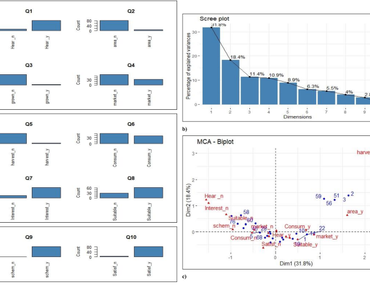
Saffron occupies a vital place in the agricultural scenario of Jammu and Kashmir, India. India ranks only second to Iran in saffron production, yet it ranks twelfth among global saffron exporters. Therefore, we need to explore ways to promote both its production and export. Traditional saffron areas of Jammu and Kashmir are not able to meet the local demand within India, and therefore India imports saffron of around 88 tons per annum, causing an expenditure of US$ 38.2 million to the exchequer. This trend can be reversed by introducing saffron in non-traditional areas of J&K. Herein, we discuss the issue from the perspective of farmers of the non-traditional areas involved in saffron on-farm trials in 16 districts of J&K. While the environmental suitability of an area with respect to its climate is the prime requisite for growing saffron, however, the ‘know-how’ of farmers regarding the management practices involved in the cultivation-module of this peculiar crop (saffron) is vital for its successful introduction in the non-traditional areas. Saffron cultivation involves several unique practices, and our study revealed a low level of knowledge among the farmers of new areas about these practices. However, the most encouraging observation was that the respondents expressed a willingness to grow saffron in new areas, provided some government-sponsored schemes are set up to support them.
References
Abdi H, Valentin D (2007) Multiple correspondence analysis. Encyclopedia Meas Stat 2(4):651–657
Babu SC, Glendenning CJ (2019) Information needs of farmers: A systemic study based on farmer surveys. Agricultural extension reforms in South Asia. Elsevier, pp 101–139
Husaini A, Bhat M, Kamili A, Mir M (2013) Kashmir saffron in crisis. Curr Sci 104(6):686–687
Husaini AM (2014) Challenges of climate change: Omics-based biology of saffron plants and organic agricultural biotechnology for sustainable saffron production. GM Crops Food 5(2):97–105. https://doi.org/10.4161/gmcr.29436
Husaini AM, Hassan B, Ghani MY, Teixeira da Silva J, Kirmani NA (2010) Saffron (Crocus sativus Kashmirianus) cultivation in kashmir: practices and problems. Funct Plant Sci Biotechnol 4(2):108–115. http://www.globalsciencebooks.info/Online/GSBOnline/images/2010/FPSB_4(SI2)/FPSB_4(SI2)108-115o.pdf
Husaini AM, Wani AB (2020) Prospects of organic saffron kitchen gardens as a source of phytochemicals for boosting immunity in common households of semi-arid regions: A case study of trans-Himalayan Kashmir Valley. J Pharmacognosy Phytochemistry 9(6):237–243. https://doi.org/10.22271/phyto.2020.v9.i6d.12889
Kumar A, Devi M, Kumar R, Kumar S (2022) Introduction of high-value crocus sativus (saffron) cultivation in non-traditional regions of India through ecological modelling. Sci Rep 12(1):11925
Magotra S, Bhagat N, Ambardar S, Ali T, Hurek BR, Hurek T, Verma PK, Vakhlu J (2021) Field evaluation of PGP Bacillus sp. strain D5 native to crocus sativus, in traditional and Non traditional areas, and mining of PGP genes from its genome. Sci Rep 11(1):5454
Naik S, Bharti N, Mir SA, Nehvi FA, Husaini AM (2024) Microbial interactions modify saffron traits selectively and modulate immunity through adaptive antioxidative strategy: organic cultivation modules should be trait and crop-specific. Ind Crops Prod 222:119521. https://doi.org/10.1016/j.indcrop.2024.119521
Pennings JM, Irwin SH, Good DL (2002) Surveying farmers: A case study. Appl Economic Perspect Policy 24(1):266–277
Sheikh SA, Wani AB, Khan F, Khan I, Bhat JI, Husaini AM (2023) Exploring Crocus sativus L. cultivation in new areas of North-Western Himalayas: the quality of saffron is location dependent. SKUAST J Res 25(1):82–89 https://doi.org/10.5958/2349-297X.2023.00009.0
Author Information
Genome Engineering and Societal Biotechnology Lab, Division of Plant Biotechnology, SKUAST-K, Shalimar, Srinagar, India