Vegetos

(An International Journal of Plant Research & Biotechnology)
(eISSN: 2229-4473)
Manihot esculenta crantz: insights on food, industrial applications and trade challenges
*Article not assigned to an issue yet
Review Article | Published: 27 May, 2026
First Page: 0
Last Page: 0
Views: 140
Keywords: Cassava, Food security, Post-harvest physiological deterioration (PPD), Trade challenges, Value-added products
Abstract
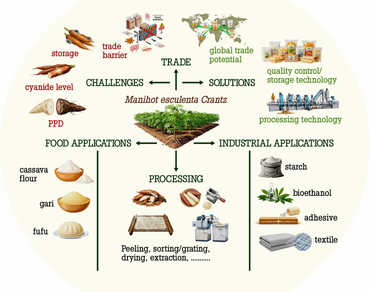
Cassava is a major staple crop in the world and its global production has steadily increased in recent years. With three of the top five cassava-producing nations situated on the continent, Africa is the world's largest producer, underscoring the crop's critical significance in Africa especially in economic development and environmental sustainability. Cassava crop development has been investigated to increase production and starch quality for many uses, including pounding, waxy starch, resistant starch, and even post-harvest degradation. Food and feed quality is negatively impacted by the presence of the antinutritional chemical cyanide, and attempts to lower cyanide levels are constantly being investigated. Gaps in cassava processing, storage, shelf-life and regulatory bottlenecks have limited international trade from the African perspective since fresh roots are extremely perishable due to post-harvest physiological deterioration (PPD), which necessitates immediate processing in order to be traded. This work explores the food and industrial uses of cassava, as well as the challenges that needs to be addressed in the cultivation, storage, and processing of cassava into value-added products like cassava starch in order to meet the international market standards for trade. Although cassava offers a wide range of potential applications in food and industry, meeting global market standards necessitates a concerted effort to address these gaps through enhanced technology and policies.
Graphical abstract

References
Abass AB, Awoyale W, Alenkhe B, Malu N, Asiru BW, Manyong V, Sanginga N (2018) Can food technology innovation change the status of a food security crop? a review of cassava transformation into “bread” in Africa. Food Rev Intl 34(1):87–102. https://doi.org/10.1080/87559129.2016.1239207
Abincha W, Dzidzienyo DK, Wesonga LN, Mwimali M, Ozimati A, Kayondo IS, Ofori K, Tongoona P, Kivuva BM (2024) Enhancing nutrition: a review of Provitamin A carotenoid cassava breeding initiatives in East Africa. Adv Agric. https://doi.org/10.1155/aia/9937876
Abirami V, Velmurugan M, Thangamani C, Natarajan SK, Davamani V, Indu RC, Venkatachalam SR (2025) Cassava intercropping systems for enhanced land productivity and farmer livelihoods: a review. Plant Sci Today. https://doi.org/10.14719/pst.8409
Abotbina W, Sapuan SM, Ilyas RA, Sultan MTH, Alkbir MFM, Sulaiman S, Bayraktar E (2022) Recent developments in cassava (manihot esculenta) based biocomposites and their potential industrial applications: a comprehensive review. Materials 15(19):6992. https://doi.org/10.3390/ma15196992
Adebayo WG (2023) Cassava production in africa: A panel analysis of the drivers and trends. Heliyon 9(9):e19939. https://doi.org/10.1016/j.heliyon.2023.e19939
Adebayo A, Mutungi C, Lukombo S, Ogunkoya A, Nsuanda G, Masheka P, Adebowale A-R (2026) Unlocking the cassava value chain: assessment of technical needs for sustainable agro-processing in Urban and Rural DRC. Agriculture 16(3):385. https://doi.org/10.3390/agriculture16030385
Adekiya AO, Faronbi OA, Adekiya SM, Oloniluyi AO, Lawal TE (2025) Enhancing cassava yield value and profitability through Tithonia diversifolia and cow dung applications in a tropical derived savanna Alfisol. Sci Rep 15(1):42684. https://doi.org/10.1038/s41598-025-26753-z
Adeniyi VA, Akangbe JA, Kolawole AE, Ayeni MD, Olorunfemi DO (2023) Women cassava processors’ livelihood; implications for improved processing technology usage in Nigeria. Cogent Soc Sci. https://doi.org/10.1080/23311886.2023.2191898
Adeyemo TA, Okoruwa VO (2018) Value addition and productivity differentials in the nigerian cassava system. Sustainability 10(12):4770. https://doi.org/10.3390/su10124770
Adigwe OP, John JE, Emeje MO (2022) History, evolution and future of starch industry in Nigeria. https://doi.org/10.5772/intechopen.102712
Adinsi L, Akissoé N, Escobar A, Prin L, Kougblenou N, Dufour D, Fliedel G (2019) Sensory and physicochemical profiling of traditional and enriched gari in Benin. Food Sci Nutr 7(10):3338–3348. https://doi.org/10.1002/fsn3.1201
Afolami I, Samuel F, Borgonjen-van den Berg K, Mwangi MN, Kalejaiye O, Sanusi RA, Melse-Boonstra A (2021) The contribution of provitamin A biofortified cassava to vitamin A intake in Nigerian pre-schoolchildren. British J Nutr 126(9):1364–1372. https://doi.org/10.1017/S0007114521000039
Agbaeze EK, Ohunyeye FO, Obamen J, Ibe GI (2020) Management of food crop for national development: problems and challenges of cassava processing in Nigeria. SAGE Open. https://doi.org/10.1177/2158244020919778
Akinbamini E, Vargas A, Traill A, Boza A, Cuenca L (2025) Critical analysis of technologies enhancing supply chain collaboration in the food industry: a Nigerian survey. Logistics 9(1):8. https://doi.org/10.3390/logistics9010008
Akinwumiju AS, Adelodun AA, Orimoogunje OI (2020) Agro-climato-edaphic zonation of Nigeria for a cassava cultivar using GIS-Based analysis of data from 1961 to 2017. Sci Rep 10(1):1259. https://doi.org/10.1038/s41598-020-58280-4
Akonor PT, Tutu CO, Affrifah NS, Budu AS, Saalia FK (2023) Effect of different drying techniques on the functionality and digestibility of yellow-fleshed cassava flour and its performance in food application. J Food Process Preserv 2023:1–11. https://doi.org/10.1155/2023/1775604
Akpoghelie PO, Edo GI, Akhayere E (2022) Proximate and nutritional composition of beer produced from malted sorghum blended with yellow cassava. Biocatal Agric Biotechnol 45:102535. https://doi.org/10.1016/j.bcab.2022.102535
Akpoghelie PO, Edo GI, Ali ABM, Yousif E, Zainulabdeen K, Owheruo JO, Isoje EF, Igbuku UA, Essaghah AEA, Makia RS, Ahmed DS, Umar H, Alamiery AA (2025a) Lactic acid bacteria: nature, characterization, mode of action, products and applications. Process Biochem 152:1–28. https://doi.org/10.1016/j.procbio.2025.02.010
Akpoghelie PO, Owheruo JO, Edo GI, Yousif E, Zainulabdeen K, Jikah AN, Mohammed AA, Ndudi W, Nwachukwu SC, Opiti RA, Ainyanbhor IE, Onyibe PN, Ugbune U, Ezekiel GO, Ekokotu HA, Oghroro EEA, Ekpekpo LD, Isoje EF, Igbuku UA, Okpoghono J, Essaghah AEA, Agbo JJ (2025b) The benefits and processing technologies of gari, a famous indigenous food of Nigeria. Discov Food 5(1):91. https://doi.org/10.1007/s44187-025-00370-1
Akuyenze P, Ssenku JE, Masawi AN, Kawongolo JB, Muranga FI (2025) Revolutionizing starch modification: the role of genetic engineering in enhancing starch properties for sustainable industrial applications – a review. Discov Biotechnol 2(1):28. https://doi.org/10.1007/s44340-025-00033-y
Alamu EO, Dixon A, Eyinla TE, Maziya-Dixon B (2022) Characterization of macro and micro-minerals in cassava leaves from genotypes planted in three different agroecological locations in Nigeria. Heliyon 8(11):e11618. https://doi.org/10.1016/j.heliyon.2022.e11618
Albishi TS, Adaigho D, Alqahtani NK, Sami R, Uguru H, Helal M, Alaoufi SH, Alkaltham MS, Osiga-Aibangbee D, Okolotu GI, Emumejaye EP, Qari SH (2026) In vitro evaluation of bio-fortification effects on the nutritional quality, toxicological safety, and antioxidant of cassava (Manihot esculenta) flour, and environmental safety of processing water, using natural additives. Front Nutr. https://doi.org/10.3389/fnut.2025.1731737
Alimi JP, Otitodun OG, Akanni AA, Jimoh MO, Adegbola RQ, Haruna PB, Akande EJ, Ishola DT, Ajayi OA, Yissa AI, Odutola BS (2024) Quality characteristics of cake produced with blends of flour from bambara nut seeds (Vigna subterranea) and cassava (Manihot esculenta). Asian Food Sci J 23(12):99–116. https://doi.org/10.9734/afsj/2024/v23i12762
Al-Monofy KB, Farghali MH, Al-Madboly LA, Kamer AMA, Abdelaziz AA (2025) Advances in biomanufacturing and recent biological applications of the fundamental bacterial carotenoids: a comprehensive review. Microb Cell Fact 24(1):225. https://doi.org/10.1186/s12934-025-02847-1
Alonso Chavez V, Milne AE, van den Bosch F, Pita J, McQuaid CF (2022) Modelling cassava production and pest management under biotic and abiotic constraints. Plant Mol Biol 109(3):325–349. https://doi.org/10.1007/s11103-021-01170-8
Amelework AB, Bairu MW, Maema O, Venter SL, Laing M (2021) Adoption and promotion of resilient crops for climate risk mitigation and import substitution: a case analysis of cassava for South African agriculture. Front Sustain Food Syst. https://doi.org/10.3389/fsufs.2021.617783
Amoah F, Bobobee EYH, Addo A, Darko JO, Akowuah JO (2022) A review of mechanical cassava peeling and its adoption by processors. J Ghana Inst Eng (JGhIE) 22(1):23–38. https://doi.org/10.56049/jghie.v22i1.37
Andreani CL, da Silva Tomoto AL, Fuess LT, Gomes SD (2026) Liquid and solid waste from the industrialization of cassava as a substrate for bioprocesses: production of lactic acid, volatile fatty acids, and antimicrobial compounds. Starchy crops waste valorization. Elsevier, pp 189–205. https://doi.org/10.1016/B978-0-323-90846-7.00014-3
Araújo DD, Amorim AB, Saleh MAD, Curcelli F, Perdigón PL, Bicudo SJ, Berto DA (2016) Nutritional evaluation of integral cassava root silages for growing pigs. Anim Nutr 2(3):149–153. https://doi.org/10.1016/j.aninu.2016.04.006
Aristizabal Galvis JA, García Agredo JA, Ospina Patiño B (2017) Refined cassava flour in bread making: a review. Ing e Investig 37(1):25. https://doi.org/10.15446/ing.investig.v37n1.57306
Asadi SZ, Khan MA, Zaidi S (2022) A study on the shelf life of cookies incorporated with sapota and beetroot leaf powders. J Food Sci Technol 59(10):3848–3856. https://doi.org/10.1007/s13197-022-05408-1
Awoyale W, Abass AB, Ndavi M, Maziya-Dixon B, Sulyok M (2017) Assessment of the potential industrial applications of commercial dried cassava products in Nigeria. J Food Meas Charact 11(2):598–609. https://doi.org/10.1007/s11694-016-9428-7
Awoyale W, Alamu EO, Chijioke U, Tran T, Takam Tchuente HN, Ndjouenkeu R, Kegah N, Maziya‐Dixon B (2021) A review of cassava semolina (gari and eba) end‐user preferences and implications for varietal trait evaluation. Int J Food Sci Technol 56(3):1206–1222. https://doi.org/10.1111/ijfs.14867
Ayele HH, Latif S, Bruins ME, Müller J (2021) Partitioning of proteins and anti-nutrients in cassava (Manihot esculenta Crantz) leaf processing fractions after mechanical extraction and ultrafiltration. Foods 10(8):1714. https://doi.org/10.3390/foods10081714
Baba T, Nomura H, Srean P, Than T, Ito K (2022) Effects of mechanization and investments on the technical efficiency of cassava farms in Cambodia. Agriculture 12(4):441. https://doi.org/10.3390/agriculture12040441
Babatunde AA, Yusuf SA, Omonona BT, Obi-Egbedi O (2022) Profitability analysis among actors of high-quality cassava flour in South West Nigeria. Int J Sustain Agric Res 9(3):129–139. https://doi.org/10.18488/ijsar.v9i3.3089
Babatuyi CY, Boboye EB, Fagbemi TN (2024) Development of odorless cassava-based ‘fufu’ with mixed starter cultures through a fermentation process and characterization of its functional, chemical properties and sensory qualities. Discov Food 4(1):180. https://doi.org/10.1007/s44187-024-00215-3
Bamidele OP (2025) Effects of natural fermentation time on chemical composition, antioxidant activities, and phenolic profile of cassava root flour. Appl Sci 15(15):8494. https://doi.org/10.3390/app15158494
Bilate Daemo B, Belew Yohannes D, Mulualem Beyene T, Gebreselassie Abtew W (2022) Biochemical analysis of cassava (Manihot esculenta Crantz) accessions in Southwest of Ethiopia. J Food Qual 2022:1–13. https://doi.org/10.1155/2022/9904103
Binang WB, Ittah MA, Obok EE, Effa EB, Bassey ES (2024) Improving the yield and nutritional quality of cassava (Manihot esculenta Crantz) in the rainforest agro-ecological zone of southeast Nigeria through agronomic biofortification with micronutrients. J Plant Nutr 47(14):2232–2241. https://doi.org/10.1080/01904167.2024.2338753
Blasi A, Verardi A, Lopresto CG, Siciliano S, Sangiorgio P (2023) Lignocellulosic agricultural waste valorization to obtain valuable products: an overview. Recycling 8(4):61. https://doi.org/10.3390/recycling8040061
Boakye Peprah B, Parkes EY, Harrison OA, van Biljon A, Steiner-Asiedu M, Labuschagne MT (2020) Proximate composition, cyanide content, and carotenoid retention after boiling of provitamin A-rich cassava grown in Ghana. Foods 9(12):1800. https://doi.org/10.3390/foods9121800
Bokundabi G, Haskins L, Horwood C, Kuwa C, Mutombo PB, John VM, Mapatano MA, Banea J-P (2023) When knowledge is not enough: barriers to recommended cassava processing in resource-constrained Kwango, Democratic Republic of Congo. J Public Health Afr 14(5):5. https://doi.org/10.4081/jphia.2023.2052
Borku AW (2025) Cassava (Manihot esculenta Crantz): its nutritional composition insights for future research and development in Ethiopia. Discover Sustain 6(1):404. https://doi.org/10.1007/s43621-025-00996-2
Borku AW, Tora TT, Masha M (2025) Cassava in focus: a comprehensive literature review, its production, processing landscape, and multi-dimensional benefits to society. Food Chem Adv 7:100945. https://doi.org/10.1016/j.focha.2025.100945
Bosompem M, Arhin P, Nunoo J, Amoah KK (2024) Smallholder farmers’ participation in cassava value addition practices: what drivers matter in Ghana? J Agric Food Res 16:101120. https://doi.org/10.1016/j.jafr.2024.101120
Bouatenin KMJ-P, Kouame KA, Djeni NT, Koffi NG, Dje KM (2021) Production of Attieke by the technique of drying of cassava ferment. J Food Qual 2021:1–7. https://doi.org/10.1155/2021/6697835
Boukhers I, Boudard F, Morel S, Servent A, Portet K, Guzman C, Vitou M, Kongolo J, Michel A, Poucheret P (2022) Nutrition, healthcare benefits and phytochemical properties of cassava (Manihot esculenta) leaves sourced from three countries (Reunion, Guinea, and Costa Rica). Foods 11(14):2027. https://doi.org/10.3390/foods11142027
Buta BM (2020) An Evaluation of oxalate content in cassava roots and sweet potato tubers in Areka, Ethiopia. Asian J Agric Food Sci. https://doi.org/10.24203/ajafs.v8i6.6484
Cempaka L (2021) Peuyeum: fermented cassava from Bandung, West Java, Indonesia. J Ethn Foods 8(1):3. https://doi.org/10.1186/s42779-021-00079-3
Chamorro AF, Palencia M, Lerma TA (2025) Physicochemical characterization and properties of cassava starch: a review. Polymers 17(12):1663. https://doi.org/10.3390/polym17121663
Chavan RS, Khedkar CD, Bhatt S (2016) Fat replacer. Encyclopedia of food and health. Elsevier, pp 589–595. https://doi.org/10.1016/B978-0-12-384947-2.00271-3
Chen W, Xu D (2023) Phytic acid and its interactions in food components, health benefits, and applications: a comprehensive review. Trends Food Sci Technol 141:104201. https://doi.org/10.1016/j.tifs.2023.104201
Chen B-R, Xiao Y, Ali M, Xu F-Y, Li J, Wang R, Zeng X-A, Teng Y-X (2024) Improving resistant starch content of cassava starch by pulsed electric field-assisted esterification. Int J Biol Macromol 276:133272. https://doi.org/10.1016/j.ijbiomac.2024.133272
Chijioke U, Madu T, Okoye B, Ogunka AP, Ejechi M, Ofoeze M, Ogbete C, Njoku D, Ewuziem J, Kalu C, Onyemauwa N, Ukeje B, Achonwa O, Forsythe L, Fliedel G, Egesi C (2021) Quality attributes of fufu in South‐East Nigeria: guide for cassava breeders. Int J Food Sci Technol 56(3):1247–1257. https://doi.org/10.1111/ijfs.14875
Coelho E, Ballesteros LF, Domingues L, Vilanova M, Teixeira JA (2020) Production of a distilled spirit using cassava flour as raw material: Chemical characterization and sensory profile. Molecules 25(14):3228. https://doi.org/10.3390/molecules25143228
Compart J, Singh A, Fettke J, Apriyanto A (2023) Customizing starch properties: a review of starch modifications and their applications. Polymers 15(16):3491. https://doi.org/10.3390/polym15163491
Cripwell RA, Favaro L, Viljoen-Bloom M, van Zyl WH (2020) Consolidated bioprocessing of raw starch to ethanol by Saccharomyces cerevisiae: achievements and challenges. Biotechnol Adv 42:107579. https://doi.org/10.1016/j.biotechadv.2020.107579
Dada MA, Bello FA, Omobulejo FO, Olukunle FE (2023) Nutritional quality and physicochemical properties of biscuit from composite flour of wheat, African yam bean and tigernut. Heliyon 9(11):e22477. https://doi.org/10.1016/j.heliyon.2023.e22477
Dankwa KO, Gimode W, Olasanmi B (2025) A review of global cassava (Manihot esculenta Crantz) production trends, post-harvest physiological deterioration (PPD) challenge, and control strategies. Discov Food 5(1):307. https://doi.org/10.1007/s44187-025-00629-7
de Oliveira DI, Demogalski L, Dias AH, Pereira LAA, Alberti A, Los PR, Demiate IM (2021) Traditional sour cassava starch obtained with alterations in the solar drying stage. Food Sci Technol 41(suppl 1):319–327. https://doi.org/10.1590/fst.16120
de Oliveira Schmidt VK, de Vasconscelos GMD, Vicente R, de Souza Carvalho J, Della-Flora IK, Degang L, de Oliveira D, de Andrade CJ (2023) Cassava wastewater valorization for the production of biosurfactants: surfactin, rhamnolipids, and mannosileritritol lipids. World J Microbiol Biotechnol 39(2):65. https://doi.org/10.1007/s11274-022-03510-2
Delaquis E, Almekinders CJM, de Haan S, Newby JC, Le Thuy CT, Srean P, Wannarat W, Aiemnaka P, Rojanaridpiched C, Nhan PT, Kang P, Struik PC (2024) Public and private institutional arrangements for early generation seed production: cassava seed value chains in Southeast Asia. Agric Syst 221:104131. https://doi.org/10.1016/j.agsy.2024.104131
Dhal S, Anis A, Shaikh HM, Alhamidi A, Pal K (2023) Effect of mixing time on properties of whole wheat flour-based cookie doughs and cookies. Foods 12(5):941. https://doi.org/10.3390/foods12050941
Díaz A, Dini C, Viña SZ, García MA (2018) Technological properties of sour cassava starches: effect of fermentation and drying processes. LWT 93:116–123. https://doi.org/10.1016/j.lwt.2018.03.029
Do TX, Vu TA (2024) Enhancing sustainable ethanol fuel production from cassava in Vietnam. Energy Clim Change 5:100136. https://doi.org/10.1016/j.egycc.2024.100136
Drapal M, Ovalle Rivera TM, Becerra Lopez-Lavalle LA, Fraser PD (2024) Carotenoid composition and sequestration in cassava (Manihot esculentum Crantz) roots. PLoS ONE 19(11):e0312517. https://doi.org/10.1371/journal.pone.0312517
Edo GI, Mafe AN, Ali ABM, Akpoghelie PO, Yousif E, Isoje EF, Igbuku UA, Zainulabdeen K, Owheruo JO, Essaghah AEA, Umar H, Ahmed DS, Alamiery AA (2025a) Eco-friendly nanoparticle phytosynthesis via plant extracts: mechanistic insights, recent advances, and multifaceted uses. Nano TransMed 4:100080. https://doi.org/10.1016/j.ntm.2025.100080
Edo GI, Mafe AN, Ali ABM, Akpoghelie PO, Yousif E, Isoje EF, Igbuku UA, Ismael SA, Essaghah AEA, Ahmed DS, Ozsahin DU, Umar H, Alamiery AA (2025b) Green biosynthesis of nanoparticles using plant extracts: mechanisms, advances, challenges, and applications. BioNanoScience 15(2):267. https://doi.org/10.1007/s12668-025-01883-w
Edo GI, Nwachukwu SC, Ali ABM, Yousif E, Jikah AN, Zainulabdeen K, Ekokotu HA, Isoje EF, Igbuku UA, Opiti RA, Akpoghelie PO, Owheruo JO, Essaghah AEA (2025c) A review on the composition, extraction and applications of phenolic compounds. Ecol Front 45(1):7–23. https://doi.org/10.1016/j.ecofro.2024.09.008
Edo GI, Mafe AN, Ali ABM, Akpoghelie PO, Yousif E, Lwanegbe L, Igbuku UA, Owheruo JO, Essaghah AEA, Ahmed DS, Ozsahin DU, Umar H, Alamiery AA (2026) Probiotics as eco-friendlybio-preservatives: in vivo mechanisms of mycotoxin inhibition and emerging applications for food safety and human health. Mycotoxin Res 42(1):12. https://doi.org/10.1007/s12550-025-00616-y
Ekeleme F, Dixon A, Atser G, Hauser S, Chikoye D, Korie S, Olojede A, Agada M, Olorunmaiye PM (2021) Increasing cassava root yield on farmers’ fields in Nigeria through appropriate weed management. Crop Prot 150:105810. https://doi.org/10.1016/j.cropro.2021.105810
Eleazu C, Eleazu K, Aniedu C, Amajor J, Ikpeama A, Ebenzer I (2014) Effect of partial replacement of wheat flour with high quality cassava flour on the chemical composition, antioxidant activity, sensory quality, and microbial quality of bread. Prev Nutr Food Sci 19(2):115–123. https://doi.org/10.3746/pnf.2014.19.2.115
Elisabeth DAA, Utomo JS, Byju G, Ginting E (2022) Cassava flour production by small scale processors, its quality and economic feasibility. Food Sci Technol. https://doi.org/10.1590/fst.41522
Enesi RO, Hauser S, Pypers P, Kreye C, Tariku M, Six J (2022) Understanding changes in cassava root dry matter yield by different planting dates, crop ages at harvest, fertilizer application and varieties. Eur J Agron 133:126448. https://doi.org/10.1016/j.eja.2021.126448
Fan W, Liu K, Xu Y, Chi Z (2025) Solid‐state fermentation of corn wet distiller grains and wheat bran with Trichoderma reesei and Candida utilis for improving feed value. J Sci Food Agric 105(5):2968–2977. https://doi.org/10.1002/jsfa.14079
Fathima AA, Sanitha M, Tripathi L, Muiruri S (2023) Cassava ( Manihot esculenta ) dual use for food and bioenergy: a review. Food Energy Sec. https://doi.org/10.1002/fes3.380
Fawole AO, Karatzas K-AG, Parker JK, Fagan CC (2025) Impact of selected starters and cassava varieties on the proximate, rheological, and volatile profiles of Lafun. Foods 14(4):660. https://doi.org/10.3390/foods14040660
Forkum AT, Wung AE, Kelese MT, Ndum CM, Lontum A, Kamga EB, Okwen PM (2025) Safety of cassava and cassava-based products: a systematic review. Front Sustain Syst. https://doi.org/10.3389/fsufs.2025.1497609
Fronza P, Costa ALR, Franca AS, de Oliveira LS (2023) Extraction and characterization of starch from cassava peels. Starch Stärke. https://doi.org/10.1002/star.202100245
Gunathilake IADSR, Somendrika MAD (2024) Development of a biodegradable packaging with antimicrobial properties from cassava starch by incorporating Ocimum tenuiflorum extract. Food Chem Adv 4:100658. https://doi.org/10.1016/j.focha.2024.100658
Halake NH, Chinthapalli B (2020) Fermentation of traditional African Cassava Based foods: microorganisms role in nutritional and safety value. J Exp Agric Int. https://doi.org/10.9734/jeai/2020/v42i930587
Hankoua BB, Diao M, Ligaba-Osena A, Garcia RA, Harun S, Ahlawat YK (2025) Constitutive overexpression of Qui-Quine starch gene simultaneously improves starch and protein content in bioengineered cassava (Manihot esculenta Crantz). Front Plant Sci. https://doi.org/10.3389/fpls.2024.1442324
Harni M, Putri SK, Gusmalini, & Handayani, T. D, (2021) Characteristics of glucose syrup from various sources of starch. IOP Conf Series: Earth Environ Sci 757(1):012064. https://doi.org/10.1088/1755-1315/757/1/012064
Hawashi M, Widjaja T, Gunawan S (2020) Solid-state fermentation of cassava products for degradation of anti-nutritional value and enrichment of nutritional value. IntechOpen, In New Advances on Fermentation Processes. https://doi.org/10.5772/intechopen.87160
Hilbeck A, Tisselli E, Crameri S, Sibuga KP, Constantine J, Shitindi MJ, Kilasara M, Churi A, Sanga C, Kihoma L, Brush G, Stambuli F, Mjunguli R, Burnier B, Maro J, Mbele A, Hamza S, Kissimbo M, Ndee A (2024) ICT4Agroecology part I: outcomes for cassava production system. Agroecol Sustain Food Syst 48(4):501–525. https://doi.org/10.1080/21683565.2023.2265318
Hossain MD, Yan Q, Zhou Z, Zhang X, Wittayakun S, Napasirth V, Napasirth P, Lukuyu BA, Tan Z (2025) Cassava as a feedstuff for ruminant feeding system in Belt and Road countries: innovations, benefits and challenges. J Agric Food Res 21:101874. https://doi.org/10.1016/j.jafr.2025.101874
Ikuemonisan ES, Mafimisebi TE, Ajibefun I, Adenegan K (2020) Cassava production in Nigeria: trends, instability and decomposition analysis (1970–2018). Heliyon 6(10):e05089. https://doi.org/10.1016/j.heliyon.2020.e05089
Imakumbili MLE, Semu E, Semoka JMR, Abass A, Mkamilo G (2021) Managing cassava growth on nutrient poor soils under different water stress conditions. Heliyon 7(6):e07331. https://doi.org/10.1016/j.heliyon.2021.e07331
Imarhiagbe O, Ogwu MC, Ikponmwosa BO, Mukah FE, Akemu SE, Ohiaba EE (2024) Threats to cassava cultivation, production, and processing: global status and sustainable management strategies. Sustainable cassava. Elsevier, pp 75–97. https://doi.org/10.1016/B978-0-443-21747-0.00016-3
Kaur K, Ahluwalia P (2017) Cassava as potential crop for the food and fermentation industry: A review. Int J Food Ferment Technol 7(1):1. https://doi.org/10.5958/2277-9396.2017.00001.0
Kaur B, Dimri S, Singh J, Mishra S, Chauhan N, Kukreti T, Preet MS (2023) Insights into the harvesting tools and equipment’s for horticultural crops: from then to now. J Agric Food Res 14:100814. https://doi.org/10.1016/j.jafr.2023.100814
Kidasi PC, Chao DK, Obudho EO, Mwang’ombe AW (2021) Farmers’ sources and varieties of cassava planting materials in Coastal Kenya. Front Sustain Food Syst. https://doi.org/10.3389/fsufs.2021.611089
Kim D-S, Iida F (2023) Nutritional composition of cassava (Manihot esculenta) and its application to elder-friendly food based on enzyme treatment. Int J Food Prop 26(1):1311–1323. https://doi.org/10.1080/10942912.2023.2213410
Kongsil P, Ceballos H, Siriwan W, Vuttipongchaikij S, Kittipadakul P, Phumichai C, Wannarat W, Kositratana W, Vichukit V, Sarobol E, Rojanaridpiched C (2024) Cassava breeding and cultivation challenges in Thailand: past, present, and future perspectives. Plants Basel 13(14):1899. https://doi.org/10.3390/plants13141899
Krajang M, Malairuang K, Sukna J, Rattanapradit K, Chamsart S (2021) Single-step ethanol production from raw cassava starch using a combination of raw starch hydrolysis and fermentation, scale-up from 5-L laboratory and 200-L pilot plant to 3000-L industrial fermenters. Biotechnol Biofuels 14(1):68. https://doi.org/10.1186/s13068-021-01903-3
Lambebo T, & Deme T (2022, February 4). Evaluation of Nutritional Potential and Effect of Processing on Improving Nutrient Content of Cassava ( Mannihot esculenta crantz ) Root and Leaves. https://doi.org/10.1101/2022.02.04.479097
Lamboll R, Martin A, Sanni L, Adebayo K, Graffham A, Kleih U, Abayomi L, Westby A (2018) Shaping, adapting and reserving the right to play. J Agribus Dev Emerg Econ 8(1):54–76. https://doi.org/10.1108/JADEE-03-2017-0036
Lansche J, Awiszus S, Latif S, Müller J (2020) Potential of biogas production from processing residues to reduce environmental impacts from cassava starch and crisp production—A case study from Malaysia. Appl Sci Basel 10(8):2975. https://doi.org/10.3390/app10082975
Lasso García C, German Bermúdez FA, Vanden Berghe W, Gabriela Zurita-Benavides M, Orellana-Manzano A (2024) Fermented beverages among indigenous Latin American societies. Front Sustain Food Syst. https://doi.org/10.3389/fsufs.2024.1390162
Laya A, Koubala BB (2020) Polyphenols in cassava leaves (Manihot esculenta Crantz) and their stability in antioxidant potential after in vitro gastrointestinal digestion. Heliyon 6(3):e03567. https://doi.org/10.1016/j.heliyon.2020.e03567
Legg JP, Diebiru-Ojo E, Eagle D, Friedmann M, Kanju E, Kapinga R, Nitturkar H (2022) Commercially sustainable cassava seed systems in Africa. Root, tuber and banana food system innovations. Springer International Publishing, Cham, pp 453–482. https://doi.org/10.1007/978-3-030-92022-7_15
Leguizamón AJ, Rompato KM, Hoyos RE, Audisio MC (2021) Nutritional evaluation of three varieties of cassava leaves (Manihot esculenta Crantz) grown in Formosa, Argentina. J Food Compos Anal 101:103986. https://doi.org/10.1016/j.jfca.2021.103986
Maidana SA, Butiuk AP, Brumovsky LA, Martos MA (2025) Cassava starch extraction with a polygalacturonase from a wild yeast strain with disintegration activity on plant tissues. Carbohydr Res 550:109386. https://doi.org/10.1016/j.carres.2025.109386
Makieu P, Kanu MS, Sillah A, Sheriff A (2025) Nutritional values of cassava leaves in three districts, Kenema, Kailahun, and Bo, Sierra Leone. Food Hum 4:100592. https://doi.org/10.1016/j.foohum.2025.100592
Maniglia BC, Lima DC, Matta JMD, Le-Bail P, Le-Bail A, Augusto PED (2020) Preparation of cassava starch hydrogels for application in 3D printing using dry heating treatment (DHT): a prospective study on the effects of DHT and gelatinization conditions. Food Res Int 128:108803. https://doi.org/10.1016/j.foodres.2019.108803
Mansaray S, Norman PE, Sherman-Kamara J, Kamanda I, Serry KN (2024) Variation in Yellow Root Cassava (Manihot esculentus Crantz) genotypes and phenotypic relationship for selected postharvest and morphological traits. Agric Sci 15(09):993–1008. https://doi.org/10.4236/as.2024.159053
Maziya-Dixon B, Alamu EO, Popoola IO, Yomeni M (2017) Nutritional and sensory properties: snack food made from high-quality cassava flour and legume blend. Food Sci Nutr 5(3):805–811. https://doi.org/10.1002/fsn3.464
Mbanjo EGN, Rabbi IY, Ferguson ME, Kayondo SI, Eng NH, Tripathi L, Kulakow P, Egesi C (2021) Technological innovations for improving cassava production in Sub-Saharan Africa. Front Genet. https://doi.org/10.3389/fgene.2020.623736
Mbinda W, Mukami A (2022) Breeding for postharvest physiological deterioration in cassava: problems and strategies. CABI Agric Biosci 3(1):30. https://doi.org/10.1186/s43170-022-00097-4
Mohidin SRNSP, Moshawih S, Hermansyah A, Asmuni MI, Shafqat N, Ming LC (2023) Cassava (Manihot esculenta Crantz): a systematic review for the pharmacological activities, traditional uses, nutritional values, and phytochemistry. J Evid Based Integr Med. https://doi.org/10.1177/2515690X231206227
Morgan NK, Choct M (2016) Cassava: nutrient composition and nutritive value in poultry diets. Anim Nutr 2(4):253–261. https://doi.org/10.1016/j.aninu.2016.08.010
Mwape MC, Parmar A, Roman F, Emmambux NM, Azouma YO, Hensel O (2025) Life cycle sustainability assessment of staple food processing: a double and dynamic materiality approach. Sustain Prod Consum 56:343–363. https://doi.org/10.1016/j.spc.2025.04.002
Nainggolan EA, Banout J, Urbanova K (2024) Recent trends in the pre-drying, drying, and post-drying processes for cassava tuber: a review. Foods 13(11):1778. https://doi.org/10.3390/foods13111778
Nath R, & Dutta K (2024). Sources of Starch and its Morphology: A Review. In Interdisciplinary Research in Technology and Management (pp. 402–411). London: CRC Press. https://doi.org/10.1201/9781003430469-47
Ngongo Y, Basuki T, DeRosari B, Mau YS, Noerwijati K, DaSilva H, Sitorus A, Kotta NRE, Utomo WH, Wisnubroto EI (2022) The roles of cassava in marginal semi-arid farming in East Nusa Tenggara—Indonesia. Sustainability 14(9):5439. https://doi.org/10.3390/su14095439
Nilusha RAT, Jayasinghe JMJK, Perera ODAN, Perera PIP, Jayasinghe CVL (2021) Proximate composition, physicochemical, functional, and antioxidant properties of flours from selected cassava (Manihot esculenta Crantz) varieties. Int J Food Sci 2021:1–13. https://doi.org/10.1155/2021/6064545
Nzola M, Ndonda A, Bidiaka S, Gwanyebit Kehbila A, Tata-Hangy W, Tambu E, Binzunga M (2022) Screening cassava for time of maturity to respond to various market needs: case study in African sub-tropical zones. J Sci Food Agric 102(8):3169–3178. https://doi.org/10.1002/jsfa.11660
Obinna-Echem PC, Amadi AO, Ogan SA (2024) Evaluation of the quality characteristics of cookies produced from blends of tigernut and soybean flour. IPS J Nutrition Food Sci 3(1):86–93. https://doi.org/10.54117/ijnfs.v3i1.38
Odoemelam CS, Percival B, Ahmad Z, Chang M-W, Scholey D, Burton E, Okafor PN, Wilson PB (2020) Characterization of yellow root cassava and food products: investigation of cyanide and β-carotene concentrations. BMC Res Notes 13(1):333. https://doi.org/10.1186/s13104-020-05175-2
Oghenejoboh KM, Orugba HO, Oghenejoboh UM, Agarry SE (2021) Value added cassava waste management and environmental sustainability in Nigeria: a review. Environ Chall 4:100127. https://doi.org/10.1016/j.envc.2021.100127
Ogungbemi K, Ajisafe SS, Balogun B, Balogun DA, Ilesanmi FF, Ilori AO (2021) Quality assurance, safety and acceptability of odourless fufu flour produced from white and yellow-flesh cassava using NSPRI-technology. Alexandria Sci Exchange J 42(2):467–474. https://doi.org/10.21608/asejaiqjsae.2021.176110
Ojide MG, Adegbite S, Tran T, Taborda LA, Chapuis A, Lukombo S, Totin E, Sartas M, Schut M, Becerra Lopez-Lavalle LA, Dufour D, Abass A (2022) Processors’ experience in the use of flash dryer for cassava-derived products in Nigeria. Front Sustain Food Syst. https://doi.org/10.3389/fsufs.2021.771639
Okike I, Wigboldus S, Samireddipalle A, Naziri D, Adesehinwa AOK, Adejoh VA, Kulakow P (2022). Turning Waste to Wealth: Harnessing the Potential of Cassava Peels for Nutritious Animal Feed. In Root, Tuber and Banana Food System Innovations (pp. 173–206). Cham: Springer International Publishing. https://doi.org/10.1007/978-3-030-92022-7_6
Okoko J, Alonge A, Ngoddy P (2020) High quality-cassava flour (HQCF) composites: their thermal characteristics in retrospect. IOP Conf Ser Earth Environ Sci 445:012043. https://doi.org/10.1088/1755-1315/445/1/012043
Oladeji Alamu E, Maziya-Dixon B, Olaniyan B, Pheneas N, Chikoye D (2020) Evaluation of nutritional properties of cassava-legumes snacks for domestic consumption—consumer acceptance and willingness to pay in Zambia. AIMS Agric Food 5(3):500–520. https://doi.org/10.3934/agrfood.2020.3.500
Olaniyan SA, Hussein JB, Oke MO, Akinwande BA, Workneh TS, Ayodele M, Adeyemi IA (2025a) Assessment of the physicochemical characteristics of by-products of cassava processing and their effects on biodiversity. Environ Monit Assess 197(5):533. https://doi.org/10.1007/s10661-025-13951-5
Olaniyan SA, Hussein JB, Oke MO, Akinwande BA, Workneh TS, Ayodele M, Adeyemi IA (2025b) Integrated bioprocessing of cassava residues for enzymatic starch recovery, citric acid production, and effluent detoxification. Sci Rep 15(1):21433. https://doi.org/10.1038/s41598-025-06841-w
Oleghe PO, Akharaiyi FC, Ehis-Eriakha CB (2024) Harnessing indigenous agro-processed flour blends as composite bioresources in functional food development. Food Res 8(1):235–249. https://doi.org/10.26656/fr.2017.8(1).248
Olivato JB (2024). Starch: a natural, safe, and multifunctional ingredient for cosmetic formulations. In Starch Industries: Processes and Innovative Products in Food and Non-Food Uses (pp. 255–269). Elsevier. https://doi.org/10.1016/B978-0-323-90842-9.00007-8
Oloya B, Adaku C, & Andama M (2024). The Cyanogenic Potential of Certain Cassava Varieties in Uganda and Their Fermentation-Based Detoxification. In Cassava - Recent Updates on Food, Feed, and Industry. IntechOpen. https://doi.org/10.5772/intechopen.110748
Olusola Sanusi R, Lordbanjou D-T, Olalekan Ibrahim A, Babakatcha Abubakar M, Olalekan Oke O (2023) Cassava Production Enterprise in the Tropics. IntechOpen, In Tropical Plant Species and Technological Interventions for Improvement. https://doi.org/10.5772/intechopen.104677
Omede AA, Ahiwe EU, Zhu ZY, Fru-Nji F, Iji PA (2018) Improving cassava quality for poultry feeding through application of biotechnology. InTech, In Cassava. https://doi.org/10.5772/intechopen.72236
Onasanya OO, Hauser S, Necpalova M, Salako FK, Kreye C, Tariku M, Six J, Pypers P (2021) On-farm assessment of cassava root yield response to tillage, plant density, weed control and fertilizer application in southwestern Nigeria. Field Crops Res 262:108038. https://doi.org/10.1016/j.fcr.2020.108038
Oresegun A, Fagbenro OA, Ilona P, Bernard E (2016) Nutritional and anti-nutritional composition of cassava leaf protein concentrate from six cassava varieties for use in aqua feed. Cogent Food Agric. https://doi.org/10.1080/23311932.2016.1147323
Osman G, Maleta W, Masamba K, Ng’ong’ola-Manani T, Kalimbira AA (2025) Cyanide in cassava: unveiling health risks in the lens of unsustainable food systems in Sub-Saharan Africa – a systematic review. Front Sustain Food Syst. https://doi.org/10.3389/fsufs.2025.1636177
Ossai CO, Ojobor SA, Ogwuche TO, Akpeji SC, Sunday AI, Diebiru-Ojo EM (2025) Performance of four newly released cassava varieties in a fallowed land over two cropping seasons. PLoS ONE 20(5):e0317477. https://doi.org/10.1371/journal.pone.0317477
Otekunrin OA (2024) Cassava (Manihot esculenta Crantz): a global scientific footprint—production, trade, and bibliometric insights. Discov Agric 2(1):94. https://doi.org/10.1007/s44279-024-00121-3
Otekunrin AO, Sawicka B (2019) Cassava, a 21st century staple crop: how can Nigeria harness its enormous trade potentials? Acta Sci Agric 3(8):194–202. https://doi.org/10.31080/ASAG.2019.03.0586
Ouellette RJ, Rawn JD (2015) Carbohydrates. Principles of organic chemistry. Elsevier, pp 343–370. https://doi.org/10.1016/B978-0-12-802444-7.00013-6
Pamungkas SD, Pratiwi DI, Rahmadani PA, Winanto AR (2024) The potential of cassava processing as an alternative food diversification substitute for rice. J Inov Pengemb Has Pengabd Masy 2(2):289–307. https://doi.org/10.61650/jip-dimas.v2i2.626
Parmar A, Sturm B, Hensel O (2017) Crops that feed the world: production and improvement of cassava for food, feed, and industrial uses. Food Secur 9(5):907–927. https://doi.org/10.1007/s12571-017-0717-8
Penido FCL, Piló FB, de C. Sandes SH, Nunes ÁC, Colen G, de S. Oliveira E, Sandes SHdC, Oliveira EdS, Rosa CA, Lacerda ICA (2018) Selection of starter cultures for the production of sour cassava starch in a pilot-scale fermentation process. Braz J Microbiol 49(4):823–831. https://doi.org/10.1016/j.bjm.2018.02.001
Pingmuanglek P, Jakrawatana N, Gheewala SH (2017) Supply chain analysis for cassava starch production: cleaner production opportunities and benefits. J Clean Prod 162:1075–1084. https://doi.org/10.1016/j.jclepro.2017.06.148
Quinn AA, Myrans H, Gleadow RM (2022) Cyanide content of cassava food products available in Australia. Foods 11(10):1384. https://doi.org/10.3390/foods11101384
Rahmawati RS, Sukma D, Ardie SW, Sudarsono S (2021) Postharvest physiological deterioration in cassava: potential problems, possible inhibition, and resistant level identification. IOP Conf Ser Earth Environ Sci 694(1):012035. https://doi.org/10.1088/1755-1315/694/1/012035
Ramos CL, de Sousa ESO, Ribeiro J, Almeida TMM, do A. Santos CCA, Abegg MA, Schwan RF (2015) Microbiological and chemical characteristics of tarubá, an indigenous beverage produced from solid cassava fermentation. Food Microbiol 49:182–188. https://doi.org/10.1016/j.fm.2015.02.005
Riaz M, Khalid R, Afzal M, Anjum F, Fatima H, Zia S, Rasool G, Egbuna C, Mtewa AG, Uche CZ, Aslam MA (2023) Phytobioactive compounds as therapeutic agents for human diseases: a review. Food Sci Nutr 11(6):2500–2529. https://doi.org/10.1002/fsn3.3308
Rozina Ahmad M, & Zafar M (2022). Biomass as Sustainable Material for Bioethanol Production. In Handbook of Smart Materials, Technologies, and Devices (pp. 453–475). Cham: Springer International Publishing. https://doi.org/10.1007/978-3-030-84205-5_19
Saengchan K, Nopharatana A, Songkasiri W (2019) New hydrocyclone design for high starch yield: effect of cylindrical-conical length proportion on the starch, sulfur and protein separation efficiencies. Powder Technol 346:1–8. https://doi.org/10.1016/j.powtec.2019.01.077
Sakadzo N, Kugedera AT, Ranganai N, Kokerai LK (2025) Cassava: practices and technologies to improve food security in Sub-Saharan Africa. Cogent Food Agric. https://doi.org/10.1080/23311932.2025.2518758
Salvador EM, Steenkamp V, McCrindle CME (2014) Production, consumption and nutritional value of cassava (Manihot esculenta, Crantz) in Mozambique: an overview. J Agric Biotechnol Sustain Dev 6(3):29–38. https://doi.org/10.5897/JABSD2014.0224
Samuel AU, Akinlabi ET, Okokpujie IP, Fayomi OSI (2021) Sustainability of garri processing: a case study of Ogun State, Nigeria. IOP Conf Ser Mater Sci Eng 1107(1):012132. https://doi.org/10.1088/1757-899X/1107/1/012132
Samwel Muiruri K, & Aliya Fathima A (2023). Advances in Cassava Trait Improvement and Processing Technologies for Food and Feed. In Cassava - Recent Updates on Food, Feed and Industry [Working Title]. IntechOpen. https://doi.org/10.5772/intechopen.110104
Samwel Muiruri K, & Aliya Fathima A (2024). Advances in Cassava Trait improvement and processing technologies for food and feed. In Cassava - Recent Updates on Food, Feed, and Industry. IntechOpen. https://doi.org/10.5772/intechopen.110104
Saranraj P, Behera SS, Ray RC (2019) Traditional foods from tropical root and tuber crops. Innovations in traditional foods. Elsevier, pp 159–191. https://doi.org/10.1016/B978-0-12-814887-7.00007-1
Sawadogo-Lingani H, Owusu-Kwarteng J, Glover R, Diawara B, Jakobsen M, Jespersen L (2021) Sustainable production of African traditional beers with focus on Dolo, a West African Sorghum-based alcoholic beverage. Front Sustain Food Syst. https://doi.org/10.3389/fsufs.2021.672410
Scaria SS, Balasubramanian B, Meyyazhagan A, Gangwar J, Jaison JP, Kurian JT, Joseph KS (2024) Cassava ( Manihot esculenta Crantz)—a potential source of phytochemicals, food, and nutrition—an updated review. Efood. https://doi.org/10.1002/efd2.127
Setyaningsih W, Karmila Fathimah RN, & Cahyanto MN (2021). Process Optimization for Ultrasound-Assisted Starch Production from Cassava (Manihot esculenta Crantz) Using Response Surface Methodology. Agronomy, 11(1), 117. https://doi.org/10.3390/agronomy11010117
Shigaki T (2016) Cassava: the nature and uses. Encyclopedia of food and health. Elsevier, pp 687–693. https://doi.org/10.1016/B978-0-12-384947-2.00124-0
Shittu TA, Alimi BA, Wahab B, Sanni LO, Abass AB (2016) Cassava flour and starch: processing technology and utilization. Tropical roots and tubers. Wiley, pp 415–450. https://doi.org/10.1002/9781118992739.ch10a
Singh BJ, Chakraborty A, Sehgal R (2023) A systematic review of industrial wastewater management: evaluating challenges and enablers. J Environ Manage 348:119230. https://doi.org/10.1016/j.jenvman.2023.119230
Sombatpraiwan S, Junyusen T, Treeamnuk T, Junyusen P (2019) Optimization of microwave‐assisted alkali pretreatment of cassava rhizome for enhanced enzymatic hydrolysis glucose yield. Food Energy Sec. https://doi.org/10.1002/fes3.174
Su Y, Guan J, Liu S, Zhu Y, Hu L, Zhang Y, Lu F, Zhu M (2025) Effects of cassava and modified starch on the structural and functional characteristics of peanut protein-based meat analogs. Foods 14(16):2849. https://doi.org/10.3390/foods14162849
Sudarmini S, Subrata AC, Hakika DC (2023) Implementation of rotary dryer for cassava drying as a raw material for Mocaf flour production. Jurnal Abdimas 27(2):185–191. https://doi.org/10.15294/abdimas.v27i2.48324
Sukpanich S, Wang W (2022) Analysis of the export competitiveness of Thai cassava in the Chinese market (2010-2020). Open J Bus Manag 10(01):337–349. https://doi.org/10.4236/ojbm.2022.101020
Suriyachai N, Imman S, Kreetachat T, Laosiripojana N, Khongchamnan P, Champreda V, Kreetachat N (2024) Enhanced bioethanol production from cassava waste: optimization of thermochemical pretreatment for maximum sugar recovery and characterisation of potential fractions. Int J Sustain Energy. https://doi.org/10.1080/14786451.2024.2411833
Tabe‐Ojong MPJ, Ibarra LM, Andrade RS, Labarta R (2023) Soil conservation and smallholder welfare under cassava‐based systems in Thailand. Land Degrad Dev 34(6):1795–1805. https://doi.org/10.1002/ldr.4569
Tibebu A, Tamrat H, Bahiru A (2024) Review: impact of food safety on global trade. Vet Med Sci. https://doi.org/10.1002/vms3.1585
Tomlins K, Parmar A, Omohimi CI, Sanni LO, Adegoke AF, Adebowale A-RA, Bennett B (2021) Enhancing the shelf-life of fresh cassava roots: a field evaluation of simple storage bags. Processes 9(4):577. https://doi.org/10.3390/pr9040577
Tonukari NJ, Tonukari NJ, Ezedom T, Enuma CC, Sakpa SO, Avwioroko OJ, Eraga L, Odiyoma E (2015) White gold: cassava as an industrial base. Am J Plant Sci 06(07):972–979. https://doi.org/10.4236/ajps.2015.67103
Triani H, Yuniza A, Marlida Y, Husmaini H, Astuti W, Yanti G (2025) A novel bacterial approach to cassava waste fermentation: reducing cyanide toxicity and improving quality to ensure livestock feed safety. Open Vet J. https://doi.org/10.5455/OVJ.2025.v15.i3.27
Uchechukwu-Agua AD, Caleb OJ, Opara UL (2015) Postharvest handling and storage of fresh cassava root and products: a review. Food Bioprocess Technol 8(4):729–748. https://doi.org/10.1007/s11947-015-1478-z
Udoro EO, Anyasi TA, Jideani AIO (2021) Process-induced modifications on quality attributes of cassava (Manihot esculenta Crantz) flour. Processes 9(11):1891. https://doi.org/10.3390/pr9111891
Van Wayenbergh E, Boakye AA, Baert J, Langenaeken NA, Appaw WO, Foubert I, Oduro IN, Courtin CM (2024) Vitamin A stability during storage of fortified gari produced using different fortification strategies. Npj Sci Food 8(1):102. https://doi.org/10.1038/s41538-024-00350-2
Weligama Thuppahige VT, Moghaddam L, Welsh ZG, Wang T, Xiao H-W, Karim A (2023) Extraction and characterisation of starch from cassava (Manihot esculenta) agro-industrial wastes. LWT 182:114787. https://doi.org/10.1016/j.lwt.2023.114787
Williams-Ngegba MSE, Onabanjo OO, Anthony NM, Alamu EO, Maziya-Dixon B, Oguntona EB (2024) Variations in micronutrient concentrations and retentions in fufu made from yellow-fleshed cassava as a function of genotype and processing methods. Front Nutr. https://doi.org/10.3389/fnut.2024.1295609
Xiao L, Cheng D, Ou W, Chen X, Rabbi IY, Wang W, Li K, Yan H (2025) Advancements and strategies of genetic improvement in cassava ( Manihot esculenta Crantz): from conventional to genomic approaches. Hortic Res. https://doi.org/10.1093/hr/uhae341
Zainuddin IM, Fathoni A, Sudarmonowati E, Beeching JR, Gruissem W, Vanderschuren H (2018) Cassava post-harvest physiological deterioration: from triggers to symptoms. Postharvest Biol Technol 142:115–123. https://doi.org/10.1016/j.postharvbio.2017.09.004
Ziemah J, Aluko OO, Ninkuu V, Adetunde LA, Anyetin-Nya AK, Abugri J, Ullrich MS, Dakora FD, Chen S, Kuhnert N (2025) The phytochemical insights, health benefits, and bioprocessing innovations of cassava-derived beverages. Beverages 11(4):98. https://doi.org/10.3390/beverages11040098
Author Information
Department of Food Science and Technology, Faculty of Science, Southern Delta University, Ozoro, Nigeria