Vegetos

(An International Journal of Plant Research & Biotechnology)
(eISSN: 2229-4473)
Micromorphology and histochemical secretion profiling of glandular trichomes in the leaf and stem epidermis of Physalis angulata L. (Solanaceae)
*Article not assigned to an issue yet
Research Article | Published: 21 November, 2025
First Page: 0
Last Page: 0
Views: 558
Keywords: Epidermis micromorphology, Cytochemical, Glandular trichome, Herbal medicine, Light microscopy
Abstract
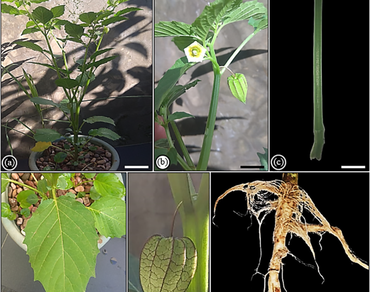
Physalis angulata is a medicinal plant used by many local tribes in Indonesia and other countries due to its pharmacological potential, such as anti-infection, anti-inflammation, anti-cancer, and anti-diabetic. However, the micromorphological and histochemical parameters of the leaf and stem epidermis of P. angulata are still very limited. We conducted this research for micromorphological analysis to identify cell parts, especially leaves and stems, as well as histochemistry to explore the secretory structures and their accumulation of the main secretion compounds. Fresh incisions of organs using razor blades followed standard plant anatomy procedures and were stained using metachromatic reagents. Histochemical analysis used various specific reagents to detect their secretory structures and metabolite accumulation. All observations were made using a light microscope. The epidermis micromorphology results indicated that glandular and non-glandular trichomes are among the leaves and stems of this species. The glandular trichomes of both organs are capitate with long and short stalks, while the non-glandular trichomes are composed of 1–3 apical cells. The secretory structure in the form of glandular trichomes of this plant contains alkaloids, phenolics, lipids, and essential oils. The results of this study indicate that the leaves and stems are potential sources of medicinal raw materials from this species and a guide for extracting specific plant parts to obtain the desired main secretion compounds, as well as valuable information material for botanical identification of this species.
References
Al-Andal A, Ewas M, Donia AERM, Radwan AM, Suliman MNS, Nishawy E, El-Shabasy A, Khames E (2025) A three-sided story: a biosystematic revision of genus Datura reveals novel tropane alkaloids for the first-time in certain species. Front Plant Sci 16:1555237. https://doi.org/10.3389/fpls.2025.1555237
Almendras D, Villalobos M, Perez S, Ciudad T, Moyano NL (2025) Revalidation of Solanum sanfurgoi (Solanaceae), an endemic species of central Chile. Darwiniana 13(1):5–12. https://doi.org/10.14522/darwiniana.2025.131.1257
Arowolo ZB, Ameen MO, Owen-Obaseki E, Gegele IB, Adamu A, Samuel RC, Ibrahim JA, Samoh TF (2024) Pharmacognostic, phytochemical, and chemomicroscopic evaluation of Physalis angulata (L). Proc Niger Acad Sci 17(1):79–94. https://doi.org/10.57046/AMSC6642
Azeez SO, Matthew JO, Tijani ZT, Aroyehun TF, Akinloye JA (2024) Anatomical and molecular characterisation in four Nigerian Physalis (Solanaceae) species. Niger J Bot 37(2):227–250. https://doi.org/10.4314/njbot.v37i2.6
Balcke GU, Bennewitz S, Bergau N, Athmer B, Henning A, Majovsky P, Jiménez-Gómez JM, Hoehenwarter W, Tissier A (2017) Multi-omics of tomato glandular trichomes reveals distinct features of central carbon metabolism supporting high productivity of specialized metabolites. Plant Cell 29(5):960–983. https://doi.org/10.1105/tpc.17.00060
Bar M, Shtein I (2019) Plant trichomes and the biomechanics of defense in various systems, with Solanaceae as a model. Botany 97(12):651–660. https://doi.org/10.1139/cjb-2019-0144
Bello AO, Oladipo O, Saheed SA (2017) Leaf epidermal studies of some Solanum (Solanaceae) species in Nigeria. Phytol Balcan 23(1):55–63
Boix YF, Victório CP, Defaveri ACA, Arruda RDCDO, Sato A, Lage CLS (2011) Glandular trichomes of Rosmarinus officinalis L.: anatomical and phytochemical analyses of leaf volatiles. Plant Biosyst 145(4):848–856. https://doi.org/10.1080/11263504.2011.584075
Brechú-Franco AE, Laguna-Hernández G, la De Cruz-Chacón I, González-Esquinca AR (2016) In situ histochemical localisation of alkaloids and acetogenins in the endosperm and embryonic axis of Annona macroprophyllata Donn. Sm. seeds during germination. Eur J Histochem 60(1):2568. https://doi.org/10.4081/ejh.2016.2568
Burrows GE, White RG, Harper JDI, Heady RD, Stanton RA, Zhu X, Wu H, Lemerle D (2013) Intrusive trichome bases in the leaves of silverleaf nightshade (Solanum elaeagnifolium; Solanaceae) do not facilitate fluorescent tracer uptake. Am J Bot 100(12):2307–2317. https://doi.org/10.3732/ajb.1300034
Chen T, Ma Y, Qi J (2025) Unraveling the complexity of plant trichomes: models, mechanisms, and bioengineering strategies. Int J Mol Sci 26(14):7008. https://doi.org/10.3390/ijms26147008
Cho K-S, Kwon M, Cho J-H, Im J-S, Park Y-E, Hong S-Y, Hwang I-T, Kang J-H (2017) Characterization of trichome morphology and aphid resistance in cultivated and wild species of potato. Hortic Environ Biotechnol 58(5):450–457. https://doi.org/10.1007/s13580-017-0078-4
Damu AG, Kuo P-C, Su C-R, Kuo T-H, Chen T-H, Bastow KF, Lee K-H, Wu T-S (2007) Isolation, structures, and structure−cytotoxic activity relationships of withanolides and physalins from Physalis angulata. J Nat Prod 70(7):1146–1152. https://doi.org/10.1021/np0701374
David R, Carde JP (1964) Coloration differentiele des inclusions lipidique et terpeniques des pseudophilles du pin maritime au moyen du reactif nadi. Comptes Rendus Hebdomadaires Dês Séances de I’ Academie Dês Sciences Paris.
Esteves MCS, Vieira JdeS, Cury G (2023) Anatomical characterization of the vegetative organs of three Solanum sp. L. Juss. (Solanaceae) species popularly known as medicinal. Rev Fitos 17(2):139–153. https://doi.org/10.32712/2446-4775.2023.1430
Feng Z, Bartholomew ES, Liu Z, Cui Y, Dong Y, Li S, Wu H, Ren H, Liu X (2021) Glandular trichomes: new focus on horticultural crops. Hortic Res 8(1):158. https://doi.org/10.1038/s41438-021-00592-1
Ferreira L, Vale A, de Souza A, Leite K, Sacramento C, Moreno M, Araújo T, Soares M, Grassi M (2019) Anatomical and phytochemical characterization of Physalis angulata L.: a plant with therapeutic potential. Pharmacogn Res 11(2):171–177. https://doi.org/10.4103/pr.pr_97_18
Fitrianingsih SP, Kurniati NF, Fakih TM, Adnyana IK (2025) Integrating network pharmacology, molecular docking, and molecular dynamics to explore the antidiabetic mechanism of Physalis angulata L. Pharmacia 72:1–29. https://doi.org/10.3897/pharmacia.72.e149156
Fladzinski KA, Armstrong L, Dos Anjos CA, da Rocha LT, Miguel OG, Miguel MD, Montrucchio DP, de Fátima Gaspari Dias J (2024) Morphoanatomical study of the species Zanthoxylum kleinii (R.S. Cowan) P.G. Waterman (Rutaceae). Microsc Res Tech 87(8):1849–1861. https://doi.org/10.1002/jemt.24564
Furr M, Mahlberg PG (1981) Histochemical analyses of laticifers and glandular trichomes in Cannabis sativa. J Nat Prod 44(2):153–159. https://doi.org/10.1021/np50014a002
Harborne AJ (1998) Phytochemical methods a guide to modern techniques of plant analysis, 2nd ed. Chapman & Hall.: Springer Science & Business Media, UK
Hua B, Chang J, Wu M, Xu Z, Zhang F, Yang M, Xu H, Wang L-J, Chen X-Y, Wu S (2021) Mediation of JA signalling in glandular trichomes by the woolly/SlMYC1 regulatory module improves pest resistance in tomato. Plant Biotechnol J 19(2):375–393. https://doi.org/10.1111/pbi.13473
Huang M, He J-X, Hu H-X, Zhang K, Wang X-N, Zhao B-B, Lou H-X, Ren D-M, Shen T (2020) Withanolides from the genus Physalis: a review on their phytochemical and pharmacological aspects. J Pharm Pharmacol 72(5):649–669. https://doi.org/10.1111/jphp.13209
Johansen DA (1940) Plant microtechnique. McGraw-Hill Book Company, Incorporated, NY
Kariyat RR, Raya CE, Chavana J, Cantu J, Guzman G, Sasidharan L (2019) Feeding on glandular and non-glandular leaf trichomes negatively affect growth and development in tobacco hornworm (Manduca sexta) caterpillars. Arthropod Plant Interact 13(2):321–333. https://doi.org/10.1007/s11829-019-09678-z
Kaur S, Khanal N, Dearth R, Kariyat R (2023) Morphological characterization of intraspecific variation for trichome traits in tomato (Solanum lycopersicum). Bot Stud 64(1):7. https://doi.org/10.1186/s40529-023-00370-3
Konarska A, Łotocka B (2020) Glandular trichomes of Robinia viscosa Vent. var. hartwigii (Koehne) Ashe (Faboideae, Fabaceae)—morphology, histochemistry and ultrastructure. Planta 252(6):102. https://doi.org/10.1007/s00425-020-03513-z
Koul M, Thomas L, Karmakar K (2021) Functional aspects of solanaceae trichomes in heavy metal detoxification. Nord J Bot 39(5):03171. https://doi.org/10.1111/njb.03171
Kumar VSA, Murugan K (2013) Taxonomic significance of foliar micromorphology and their systematic relevance in the genus Solanum (Solanaceae). In: Sabu A, Augustine A (eds) Prospects in Bioscience: Addressing the Issues. Springer, India. https://doi.org/10.1007/978-81-322-0810-5_40
Lestari NB, Sulistyaningsih YC, Umar AH, Ratnadewi D (2024) Distribution and FTIR-based fingerprint of secondary metabolites in different organs of ant-plant (Myrmecodia tuberosa). Biodiversitas 25(3):1104–1115. https://doi.org/10.13057/biodiv/d250325
Liu J, Le Y, Wang J, Zheng J, Yuan A, Guo J, Chen H, Wang C, Wang C-Y, Lu J-J, Lu D (2025) Fruit of Physalis angulata L. and anti-inflammatory potential: an in silico, in vitro, and in vivo study focusing on PFKFB3. Phytomedicine 143:156813. https://doi.org/10.1016/j.phymed.2025.156813
Mandal S, Rezenom YH, McKnight TD (2025) Role of LEAFLESS, an AP2/ERF family transcription factor, in the regulation of trichome specialized metabolism. New Phytol 247(2):774–790. https://doi.org/10.1111/nph.70198
Matias LJ, Mercadante-Simões MO, Royo VA, Ribeiro LM, Santos AC, Fonseca JMS (2016) Structure and histochemistry of medicinal species of Solanum. Rev Bras Farmacogn 26(2):147–160. https://doi.org/10.1016/j.bjp.2015.11.002
Mawcha KT, Grace K, Daniel Hagos B, Athanase H, Kajuga J, Dennis N (2025) An overview of sustainable management strategies for Tuta absoluta. Int J Pest Manag 0(0):1–24. https://doi.org/10.1080/09670874.2025.2456590
McDowell ET, Kapteyn J, Schmidt A, Li C, Kang J-H, Descour A, Shi F, Larson M, Schilmiller A, An L et al (2011) Comparative functional genomic analysis of Solanum glandular trichome types. Plant Physiol 155(1):524–539. https://doi.org/10.1104/pp.110.167114
Meira CS, Soares JWC, dos Reis BPZC, Pacheco LV, Santos IP, Silva DKC, de Lacerda JC, Daltro SRT, Guimarães ET, Soares MBP (2022) Therapeutic applications of physalins: powerful natural weapons. Front Pharmacol 13:864714. https://doi.org/10.3389/fphar.2022.864714
Motti R (2021) The solanaceae family: botanical features and diversity. In: Carputo D, Aversano R, Ercolano MR (eds) The wild solanums genomes. Springer International Publishing, Cham, pp 1–9
Munien P, Naidoo Y, Naidoo G (2015) Micromorphology, histochemistry and ultrastructure of the foliar trichomes of Withania somnifera (L.) Dunal (Solanaceae). Planta 242(5):1107–1122. https://doi.org/10.1007/s00425-015-2341-1
Muravnik LE, Mosina AA, Zaporozhets NL, Bhattacharya R, Saha S, Ghissing U, Mitra A (2021) Glandular trichomes of the flowers and leaves in Millingtonia hortensis (Bignoniaceae). Planta 253(1):13. https://doi.org/10.1007/s00425-020-03541-9
Novitasari A, Rohmawaty E, Rosdianto AM (2024) Physalis angulata Linn. as a medicinal plant (Review). Biomed Rep 20(3):1–16. https://doi.org/10.3892/br.2024.1735
Nurit-Silva K, Costa-Silva R, Coelho VPM, Agra MdeF (2011) A pharmacobotanical study of vegetative organs of Solanum torvum. Rev Bras Farmacogn 21(4):568–574. https://doi.org/10.1590/S0102-695X2011005000101
Nurit-Silva K, De Fátima Agra M (2011) Leaf epidermal characters of Solanum sect. polytrichum (Solanaceae) as taxonomic evidence. Microsc Res Tech 74(12):1186–1191. https://doi.org/10.1002/jemt.21013
Ojo FM, Vendemiatti E, Júnior JL, Kumar-Mahto M, Benedito VA, Simões ARG (2025) Determining trichome elemental composition in Solanum wild and domesticated species using SEM-EDS. Sci Rep 15(1):15292. https://doi.org/10.1038/s41598-025-87643-y
Olatunji TL, Afolayan AJ (2020) Comparative foliar epidermal studies in Capsicum annuum L. and Capsicum frutescens L. J Trop Agric 58(1):60–67
Pessoa MJG, Pireda S, Simioni P, Bautz N, Da Cunha M (2021) Structural and histochemical attributes of secretory ducts and cavities in leaves of four species of Calophyllaceae J. Agardh in Amazonian savannas. Plant Biol 23(6):1128–1140. https://doi.org/10.1111/plb.13321
Peter GF (2018) Breeding and engineering trees to accumulate high levels of terpene metabolites for plant defense and renewable chemicals. Front Plant Sci 9:1672. https://doi.org/10.3389/fpls.2018.01672
Pinheiro GP, Graciano DdaS, Mayer JLS, Hantao LW, Sawaya ACHF (2023) Glandular trichomes of Coleus amboinicus Lour. and the effect of developmental stage on leaf headspace volatile composition. S Afr J Bot 152:136–146. https://doi.org/10.1016/j.sajb.2022.11.041
POWO (2025) Physalis angulata L. | Plants of the World Online | Kew Science. Plants of the World Online. http://powo.science.kew.org/taxon/urn:lsid:ipni.org:names:195334-2
Riski R, Adnyana IK, Nugraha YP, Rachmawati H (2025) Immunostimulatory effects of Physalis angulata L fruit extract: an in vitro and in vivo studies. J Appl Pharm Sci 15(4):244–251. https://doi.org/10.7324/JAPS.2025.211816
de Rojas CB (2007) Anatomy of the foliar epidermis of the Solanum nudum species group of Solanum sec. Geminata (Solanaceae). Acta Hortic 745:287–294. https://doi.org/10.17660/ActaHortic.2007.745.13
Santos Tozin LRdos, de Melo Silva SC, Rodrigues TM (2016) Non-glandular trichomes in Lamiaceae and Verbenaceae species: morphological and histochemical features indicate more than physical protection. N Z J Bot 54(4):446–457. https://doi.org/10.1080/0028825X.2016.1205107
Sass J (1951) Botanical microtechnique, 2nd ed. The Lowa State College Press; Constable & Co, Ames, Lowa, USA. https://doi.org/10.31274/isudp.25
Shalini S, Sudeepthi N, Jayashre R, Geetha D (2025) Microscopical and histochemical assessment of Secamone emetica (Apocynaceae) leaves - an endemic medicinal plant. Flora 327:152726. https://doi.org/10.1016/j.flora.2025.152726
Syahruni R, Umar AH, Halim NAR (2024) Anatomy and histochemistry of Alliaceae and Iridaceae species: quality control of traditional medicine raw materials. J Jamu Indo 9(1):31–40. https://doi.org/10.29244/jji.v9i1.309
Syahruni R, Umar AH, Todingbua D, Semba Y, Irmawati D, Ratnadewi D (2023) Morphology, anatomy, and histochemistry of three species of Jatropha: a contribution to plant recognition and selection. Plant Biol 25(6):1009–1021. https://doi.org/10.1111/plb.13567
Umar AH, Ratnadewi D, Rafi M, Sulistyaningsih YC, Hamim H (2021) Metabolite profiling, distribution of secretory structures, and histochemistry in Curculigo orchioides Gaertn. and Curculigo latifolia Dryand. ex W.T.Aiton. Turk J Bot 45(5):421–439. https://doi.org/10.3906/bot-2009-43
Vargas-Arana G, Torres-Benítez A, Ortega-Valencia JE, Merino-Zegarra C, Carranza-Rosales P, Simirgiotis MJ (2025) Untargeted chemical profile, antioxidant, and enzyme inhibition activity of Physalis angulata L. from the Peruvian Amazon: a contribution to the validation of its pharmacological potential. Antioxidants 14(3):246. https://doi.org/10.3390/antiox14030246
Wahua C, Ukomadu J, Nichodemus CO (2020) Studies on chemotaxonomic properties of tomato (Solanum lycopersicum Linn.). J Appl Sci Environ Manage 24(1):91–95. https://doi.org/10.4314/jasem.v24i1.13
Wang J-X, Han W-H, Xie R, Zhang F-B, Ge Z-W, Ji S-X, Liu S-S, Wang X-W (2025) Metabolic and molecular insights into Nicotiana benthamiana trichome exudates: an ammunition depot for plant resistance against insect pests. Plant Cell Environ 48(1):387–405. https://doi.org/10.1111/pce.15135
Watts S, Kariyat R (2021a) Morphological characterization of trichomes shows enormous variation in shape, density and dimensions across the leaves of 14 Solanum species. AoB Plants 13(6):plab071. https://doi.org/10.1093/aobpla/plab071
Watts S, Kariyat R (2021b) Picking sides: feeding on the abaxial leaf surface is costly for caterpillars. Planta 253(4):77. https://doi.org/10.1007/s00425-021-03592-6
Widuri SA, Sulistyaningsih YC, Umar AH, Ratnadewi D (2024) Secretory structures and histochemistry of roots, stem, and leaves of medicinal plant Fibraurea tinctoria Lour. Microsc Res Tech 87(12):3026–3036. https://doi.org/10.1002/jemt.24676
Wu R, Cun S, Gao Y-Q, Ma R, Zhang L, Lev-Yadun S, Sun H, Song B (2025) Distribution patterns of glandular trichomes in the flora of the Hengduan Mountains, southwestern China. Bot J Linn Soc 207(1):83–94. https://doi.org/10.1093/botlinnean/boae035
Zhang W-N, Tong W-Y (2016) Chemical constituents and biological activities of plants from the genus Physalis. Chem Biodivers 13(1):48–65. https://doi.org/10.1002/cbdv.201400435
Zhang Y, Zhang J, Miao J, Sun G, Bai H, Xiao J, Sun M, Shi L (2025) Micromorphology and molecular insights into glandular trichomes in two different thymes: glandular trichomes formation process and the function of the main regulator TqHD1. Plant Cell Environ 48(8):6269–6284. https://doi.org/10.1111/pce.15602
Selvi S, Satil F (2020) Comparative anatomy on the vegetative organs of genus Ziziphora L. (Lamiaceae) from Turkey. Microsc Res Tech 83(1):10–21. https://doi.org/10.1002/jemt.23383
Rodrigues FA, Rodrigues SJD, Lara SRA, Edwaldo dos SP, Pasqual M, Pereira FJ, Mauro de Castro E (2014) Anatomy of vegetative organs and seed histochemistry of Physalis peruviana L. Aust J Crop Sci 8(6):895–900. https://doi.org/10.3316/informit.479603863820675
Author Information
Department of Pharmaceutical Biology, Faculty of Health Sciences, Almarisah Madani University, Makassar, Indonesia