Vegetos

(An International Journal of Plant Research & Biotechnology)
(eISSN: 2229-4473)
Modulation of morpho-physiological responses and antioxidant enzymes in green gram under metal stress
*Article not assigned to an issue yet
Balagopal Anupama, Thorat Sachin Ashok, Kaniyassery Arya, Balachandran Srinivasan, Muthusamy Annamalai
Research Article | Published: 15 June, 2026
First Page: 0
Last Page: 0
Views: 105
Keywords: Heavy metals, Lead, n V. radiatan , Physiology, Antioxidant systems, Accumulation
Abstract
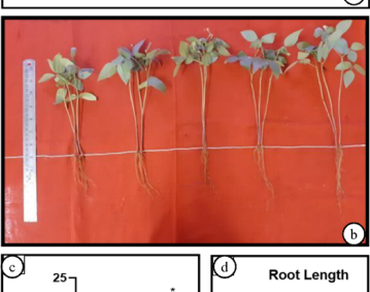
The ecological health status of our planet has gradually declined, with industrialization being a key cause of environmental degradation. The massive number of industries producing more waste materials with or without recommended treatment and improper management ultimately accumulates, which affects ecosystems directly or indirectly. Among the most common contaminants, heavy metals, particularly lead (Pb), are associated with soil fertility loss, water and air pollution, which poses enormous risks to life of biodiversiy. In the current study we aimed to analyze the emerging metal pollution in soil and its impact of metal (lead) to green gram [Vigna radiata (L.) Wilczek] through, seed germination, growth characters, physio-biochemical changes, photosynthetic rate, stomatal conductance and antioxidant systems. Although no significant differences in seed germination were noted within treatments, Pb exposure (100–400 μM) influenced growth and physiological responses in Vigna radiata. Shoot length increased from 17.96 cm in the control to 21.38 cm at 400 μM, while root length increased from 11.25 to 14.60 cm. However, photosynthetic pigments declined under Pb stress, with total chlorophyll decreasing from 38.08 mg (control) to 23.56 mg g−1 FW at 300 μM, and carotenoids showing a significant reduction at the same concentration. In contrast, anthocyanin content increased markedly, reaching 3.5 and 4.7 mg g−1 FW at 300 and 400 μM, respectively. Antioxidant profiling revealed a decline in SOD activity (983.08 to 905.73 U g−1 FW) and CAT activity, whereas POD increased from 4.8 to 9.3 mM g−1 FW and APX from 253.39 to 296.9 mM g−1 FW at higher Pb concentrations, indicating activation of specific defense mechanisms against oxidative stress. ICP–MS analysis further showed predominant Pb accumulation in roots (0.358 μmol g−1 DW at 300 μM), with comparatively lower levels in stems and leaves, suggesting restricted translocation to aerial tissues. This study sheds light on the tolerance and adaptive mechanisms of V. radiata under lead stress, highlighting its potential for phytoremediation and the importance of managing industrial waste to protect environmental and human health.
References
Aebi H (1984) Catalase in vitro. Methods Enzymol 105:121–126. https://doi.org/10.1016/S0076-6879(84)05016-3
Ai TN, Naing AH, Yun BW, Lim SH, Kim CK (2018) Overexpression of RsMYB1 enhances anthocyanin accumulation and heavy metal stress tolerance in transgenic petunia. Front Plant Sci 9:1388. https://doi.org/10.3389/fpls.2018.01388
Alva, A., Aishwarya, H.L., Udupa, S. Kumar M, Ramesha NK, Thorat SA, Kaniyassery A, Balachandran S, Chiang YC, Muthusamy A. (2026). Morpho-physiological and biochemical insights into phytoremediation of lithium by sunn hemp (Crotalaria juncea L.) and napier grass (Cenchrus purpureus Schumach.). Sci Rep 16: 2270, 1–17. https://doi.org/10.1038/s41598-025-32169-6
Aqeel M, Khalid N, Tufail A, Ahmad RZ, Akhter MS, Luqman M, Javed MT, Irshad MK, Alamri S, Hashem M, Noman A (2021) Elucidating the distinct interactive impact of cadmium and nickel on growth, photosynthesis, metal-homeostasis, and yield responses of mung bean (Vigna radiata L.) varieties. Environ Sci Pollut Res 21:27376–27390. https://doi.org/10.1007/s11356-021-12579-5
Balagopal A, Alva A, K Chandrasekhar H, Thorat SA, Kaniyassery A, Koley A, Balachandran S, Govender N, Muthusamy A (2025) The fate of heavy metals and metalloids in plant systems—a comprehensive review. Toxicol. Environ. Chem. 107:1114–1170. https://doi.org/10.1080/02772248.2025.2515403
Berni R, Luyckx M, Xu X, Legay S, Sergeant K, Hausman JF, Lutts S, Cai G, Guerriero G (2019) Reactive oxygen species and heavy metal stress in plants: impact on the cell wall and secondary metabolism. Environ Exp Bot 161:98–106
Chandra R, Kang H (2016) Mixed heavy metal stress on photosynthesis, transpiration rate, and chlorophyll content in poplar hybrids. Forest Sci Technol 12(2):55–61. https://doi.org/10.1080/21580103.2015.1044024
Chappell JH, Cohn MA (2011) Corrections for interferences and extraction conditions make a difference: use of the TBARS assay for lipid peroxidation of orthodox Spartina pectinata and recalcitrant Spartina alterniflora seeds during desiccation. Seed Sci Res 21(2):153–158. https://doi.org/10.1017/S0960258510000437
Collin S, Baskar A, Geevarghese DM, Ali MNVS, Bahubali P, Choudhary R, Lvov V, Tovar GI, Senatov F, Koppala S, Swamiappan S (2022) Bioaccumulation of lead (Pb) and its effects in plants: a review. JHM Lett 3:100064. https://doi.org/10.1016/j.hazl.2022.100064
Degvekar JV, Gadekar EU, Darshana O, Chand J, Amrish VN, Jose J, Priya K, Prabhu S, Warrier AK (2025) Tracking soil health and potentially toxic elements (PTEs) across land-use types using physico-chemical, magnetic, and geochemical proxies: a case study from Manipal, Southwestern India. Environ Geochem Health 47(9):397. https://doi.org/10.1007/s10653-025-02665-9
DuBois M, Gilles KA, Hamilton JK, Rebers PT, Smith F (1956) Colorimetric method for determination of sugars and related substances. Anal Chem 28(3):350–356. https://doi.org/10.1021/ac60111a017
Emamverdian A, Ding Y, Mokhberdoran F, Xie Y (2015) Heavy metal stress and some mechanisms of plant defense response. Sci World J 2015(1):756120. https://doi.org/10.1155/2015/756120
Giannopolitis CN, Ries SK (1977) Superoxide dismutases: I. occurrence in higher plants. Plant Physiol 59(2):309–314. https://doi.org/10.1104/pp.59.2.309
Iqbal MM, Murtaza GGM, Naz TTN, Niazi NK, Shakar MMS, Wattoo FM, Farooq OOF, Ali MMA, Hafeez-ur-Rehman HU, Afzal IIA, Mehdi SM (2017) Effects of lead salts on growth, chlorophyll contents and tissue concentration of rice genotypes. Int J Agric Biol 19:69–76. https://doi.org/10.17957/IJAB/15.0243
Jalal A, de Oliveira JJC, Ribeiro JS, Fernandes GC, Mariano GG, Trindade VDR, Dos Reis AR (2021) Hormesis in plants: physiological and biochemical responses. Ecotoxicol Environ Saf 207:111225. https://doi.org/10.1016/j.ecoenv.2020.1112
John R, Ahmad P, Gadgil K, Sharma S (2009) Heavy metal toxicity: effect on plant growth, biochemical parameters and metal accumulation by Brassica juncea L. Arch Agron Soil Sci 55(4):395–405. https://doi.org/10.1080/03650340802552395
Keunen ELS, Peshev D, Vangronsveld J, Van Den Ende WIM, Cuypers ANN (2013) Plant sugars are crucial players in the oxidative challenge during abiotic stress: extending the traditional concept. Plant Cell Environ 36(7):1242–1255. https://doi.org/10.1111/pce.12061
Khan A, Khan S, Khan MA, Qamar Z, Waqas M (2015) The uptake and bioaccumulation of heavy metals by food plants, their effects on plants nutrients, and associated health risk: a review. EnviRon Sci Pollut Res Int 22:13772–13799. https://doi.org/10.1007/s11356-015-4881-0
Kumar V, Dwivedi SK, Oh S (2022) A critical review on lead removal from industrial wastewater: recent advances and future outlook. J Water Process Eng 45:102518. https://doi.org/10.1016/j.jwpe.2021.102518
Kuru B, Abera N, Mulualem T (2025) Genotype X environment interaction and yield stability of finger millet (Eleusine Coracana L.) genotypes based on AMMI, GGE and MTSI analysis in humid lowland areas of Ethiopia. Field Crops Res 322:1–12. https://doi.org/10.1016/j.fcr.2024.109707
Lamhamdi M, El Galiou O, Bakrim A, Novoa-Munoz JC, Arias-Estevez M, Aarab A, Lafont R (2013) Effect of lead stress on mineral content and growth of wheat (Triticum aestivum) and spinach (Spinacia oleracea) seedlings. Saudi J Biol Sci 20(1):29–36. https://doi.org/10.1016/j.sjbs.2012.09.001
Lamhamdi M, Bakrim A, Aarab A, Lafont R, Sayah F (2011) Lead phytotoxicity on wheat (Triticum aestivum L.) seed germination and seedlings growth. Comptes Rend Biol 334(2):118–126. https://doi.org/10.1016/j.crvi.2010.12.006
Levine MB, Hall AT, Barrett GW, Taylor DH (1989) Heavy metal concentrations during ten years of sludge treatment to an old-field community. J Environ Qual 18(4):411–418. https://doi.org/10.2134/jeq1989.00472425001800040003x
Li X, Bu N, Li Y, Ma L, Xin S, Zhang L (2012) Growth, photosynthesis and antioxidant responses of endophyte infected and non-infected rice under lead stress conditions. J Hazard Mater 213:55–61. https://doi.org/10.1016/j.jhazmat.2012.01.052
Lichtenthaler HK, Buschmann C (2001) Chlorophylls and carotenoids: measurement and characterization by UV‐VIS spectroscopy. Curr Protoc Food Anal Chem 1(1):F4-3. https://doi.org/10.1002/0471142913.faf0403s01
Lowry OH, Rosebrough NJ, Farr AL, Randall RJ (1951) Protein measurement with the Folin phenol reagent. J Biol Chem. 1951:265–275
Małecka A, Piechalak A, Morkunas I, Tomaszewska B (2008) Accumulation of lead in root cells of Pisum sativum. Physiol Plant 30:629–637. https://doi.org/10.1007/s11738-008-0159-1
Małkowski E, Sitko K, Szopiński M, Gieroń Ż, Pogrzeba M, Kalaji HM, Zieleźnik-Rusinowska P (2020) Hormesis in plants: The role of oxidative stress, auxins and photosynthesis in corn treated with Cd or Pb. Int J Mol Sci 21(6):1–21. https://doi.org/10.3390/ijms21062099
Mishra S, Kumar R, Kumar M (2023) Use of treated sewage or wastewater as an irrigation water for agricultural purposes-environmental, health, and economic impacts. Total Environ Res Themes 6:100051. https://doi.org/10.1016/j.totert.2023.100051
Mota FM, Balla DS (2021) Doda MB (2021) Response of mung bean varieties (Vigna radiata L.) to application rates and methods of blended NPS fertilizer at Humbo. Int J Agro 1:1–10. https://doi.org/10.1155/2021/3786720
Nakano Y, Asada K (1981) Hydrogen peroxide is scavenged by ascorbate-specific peroxidase in spinach chloroplasts. Plant Cell Physiol 22(5):867–880. https://doi.org/10.1093/oxfordjournals.pcp.a076232
Newman JR (1979) Effects of industrial air pollution on wildlife. Biol Conserv 15(3):181–190. https://doi.org/10.1016/0006-3207(79)90039-9
Palansooriya KN, Shaheen SM, Chen SS, Tsang DC, Hashimoto Y, Hou D, Bolan NS, Rinklebe J, Ok YS (2020) Soil amendments for immobilization of potentially toxic elements in contaminated soils: a critical review. Environ Int 134:105046. https://doi.org/10.1016/j.envint.2019.105046
Parihar AK, Basandrai AK, Kushwaha KPS, Chandra S, Singh KD, Bal RS (2018) Targeting test environments and rust-resistant genotypes in lentils (Lens culinaris) by using heritability-adjusted biplot analysis. Crop Pasture Sci 69:1113–2112. https://doi.org/10.1071/CP18259
Piechalak A, Tomaszewska B, Baralkiewicz D, Malecka A (2002) Accumulation and detoxification of lead ions in legumes. Phytochemistry 60(2):153–162. https://doi.org/10.1016/S0031-9422(02)00067-5
Poli Y, Nallamothu V, Balakrishnan D, Ramesh P, Desiraju S, Mangrauthia SK, Voleti SR, Neelamraju S (2018) Increased catalase activity and maintenance of photosystem II distinguishes high-yield mutants from low-yield mutants of rice var. Nagina22 under low-phosphorus stress. Front Plant Sci 9:1–14. https://doi.org/10.3389/fpls.2018.01543
Rahman SU, Qin A, Zain M, Mushtaq Z, Mehmood F, Riaz L, Naveed S, Ansari MJ, Saeed M, Ahmad I, Shehzad M (2024) Pb uptake, accumulation, and translocation in plants: plant physiological, biochemical, and molecular response: a review. Heliyon 10(6):1–19
Rai PK, Lee SS, Zhang M, Tsang YF, Kim KH (2019) Heavy metals in food crops: health risks, fate, mechanisms, and management. Environ Int 125:365–385. https://doi.org/10.1016/j.envint.2019.01.067
Rangaiah KM, Nagaraju B, Kasturappa G, Maragondanadibba Nanjundappa S, Sugaturu Narayanaswamy UK, Srivastava S, Dey P (2025) Assessment of fertilizer prescription equations, crop and soil performance with different nutrient management practices for green gram (Vigna radiata) in Southern India’s Alfisols. Sci Rep 15(1):31954. https://doi.org/10.1038/s41598-025-04738-2
Seregin IV, Kozhevnikova AD (2005) Distribution of cadmium, lead, nickel, and strontium in imbibing maize caryopses. Russ J Plant Physiol 52:565–569. https://doi.org/10.1007/s11183-005-0084-8
Shahid M, Pinelli E, Pourrut B, Silvestre J, Dumat C (2011) Lead-induced genotoxicity to Vicia faba L. roots in relation with metal cell uptake and initial speciation. Ecotoxicol Environ Saf 74(1):78–84. https://doi.org/10.1016/j.ecoenv.2010.08.037
Shen J, Song L, Müller K, Hu Y, Song Y, Yu W, Wang H, Wu J (2016) Magnesium alleviates adverse effects of lead on growth, photosynthesis, and ultrastructural alterations of Torreya grandis seedlings. Front Plant Sci 7:1–11. https://doi.org/10.3389/fpls.2016.01819
Souahi H, Chebout A, Akrout K, Massaoud N, Gacem R (2021) Physiological responses to lead exposure in wheat, barley and oat. Environ Chall 4:1–6. https://doi.org/10.1016/j.envc.2021.100079
Tchounwou PB, Yedjou CG, Patlolla AK, Sutton DJ (2012) Heavy metal toxicity and the environment. Mol Clin Environ Toxicol 3:133–164. https://doi.org/10.1007/978-3-7643-8340-4_6
Thorat SA, Srivaishnavi M, Kaniyassery A, Padikkal S, Rai PS, Botha A-M, Muthusamy A (2023) Physiological and biochemical traits positively modulate tissue-specific withanolides and untargeted metabolites in Withania somnifera (L.) Dunal under salinity stress. Plant Physiol Biochem 203:108011. https://doi.org/10.1016/j.plaphy.2023.108011
Wang W, Vignani R, Scali M, Cresti M (2006) A universal and rapid protocol for protein extraction from recalcitrant plant tissues for proteomic analysis. Electrophoresis 27(13):2782–2786. https://doi.org/10.1002/elps.200500722
Yadav SK (2010) Heavy metals toxicity in plants: an overview on the role of glutathione and phytochelatins in heavy metal stress tolerance of plants. S Afr J Bot 76(2):167–179. https://doi.org/10.1016/j.sajb.2009.10.007
Yang J, Ye Z (2015) Antioxidant enzymes and proteins of wetland plants: their relation to Pb tolerance and accumulation. Environ Sci Pollut Res 22:1931–1939. https://doi.org/10.1007/s11356-014-3610-4
Yang C, Xie F, Li L (2021) Phenotypic study of photomorphogenesis in Arabidopsis seedlings. Methods Mol Biol 2297:41–47. https://doi.org/10.1007/978-1-0716-1370-2_5
Yap CK, Tan WS, Wong KW, Ong GH, Cheng WH, Nulit R, Ibrahim MH, Chew W, Berandah Edward F, Okamura H, Al-Mutairi KA (2021) Antioxidant enzyme activities as biomarkers of Cu and Pb stress in Centella asiatica. Stresses 1(4):253–265. https://doi.org/10.3390/stresses1040018
Yun EH, Kang YH, Lim MK, Oh JK, Son JM (2010) The role of social support and social networks in smoking behavior among middle and older aged people in rural areas of South Korea: a cross-sectional study. BMC Public Health 10:1–8. https://doi.org/10.1186/1471-2458-10-78
Zahir S, Zhang F, Chen J, Zhu S (2021) Determination of oxidative stress and antioxidant enzyme activity for physiological phenotyping during heavy metal exposure. Methods Mol Biol 2326:241–249. https://doi.org/10.1007/978-1-0716-1514-0_17
Author Information
Department of Plant Sciences, Manipal School of Life Sciences, Manipal Academy of Higher Education, Manipal, India