Vegetos

(An International Journal of Plant Research & Biotechnology)
(eISSN: 2229-4473)
Pathogen spectrum and occurrence of wilt complex disease in hot pepper in northwestern Ethiopia
*Article not assigned to an issue yet
Alehegn Mastewal, Fininsa Chemeda, Terefe Habtamu, Dejene Mashilla, Mohammed Wassu
Research Article | Published: 07 August, 2025
First Page: 0
Last Page: 0
Views: 329
Keywords: Biochemical test, Capsicum annum, n Fusarium oxysporumn , n Rhizoctonia solanin , n Ralstonia solanacearumn , Wilt complex
Abstract
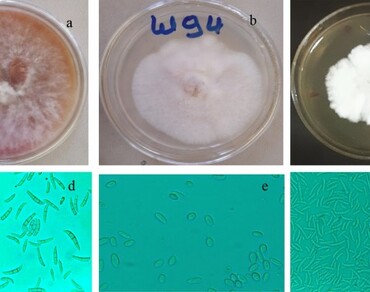
Hot pepper (Capsicum annuum L.) is susceptible to soilborne diseases incited by fungi and bacteria, and plant parasitic nematode species. This study was conducted to identify and characterize pathogens associated with hot pepper wilt complex disease and determine their frequency of occurrence. Wilted hot pepper root and stem samples were collected from pepper growing areas of northwestern Ethiopia during the 2020 main cropping season. Pathogen characterization assays were done based on cultural, morphological, and biochemical tests of the isolates. The causal pathogens were prioritized according to their frequency of occurrence in the survey areas. Pathogens associated with infected roots and stems were Fusarium oxysporum f.sp. capsici, Fusarium solani, Rhizoctonia solani, Pythium spp., and Ralstonia solanacearum. Among these, F. oxysporum f.sp. capsici and Pythium spp. were the most frequently (32.26%) and the least frequently (8.57%) occurring pathogens in the survey areas. The results revealed pathogens associated with wilted hot pepper samples in all inspected areas were highly variable in their cultural and morphological features. Fusarium oxysporum f.sp. capsici and F. solani produced pink, cottony-white, white, and creamy-white colonies with variability in their frequencies of occurrence on potato dextrose agar medium. Likewise, R. solani and Pythium spp. had quite similar cultural pigmentation, except the former had scelrotial formation on the front view of its culture. Cultural, morphological and biochemical tests also confirmed the presence of R. solanacearum in wilted samples. This study has confirmed that fungal, bacterial, and unidentified pathogens were found associated with hot pepper wilt complex disease in hot pepper growing fields of the study areas. The study offers insights into wilt complex pathogens and emphasizes the need for multi-disease-resistant hot pepper varieties and effective Integrated Disease Management (IDM) strategies. Thus, effective and sustainable management strategies targeted to those with complex disease-causing pathogens need priority focus in the survey areas and other locations with similar agro-ecologies.
References
Abdel-Monaim MF, Abdel-Gaid MA, Zayan SA (2014) Effectiveness of organic compounds in controlling root rots/wilt diseases, growth, and yield parameters of pepper. Int J Agric Sci 4(4):143–150
Arora H, Sharma A, Sharma S, Haron FF, Gafur A, Sayyed RZ, Datta R (2021) Pythium damping-off and root rot of Capsicum annuum L. impacts, diagnosis, and management. Microorganisms 9(4):1–17
Assefa M, Dawit W, Lencho A, Hunduma T (2015) Assessment of wilt intensity and identification of causal fungal and bacterial pathogens on hot pepper (Capsicum annuum L.) in Bako Tibbe and Nonno districts of West Shewa zone Ethiopia. Int J Phytopathol 4(1):21–28
Awel M (2017) Adaptability study of hot pepper (Capsicum spp.) varieties at Senegal Southern Ethiopia. J Plant Sci Res 5(5):130–133
Barnett HL, Hunter BB (1998) Illustrated genera of imperfect fungi, 3rd edn. American Phytopathological Society, Minneapolis, Burgess USA, p 241
Beyene T, David P (2007) Ensuring small scale producers in Ethiopia to achieve sustainable and fair access to pepper market. Uganda J Agric Sci 3(2):113–119
Chaudhry Z, Rashid H (2011) Isolation and characterization of Ralstonia solanacearum from infected tomato plants of Soanskesar valley of Punjab. Pak J Bot 43(6):2979–2985
CSA (Central Statistical Agency) (2021) Agricultural sample survey report on: area and production of major crops, 2021. Volume I. Addis Ababa, Ethiopia.
Dar GH, Mir GH, Rashid H, Dar WA, Majeed M (2015) Evaluation of microbial antagonists for the management of wilt/root rot and damping-off diseases in chilli (Capsicum annuum). Vegetos 28(4):102–110
El-Mohamady RSR, Nehal S, El-Mougy AMM, Mejda DR (2014) Survey of root and foliar fungal diseases of grown tomato at different locations in Egypt. Int J Eng Technol Innov 4:51–54
Elphinstone JG (2005) The current bacterial wilt situation: a global overview. In: Allen C, Piror P, Hayward AC (eds) Bacterial wilt disease and the Ralstonia solanacearum complex. American Pythtopathological Society Press, Minnesota, USA, pp 9–28
FAO (Food and Agriculture Organization) (2020) Dry pepper and chilie. Statistical database. http://faostat.fao.org/site/567/default.aspx#ancor. Accessed 22 Jun 2022.
Gabrekiristos E, Demiyo T (2020) Hot pepper Fusarium wilts (Fusarium oxysporum f.sp. capsici) epidemics, characteristic features and management options. J Agric Sci 12(10):347–360
Gabrekiristos E, Teshome D, Ayana G (2020) Cultural, morphological and pathogenic variability among isolates of Fusarium oxysporum f.sp. capsici causing wilt of hot pepper in Central Rift Valley Ethiopia. J Plant Pathol Microbiol 11(6):1–12
Gogoi M, Sarmah DK, Ali S (2017) Cultural and morphological variations of Fusarium solani (Mart.) Sacc. causing root rot of patchouli in Assam India. Int J Curr Microbiol Appl Sci 6(11):1889–1901
Gomez KA, Gomez AA (1984) Statistical procedures for agricultural research. John Wiley and Sons, Singapore, p 680
Hafizi R, Salleh B, Latiffah Z (2013) Morphological and molecular characterization of Fusarium solani and F. oxysporum associated with crown disease of oil palm. Braz J Microbiol 44(3):959–968
Hami A, Rasool RS, Khan NA, Mansoor S, Mir MA, Ahmed N, Masoodi KZ (2021) Morpho-molecular identification and first report of Fusarium equiseti in causing chili wilt from Kashmir. Sci Rep 11(1):1–14
Joshi M, Srivastava R, Sharma AK, Prakash A (2012) Screening of resistant varieties and antagonistic Fusarium oxysporum for biocontrol of Fusarium wilt of chilli. J Plant Pathol Microbiol 3(5):1–6
Kolattukudy PE, Gamble DL (1995) Pathogenesis and host specificity in plant diseases. In: Kohmoto K, Singh US, Singh RP (eds) Pathogenesis and Host Specificity in Plant Pathogenic Fungi and Nematodes, vol 2 Eukaryotes. Pergamon, Oxford, pp 83–102
Kurabachew H, Ayana G (2017) Bacterial wilt caused by Ralstonia solanacearum in Ethiopia: status and management approaches: a review. Int J Phytopathol 5(3):107–119
Lal M, Kandhari J (2009) Cultural and morphological variability in Rhizoctonia solani isolates causing sheath blight of rice. J Mycol Plant Pathol 39(1):77–81
Leslie JF, Summerell BA (2006) The Fusarium laboratory manual. Blackwell Publishing Ltd, UK, p 388
López AV, Bolaños BT, Morales MDJY, Pacheco RP, Escalante MQ (2009) Etiology of pepper wilt disease of’ Chillie de agua (Capsicum annuum L.) in Oaxaca, México. Rev Fitotec Mex 32(2):127–134
Manda RR, Addanki VA, Srivastava S (2020) Bacterial wilt of Solanaceae crops. Int J Chem Stud 8(6):1048–1057
Marame F (2009) Genetic analysis and improvement of hot pepper for yield, yield related traits and resistance to potato virus k and Ethiopian pepper mottle virus. Doctoral Dissertation, Haramaya University, Ethiopia.
Mastewal A, Chemeda F, Habtamu T, Mashilla D, Wassu M (2022) Agro-ecological factors influencing geographic distribution and epidemic development of hot pepper wilt complex disease in Northwestern Ethiopia. Int J Pest Manag 70(4):1387–1398
Mastewal A, Chemeda F, Habtamu T, Mashilla D, Wassu M (2024) Evaluation of hot pepper (Capsicum annuum L.) genotypes for their reaction to wilt complex disease and yield performance in Jabi Tehena district, northwestern Ethiopia. Can J Plant Pathol 46(6):569–579
Mendoza-de G (2022) Soilborne nematodes impact in agriculture and livestock and sustainable strategies of prevention and control with special reference to the use of nematode natural enemies. Pathogens 11(6):1–24
Meyer RW (1965). Heterokaryosis and nuclear phenomenon in Rhizoctonia. PhD Thesis, University of California, Berkeley, p 118.
Moni ZR, Ali MA, Alam MS, Rahman MA, Bhuiyan MR, Mian MS, Latif MA, Khan MAI (2016) Morphological and genetical variability among Rhizoctonia solani isolates causing sheath blight disease of rice. Rice Sci 23(1):42–50
Moura RM, Echandi E, Powell NT (1975) Interaction of Corynebacterium michiganense and Meloidogyne incognita on tomato. Phytopathol 65:1332–1335
Nelson PE, Toussoun TA, Marasas WFO (1983) Fusarium species: an Illustrated manual for identification. Pennsylvania State University Press, University Park, Pennsylvania, USA, p 193
Oljira T, Berta S (2020) Isolation and characterization of wilt-causing pathogens of local growing pepper (Capsicum annuum L.) in Gurage Zone, Ethiopia. Int J Agron: 1–8. https://doi.org/10.1155/2020/6638683
Raghu S, Benagi VI, Nargund VB (2016) Cultural, morphological and pathogenic variability among the isolates of Fusarium solani causing wilt disease of Chilli (Capsicum annuum L.). J Pure Appl Microbiol 10(1):599–604
Ramdial HA, Rampersad SN (2010) First report of Fusarium solani causing fruit rot of sweet pepper in Trinidad. Plant Dis 94(11):1375–1385
Rodriguez Y, Depestre T, Gomez O (2008) Efficiency of selection in pepper lines (Capsicum annuum L.) from four subpopulations in characters of productive interest. Cienc Investig Agrar 35(1):29–40
Schaad NW, Jones JB, Chun W (2001) Laboratory guide for the identification of plant pathogenic bacteria, 3rd edn. American Phytopathological Society Press, St Paul, USA, p 373
Author Information
Department of Horticulture, Debre Markos University, Debre Markos, Ethiopia