Vegetos

(An International Journal of Plant Research & Biotechnology)
(eISSN: 2229-4473)
Physcioid lichens as indicators of spatial variation in heavy metal deposition in the subtropical-temperate habitat of the Himalayas
*Article not assigned to an issue yet
Research Article | Published: 19 October, 2025
First Page: 0
Last Page: 0
Views: 466
Keywords: Lichen, Physcioid lichen, Subtropical-temperate Himalayan habitats, n Dirinarian , n Pyxinen
Abstract
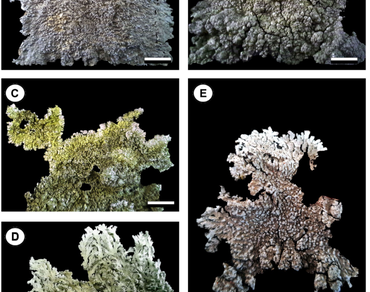
The subtropical–temperate habitats of the Himalayas form a transition between lowland subtropical forests and mid-elevation temperate zones. These areas are both highly diverse and heavily impacted by human disturbance. Lichens, symbiotic organisms of fungi and algae, serve as established bioindicators of heavy metal pollution. Although lichen-based studies on metal pollution exist in the Himalayas, subtropical–temperate zones remain underexplored. This study examines the biomonitoring potential of Physcioid lichens at two contrasting sites in Champawat, India: a reserve forest (PRF) and a highway-exposed location (ETC). The study assessed interspecific and site-level variability in heavy metal accumulation by physcioid lichens and its relation to land use. Epiphytic lichens were collected from tree trunks and analysed for metal concentrations using atomic absorption spectrophotometry (AAS). Heavy metal data were analysed using one-way ANOVA, Welch’s t-test, Pearson correlations, and principal component analysis (PCA). Visualisations included species-level boxplots and PCA biplots generated using R and Python. Five Physcioid lichens were recorded, with Dirinaria applanata, D. consimilis, and Pyxine sorediata common to both sites. Metal concentrations varied widely: iron (Fe) was most abundant, followed by aluminium (Al), magnesium (Mg), and zinc (Zn), while chromium (Cr) was below detection limits. Lichens at the highway site (ETC) accumulated nearly twice the total metal load compared to the reserve forest (PRF), likely due to vehicular emissions. Cumulative metal loads (ΣM10) were significantly higher in ETC lichens, with D. consimilis and D. aegialita showing particularly elevated Fe and Al levels. PCA showed that PC1 (78.9% variance) was driven by traffic-related metals (Fe, Al, Pb, Zn, Cu), clearly separating ETC from PRF samples. These results affirm that Physcioid lichens effectively capture both geogenic and anthropogenic pollution gradients and can serve as reliable tools for long-term ecological monitoring of Himalayan ecotones.
References
Abas A (2021) A systematic review on biomonitoring using lichen as the biological indicator: a decade of practices, progress and challenges. Ecol Indic 121:107197. https://doi.org/10.1016/j.ecolind.2020.107197
Abas A, Sulaiman N, Adnan NR, Aziz SA, Nawang WNSW (2019) Using lichen (Dirinaria sp.) as bio-indicator for airborne heavy metal at selected industrial areas in Malaysia. Environ Asia 12:85–90. https://doi.org/10.14456/ea.2019.48
Abdollahi S, Hassanzadeh N, Sohrabi M, Loppi S (2025) Biomonitoring of potentially toxic elements in the urban atmosphere of Tehran Metropolis using the lichen Anaptychia setifera (Mereschk.) Räsänen. Atmosphere 16(2):206. https://doi.org/10.3390/atmos16020206
Adžemović S, Aliefendić S, Mehić E, Ranica A, Vehab I, Alagić N, Delibašić Š, Herceg K, Karić M, Hadžić B, Gojak-Salimović S, Ljubijankić N, Džepina K, Ramić E, Huremović J (2023) Estimation of atmospheric deposition utilizing lichen Hypogymnia physodes, moss Hypnum cupressiforme and soil in Bosnia and Herzegovina. Int J Environ Sci Technol 20:1905–1918. https://doi.org/10.1007/s13762-022-04133-8
Awasthi DD (2007) A compendium of the macrolichens from India, Nepal and Sri Lanka. Bishen Singh Mahendra Pal Singh, Dehra Dun.
Bačkor M, Loppi S (2009) Interactions of lichens with heavy metals. Biol Plant 53:214–222. https://doi.org/10.1007/s10535-009-0042-y
Bahinskyi L, Świsłowski P, Isinkaralar O, Isinkaralar K, Rajfur M (2025) Low-cost monitoring of airborne heavy metals using lichen bioindicators: insights from Opole, Southern Poland. Atmosphere 16:576. https://doi.org/10.3390/atmos16050576
Banerjee S, Ram SS, Mukhopadhyay A, Jana N, Sudarshan M, Chakraborty A (2023) Potential of Epiphytic Lichen Pyxine cocoes, as an Indicator of Air Pollution in Kolkata, India. In: Proceedings of the national academy of sciences, India Section B: biological sciences, 93: 165-180. https://doi.org/10.1007/s40011-022-01395-7
Bernardo F, Rodrigues A, Branquinho C, Garcia P (2021) Elemental profile of native lichens displaying the impact by agricultural and artificial land uses in the Atlantic island of São Miguel (Azores). Chemosphere 267:128887. https://doi.org/10.1016/j.chemosphere.2020.128887
Brunialti G, Frati L (2023) Biomonitoring with lichens and mosses in forests. Forests 14(11):2265. https://doi.org/10.3390/f14112265
Budzyńska-Lipka W, Świsłowski P, Rajfur M (2022) Biological monitoring using lichens as a source of information about contamination of mountain with heavy metals. Ecol Chem Eng 29:155–168. https://doi.org/10.2478/eces-2022-0012
Carrillo W, Calva J, Benítez Á (2022) The use of bryophytes, lichens and bromeliads for evaluating air and water pollution in an Andean city. Forests 13:1607. https://doi.org/10.3390/f13101607
Çobanoğlu G, Kaan T (2024) Biomonitoring of atmospheric heavy metals in native lichen Xanthoria parietina around Salda Lake (Burdur–Turkey), a special environmental protection area. Air Qual Atmos Health 17:2789–2800. https://doi.org/10.1007/s11869-024-01602-6
Daimari R, Bhuyan P, Hussain S, Nayaka S, Mazumder MAJ, Hoque RR (2019) Biomonitoring by epiphytic lichen species—Pyxine cocoes (Sw.) Nyl.: understanding characteristics of trace metal in ambient air of different landuses in mid-Brahmaputra Valley. Environ Monit Assess 192:37. https://doi.org/10.1007/s10661-019-8007-x
de Jesus TA, Costa-Böddeker S, Fontana L, Mozeto AA, do Carmo Calijuri M, Albuquerque ALS, de Campos Bicudo D (2025) Metal pollution reconstruction in São Paulo City (southeast Brazil) over the twentieth century by paleolimnological approach. Environ Sci Pollut Res Int 32:4718–4732. https://doi.org/10.1007/s11356-025-35998-0
Dietrich M, Krekeler MP, Kousehlar M, Widom E (2021) Quantification of Pb pollution sources in complex urban environments through a multi-source isotope mixing model based on Pb isotopes in lichens and road sediment. Environ Pollut 288:117815. https://doi.org/10.1016/j.envpol.2021.117815
Ding H, Zhang Z, Wang Z, Wu Q, Wang D (2022) Using mosses and lichen to study roadside pollution and the correlation of toxic elements and elevation in a mountainous area of Guizhou, China. Taiwania 67:351–360
Elix JA (2014) A catalogue of standardized chromatographic data and biosynthetic relationships for lichen substances. 3rd edition. Published by the author, Canberra. https://www.anbg.gov.au/abrs/lichenlist/Chem%20Cat%203.pdf
Frati L, Brunialti G (2023) Recent trends and future challenges for lichen biomonitoring in forests. Forests 14:647. https://doi.org/10.3390/f14030647
Greenacre M, Groenen PJ, Hastie T, d’Enza AI, Markos A, Tuzhilina E (2022) Principal component analysis. Nat Rev Methods Primers 2:100. https://doi.org/10.1038/s43586-022-00184-w
Gupta S, Rai H, Upreti DK, Gupta RK, Sharma PK (2017) Lichenized fungi Phaeophyscia (Physciaceae, Ascomycota) as indicator of ambient air heavy metal deposition, along land use gradient in an alpine habitat of Western Himalaya. Pollution Res 36:150–157. https://doi.org/10.6084/m9.figshare.28183814
Halfadji A, Obeid E, Henry F, Cœur C (2025) Assessment of metals/metalloids and organic pollutants in road dust: a case study of diverse land uses. Stoch Environ Res Risk Assess 39:1817–1850. https://doi.org/10.1007/s00477-025-02936-y
Işik V, Yildiz A (2025) Accumulation of Airborne Trace Elements in Pseudevernia furfuracea (L.) Zopf Transplanted to Yozgat Province, Türkiye. J Nat Appl Sci 29:84–95. https://doi.org/10.19113/sdufenbed.1567997
Işık V, Yıldız A (2025) Accumulation of airborne trace elements in transplanted Pseudevernia furfuracea (L.) Zopf exposed at urban monitoring stations in Yozgat Province, Türkiye. Süleyman Demirel Üniversitesi Fen Bilimleri Enstitüsü Dergisi 29:84–95. https://doi.org/10.19113/sdufenbed.1567997
Jozwiak MA (2013) Ectohydricity of lichens and role of cortex layer in accumulation of heavy metals. Ecol Chem Eng 20:659. https://doi.org/10.2478/eces-2013-0045
Kassambara A, Mundt F (2020) Factoextra: extract and visualize the results of multivariate data analyses. R package version 1.0.7. https://CRAN.R-project.org/package=factoextra
Khelili A, Cloquet C, Dong S, Poszwa A, Mansuy-Huault L, Muel V, Gley R, Gauthier C, Fraysse F, Montargès-Pelletier E (2024) Assessment of particulate Zn and Pb sources in the Orne watershed (Northeast France) using geochemical tools. Environ Sci Pollut Res Int 31:36663–36684. https://doi.org/10.1007/s11356-024-33600-7
Kozlov MV, Zverev V, Zvereva EL (2025) Searching for a universal indicator of plant stress: a three-year study of three woody species in three environmental gradients in boreal forests: MV Kozlov et al. J for Res 36(1):99. https://doi.org/10.1007/s11676-025-01891-2
Kumari K, Kumar V, Nayaka S, Saxena G, Sanyal I (2023) Physiological alterations and heavy metal accumulation in the transplanted lichen Pyxine cocoes (Sw.) Nyl. in Lucknow city, Uttar Pradesh. Environ Monit Assess 196:84. https://doi.org/10.1007/s10661-023-12256-9
Labaran I (2019) Determination of some concentrated atmospheric pollutants such as heavy metal (Pb, Mn, Cd, Cr and Zn) in lichens found in urban and peri-urban areas of Kaduna state. International Digital Organization for Scientific Research (IDOSR) J Biol Chem Pharm 3:23–64
Lõhmus A, Motiejūnaitė J, Lõhmus P (2023) Regionally varying habitat relationships in lichens: the concept and evidence with an emphasis on North-Temperate ecosystems. J Fungi 9(3):341. https://doi.org/10.3390/jof9030341
Maslać Mikulec M, Likić S, Antonić O, Tkalec M (2025) Any way the wind blows does really matter in lichen response to air pollution from an oil refinery. Toxics 13:160. https://doi.org/10.3390/toxics13030160
Matei E, Râpă M, Mateș IM, Popescu AF, Bădiceanu A, Balint AI, Covaliu-Mierlă CI (2025) Heavy metals in particulate matter—trends and impacts on environment. Molecules 30:1455. https://doi.org/10.3390/molecules30071455
Mawarda PC, van der Kaaij R, Dini-Andreote F, Duijker D, Stech M, Speksnijder AG (2025) Unveiling the ecological processes driving soil and lichen microbiome assembly along an urbanization gradient. NPJ Biofilms Microbiomes 11:99. https://doi.org/10.1038/s41522-025-00736-4
Milow P, Abdullah R, Yong SLS, Nur SAH, Panhwar QA (2022) Atmospheric deposition of heavy metals in different land uses and biomonitoring of heavy metals using lichen. In: Aftab T, Hakeem K (ed.) Metals metalloids soil plant water systems. Academic press, 233–254. https://doi.org/10.1016/B978-0-323-91675-2.00019-6
Moreno-Palacios M, Torres-Benítez A, Soto-Medina E, Sánchez M, Divakar PK, Pereira I, Gómez-Serranillos MP (2024) Corticolous lichen communities and their bioindication potential in an urban and peri-urban ecosystem in the central region of Colombia. Land 13:932. https://doi.org/10.3390/land13070932
Nag P, Gupta RK, Upreti DK (2019) Lichenized fungi Stereocaulon foliolosum Nyl. (Stereocaulaceae, Ascomycota), indicator of ambient air metal deposition in a temperate habitat of Kumaun, central Himalaya, India. Trop Plant Res 6:199–205. https://doi.org/10.22271/tpr.2019.v6.i2.029
Nag P, Rai H, Gupta RK, Upreti DK (2020) Lichenized fungal family Physciaceae (Ascomycota) as an indicator of ambient air heavy metal pollution in a temperate forest of Western Himalaya, India. Shodh Sarita 7:190–193. https://doi.org/10.6084/m9.figshare.15129204.v1
Nag P, Rai H, Upreti DK, Gupta RK (2023) Assessment of lichens as bioindicator of ambient air heavy metal pollution in far-west Nepal. J Environ Biol 44:872–878. https://doi.org/10.22438/jeb/44/6/5142
Negi SS (2002) Handbook of Himalayan ecosystem and sustainability. Indus Publishing, New Delhi
Niepsch D, Clarke LJ, Jones RG, Tzoulas K, Cavan G (2024) Lichen biomonitoring to assess spatial variability, potential sources and human health risks of polycyclic aromatic hydrocarbons (PAHs) and airborne metal concentrations in Manchester (UK). Environ Monit Assess 196:379. https://doi.org/10.1007/s10661-024-12522-4
Orange A, James PW, White FJ (2010) Microchemical methods for the identification of lichens, 2nd edn. British Lichen Society, London
Paoli L, Fačkovcová Z, Guttová A (2025) Reconstructing air pollution trends in remote forests of Central Europe using lichen herbarium specimens. Arch Environ Contam Toxicol. https://doi.org/10.1007/s00244-025-01134-9
Pouillé S, Talbot J, Tamalavage AE, Kessler-Nadeau MÉ, King J (2024) Impacts of mineral dust on trace element concentrations (As, Cd, Cu, Ni and Pb) in lichens and soils at Lhù’ààn Mân’(Yukon Territory, Canada). J Geophys Res Biogeosciences 129:e2023JG007927. https://doi.org/10.1029/2023JG007927
Rai H, Upreti DK, Gupta RK (2012) Diversity and distribution of terricolous lichens as indicator of habitat heterogeneity and grazing induced trampling in a temperate-alpine shrub and meadow. Biodivers Conserv 21:97–113. https://doi.org/10.1007/s10531-011-0168-z
Rai H, Khare R, Gupta RK, Ade AB (2022) Physiochemical Response of the Lichen genus Everniastrum as Bioindicator of Ambient Air Nitrogen Deposition along with an Elevation Gradient in a Temperate-alpine Habitat of Western Himalaya. Cryptogam Biodivers Assess 6:39–44. https://doi.org/10.21756/cab.v6i1.07
Rola K, Latkowska E, Ogar W, Osyczka P (2022) Towards understanding the effect of heavy metals on mycobiont physiological condition in a widespread metal-tolerant lichen Cladonia rei. Chemosphere 308:136365. https://doi.org/10.1016/j.chemosphere.2022.136365
Sarret G, Manceau A, Cuny D, Van Haluwyn C, Déruelle S, Hazemann JL, Soldo Y, Eybert-Bérard L, Menthonnex JJ (1998) Mechanisms of lichen resistance to metallic pollution. Environ Sci Technol 32:3325–3330. https://doi.org/10.1021/es970718n
Shukla V, Upreti DK, Bajpai R (2014) Lichens to biomonitor the environment. Springer India, New Delhi. https://doi.org/10.1007/978-81-322-1503-5
Singh JS, Singh SP (1987) Forest vegetation of the Himalaya. Bot Rev 53:80–192. https://doi.org/10.1007/BF02858183
Singh P, Singh PK, Tondon PK, Singh KP (2018) Heavy metals accumulation by epiphytic foliose lichens as biomonitors of air quality in Srinagar city of Garhwal hills, Western Himalaya (India). Curr Res Environ Appl Mycol J Fungal Biol 8:282–289. https://doi.org/10.5943/cream/8/2/11
Singh JS, Singh SP (1992) Forests of Himalaya: structure, functioning and impact of man. Gyanodaya Prakashan, Nainital.
Syed Salleh SNA, Abas A (2023) Monitoring heavy metal concentrations using transplanted lichen in a tourism city of Malaysia. Sustainability 15:5885. https://doi.org/10.3390/f14030647
Taka M, Sillanpää N, Niemi T, Warsta L, Kokkonen T, Setälä H (2022) Heavy metals from heavy land use? Spatio-temporal patterns of urban runoff metal loads. Sci Total Environ 817:152855. https://doi.org/10.1016/j.scitotenv.2021.152855
Taufikurahman T, Irwanto RR, Saragih DE (2024) Assesing the impact of air pollution on lichen (Dirinaria picta (sw.) Schaer: morphological characteristics, magnetic grain analysis, and elemental composition. Jordan J Biol Sci 17:307–313. https://doi.org/10.54319/jjbs/170211
Thakur M, Chander H (2018) Bio-indicator lichens of Sikandra hills of North West Himalaya. Asian J Adv Basic Sci 6:35–37
Thakur M, Bhatt A, Sharma V, Mathur V (2024) Interplay of heavy metal accumulation, physiological responses, and microbiome dynamics in lichens: insights and future directions. Environ Monit Assess 196:926. https://doi.org/10.1007/s10661-024-13103-1
Upreti DK (2014) Multidimensional approaches in the study of lichens. In: Rana TS, Nair KN, Upreti DK (eds) Plant taxonomy and biosystematics: classical and modern methods. New India Publishing Agency, New Delhi, pp 73–99
Varrica D, Lo Medico F, Alaimo MG (2022) Air quality assessment by the determination of trace elements in lichens (Xanthoria calcicola) in an industrial area (Sicily, Italy). Int J Environ Res Public Health 19:9746. https://doi.org/10.3390/ijerph19159746
Waskom ML (2021) Seaborn: statistical data visualization. J Open Source Softw 6(60):3021. https://doi.org/10.21105/joss.03021
Wickham H (2016) ggplot2: elegant graphics for data analysis. Springer-Verlag, New York. https://doi.org/10.1007/978-3-319-24277-4
Wu YY, Gao J, Zhang GZ, Zhao RK, Liu AQ, Sun LW, Li X, Tang HL, Zhao LC, Guo XP, Liu HJ (2020) Two lichens differing in element concentrations have similar spatial patterns of element concentrations responding to road traffic and soil input. Sci Rep 10:19001. https://doi.org/10.1038/s41598-020-76099-x
Wu L, Isley CF, Handley HK, Taylor MP (2021) Atmospheric sources of anthropogenic and geogenic trace metals in Australian lichen and fungi. Anthropocene 33:100279. https://doi.org/10.1016/j.ancene.2021.100279
Xu P, Meng JW, Zheng X, Jin Q, Wu QF, Wang L, Liu AQ, Qiao SF, Xia Y, Liu HJ (2025) Examining effective exposure time and bioaccumulation rate of a sensitive and accurate active biomonitor (Ramalina Sinensis) for atmospheric suspended particulates. Appl Ecol Environ Res. https://doi.org/10.15666/aeer/2303_51335161
Yadav D, Pandey M (2024) Altitudinal gradient and Himalayan vegetation in changing climate: a short overview. In: Pal SC, Roy SS, Saha A, Abioui M (ed), Water resources monitoring, management, and sustainability application of geostatistics and geospatial modeling developments in environmental science, Elsevier, 16, 539–557. https://doi.org/10.1016/B978-0-443-23665-5.00023-5
Yıldız A, Işık V, Aydın SS (2024) Assessment of atmospheric pollution by heavy metals using transplanted lichen Pseudevernia furfuracea (L.) Zopf in Niğde Province, Türkiye. Süleyman Demirel Üniversitesi Fen Bilimleri Enstitüsü Dergisi 28:126–136. https://doi.org/10.19113/sdufenbed.1407028
Zakhozhiy IG, Shelyakin MA (2024) Accumulation and localization of metals in lichen thallus under conditions of dust pollution during open mining of boxite deposits. Russ J Ecol 55:32–41. https://doi.org/10.1134/S1067413624010090
R Core Team (2023) R: A language and environment for statistical computing. R Foundation for Statistical Computing. https://www.R-project.org/
Author Information
Department of Bioscience and Biotechnology, Banasthali Vidyapith, Tonk, India