Vegetos

(An International Journal of Plant Research & Biotechnology)
(eISSN: 2229-4473)
Phytochemical analysis and evaluation of antibacterial activity of some important medicinal plants against pathogenic bacteria
*Article not assigned to an issue yet
Research Article | Published: 25 May, 2026
First Page: 0
Last Page: 0
Views: 78
Keywords: Phytochemical screening, Petroleum ether extract, Antibacterial, MIC, Antioxidant, GC-MS analysis
Abstract
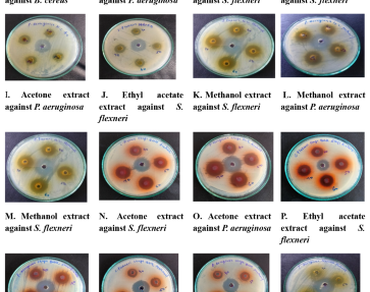
Numerous bioactive compounds found in medicinal plants can treat a wide range of human ailments and promote healing. Natural products provide an infinite number of opportunities for drug discovery due to their phytochemical diversity. The current study investigates the antibacterial activity of various extracts from four medicinal plants. i.e., Chaerophyllum villosum, Taxus wallichiana, Hieracium murorum, and Origanum vulgare, against six pathogenic microorganisms using the agar well diffusion method and the resazurin dye method. Petroleum ether extract from Chaerophyllum villosum leaves had the highest antibacterial activity against S. flexneri (24.7 ± 0.21 mm), followed by acetone extract of Taxus wallichiana bark (16 ± 0.71 mm) against P. aeruginosa, Hieracium murorum flower methanol extract (14.54 ± 0.32 mm) against P. aeruginosa at 7 mg/70 µl. Chaerophyllum villosum had a MIC of 2.5 mg/100 μl against S. aureus, S. typhi, S. flexneri, E. coli, and B. cereus P. aeruginosa. Qualitative phytochemical analysis revealed the presence of alkaloids, terpenoids, saponins, carbohydrates, phenolics, and flavonoids. A quantitative analysis revealed that Chaerophyllum villosum had 230 ± 0.25 mg AE/g of total alkaloids, followed by terpenoids (122 ± 0.23 mg LE/g), phenolics (85 ± 0.30 mg GAE/g), and flavonoids (44 ± 0.41 mg QE/g). Chaerophyllum villosum exhibited a maximum DPPH radical scavenging activity of 55.36 ± 0.02%, and the H2O2 scavenging activity was found to be 77.04 ± 0.04%. The GC-MS analysis revealed the presence of major components, including hexadecane (7.14%), eicosane (7.14%), and phytol acetate (5.81%). The present research findings revealed that crude extracts from various plant sources possess significant antibacterial and antioxidant properties, highlighting relevance in the discovery of novel drug compounds.
References
Abe N, Murata T, Hirota A (1998) Novel DPPH radical scavengers, bisorbicillinol and demethyltrichodimerol, from a fungus. Biosci Biotechnol Biochem 62(4):661–666. https://doi.org/10.1271/bbb.62.661
Adhikari P, Pandey A, Agnihotri V, Pande V (2018) Selection of solvent and extraction method for determination of antimicrobial potential of Taxus wallichiana Zucc. Res Pharm 8:1–9
Adil M, Dastagir G, Bakht J, Ambrin A (2020) Phytochemical screening and antimicrobial activity of medicinally important Achillea millefolium L and Chaerophyllum villosum Wall Exdc. Pak J Bot 52:971–974. https://doi.org/10.30848/PJB2020-3(29)
Adil M, Dastagir G, Sher AA, Rahim F, Quddoos A, Filimban FZ (2023) Cytotoxic, phytotoxic and insecticidal potential of Achillea millefolium L. and Chaerophyllum villosum Wall exdc. Braz J Biol 84:262479
Adil M, Dastagir G, Quddoos A, Naseer M, Filimban FZ (2024) HPLC analysis, genotoxic and antioxidant potential of Achillea millefolium L. and Chaerophyllum villosum all ex. Dc. BMC Complement Med Ther 24:91
Álvarez-Martínez FJ, Barrajón-Catalán E, Herranz-López M, Micol V (2021) Antibacterial plant compounds, extracts and essential oils: an updated review on their effects and putative mechanism of action. Phytomedicine 90:153626. https://doi.org/10.1016/j.phymed.2021.153626
Chaudhary P, Janmeda P, Docea AO, Yeskaliyeva B, Abdull Razis AF, Modu B, Calina D, Sharifi-Rad J (2023) Oxidative stress, free radicals and antioxidants: potential crosstalk in the pathophysiology of human diseases. Front Chem 11:1158198. https://doi.org/10.3389/fchem.2023.1158198
Devi M, Devi S, Sharma V, Rana N, Bhatia RK, Bhatt AK (2020) Green synthesis of silver nanoparticles using methanolic fruit extract of Aegle marmelos and their antimicrobial potential against human bacterial pathogens. J Tradit Complement Med 10:158–165. https://doi.org/10.1016/j.jtcme.2019.04.007
Dutt B, Nath D, Chauhan NS, Sharma KR, Sharma SS (2014) Ethnomedicinal plant resources of tribal Pangi Valley in District Chamba, Himachal Pradesh, India. Int J Bio-Resour Stress Manag 5(3):416–421. https://doi.org/10.5958/0976-4038.2014.00591.0
Farhadi K, Esmaeilzadeh F, Hatami M, Forough M, Molaie R (2016) Determination of phenolic compounds content and antioxidant activity in skin, pulp, seed, cane and leaf of five native grape cultivars in West Azerbaijan province, Iran. Food Chem 199:847–855. https://doi.org/10.1016/j.foodchem.2015.12.083
Firdaus M, Kartikaningsih H, Sulifah U (2019) Sargassum spp extract inhibits the growth of foodborne illness bacteria. AIP Conf Proc 1:020083
Gawrońska-Grzywacz M, Krzaczek T, Nowak R, Los R, Malm A, Cyranka M, Rzeski W (2011) Biological activity of new flavonoid from Hieracium pilosella L. Cent Eur J Biol 6(3):397–404. https://doi.org/10.2478/s11535-011-0017-9
Ghorai N, Chakraborty S, Gucchait S, Saha SK, Biswas S (2012) Estimation of total terpenoids concentration in plant tissues using a monoterpene, linalool as standard reagent. https://doi.org/10.1038/protex.2012.055
Hussen EM, Endalew SA (2023) In vitro antioxidant and free-radical scavenging activities of polar leaf extracts of Vernonia amygdalina. BMC Complement Med Ther 23(1):146. https://doi.org/10.1186/s12906-023-03923-y
Kafle S, Saugat RC, Thapa S, Pokharel S, Chaulagain A, Basnyat AS (2024) Investigation of phytochemicals, antimicrobial and antioxidant properties of Taxus wallichiana found in different altitudes of Nepal. Nepal J Biotechnol 12:67–73. https://doi.org/10.54796/njb.v12i1.305
Kim DY, Won KJ, Hwang DI, Kim NY, Kim B, Lee HM (2022) 1-Iodohexadecane alleviates 2, 4-dinitrochlorobenzene-induced atopic dermatitis in mice: possible involvements of the skin barrier and mast cell snare proteins. Molecules 27:1560. https://doi.org/10.3390/molecules27051560
Kumar I, Kumar U, Singh PK, Yadav JS, Dwivedi A, Singh P, Tripathi A, Sharma RK (2024) Phytochemical composition, antioxidant and antibacterial properties of methanol stem and leaf extracts of Croton bonplandianus Baill. Vegetos 15:1–1
Nisar M, Khan I, Ahmad B, Ali I, Ahmad W, Choudhary MI (2008) Antifungal and antibacterial activities of Taxus wallichiana Zucc. J Enzyme Inhib Med Chem 23:256–260. https://doi.org/10.1080/14756360701505336
Okechukwu PN (2020) Evaluation of anti-inflammatory, analgesic, antipyretic effect of eicosane, pentadecane, octacosane, and heneicosane. Asian J Pharm Clin Res https://doi.org/10.22159/ajpcr2020.v13i4.36196
Pavani C, Shasthree T (2022) Qualitative screening and quantitative determination of secondary metabolites from different plant extracts of Solanum khasianum Clarke. Res J Chem Environ 26:113–123. https://doi.org/10.25303/2612rjce1130123
Pezzani R, Vitalini S, Iriti M (2017) Bioactivities of Origanum vulgare L.: an update. Phytochem Rev 16:1253–1268. https://doi.org/10.1007/s11101-017-9535-z
Salkowski E (1885) Ueber das Verhalten der Skatolcarbonsäure im Organismus. Biol Chem 9:23–33. https://doi.org/10.1515/bchm1.1885.9.1.23
Thakur K, Bala I, Rajeshwer DM, Bhatt AK (2017) Evaluation of the effectiveness of biologically synthesized silver nanoparticles of Eucalyptus globules leaf extract against pathogenic and acne-inducing bacteria. J Nanomed Nanotechnol 8:443. https://doi.org/10.4172/2157-7439.1000443
Willer J, Zidorn C, Juan-Vicedo J (2021) Ethnopharmacology, phytochemistry, and bioactivities of Hieracium L. and Pilosella Hill (Cichorieae, Asteraceae) species. J Ethnopharmacol 281:114465
Author Information
Department of Biotechnology, Himachal Pradesh University, Shimla, India