Vegetos

(An International Journal of Plant Research & Biotechnology)
(eISSN: 2229-4473)
Phytochemical constituents, antioxidant and antibacterial activities of two Dendrobium hybrids
*Article not assigned to an issue yet
Research Article | Published: 15 August, 2025
First Page: 0
Last Page: 0
Views: 479
Keywords: Antibacterial, Phytochemicals, Antioxidant, n Dendrobiumn , LC-MS
Abstract
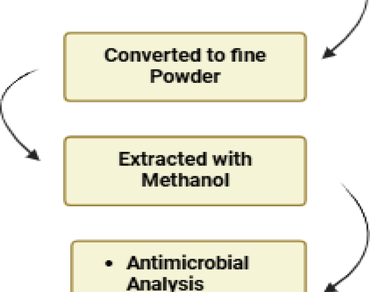
The purpose of this study is to examine the phytochemical constituents, antioxidant capacity, and antibacterial activity of methanolic leaf extracts from Dendrobium “Sonia Earsakul” and Dendrobium “Singapore White,” two extensively grown but little-studied Dendrobium hybrids. In order to support their pharmacological significance and conservation, the goal is to evaluate their bioactive ingredients and validate their therapeutic potential. Qualitative phytochemical screening, agar well diffusion and MIC assays for antibacterial assessment, FRAP assay for antioxidant activity, FTIR analysis for functional group identification and Liquid Chromatography Mass Spectrometry (LC-MS) profiling were used to find key bioactive components using LC MS spectrum. Alkaloids, flavonoids, phenols, and steroids were detected by phytochemical screening, indicating potential medical use. According to antibacterial tests, Dendrobium “Sonia Earsakul” was more effective against Escherichia coli (MIC = 25 mg/ml) than Dendrobium “Singapore White” which efficiently inhibited Staphylococcus aureus (MIC = 12.5 mg/ml). Strong antioxidant activity was demonstrated by FRAP research in both species, but especially in Dendrobium “Sonia Earsakul”. Functional groups such -OH, -NH, C = O, and C-O were validated by FTIR, showing molecules with antibacterial and antioxidant activity. LC-MS analysis showed unique chemical profiles. Sonia Earsakul included hesperidin, rutin, soyasaponins, and derivatives of quercetin, while Singapore White was rich in isorhamnetin-3-glucoside, ginsenoside Rg1, and sphingomyelin, highlighting its adaptogenic and neuroprotective qualities. Strong bioactive compounds found in these Dendrobium hybrids validate their ethnomedical significance and potential use in the pharmaceutical and cosmetic industries. They also suggest that these hybrids may be used to develop natural antioxidants and alternative antimicrobial agents. Additionally, because these.
References
Abass S, Parveen R, Irfan M, Malik Z, Husain SA, Ahmad S (2024) Mechanism of antibacterial phytoconstituents: an updated review. Arch Microbiol 206(7). https://doi.org/10.1007/s00203-024-04035-y
Abew B, Sahile S, Moges F (2014) In vitro antibacterial activity of leaf extracts of Zehneria scabra and ricinus communis against Escherichia coli and methicillin resistance Staphylococcus aureus. Asian Pac J Trop Biomed 4(10):816–820. https://doi.org/10.12980/apjtb.4.201414b16
Ayanaw MA, Yesuf JS, Birru EM (2023) Evaluation of analgesic and Anti-inflammatory activities of methanolic leaf and root extracts of gomphocarpuspurpurascens A. Rich (Asclepiadaceae) in mice. J Experimental Pharmacol 15:1–11. https://doi.org/10.2147/jep.s361194
Aswandi A, Kholibrina CR (2021) Ethnomedicinal properties of orchidaceae by local communities in Lake Toba region, North Sumatra, Indonesia. IOP Conference Series Earth and Environmental Science, 914(1), 012056. https://doi.org/10.1088/1755-1315/914/1/012056
Aparna V, Dileep KV, Mandal PK, Karthe P, Sadasivan C, Haridas M (2012) Anti-Inflammatory property of N‐Hexadecanoic acid: structural evidence and kinetic assessment. Chem Biol Drug Des 80(3):434–439. https://doi.org/10.1111/j.1747-0285.2012.01418.x
Bakrim S, Benkhaira N, Bourais I, Benali T, Lee L, Omari NE, Sheikh RA, Goh KW, Ming LC, Bouyahya A (2022) Health benefits and Pharmacological properties of stigmasterol. Antioxidants 11(10):1912. https://doi.org/10.3390/antiox11101912
Behura NA, Kothakota NJ, Behera B, Teja SA, Routray SK, Babu R (2024) Advancements in Orchidaceae species identification: A comprehensive review of traditional and molecular methods. Int J Experimental Res Rev 43:229–252. https://doi.org/10.52756/ijerr.2024.v43spl.017
Brewer (2011) Natural antioxidants: sources, compounds, mechanisms of action, and potential applications. Compr Rev Food Sci Food Saf 10(4):221–247. https://doi.org/10.1111/j.1541-4337.2011.00156.x
Bot Verification. (n.d.-b). http://www.rasayanjournal.com/
Benzie IF, Strain J (1996) The ferric reducing ability of plasma (FRAP) as a measure of antioxidant power: the FRAP assay. Anal Biochem 239(1):70–76. https://doi.org/10.1006/abio.1996.0292
Benzie IF, Strain J (1999) [2] ferric reducing/antioxidant power assay: direct measure of total antioxidant activity of biological fluids and modified version for simultaneous measurement of total antioxidant power and ascorbic acid concentration. Methods Enzymol CD-ROM/Methods Enzymol 15–27. https://doi.org/10.1016/s0076-6879(99)99005-5
Chan CF, Wu CT, Huang WY, Lin WS, Wu HW, Huang TK, Chang MY, Lin YS (2018) Antioxidation and melanogenesis Inhibition of various dendrobium Tosaense extracts. Molecules 23(7):1810. https://doi.org/10.3390/molecules23071810
Chinembiri T, Du Plessis L, Gerber M, Hamman J, Du Plessis J (2014) Review of natural compounds for potential skin cancer treatment. Molecules 19(8):11679–11721. https://doi.org/10.3390/molecules190811679
Dressler RL (1994) Phylogeny and classification of the Orchid family. Choice Reviews Online 31(05):31–2679. https://doi.org/10.5860/choice.31-2679
Davis WW, Stout TR (1971) Disc plate method of Microbiological antibiotic assay. Appl Microbiol 22(4):659–665. https://doi.org/10.1128/am.22.4.659-665.1971
Devi DR, Battu GR (2019) Qualitative phytochemical screening and FTIR spectroscopic analysis of Grewia tilifolia (Vahl.) leaf extracts. Int J Curr Pharm Res 100–107. https://doi.org/10.22159/ijcpr.2019v11i4.34936
Dai J, Mumper RJ (2010) Plant phenolics: extraction, analysis and their antioxidant and anticancer properties. Molecules 15(10):7313–7352. https://doi.org/10.3390/molecules15107313
Ghosh A, Das BK, Roy A, Mandal B, Chandra G (2007) Antibacterial activity of some medicinal plant extracts. J Nat Med 62(2):259–262. https://doi.org/10.1007/s11418-007-0216-x
Ghosh SS, Bhattacharjee A (2010) Orchids and their importance in the traditional system of medicine– A review. J Med Plants Res 4(11):1089–1098
Harborne JB (1973) Phytochemical Methods: A Guide to Modern Techniques of Plant Analysis.https://www.springer.com/cda/content/document/productFlyer/productFlyer_978-0-412-57260-9.pdf?SGWID=0-0-1297-33550746-0
Hossain MM, Sharma M, Teixeira da Silva JA, Pathak P (2013) Phytochemistry and Pharmacological properties of Dendrobium orchids. Chin J Integr Med 19(10):792–798. https://doi.org/10.1007/s11655-013-1609-7
Harada H, Yamashita U, Kurihara H, Fukushi E, Kawabata J, Kamei Y (2002) Antitumor activity of palmitic acid found as a selective cytotoxic substance in a marine red Alga. Anticancer Res 22(5):2587–2590
Kadeřábková N, Mahmood AJS, Mavridou DaI (2024) Antibiotic susceptibility testing using minimum inhibitory concentration (MIC) assays. Npj Antimicrobials Resist 2(1). https://doi.org/10.1038/s44259-024-00051-6
Kebede B, Shibeshi W (2022) In vitro antibacterial and antifungal activities of extracts and fractions of leaves of ricinus communis Linn against selected pathogens. Veterinary Med Sci 8(4):1802–1815. https://doi.org/10.1002/vms3.772
Kumar A, Jha K, Kumar D, Agrawal A, Gupta A (2012) Preliminary phytochemical analysis of leaf and bark (Mixture) extract of ficus infectoria plant. Deleted J 1(5):71–76. https://www.thepharmajournal.com/vol1Issue5/Issue_july_2012/7.7.pdf
Medicinal properties and uses of orchids: a concise review (2012) In Elixir Appl. Botany (Vols. 52–52, pp. 11627–11634). https://chfcau.org.in/sites/default/files/pdf/epub/Medicinal-Orchid.pdf
Minh T, Khang D, Tuyen P, Minh L, Anh L, Quan N, Ha P, Quan N, Toan N, Elzaawely A, Xuan T (2016) Phenolic compounds and antioxidant activity of phalaenopsis Orchid hybrids. Antioxidants 5(3):31. https://doi.org/10.3390/antiox5030031
Patwardhan B, Warude D, Pushpangadan P, Bhatt N (2005) Ayurveda and traditional Chinese medicine: A comparative overview. Evidence-based Complement Altern Med 2(4):465–473. https://doi.org/10.1093/ecam/neh140
Pokorný J (2007) Are natural antioxidants better– and safer– than synthetic antioxidants? Eur J Lipid Sci Technol 109(6):629–642. https://doi.org/10.1002/ejlt.200700064
Paudel MR, Bhattarai HD, Pant B (2020) Traditionally Used Medicinal Dendrobium: A Promising Source of Active Anticancer Constituents. In Reference series in phytochemistry (pp. 1–26). https://doi.org/10.1007/978-3-030-11257-8_16-1
Rashmi K, Shweta S, Sudeshna C, Vrushala P, Kekuda T, Raghavendra H (2015) Antibacterial and radical scavenging activity of selected orchids of karnataka, India. Sci Technol Arts Res J 4(1):160. https://doi.org/10.4314/star.v4i1.27
Rashmi R, Negi AS (2020) Plant-derived steroids: the current state of knowledge and future prospects. Curr Med Chem 27(26):4347–4374. https://doi.org/10.2174/0929867326666191002152330
Rajput D, Saikia LR (2020) GCMS analysis of phyto components of the musky smelling Dendrobium–Dendrobium moschatum. Ecology, environment and conservation, 26, Pages215-220. https://doi.org/10.13140/RG.2.2.29976.72969
Rahamtulla M, Mallikarjuna K, Khasim SM et al (2023) GC-MS analysis and therapeutic importance of leaf extracts of dendrobium aphyllum (Roxb.) CEC fischer: an in vitro study. South Afr J Bot 153:62–76. https://doi.org/10.1016/j.sajb.2022.12.011
Roy R, Debnath D, Ray S (2021) Comprehensive assessment of various lignocellulosic biomasses for energy recovery in a hybrid energy system. Arab J Sci Eng 47(5):5935–5948. https://doi.org/10.1007/s13369-021-05723-3
Roy R, Ray S (2019) Effect of various pretreatments on energy recovery from waste biomass. Energy Sources Part Recovery Utilization Environ Eff 45(3):9616–9628. https://doi.org/10.1080/15567036.2019.1680767
Saxena M, Saxena J, Nema R, Singh D, Gupta A (2013) Phytochemistry of medicinal plants. J Pharmacognosy Phytochemistry 1(6):168–182
Saeed NM, El-Demerdash E, Abdel-Rahman HM, Algandaby MM, Al-Abbasi FA, Abdel-Naim AB (2012) Anti-inflammatory activity of Methyl palmitate and Ethyl palmitate in different experimental rat models. Toxicol Appl Pharmcol 264(1):84–93. https://doi.org/10.1016/j.taap.2012.07.020
Sohag SI, Hoque MM, Huda MK (2017) Phytochemical screening and antioxidant activity of rare medicinal Orchid Luisia Zeylanica Lindl. J Pharmacognosy Phytochemistry 6(4):688–692. https://www.phytojournal.com/archives/2017/vol6issue4/PartJ/6-3-86-753.pdf
Shafazila, T. S., Lee, P. M., & Hung, N. L. K. (2010). Radical scavenging activities of extract and solvent-solvent partition fractions from Dendrobium Sonia Red Bom flower. https://doi.org/10.1109/cssr.2010.5773886
Śliwiński T, Kowalczyk T, Sitarek P, Kolanowska M (2022) Orchidaceae-Derived anticancer agents: A review. Cancers 14(3):754. https://doi.org/10.3390/cancers14030754
Srinivasan PA (2011) Isolation, spectral and optical analysis of fistulic acid– A phytochemical constituent of Cassia fistula Linn. Indian J Sci Technol 4(4):422–424. https://doi.org/10.17485/ijst/2011/v4i4.11
Tungmunnithum D, Thongboonyou A, Pholboon A, Yangsabai A (2018) Flavonoids and other phenolic compounds from medicinal plants for pharmaceutical and medical aspects: an overview. Medicines 5(3):93. https://doi.org/10.3390/medicines5030093
Wong CC, Li HB, Cheng KW, Chen F (2006) A systematic survey of antioxidant activity of 30 Chinese medicinal plants using the ferric reducing antioxidant power assay. Food Chem 97(4):705–711. https://doi.org/10.1016/j.foodchem.2005.05.049
Wang YH (2021) Traditional uses and Pharmacologically active constituents of dendrobium plants for dermatological disorders: A review. Nat Prod Bioprospecting 11(5):465–487. https://doi.org/10.1007/s13659-021-00305-0
Yan Y, Li X, Zhang C, Lv L, Gao B, Li M (2021) Research progress on antibacterial activities and mechanisms of natural alkaloids: A review. Antibiotics 10(3):318. https://doi.org/10.3390/antibiotics10030318
Author Information
School of Forensic Science, Centurion University of Technology and Management, Jatni, Bhubaneswar, India