Vegetos

(An International Journal of Plant Research & Biotechnology)
(eISSN: 2229-4473)
Phytoremediation of palm oil mill effluent contaminated soils using three potential plants
*Article not assigned to an issue yet
Oke Oluwatosin Gabriel, Adewole Moses Bamidele, Akinpelu Bolajoko Ayinke
Research Articles | Published: 11 July, 2026
First Page: 0
Last Page: 0
Views: 80
Keywords: Phytoremediation, Nicotiana tabacum, Amaranthus hybridus, Corchorus olitorius, Metals
Abstract
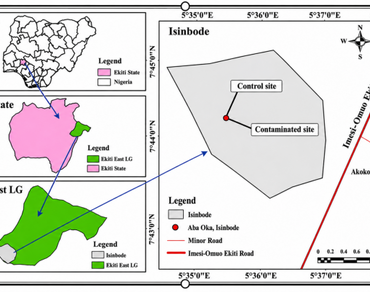
The study investigated remediation of palm oil mill effluent (POME) contaminated soils using Nicotiana tabacum (NIC), Amaranthus hybridus (AMA), and Corchorus olitorius (COR) plants. The study was carried out in Aba-oka Isinbode, Ekiti State, Nigeria. It was a field experiment conducted during the early rainy (May to the middle of August), late rainy (the middle of August to the middle of October), and early dry (the middle of October to December) seasons. Soil that has been exposed to continuous POME discharge from an oil palm mill for over 7 years and non-contaminated soils served as the study sites. Each site measured 8.5 m x 15 m, with 2.5 m x 1.5 m subplots, replicated four times to make a total of 12 subplots for each season. Soil samples were collected at the depths of 0–15 cm throughout the sowing period and analyzed using appropriate standard methods. The results show that soil pH in the non-contaminated and contaminated soils is 5.89 ± 0.55 and 6.85 ± 0.15 respectively. The remediation efficiency across the soils in which the study plants were grown is in this order: AMA > COR > NIC. The study concluded that palm oil mill effluent-contaminated soil could be significantly cleaned up using Amaranthus hybridus, Corchorus olitorius, and Nicotiana tabacum. It is therefore recommended that edible food crops should not be cultivated on POME-contaminated soils.
References
Adepetu JA, Obi AO, Amusan AA (1984) Soil science laboratory manual, Department of Soil Science, University of Ife Laboratory Manual. 2nd edn. 33–206
Ako PAE, Anegbe B (2022) Total and available copper and zinc in soils affected by palm oil mill effluent in Oghareki, Oghara Kingdom, Delta State, Nigeria. J Appl Sci Environ Manage 26(6):1049–1055. https://doi.org/10.4314/jasem.v26i6.8
Ali H, Khan E, Sajad MA (2013) Phytoremediation of heavy metals, concepts and applications. Chemosphere 91(7):869–881. https://doi.org/10.1016/j.chemosphere.2013.01.075
Hassan Al-Taai SH (2021) Soil pollution-causes and effects. IOP Conf Ser Earth Environ Sci 790(1): 012009. https://doi.org/10.1088/1755-1315/790/1/012009
Aryal M (2024) Phytoremediation strategies for mitigating environmental toxicants. Heliyon 10(19):e38683. https://doi.org/10.1016/j.heliyon.2024.e38683
Bremner JM (1965) Total nitrogen. Methods Soil Anal Part 2 Chem Microbiol Prop 9:1149–1178. https://doi.org/10.2134/agronmonogr9.2.c32
Chinyere GC, Nwaogwugwu CJ, Atasie OC (2018) Effects of palm oil mill effluent (POME) dumping on soil physicochemical parameters and selected plant nutrients in Uturu, Abia State, Nigeria. Global Sci Journals 6(1):244–259. http://www.globalscientificjournal.com/
Ciaramella BR, Corinzia SA, Cosentino SL, Testa G (2022) Phytoremediation of heavy metal contaminated soils using safflower. Agronomy 12:2302. https://doi.org/10.3390/agronomy12102302
Costa C, Santos A, Vega MA (2022) Kinetics of Arab light crude oil degradation by pseudomonas and bacillus strains. Water 14(23):3802. https://doi.org/10.3390/w14233802
Daghan H, Uygur V (2021) Lead phytoremediation potential of wild type and transgenic tobacco plants. ISPEC J Agricultural Sci 5(1):168–182. https://doi.org/10.46291/ISPECJASvol5iss1pp168-182
Derakhshan Nejad Z, Jung MC, Kim KH (2018) Remediation of soils contaminated with heavy metals with an emphasis on immobilization technology. Environ Geochem Health 40(3):927–953. https://doi.org/10.1007/s10653-017-9964-z
Dhaliwal SS, Singh J, Taneja PK, Mandal A (2020) Remediation techniques for removal of heavy metals from the soil contaminated through different sources: a review. Environ Sci Pollut Res 27(2):1319–1333. https://doi.org/10.1007/s11356-019-06967-1
Dutta A, Patra A, Jatav HS, Jatav SS, Singh SK, Sathyanarayana E, Verma S, Singh P (2020) Toxicity of cadmium in soil-plant-human continuum and its bioremediation techniques. Soil Contam Threat Sustain Solut. https://doi.org/10.5772/intecopen.94307
Ebere JU, Wokoma EC, Wokocha CC (2011) Enhanced remediation of a hydrocarbon polluted soil. Res J Environ Earth Sci 3(2):70–74
Garba MD, Mohammed MI, Kiyawa SA (2018) Heavy metals accumulation in amaranths (Amaranthus hybridus) and jews mallow (Corchorus olitorius) grown on soil amended with tannery sludge from Challawa industrial area, Kano State, Nigeria. IOSR J Environ Sci Toxicol Food Techn 12(2):41–45. https://doi.org/10.9790/2402-1202014145
Gaur VK, Gautam K, Sharma P, Gupta P, Dwivedi S, Srivastava JK, Varjani S, Ngo HH, Kim SH, Chang JS, Bui XT (2022) Sustainable strategies for combating hydrocarbon pollution: special emphasis on Mobil Oil bioremediation. Sci Total Environ 832:155083. https://doi.org/10.1016/j.scitotenv.2022.155083
Haller H, Pronoza L, Dyer M, Ahlgren M, Bergqvist L, Flores-Carmenate G, Jonsson A (2023) Phytoremediation of heavy-metal-contaminated soils: capacity of amaranth plants to extract cadmium from nutrient-poor, acidic substrates. Challenges 14(2):28. https://doi.org/10.3390/challe14020028
Hu S, Zhang Y, Meng H, Yang Y, Chen G, Wang Q, Cheng K, Guo C, Li X, Liu T (2024) Transformation and migration of Hg in a polluted alkaline paddy soil during flooding and drainage processes. Environ Pollut 345:123471. https://doi.org/10.1016/j.envpol.2024.123471
Jia J, Dai H, Zhan J, Wei S, Miszczak E, Chang J (2025) Cadmium uptake/accumulation from low and moderately contaminated soil by different tobacco (Nicotiana tabacum L.) cultivars and their management suggestion in the human health context. Ind Crops Prod 233:121458
Khomiakov DM (2020) Soil is an essential component of the biosphere and the global food system (critical assessment of the situation). Mosc Univ Soil Sci Bull 75(4):147–158. https://doi.org/10.3103/S0147687420040055
Lavanya MB, Viswanath DS, Sivapullaiah PV (2024) Phytoremediation: an eco-friendly approach for remediation of heavy metal-contaminated soils comprehensive review. Environ Nanatechnol Monit Manag 22:100975. https://doi.org/10.1016/j.enmm.2024.100975
O McLean E (1982) Soil pH and lime requirement. Methods Soil Anal Part 2 Chem Microbiol Prop 9:199–224. https://doi.org/10.2134/agronmonogr9.2.2ed.c12
Murphy JAMES, Riley JP (1962) A modified single solution method for the determination of phosphate in natural waters. Anal Chim Acta 27:31–36. https://doi.org/10.1016/S0003-2670(00)88444-5
Odu CTI, Babalola O, Udo EJ, Ogunkale AO, Bakara TA, Adeoye GO, Ibaden (1986) Nigeria: laboratory manual, department of agronomy, University of Ibadan
Oke OG, Adewole MB, Akinpelu BA (2022) Growth response and antioxidant enzyme capability of Helianthus annuus L. in lead contaminated soil under organic and urea fertilizer applications. Int J Sci Rep 8(10):274. https://doi.org/10.18203/issn.2454-2156.IntJSciRep20222392
Okwute LO, Isu NR (2017) The environmental impact of palm oil mill effluent (pome) on some physico-chemical parameters and total aerobic bioload of soil at a dump site in Anyigba, Kogi State, Nigeria. Adv Agric Sci 3(3):001–007
Raklami A, Meddich A, Oufdou K, Baslam M (2022) Plants: microorganisms-based bioremediation for heavy metal cleanup—recent developments, phytoremediation techniques, regulation mechanisms, and molecular responses. Int J Mol Sci 23(9):5031
Rashid S (2017) Effects of the economic problems of environmental pollution in Iraq and methods for its treatment. Al-Mustansiriya J Arab Int Stud 14:106
Rodríguez-Eugenio N, McLaughlin M, Pennock D (2018) Soil pollution: a hidden reality. http://www.fao.org/3/i9183en/I9183EN.pdf
Roy J, Dutta S, Pal T, Sarowar SG, Saha C, Rupesh T (2026) Modified biochar for remediation of potentially toxic elements in soils: a systematic review of modification approaches, novel mechanisms and field-scale applications. Discover Soil 3(1):14. https://doi.org/10.1007/s44378-026-00170-8
Samanth M (2024) An inclusive evaluation of soil pollution and its remediation by chemical, physical and biological methods. Phys Biol Methods
Santos M, Rebola S, Evtuguin DV (2025) Soil remediation: current approaches and emerging bio-based trends. Soil Syst 9(2):35. https://doi.org/10.3390/soilsystems9020035
Teodoro M, Hejcman M, Vítková M, Wu S, Komárek M (2020) Seasonal fluctuations of Zn, Pb, As and Cd contents in the biomass of selected grass species growing on contaminated soils: implications for in situ phytostabilization. Sci Total Environ 703:134710. https://doi.org/10.1016/j.scitotenv.2019.134710
Thomas GW (1982) Exchangeable cations. Methods Soil Anal Part 2 Chem Microbiol Prop 9:159–165. https://doi.org/10.2134/agronmonogr9.2.2ed.c9
Tüzen M (2003) Determination of heavy metals in soil, mushroom and plant samples by atomic absorption spectrometry. Microchem J 74(3):289–297. https://doi.org/10.1016/S0026-265X(03)00035-3
Udaya Sri M, Korra T, Perumal T, Sabina Mary D (2025) Sources of agricultural soil pollution: the impact of waste sorting policy on air pollution and agricultural soil. Producing healthy food with healthy soils: hazardous waste management. Springer, Cham, pp 185–192. https://doi.org/10.1007/978-3-031-82536-1_16
Walkley A, Black IA (1934) An examination of the Degtjareff method for determining soil organic matter, and a proposed modification of the chromic acid titration method. Soil Sci 37(1):29–38
WHO (1996) Permissible limit of heavy metals in soils and plants. Geneva, Switzerland
WHO—World Health Organization (2007) Guidelines for assessing quality of herbal medicines with reference to contaminants and residues. WHO, World Health Organization: Geneva, Switzerland
Wu TY, Mohammad AW, Jahim JM, Anuar N (2009) A holistic approach to managing palm oil mill effluent (POME): Biotechnological advances in the sustainable reuse of POME. Biotechnol Adv 27(1):40–52
Yan A, Wang Y, Tan SN, Yusof M, Ghosh ML, S. and, Chen Z (2020) Phytoremediation: a promising approach for revegetation of heavy metal-polluted land. Front Plant Sci 11:359. https://doi.org/10.3389/fpls.2020.00359
Author Information
Institute of Ecology and Environmental Studies, Obafemi Awolowo University, Ile-Ife, Nigeria