Vegetos

(An International Journal of Plant Research & Biotechnology)
(eISSN: 2229-4473)
Potentiality of Bacillus amyloliquefaciens as a biocontrol agent for management of anthracnose disease in chilli: an in vitro analysis
*Article not assigned to an issue yet
Yadav Priti, Niharika, Dubey Neetu, Shweta, Chakraborty Nirmalya, Khatua Somanjana
Research Article | Published: 26 May, 2026
First Page: 0
Last Page: 0
Views: 87
Keywords: Biocontrol, Dual culture, PGPR, Seedling vigor, Seed priming
Abstract
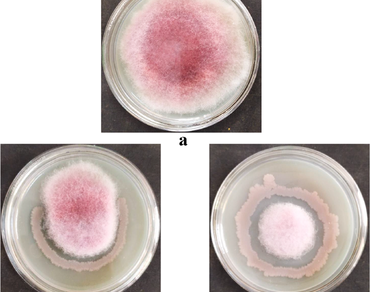
Anthracnose, caused by Colletotrichum capsici, poses a significant challenge to chilli (Capsicum annuum L.) cultivation, particularly affecting ripened fruits and leading to substantial yield and quality losses. In light of rising disease pressure and growing concerns over chemical fungicide use, this study explores the potential of Bacillus amyloliquefaciens as a sustainable biocontrol and plant growth-promoting agent. Dual culture assays revealed pronounced antifungal activity, with up to 56.8% inhibition of pathogen growth in five days. Microscopic observations showed severe hyphal deformities; while culture filtrate and volatile assays further confirmed the production of potent antifungal compounds. Beyond disease suppression, seed priming with B. amyloliquefaciens accelerated germination, stimulated root and shoot development, and thus significantly improved seedling vigour. These results thus position B. amyloliquefaciens as a promising eco-friendly solution for managing anthracnose while promoting healthier, more resilient chilli crops. Field-level validation and formulation development will further help to realize its full potential in sustainable farming.
References
Ashwini N, Srividya S (2014) Potentiality of Bacillus subtilis as biocontrol agent for management of anthracnose disease of chilli caused by Colletotrichum gloeosporioides OGC1. 3 Biotech 4(2):127–136. https://doi.org/10.1007/s13205-013-0134-4
Bhakat A, Sen S, Banerjee S, Sarkar K (2023) Plant growth promotion and lipopeptide-mediated biological control of chilli pathogen Colletotrichum siamense by endophytic Bacillus sp. Physiol Mol Plant Pathol 125:102026. https://doi.org/10.1016/j.pmpp.2023.102026
Birari BP, Gade RM, Chuodhari RK (2018) Antifungal efficacy of plant extracts, biocontrol agents against Colletotrichum capsici causing anthracnose of chilli. J Pharmacogn Phytochem 7(5):1368–1373. https://doi.org/10.1016/j.pmpp.2023.102026
Calvo H, Mendiara I, Arias E, Gracia AP, Blanco D, Venturini ME (2020) Antifungal activity of the volatile organic compounds produced by Bacillus velezensis strains against postharvest fungal pathogens. Postharvest Biol Technol 166:111208. https://doi.org/10.1016/j.postharvbio.2020.111208
Chakraborty N, Chakraborty N, Acharyya P, Acharya K (2021) Isolation, characterization and identification of novel broad spectrum bacterial antagonist(s) to control Fusarium wilt of eggplant. Physiol Mol Plant Pathol 116:101711. https://doi.org/10.1016/j.pmpp.2021.101711
Chatterjee S, Maiti CK, Sen S, Acharya K (2007) Antagonism of fluorescent Pseudomonas WS-1 towards Alternaria alternata. J Mycopathol Res 45:231–235
Chinthagunta L, Zacharia S (2018) In-vitro evaluation of different bio-control agents against Colletotrichum capsici. J Exp Zool India 21(1):537–540
Choub V, Won SJ, Ajuna HB, Moon JH, Choi SI, Lim HI, Ahn YS (2022) Antifungal activity of volatile organic compounds from Bacillus velezensis CE 100 against Colletotrichum gloeosporioides. Horticulturae 8(6):557. https://doi.org/10.3390/horticulturae8060557
Cui L, van den Munckhof MC, Bai Y, Voorrips RE (2023) Resistance to anthracnose rot disease in Capsicum. Agronomy 13(5):1434. https://doi.org/10.3390/agronomy13051434
da Silva LR, Valadares-Inglis MC, Moraes MC, Magalhães DM, Sifuentes DN, Martins I, de Mello SC (2020) Morphological and protein alterations in Sclerotinia sclerotiorum (Lib.) de Bary after exposure to volatile organic compounds of Trichoderma spp. Biocontrol 147:104279. https://doi.org/10.1016/j.biocontrol.2020.104279
Fiodor A, Ajijah N, Dziewit L, Pranaw K (2023) Biopriming of seed with plant growth-promoting bacteria for improved germination and seedling growth. Front Microbiol 14:1142966. https://doi.org/10.3389/fmicb.2023.1142966
Gowtham HG, Murali M, Singh SB, Lakshmeesha TR, Murthy KN, Amruthesh KN, Niranjana SR (2018) Plant growth promoting rhizobacteria-Bacillus amyloliquefaciens improves plant growth and induces resistance in chilli against anthracnose disease. Biocontrol 126:209–217. https://doi.org/10.1016/j.biocontrol.2018.05.022
Haidar R, Roudet J, Bonnard O, Dufour MC, Corio-Costet MF, Fert M, Gautier T, Deschamps A, Fermaud M (2016) Screening and modes of action of antagonistic bacteria to control the fungal pathogen Phaeomoniella chlamydospora involved in grapevine trunk diseases. Microbiol Res 192:172–184. https://doi.org/10.1016/j.micres.2016.07.003
Ilyas T, Vishwakarma SK, Shahid M, Malviya D, Kumar S, Singh S, Johri P, Singh UB, Singh HV (2024) Exploring the potentiality of Bacillus amyloliquefaciens as a prominent biocontrol agent: a comprehensive overview. In: Mageshwaran V, Singh UB, Saxena AK, Singh HB (eds) Applications of Bacillus and Bacillus derived genera in agriculture, biotechnology and beyond. Springer, pp 133–50. https://doi.org/10.1007/978-981-99-8195-3_7
Islam T, Danishuddin, Tamanna NT, Matin MN, Barai HR, Haque MA (2024) Resistance mechanisms of plant pathogenic fungi to fungicide, environmental impacts of fungicides, and sustainable solutions. Plants 13(19):2737. https://doi.org/10.3390/plants13192737
Jaihan P, Sangdee K, Sangdee A (2016) Selection of entomopathogenic fungus for biological control of chili anthracnose disease caused by Colletotrichum spp. Eur J Plant Pathol 146(3):551–564. https://doi.org/10.1007/s10658-016-0941-7
Kashyap U, Garg S, Arora P (2024) Pesticide pollution in India: environmental and health risks, and policy challenges. Toxicol Rep 13:101801. https://doi.org/10.1016/j.toxrep.2024.101801
Khatri P, Kumar P, Shakya KS, Kirlas MC, Tiwari KK (2024) Understanding the intertwined nature of rising multiple risks in modern agriculture and food system. Environ Dev Sustain 26(9):24107–24150. https://doi.org/10.1007/s10668-023-03638-7
Kiran R, Akhtar J, Kumar P, Shekhar M (2020) Diagnosis, and management. In: Dekebo A (ed) Capsicum, IntechOpen. pp 1–15. https://doi.org/10.5772/intechopen.93614
Kumar A, Rabha J, Jha DK (2021) Antagonistic activity of lipopeptide-biosurfactant producing Bacillus subtilis AKP, against Colletotrichum capsici, the causal organism of anthracnose disease of chilli. Biocatal Agric Biotechnol 36:102133. https://doi.org/10.1016/j.bcab.2021.102133
Lahiri S, Chattopadhyay M, Nag S, Kundu S (2024) Differential colony growth and morphology of Colletotrichum capsici under different culture conditions and photoperiods. J Mycopathol Res 62(4):735–739
Li X, Zhang L, Zhao Y, Feng J, Chen Y, Li K, Zhang M, Qi D, Zhou D, Wei Y, Wang W (2024) Biocontrol potential of volatile organic compounds produced by Streptomyces corchorusii CG-G2 to strawberry anthracnose caused by Colletotrichum gloeosporioides. Food Chem 437:137938. https://doi.org/10.1016/j.foodchem.2023.137938
Li ZH, Ling JF, Zeng HC (2006) Antifungal activity of six soil Streptomyces strains and their control effects against banana postharvest anthracnose. Trop Agric Sci 26:35–37
Luo L, Zhao C, Wang E, Raza A, Yin C (2022) Bacillus amyloliquefaciens as an excellent agent for biofertilizer and biocontrol in agriculture: An overview for its mechanisms. Microbiol Res 259:127016. https://doi.org/10.1016/j.micres.2022.127016
Manikantha Chowdary GBS, Sutha Raja Kumar R, Sam Ruban J (2024) In vitro antagonistic potential of bacterial endophytes against chilli anthracnose pathogen Colletotrichum acutatum. Indian J Exp Biol 62(10):824–833
Miljaković D, Marinković J, Tamindžić G, Milošević D, Ignjatov M, Karačić V, Jakšić S (2024) Bio-Priming with Bacillus isolates suppresses seed infection and improves the germination of garden peas in the presence of Fusarium strains. J Fungi 10(5):358. https://doi.org/10.3390/jof10050358
Mülner P, Schwarz E, Dietel K, Junge H, Herfort S, Weydmann M, Lasch P, Cernava T, Berg G, Vater J (2020) Profiling for bioactive peptides and volatiles of plant growth promoting strains of the Bacillus subtilis complex of industrial relevance. Front Microbiol 11:1432. https://doi.org/10.3389/fmicb.2020.01432
Narasimhan A, Shivakumar S (2015) Evaluation of Bacillus subtilis (JN032305) biofungicide to control chilli anthracnose in pot-controlled conditions. Biocontrol Sci Technol 25(5):543–559. https://doi.org/10.1080/09583157.2014.996737
Nimbeshaho F, Nihorimbere G, Arias AA, Liénard C, Steels S, Nibasumba A, Nihorimbere V, Legreve A, Ongena M (2024) Unravelling the secondary metabolome and biocontrol potential of the recently described species Bacillus nakamurai. Microbiol Res 288:127841. https://doi.org/10.1016/j.micres.2024.127841
Nysanth NS, Sivapriya SL, Natarajan C, Anith KN (2022) Novel in vitro methods for simultaneous screening of two antagonistic bacteria against multiple fungal phytopathogens in a single agar plate. 3 Biotech 12(6):140. https://doi.org/10.1007/s13205-022-03205-3
Patel SK, Singh S, Benjamin JC, Singh VR, Bisht D, Lal RK (2024) Plant growth-promoting activities of Serratia marcescens and Pseudomonas fluorescens on Capsicum annuum L. plants. Ecol Front 44(4):654–63. https://doi.org/10.1016/j.ecofro.2024.01.002
Prajapati MK, Rawat S, Singh P, Shankar K (2020) Cultural and morphological characterization of Colletotrichum capsici causing anthracnose of chilli (Capsicum anum L). J Pharmacogn Phytochem 9(3):1985–1989
Rahman MA, Ansari TH, Alam MF, Moni JR, Ahmed M (2018) Efficacy of Trichoderma against Colletotrichum capsici Causing Fruit Rot Due to Anthracnose of Chili (Capsicum annum L). The Agriculturists 16(02):75–87
Sandani HB, Ranathunge NP, Lakshman PL, Weerakoon WM (2019) Biocontrol potential of five Burkholderia and Pseudomonas strains against Colletotrichum truncatum infecting chilli pepper. Biocontrol Sci Technol 29(8):727–745. https://doi.org/10.1080/09583157.2019.1597331
Sdiri Y, Lopes T, Rodrigues N, Silva K, Rodrigues I, Pereira JA, Baptista P (2022) Biocontrol ability and production of volatile organic compounds as a potential mechanism of action of olive endophytes against Colletotrichum acutatum. Microorganisms 10(3):571. https://doi.org/10.3390/microorganisms10030571
Sen S, Tahsin KS, Acharya K (2008) Antagonism of fluorescent Pseudomonas BRL-1 against Curvularia lunata. NBU J Plant Sci 2:94–100
Sharma A, Shukla A, Gupta M (2023) Effect of bioagents on cucumber seed mycoflora, seed germination, and seedling vigour. Sci Rep 13(1):6052. https://doi.org/10.1038/s41598-023-30253-3
Shu C, Chen Q, Pi L, Zhang D, Panhwar QA, Zhou E (2017) Identification and antifungal activity analysis of two biocontrol antagonists to Colletotrichum musae. J Phytopathol 165(7–8):554–561. https://doi.org/10.1111/jph.12592
Singh M (2024) Pesticide predicament: exploring environmental and health impacts, and possible eco-friendly solutions. Int J Environ Health Sci 6:38–47. https://doi.org/10.47062/1190.0401.05
Soman S, Christiansen A, Florinski R, Bharat G, Steindal EH, Nizzetto L, Chakraborty P (2024) An updated status of currently used pesticides in India: human dietary exposure from an Indian food basket. Environ Res 242:117543. https://doi.org/10.1016/j.envres.2023.117543
Sudirga SK, Suprapta DN (2021) Biological control of anthracnose disease (Colletotrichum acutatum) in chili peppers by crude leaf extract of fig (Ficus septica brum. f). SABRAO J Breed Genet 53(1):79–87
Taheri E, Tarighi S, Taheri P (2023) An endophytic bacterium with biocontrol activity against important wheat pathogens. Biocontrol 183:105243. https://doi.org/10.1016/j.biocontrol.2023.105243
Tiwari PK, Kasyap A, Awadhiya GK, Thrimurty VS (2008) Efficacy of bioagents, neem-based plant products and plant extracts against Colletotrichum capsici. Indian J Plant Prot 36(1):97
Wang F, Chao SH, Tsai CH, Blanco SD, Yang YY, Lin YH (2023a) Developing fermentation liquid of Bacillus amyloliquefaciens PMB04 to control bacterial leaf spot of sweet pepper. Agriculture 13(7):1456. https://doi.org/10.3390/agriculture13071456
Wang J, Wang J, Liu T, Li X, Gao J, Jiang Y, Chen CQ (2023b) Bacillus amyloliquefaciens FG14 as a potential biocontrol strain against rusty root rot of Panax ginseng, and its impact on the rhizosphere microbial community. Biocontrol 182:105221. https://doi.org/10.1016/j.biocontrol.2023.105221
Wang K, Qin Z, Wu S, Zhao P, Zhen C, Gao H (2021) Antifungal mechanism of volatile organic compounds produced by Bacillus subtilis CF-3 on Colletotrichum gloeosporioides assessed using omics technology. J Agric Food Chem 69(17):5267–5278. https://doi.org/10.1021/acs.jafc.1c00640
Wang X, Yuan Z, Shi Y, Cai F, Zhao J, Wang J, Wang Y (2020) Bacillus amyloliquefaciens HG01 induces resistance in loquats against anthracnose rot caused by Colletotrichum acutatum. Postharvest Biol Tec 160:111034. https://doi.org/10.1016/j.postharvbio.2019.111034
Whipps JM (2001) Microbial interactions and biocontrol in the rhizosphere. J Exp Bot 52:487–511. https://doi.org/10.1093/jexbot/52.suppl_1.487
Yuan J, Raza W, Shen Q, Huang Q (2012) Antifungal activity of Bacillus amyloliquefaciens NJN-6 volatile compounds against Fusarium oxysporum f. sp. cubense. Appl Environ Microbiol 78(16):5942–5944. https://doi.org/10.1128/AEM.01357-12
Zalila-Kolsi I, Ben-Mahmoud A, Al-Barazie R (2023) Bacillus amyloliquefaciens: harnessing its potential for industrial, medical, and agricultural applications-a comprehensive review. Microorganisms 11(9):2215. https://doi.org/10.3390/microorganisms11092215
Zanon MS, Cavaglieri LR, Palazzini JM, Chulze SN, Chiotta ML (2024) Bacillus velezensis RC218 and emerging biocontrol agents against Fusarium graminearum and Fusarium poae in barley: in vitro, greenhouse and field conditions. Int J Food Microbiol 413:110580
Zhou D, Jing T, Chen Y, Yun T, Qi D, Zang X, Zhang M, Wei Y, Li K, Zhao Y, Wang W (2022) Biocontrol potential of a newly isolated Streptomyces sp. HSL-9B from mangrove forest on postharvest anthracnose of mango fruit caused by Colletotrichum gloeosporioides. Food Control 135:108836. https://doi.org/10.1016/j.foodcont.2022.108836
Zhou W, Li M, Achal V (2025) A comprehensive review on environmental and human health impacts of chemical pesticide usage. Emerg Contam 11(1):100410. https://doi.org/10.1016/j.emcon.2024.100410
Author Information
Molecular and Applied Mycology Laboratory, Department of Botany, Faculty of Science, University of Allahabad, Prayagraj, India