Vegetos

(An International Journal of Plant Research & Biotechnology)
(eISSN: 2229-4473)
Unfolding pesticide toxicity: food safety, health risk, and sustainable agriculture
*Article not assigned to an issue yet
Kumar Umesh, Patel Om Sajeevan, Siddiqui Shahil, Kumar Kewat Sanjay, Prasad Sheo Mohan
Review Article | Published: 11 December, 2025
First Page: 0
Last Page: 0
Views: 715
Keywords: Contamination, Food safety, Human health, Biopesticide, CRISPR/Cas9
Abstract
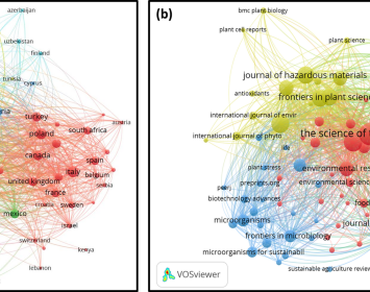
The application of pesticides is rising continuously in Indian agriculture to fulfil the food challenge of a surging population by increasing crop yields, resulting in contamination of the environment. Pesticides regulate the occurrence of pests and diseases in flora and fauna. The extensive use of pesticides, recognized for their steadfast nature and bioaccumulation, presents significant threats to ecosystem diversity, water quality, human health, and food safety. To efficiently manage pesticide pollution, it is necessary to utilize modern methods for pesticide decontamination. This review aims to investigate the increasing application of pesticides in agriculture and their implications for food safety, human health, and environmental sustainability, while emphasizing recent eco-friendly mitigation approaches. A systematic literature survey was conducted using Scopus, Web of Science, and Google Scholar databases (2005–2025), focusing on pesticide usage trends, toxicity mechanisms, and remediation approaches; bibliometric analysis was also employed to assess global research progress. In recent years, various innovative strategies such as Integrated Pest Management (IPM), biopesticides, nanotechnology, CRISPR/Cas9, and signalling molecules are being adopted to alleviate pesticide-induced toxicity in organisms and agricultural ecosystems. This study highlights wide global patterns of pesticide application, while underscoring their persistent and bioaccumulative nature that harms biodiversity, soil activity, water quality and human well-being. A shift from surplus chemical pesticide usage to green and farmer-friendly technologies alongside policy measures and efficient regulating systems will be key point to securing food safety while preserving environmental balance.
References
Ahmad R, Hussain B, Ahmad T (2021) Fresh and dry fruit production in Himalayan Kashmir, sub-Himalayan Jammu and trans-Himalayan Ladakh, India. Heliyon 7(1):e05835. https://doi.org/10.1016/j.heliyon.2020.e05835
Ahmad MB, Islam AU, Hassan S, Tarfeen N, Nisa KU, Nisar K, Ganai BA (2025) Unraveling the toxic link between pesticides and brain cancer: a review on molecular mechanisms, signaling pathways and future research trends. The Nucleus 1–16. https://doi.org/10.1007/s13237-024-00529-8
Ahmed F, Shakeel A, Ahmad S, Kaur N (2025) Exploring the linkages between land degradation and food insecurity. Asia-Pac J Rural Dev 35(1):71–90. https://doi.org/10.1177/10185291241307272
Al-Ani MAM, Hmoshi RM, Kanaan IA, Thanoon AA (2019) Effect of pesticides on soil microorganisms. In JPCS, IOP Publishing 72007.https://doi.org/10.1088/1742-6596/1294/7/072007.
Alengebawy A, Abdelkhalek ST, Qureshi SR, Wang MQ (2021) Heavy metals and pesticides toxicity in agricultural soil and plants: ecological risks and human health implications. Toxics 9(3):42. https://doi.org/10.3390/toxics9030042
Ali S, Ullah MI, Sajjad A, Shakeel Q, Hussain A (2020) Environmental and health effects of pesticide residues. In Sustainable Agriculture Reviews 48: Pesticide occurrence, analysis and remediation vol. 2 analysis (pp. 311–336). Cham: Springer International Publishing.https://doi.org/10.1007/978-3-030-54719-6_8
An C, Sun C, Li N, Huang B, Jiang J, Shen Y (2022) Nanomaterials and nanotechnology for the delivery of agrochemicals: strategies towards sustainable agriculture. J Nanobiotechnology 20(1):11. https://doi.org/10.1186/s12951-021-01214-7
Ashesh A, Singh S, Devi NL, Yadav IC (2022) Organochlorine pesticides in multi-environmental matrices of India: a comprehensive review on characteristics, occurrence, and analytical methods. Microchem J 177:107306. https://doi.org/10.1016/j.microc.2022.107306
Atheeb ZA (2025) The impact of air pollution in Iraq on the environment: a chemical study of the relationships between pollutants and climatic conditions. Cent Asian J Theor Appl Sci 6(3):427–439. https://doi.org/10.51699/cajotas.v6i3.1572
Bartucca ML, Di Michele A, Del Buono D (2018) Interference of three herbicides on iron acquisition in maize plants. Chemosphere 206:424–431. https://doi.org/10.1016/j.chemosphere.2018.05.040
Basantani M, Srivastava A, Sen S (2011) Elevated antioxidant response and induction of tau-class glutathione S-transferase after glyphosate treatment in Vigna radiata (L.) Wilczek. Pest Biochem Physiol 99:111–117. https://doi.org/10.1016/j.pestbp.2010.11.007
Bokade P, Gaur VK, Tripathi V, Bobate S, Manickam N, Bajaj A (2023) Bacterial remediation of pesticide polluted soils: exploring the feasibility of site restoration. J Hazard Mater 441:129906. https://doi.org/10.1016/j.jhazmat.2022.129906
Bowman HD, Hydrick HT, Bond JA, Allen TW (2022) Response of Soybean (Glycine max (L.) Merr.) and weed control with postemergence herbicides and combinations of cytokinin mixtures. Agronomy 12(12):3086. https://doi.org/10.3390/agronomy12123086
Bravo G, Vega-Celedón P, Macaya C, Vasconez IN, Seeger M (2021) Nitrogen Cycle Bacteria in Agricultural Soils: Effects of Nitrogen Fertilizers, Heavy Metals, Pesticides and Bioremediation Approaches. In Rhizomicrobiome Dynamics in Bioremediation (pp. 335–356). CRC Press.
Buralli RJ, Ribeiro H, Le˜ao RS, Marques RC, Guimar˜aes JRD (2019) Data on pesticide exposure and mental health screening of family farmers in Brazil. Data Brief 25:103993. https://doi.org/10.1016/j.dib.2019.103993
Cara IG, Țopa D, Puiu I, Jităreanu G (2022) Biochar a promising strategy for pesticide-contaminated soils. Agriculture 12(10):1579. https://doi.org/10.3390/agriculture12101579
Chang J, Fang W, Chen L, Zhang P, Zhang G, Zhang H (2022) Toxicological effects, environmental behaviors and remediation technologies of herbicide atrazine in soil and sediment: a comprehensive review. Chemosphere 307:136006. https://doi.org/10.1016/j.chemosphere.2022.136006
Chaudhry D (2024) Pesticide use in Indian agriculture: policy alternatives for environmental health. J Dev Policy Pract 9(1):133–161. https://doi.org/10.1177/24551333221121890
Cheng Y, Lv Y, Zhao X, Lu Y, Jiao T, Ma T, Fu Y (2025) Multidimensional toxicity of organophosphate pesticides and mitigation strategies for agricultural sustainability. J Agric Food Chem 73(29):18047–18062. https://doi.org/10.1021/acs.jafc.5c02491
Chowdhury A (2024) Punjab's' cancer train'is a grim reminder of the role of agricultural chemicals. The wire.
CIB and RC 2025. https://www.ppqs.gov.in/en/contactus/central-insecticide-board-and-registration-committee-cibrc.
Dash DM, Osborne WJ (2023) A systematic review on the implementation of advanced and evolutionary biotechnological tools for efficient bioremediation of organophosphorus pesticides. Chemosphere 313:137506. https://doi.org/10.1016/j.chemosphere.2022.137506
Dash S, Gupta P, Kumar M (2025) Green Revolution to clinical burden: connecting the dots between pesticide consumption and cancer incidents in India. Curr Opin Environ Sci Health. https://doi.org/10.1016/j.coesh.2025.100617
Dhanamanjuri W, Thoudam R, Dutta BK (2013) Effect of some pesticides (fungicides) on the germination and growth of seeds/seedlings of some crop plants (i.e. Cicer arietinum and Zea mays). Mid-Eas J Sci Res 17(5):627–632. https://doi.org/10.5829/idosi.mejsr.2013.17.05.12221
Dubey P, Mishra AK, Shukla P, Singh AK (2015) Differential sensitivity of barley (Hordeum vulgare L.) to chlorpyrifos and propiconazole: morphology, cytogenetic assay and photosynthetic pigments. Pestic Biochem Physiol 124:29–36. https://doi.org/10.1016/j.pestbp.2015.03.013
FAO (2024) Food and agriculture organization of the United Nations pesticides use and trade 1990–2022.
FAOSTAT (2025) Available online: https://www.fao.org/faostat/en/#data/RP (accessed on 31 august 2025).
Fatma F, Ahmad F, Kamal A, Pandey A (2022) Salicylic acid ameliorates cytotoxicity and genotoxicity induced by metribuzin (herbicides) in model Allium cepa plant. https://doi.org/10.21203/rs.3.rs-1508554/v1
Fenga C, Giusi B, Costa C (2021) Immunotoxicity of pesticides: current knowledge and perspectives, Toxicol Risk Assess Multi-Syst. Health Impacts Expo 557–568.https://doi.org/10.1016/B978-0-323-85215-9.00023-4.
Ganaie MI, Jan I, Mayer AN, Dar AA, Mayer IA, Ahmed P, Sofi JA (2023) Health risk assessment of pesticide residues in drinking water of upper Jhelum region in Kashmir Valley‐India by GC‐MS/MS. Int J Anal Chem 2023(1):6802782. https://doi.org/10.1155/2023/6802782
Garud A, Pawar S, Patil MS, Kale SR, Patil S (2024) A scientific review of pesticides: classification, toxicity, health effects, sustainability, and environmental impact. Cureus 16(8):e67945. https://doi.org/10.7759/cureus.67945
Grewal AS (2017) Pesticide residues in food grains, vegetables, and fruits: a hazard to human health. J Med Chem Toxicol 2(1):1–7. https://doi.org/10.15436/2575-808X.17.1355
Gupta A, Singh UB, Sahu PK, Paul S, Kumar A, Malviya D, Saxena AK (2022) Linking soil microbial diversity to modern agriculture practices: a review. Int J Environ Res Public Health 19(5):3141. https://doi.org/10.3390/ijerph19053141
Gureev AP, Sitnikov VV, Pogorelov DI, Vitkalova IY, Igamberdiev AU, Popov VN (2022) The effect of pesticides on the NADH-supported mitochondrial respiration of permeabilized potato mitochondria. Pestic Biochem Physiol 183:105056. https://doi.org/10.1016/j.pestbp.2022.105056
Han Y, Mo R, Yuan X, Zhong D, Tang F, Ye C, Liu Y (2017) Pesticide residues in nut-planted soils of China and their relationship between nut/soil. Chemosphere 180:42–47. https://doi.org/10.1016/j.chemosphere.2017.03.138
Jaiswal S, Shukla P (2020) Alternative strategies for microbial remediation of pollutants via synthetic biology. Front Microbiol 11:808. https://doi.org/10.3389/fmicb.2020.00808
Jan S, Singh R, Bhardwaj R, Ahmad P, Kapoor D (2020) Plant growth regulators: a sustainable approach to combat pesticide toxicity. 3 Biotech 10(11):466. https://doi.org/10.1007/s13205-020-02454-4
Jan R, Asif S, Asaf S, Lubna Khan Z, Khan W, Kim KM (2024) Gamma-aminobutyric acid treatment promotes resistance against Sogatella furcifera in rice. Front Plant Sci 15:1419999. https://doi.org/10.3389/fpls.2024.1419999
Jia Y, Kang L, Wu Y, Zhou C, Li D, Li J, Pan C (2023) Review on pesticide abiotic stress over crop health and intervention by various biostimulants. J Agric Food Chem 71(37):13595–13611. https://doi.org/10.1021/acs.jafc.3c04013
Jiang L, Yang Y, Jia LX, Lin JL, Liu Y, Pan B, Lin Y (2016) Biological responses of wheat (Triticum aestivum) plants to the herbicide simetryne in soils. Ecotoxicol Environ Saf 127:87–94. https://doi.org/10.1016/j.ecoenv.2016.01.012
Karasali H, Pavlidis G (2025) Environmental Contamination by Organochlorine Persistent Organic Pollutants: A Globally Alarming Detriment from the Past. In The Old and New Persistent Organic Pollutants (pp. 122–162). CRC Press. https://doi.org/10.1201/9781003530466-7
Karthikeyan L, Chawla I, Mishra AK (2020) A review of remote sensing applications in agriculture for food security: crop growth and yield, irrigation, and crop losses. J Hydrol 586:124905. https://doi.org/10.1016/j.jhydrol.2020.124905
Kashyap U, Garg S, Arora P (2024) Pesticide pollution in India: environmental and health risks, and policy challenges. Toxicol Rep 13:101801. https://doi.org/10.1016/j.toxrep.2024.101801
Kim DS, Zhang J (2023) Strategies to improve the efficiency of RNAi-mediated crop protection for pest control. Entomol Gen 43(1):10.1127/entomologia/2022/1638
Kim KH, Kabir E, Jahan SA (2017) Exposure to pesticides and the associated human health effects. Sci Total Environ 575:525–535. https://doi.org/10.1016/j.scitotenv.2016.09.009
Komal J, Desai HR, Samal I, Mastinu A, Patel RD, Kumar PD, Bhoi TK (2023) Unveiling the genetic symphony: harnessing CRISPR-Cas genome editing for effective insect pest management. Plants 12(23):3961. https://doi.org/10.3390/plants12233961
Kumar P, Kumar R, Thakur K, Mahajan D, Brar B, Sharma D, Sharma AK (2023) Impact of pesticides application on aquatic ecosystem and biodiversity: a review. Biol Bull 50(6):1362–1375. https://doi.org/10.1134/S1062359023601386
Kumar A, Bhople BS, Jeganathan J (2025) Balancing food security and environmental health: the dual challenge of pesticide use in India. Environ Sci Pollut Res 32(9):4949–4956. https://doi.org/10.1007/s11356-025-36009-y
Kumari R, Saha T, Kumar P, Singh AK (2024) CRISPR/Cas9-mediated genome editing technique to control fall armyworm (Spodoptera frugiperda) in crop plants with special reference to maize. Physiol Mol Biol Plants 30(7):1161–1173. https://doi.org/10.1007/s12298-024-01486-x
Lazarević-Pašti T, Milanković V, Tasić T, Petrović S, Leskovac A (2025) With or without you?—a critical review on pesticides in food. Foods 14(7):1128. https://doi.org/10.3390/foods14071128
Liu N, Zhu L (2020) Metabolomic and transcriptomic investigation of metabolic perturbations in Oryza sativa L. triggered by three pesticides. Environ Sci Technol 54:6115–6124. https://doi.org/10.1021/acs.est.0c00425
Liu N, Li J, Lv J, Yu J, Xie J, Wu Y, Tang Z (2021) Melatonin alleviates imidacloprid phytotoxicity to cucumber (Cucumis sativus L.) through modulating redox homeostasis in plants and promoting its metabolism by enhancing glutathione dependent detoxification. Ecotoxicol Environ Saf 217:112248. https://doi.org/10.1016/j.ecoenv.2021.112248
Maldani M, Aliyat FZ, Cappello S, Morabito M, Giarratana F, Nassiri L (2021) Effect of glyphosate and paraquat on seed germination, amino acids, photosynthetic pigments and plant morphology of Vicia faba, Phaseolus vulgaris and Sorghum bicolor. Environ Sustain 4:723–733. https://doi.org/10.1007/s42398-021-00170-0
Mani S, Jain A, Gulati A, Tyagi S, Pal KV, Jaiswal H, Singh M (2022) Oxidative stress: A potential link between pesticide exposure and early-life neurological disorders. In Free Radical Biology and Environmental Toxicity (pp. 209–251). Cham: Springer International Publishing. https://doi.org/10.1007/978-3-030-83446-3_10
Melki MNE, Faqeih KY, Alamri S, AlAmri AR, Aldubehi MA, Alamery ER (2025) Integrating Artificial Intelligence, Drones, Robotics, and Sensors for Sustainable and Climate-Resilient Agriculture: A Critical Review. Sustainability 1,0. https://doi.org/10.3390/su1010000
Midler E (2022) Environmental degradation: impacts on agricultural production. IEEP-Policy Brief URL: https://ieep.eu/publications/environmental-degradation-impacts-onagricultural-production.
Mishra V, Srivastava G, Prasad SM, Abraham G (2008) Growth, photosynthetic pigments and photosynthetic activity during seedling stage of cowpea (Vigna unguiculata) in response to UV-B and dimethoate. Pestic BioPhysiol 92(1):30–37. https://doi.org/10.1016/j.pestbp.2008.05.003
Mohan C, Robinson J, Vodwal L, Kumari N (2024) Sustainable Development Goals for addressing environmental challenges. In Green chemistry approaches to environmental sustainability (pp. 357–374). Elsevier.https://doi.org/10.1016/B978-0-443-18959-3.00007-0
Moon TT, Maliha IJ, Khan AAM, Chakraborty M, Uddin MS, Amin MR, Islam T (2022) CRISPR-Cas genome editing for insect pest stress management in crop plants. Stresses 2(4):493–514. https://doi.org/10.3390/stresses2040034
Nayak P, Solanki H (2021) Pesticides and Indian agriculture—a review. Int J Res Granthaalayah 9(5):250–263. https://doi.org/10.7821/granthaalayah.v9.i5.2021.3930
Palli SR (2023) RNAi turns 25: contributions and challenges in insect science. Front Insect Sci 3:1209478. https://doi.org/10.3389/finsc.2023.1209478
Pan L, Mao L, Zhang H, Wang P, Wu C, Xie J, Yu B, Sial MU, Zhang L, Zhang Y, Zhu L, Jiang H, Zheng Y, Liu X (2022) Modified biochar as a more promising amendment agent for remediation of pesticide-contaminated soils: modification methods, mechanisms, applications, and future perspectives. Appl Sci 12(22):11544. https://doi.org/10.3390/app122211544
Pang Y, Qin Z, Wang S, Yi C, Zhou M, Lou H, Qiu X (2020) Preparation and application performance of lignin-polyurea composite microcapsule with controlled release of avermectin. Colloid Polym Sci 298(8):1001–1012. https://doi.org/10.1007/s00396-020-04664-x
Pascual LS, López-Climent MF, Segarra-Medina C, Gomez-Cadenas A, Zandalinas SI (2023) Exogenous spermine alleviates the negative effects of combined salinity and paraquat in tomato plants by decreasing stress-induced oxidative damage. Front Plant Sci 14:1193207. https://doi.org/10.3389/fpls.2023.1193207
Qi SY, Xu XL, Ma WZ, Deng SL, Lian ZX, Yu K (2022) Effects of organochlorine pesticide residues in maternal body on infants. Front Endocrinol 13:890307. https://doi.org/10.3389/fendo.2022.890307
Rajashekar N, Prakasha P, Murthy TCS (2012) Seed germination and physiological behavior of maize (cv. NAC-6002) seedlings under abiotic stress (pendimethalin) condition. Asia J Crop Sci 4:80–85. https://doi.org/10.3923/ajcs.2012.80.85
Rani L, Thapa K, Kanojia N, Sharma N, Singh S, Grewal AS, Kaushal J (2021) An extensive review on the consequences of chemical pesticides on human health and environment. J Clean Prod 283:124657. https://doi.org/10.1016/j.jclepro.2020.124657
Rashid S, Rashid W, Tulcan RXS, Huang H (2022) Use, exposure, and environmental impacts of pesticides in Pakistan: a critical review. Environ Sci Pollut Res 29(29):43675–43689. https://doi.org/10.1007/s11356-022-20164-7
Reddy AA, Reddy M, Mathur V (2024) Pesticide use, regulation, and policies in Indian agriculture. Sustainability 16(17):7839. https://doi.org/10.3390/su16177839
Rodrigues TB, Mishra SK, Sridharan K, Barnes ER, Alyokhin A, Tuttle R (2021) First sprayable double-stranded RNA-based biopesticide product targets proteasome subunit beta type-5 in Colorado potato beetle (Leptinotarsa decemlineata). Front Plant Sci 12:728652. https://doi.org/10.3389/fpls.2021.728652
Rodrigues JA, Narasimhamurthy RK, Joshi MB, Dsouza HS, Mumbrekar KD (2022) Pesticides exposure-induced changes in brain metabolome: implications in the pathogenesis of neurodegenerative disorders. Neurotox Res 40(5):1539–1552. https://doi.org/10.1007/s12640-022-00534-2
Sabarwal A, Kumar K, Singh RP (2018) Hazardous effects of chemical pesticides on human health–cancer and other associated disorders. Environ Toxicol Pharmacol 63:103–114. https://doi.org/10.1016/j.etap.2018.08.018
Sarker A, Shin WS, Al Masud MA, Nandi R, Islam T (2024) A critical review of sustainable pesticide remediation in contaminated sites: research challenges and mechanistic insights. Environ Pollut 341:122940. https://doi.org/10.1016/j.envpol.2023.122940
Schneider JR, De Bona AC, Müller M, Chavarria G (2023a) Mancozeb associated with water deficit: physiological and biochemical responses of soybean plants. Plant Stress 10:100284. https://doi.org/10.1016/j.stress.2023.100284
Schneider K, Barreiro-Hurle J, Rodriguez-Cerezo E (2023b) Pesticide reduction amidst food and feed security concerns in Europe. Nat Food 4(9):746–750. https://doi.org/10.1038/s43016-023-00834-6
Shaili SJ, Kabiraj UK, Mahedi M (2025) Fungal biocontrol in agriculture: a sustainable alternative to chemical pesticides–a comprehensive review. World J Adv Res Rev 26(1):2305–2316. https://doi.org/10.30574/wjarr.2025.26.1.0732
Shakir SK, Irfan S, Akhtar B, Rehman SU, Daud MK, Taimur N, Azizullah A (2018) Pesticide-induced oxidative stress and antioxidant responses in tomato (Solanum lycopersicum) seedlings. Ecotoxicology 27(7):919–935. https://doi.org/10.1007/s10646-018-1916-6
Shambharkar PS, Doshi PS, Jadhav SV (2025) Advances in Understanding Airborne Pesticide Aerosols: Sources, Behavior, and Control Strategies. Aeros Sci Engin 1–24. https://doi.org/10.1007/s41810-025-00346-9
Shan Q, Liu M, Li R, Shi Q, Li Y, Gong B (2022) γ-Aminobutyric acid (GABA) improves pesticide detoxification in plants. Sci Total Environ 835:155404. https://doi.org/10.1016/j.scitotenv.2022.155404
Sharma A, Kumar V, Bhardwaj R, Thukral AK (2017) Seed pre-soaking with 24- epibrassinolide reduces the imidacloprid pesticide residues in green pods of Brassica juncea L. Toxicol Environ Chem 99:95–103. https://doi.org/10.1080/02772248.2016.1146955
Sharma C, Sharma P, Kumar A, Walia Y, Kumar R, Umar A, Baskoutas S (2023) A review on ecology implications and pesticide degradation using nitrogen fixing bacteria under biotic and abiotic stress conditions. Chem Ecol 39(7):753–774. https://doi.org/10.1080/02757540.2023.2253220
Shattuck A, Werner M, Mempel F, Dunivin Z, Galt R (2023) Global pesticide use and trade database (GloPUT): new estimates show pesticide use trends in low-income countries substantially underestimated. Glob Environ Change 81:102693. https://doi.org/10.1016/j.gloenvcha.2023.102693
Sheng Y, Benmati M, Guendouzi S, Benmati H, Yuan Y, Song J, Berkani M (2022) Latest eco-friendly approaches for pesticides decontamination using microorganisms and consortia microalgae: a comprehensive insight, challenges, and perspectives. Chemosphere 308:136183. https://doi.org/10.1016/j.chemosphere.2022.136183
Shopova E, Katerova Z, Brankova L, Dimitrova L, Sergiev I, Todorova D, Talaat NB (2021) Modulation of physiological stress response of Triticum aestivum L. to glyphosate by brassinosteroid application. Life 11(11):1156. https://doi.org/10.3390/life11111156
Singh S, Sharma S, Sarma SJ, Misra K, Brar SK (2021) Pesticides in water. in: Handbook of Water Purity and Quality, Elsevier pp. 231e253. https://doi.org/10.1016/B978-0-12-821057-4.00004-5.
Singla A, Barmota H, Kumar Sahoo S, Kaur Kang B (2021) Influence of neonicotinoids on pollinators: a review. J Apic Res 60(1):19–32. https://doi.org/10.1080/00218839.2020.1825044
Sonawane R, Tugaonkar A, Patel Y, Girase S, Shinde K (2024) An Overview of the Organophosphate Pesticide Use Scenario in India. Afr J Bio Sc. https://doi.org/10.48047/AFJBS.6.14.2024.9669-9683
Syafrudin M, Kristanti RA, Yuniarto A, Hadibarata T, Rhee J, Al-Onazi WA, Al-Mohaimeed AM (2021) Pesticides in drinking water—a review. Int J Environ Res Public Health 18(2):468. https://doi.org/10.3390/ijerph18020468
Tahir R, Afzal F, Jamil H, Razzaq M, Khan MS (2024) Physiological impacts of pesticidal contamination: challenge to sustainable agriculture and biodegradation methods. Pakistan J Agri, Agricultural Eng Veterinary Sci 40(1):24–37. https://doi.org/10.47432/2024.40.1.4
Tang FH, Malik A, Li M, Lenzen M, Maggi F (2022) International demand for food and services drives environmental footprints of pesticide use. Commun Earth Environ 3(1):272. https://doi.org/10.1038/s43247-022-00601-8
Tang FH, Wyckhuys KA, Li Z, Maggi F, Silva V (2025) Transboundary impacts of pesticide use in food production. Nat Rev Earth Environ. https://doi.org/10.1038/s43017-025-00673-y
Tarla DN, Erickson LE, Hettiarachchi GM, Amadi SI, Galkaduwa M, Davis LC, Pidlisnyuk V (2020) Phytoremediation and bioremediation of pesticide-contaminated soil. Appl Sci 10(4):1217. https://doi.org/10.3390/app10041217
Timokhina EP, Yaglov VV, Nazimova SV (2021) Dichlorodiphenyltrichloroethane and the adrenal gland: from toxicity to endocrine disruption. Toxics 9(10):243. https://doi.org/10.3390/toxics9100243
Author Information
Ranjan Plant Physiology and Biochemistry Laboratory, Department of Botany, University of Allahabad, Prayagraj, India