Vegetos

(An International Journal of Plant Research & Biotechnology)
(eISSN: 2229-4473)
Zinc solubilizing bacteria Pantoea dispersa SHL2C isolated from lichen with additional growth promoting activity on Sorghum vulgare, a crop plant
*Article not assigned to an issue yet
Research Article | Published: 15 June, 2026
First Page: 0
Last Page: 0
Views: 94
Keywords: Lichen, n Pantoea dispersan , Seed bio-priming, Zinc solubilizing bacteria (ZSB)
Abstract
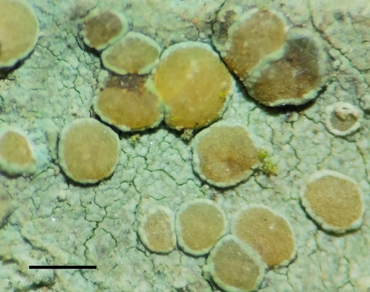
Zinc solubilizing bacteria (ZSBs) are gaining importance as they can solubilize insoluble organic or inorganic sources of zinc minerals and make them available to plants. These ZSBs are commonly found in soil near the rhizosphere. However, they have also been found as endophytes. Here we present the first evidence of the presence of such zinc solubilizing bacteria from a new source, namely, lichen thallus, which is a complex symbiotic association between fungi and photosynthetic member either green algae or cyanobacteria. Presently, different types of bacteria, viruses, or other unicellular eukaryotes are also found in the lichen, forming a micro community. This study focused on isolation of zinc solubilizing bacteria from lichen and to evaluate their plant growth promoting activity on crop plant seedlings. Seven different bacterial strains were isolated from the corticolous crustose lichen Lecanora leprosa Fée collected from three different locations of West Bengal, India. After preliminary screening, one bacterial strain was selected based on zinc solubilization efficiency. The selected bacterial strain also showed other Plant Growth Promoting activities viz., potassium and phosphate solubilization activity, nitrogen fixing activity, Hydrogen cyanide, Siderophores, and indole production activity. The isolate was identified as Pantoea dispersa by 16s rDNA gene sequence analysis. Seeds of Sorghum vulgare were bio-primed with this bacterial strain which resulted in more seedling vigor.
References
Akram W, Waqar S, Hanif S, Anjum T, Aftab ZH, Li G, Ali B, Rizwana H, Hassan A, Rehman A et al (2024) Comparative effect of seed coating and biopriming of Bacillus aryabhattai Z-48 on seedling growth, growth promotion, and suppression of Fusarium Wilt Disease of tomato plants. Microorganisms 12(4):792. https://doi.org/10.3390/microorganisms12040792
Alshummary AM, Al-Freeh LM, Alabdulla SA (2023) Yield and nutrient uptake by sudangrass (Sorghum vulgare var. sudanense) as influenced by phosphorus and zinc application. Earth Environ Sci 126(2):052–053. https://doi.org/10.1088/1755-1315/1262/5/052053
Altschul SF, Gish W, Miller W, Myers EW, Lipman DJ (1990) Basic local alignment search tool. J Mol Biol 215(3):403–410. https://doi.org/10.1016/S0022-2836(05)80360-2
Amri M, Rjeibi MR, Gatrouni M, Mateus DMR, Asses N, Pinho HJO, Abbes C (2023) Isolation, identification, and characterization of phosphate-solubilizing bacteria from Tunisian soils. Microorganisms 11(3):783. https://doi.org/10.3390/microorganisms11030783
Auður Sigurbjörnsdóttir M, Andrésson ÓS, Vilhelmsson O (2016) Nutrient scavenging activity and antagonistic factors of non-photobiont lichen-associated bacteria: a review article. World J Microbiol Biotechnol 32:68. https://doi.org/10.1007/s11274-016-2019-2
Awasthi DD (1991) A key to microlichens of India, Nepal and Sri Lanka. Bibliotheca Lichenologica, Band 40, J. Cramer. Schweizerbart Science Publishers, Stuttgart
Azhar H, Muhammad A, Zahir AZ, Muhammad A (2015) Prospects of zinc solubilizing bacteria for enhancing growth of maize. Pak J Agric Sci 52(4):915–922
Azizah H, Rahajeng SM, Jatmiko YD (2020) Isolation and screening of phosphate and potassium solubilizing endophytic bacteria in maize (Zea mays L.). J Exp Life Sci 10(3):165–170. https://doi.org/10.21776/ub.jels.2020.010.03.04
Boubekri K, Soumare A, Mardad I, Lyamlouli K, Hafidi M, Ouhdouch Y et al (2021) The screening of potassium-and phosphate-solubilizing actinobacteria and the assessment of their ability to promote wheat growth parameters. Microorganisms 9:1–16. https://doi.org/10.3390/microorganisms9030470
Choudhary S, Saharan BS, Gera R, Kumar S, Prasad M, Gupta A, Duhan JS (2024) Molecular characterization and validation of zinc solubilization potential of bacteria isolated from onion (Allium cepa L.) rhizosphere. Microbe 4:100145. https://doi.org/10.1016/j.microb.2024.100145
Dinesh R, Srinivasan V, Hamza S, Sarathambal C, Anke GSJ, Ganeshamurthy AN, Gupta SB, Aparna NV, Subila KP, Lijina A, Divya VC (2018) Isolation and characterization of potential Zn solubilizing bacteria from soil and its effects on soil Zn release rates, soil available Zn and plant Zn content. Geoderma. https://doi.org/10.1016/j.geoderma.2018.02.013
Dutta D, Gachhui R (2007) Nitrogen-fixing and cellulose-producing Gluconacetobacter kombuchae sp. nov., isolated from Kombucha tea. Int J Syst Evol Microbiol 57:353–357. https://doi.org/10.1099/ijs.0.64638-0
Feng S, Qiaojing O, Nan W, Zixuan G, Yuyi O, Na L, Changlian P (2020) Isolation and identification of potassium-solubilizing bacteria from Mikania micrantha rhizospheric soil and their effect on M. micrantha plants. Glob Ecol Conserv 23:e01141. https://doi.org/10.1016/j.gecco.2020.e01141
Fiodor A, Ajijah N, Dziewit L, Pranaw K (2023) Biopriming of seed with plant growth-promoting bacteria for improved germination and seedling growth. Front Microbiol 14:1142966. https://doi.org/10.3389/fmicb.2023.1142966
Franke, Fegan, Heyward, Sly (1998) Nucleotide sequence of the nifH gene coding for nitrogen reductase in the acetic acid bacterium Acetobacter diazotrophicus. Lett Appl Microbiol 26(1):12–16. https://doi.org/10.1046/j.1472-765X.1998.00258.x
Grimm M, Grube M, Schiefelbein U, Zühlke D, Bernhardt J, Riedel K (2021) The lichens’ microbiota, still a mystery? Front Microbiol 12:623839. https://doi.org/10.3389/fmicb.2021.623839
Grube M, Cardinale M, Castro D, Müller H, Berg G (2009) Species-specific structural and functional diversity of bacterial communities in lichen symbioses. ISME J 3(9):1105–1115. https://doi.org/10.1038/ismej.2009.63
Jagadeesh Ram TAM, Sinha GP, Singh KP (2012) Lichen flora of Sundarbans Biosphere Reserve, West Bengal. Bishen Singh Mahendra Pal Singh, India
Katerin A, Jaime G, Margarita C, Julieta O (2018) Nitrogen-fixing bacteria associated with Peltigera cyanolichens and Cladonia chlorolichens. Molecules 23(12):3077. https://doi.org/10.3390/molecules23123077
Kumar A, Kumar A, Devi S, Patil S, Payal C, Negi S (2012) Isolation, screening and characterization of bacteria from rhizospheric soils for different plant growth promotion (PGP) activities: an in vitro study. Recent Res Sci Technol 4(1):01–05
Kumar P, Aeron A, Shaw N, Singh A, Bajpai VK, Pant S, Dubey RC (2020) Seed bio-priming with tri-species consortia of phosphate solubilizing rhizobacteria (PSR) and its effect on plant growth promotion. Heliyon 6(12):e05701. https://doi.org/10.1016/j.heliyon.2020.e05701
Liba CM, Ferrara FIS, Manfio GP, Fantinatti GF, Albuquerque RC, Pavan C, Ramos PL, Moreira FCA, Barbosa HR (2006) Nitrogen-fixing chemo-organotrophic bacteria isolated from cyanobacteria-deprived lichens and their ability to solubilize phosphate and to release amino acids and phytohormones. J Appl Microbiol 101(5):1076–1086. https://doi.org/10.1111/j.1365-2672.2006.03010.x
Lv L, Luo J, Ahmed T, Zaki HEM, Tian Y, Shahid MS, Chen J, Li B (2022) Beneficial effect and potential risk of Pantoea on rice production. Plants 11:2608. https://doi.org/10.3390/plants11192608
Marco V, Martina G, Danilo F, Gianniantonio P, Elisabetta F (2022) The role of plant growth-promoting rhizobacteria (PGPR) in mitigating plant’s environmental stresses. Appl Sci 12(3):1231. https://doi.org/10.3390/app12031231
Medison RG, Jiang J, Medison MB, Tan L-T, Kayange CDM, Sun Z, Zhou Y (2023) Evaluating the potential of Bacillus licheniformis YZCUO202005 isolated from lichens in maize growth promotion and biocontrol. Heliyon 9(10):e20204. https://doi.org/10.1016/j.heliyon.2023.e20204
Mohite B (2013) Isolation and characterization of indole acetic acid (IAA) producing bacteria from rhizospheric soil and its effect on plant growth. J Soil Sci Plant Nutr 13(3):638–649. https://doi.org/10.4067/S0718-95162013005000051
Monis J, Panuganti R, Chitnis K (2024) Millets based alternative sustainable cost-effective culture media for microbial growth. Plant Sci Today 11(2):99–104. https://doi.org/10.14719/pst.2789
Morillas L, Roales J, Cruz C, Munzi S (2022) Lichen as multipartner symbiotic relationships. Encyclopedia 2(3):1421–1431. https://doi.org/10.3390/encyclopedia2030096
Orange A, James PW, White FJ (2001) Microchemical methods for the identification of lichens. British Lichen Society, London
Othman NMI, Othman R, Zuan ATK, Shamsuddin AS, Zaman NBK, Sari NA, Panhwar QA (2022) Isolation, characterization, and identification of zinc-solubilizing bacteria (ZSB) from wetland rice fields in Peninsular Malaysia. Agriculture 12(11):1823. https://doi.org/10.3390/agriculture12111823
Panchal VH, Dhale DA (2011) Isolation of seed-borne fungi of sorghum (Sorghum vulgare pers.). J Phytol 3(12):45–48
Pande A, Prashant P, Simmi M, Mritunjay S, Suresh K (2017) Phenotypic and genotypic characterization of phosphate solubilizing bacteria and their efficiency on the growth of maize. J Genet Eng Biotechnol 15(2):379–391. https://doi.org/10.1016/j.jgeb.2017.06.005
R Core Team (2023) R: a language and environment for statistical computing. R Foundation for Statistical Computing, Vienna
Rani N, Chauhan A, Kaur S, Solanki MK, Tripathi M, Jain D, Singh S, Upadhyay SK, Kaur G (2025) Molecular mechanistic of Zn-solubilizing bacteria for agronomic eminence: recent updates and futuristic development. J Plant Growth Regul 44:1337–1351. https://doi.org/10.1007/s00344-023-11111-y
Sánchez-Yáñez JM, Hernández MEV, Pérez-González DA, Guerra-Gonzalez R (2024) Sorghum vulgare plus Azospirillum lipoferum and Rhizobium tropici with NH4NO3 at 50% reduce N2O releasing. Int J Environ Chem 10(2):14–19
Schwyn B, Neilands JB (1987) Universal chemical assay for the detection and determination of siderophores. Anal Biochem 160(1):47–56. https://doi.org/10.1016/0003-2697(87)90612-9
Spribille T, Resl P, Stanton DE, Tagirdzhanova G (2022) Evolutionary biology of lichen symbioses. New Phytol 234(5):1566–1582. https://doi.org/10.1111/nph.18048
Talaiekhozani A, Alaee S, Ponraj M (2015) Guidelines for quick application of biochemical tests to identify unknown bacteria. Acc Biotechnol Res 2(2):65–82. https://doi.org/10.2139/ssrn.4101035
Tamura K, Stecher G, Kumar S (2021) MEGA11: Molecular evolutionary genetics analysis version 11. Mol Biol Evol 38(7):3022–3027. https://doi.org/10.1093/molbev/msab120
Thompson JD, Higgins DG, Gibson TJ (1994) CLUSTAL W: improving the sensitivity of progressive multiple sequence alignment through sequence weighting, position-specific gap penalties and weight matrix choice. Nucleic Acids Res 22(22):4673–4680. https://doi.org/10.1093/nar/22.22.4673
Wang Q, Li J, Yang J, Zou Y, Zhao X-Q (2022) Diversity of endophytic bacterial and fungal microbiota associated with the medicinal lichen Usnea longissima at high altitudes. Front Microbiol 13:958917. https://doi.org/10.3389/fmicb.2022.958917
Weisburg WG, Barns SM, Pelletier DA, Lane DJ (1991) 16S ribosomal DNA amplification for phylogenetic study. J Bacteriol 173(2):697–703. https://doi.org/10.1128/jb.173.2.697-703.1991
Yahaghi Z, Shirvani M, Nourbakhsh F, Pueyo JJ (2025) Isolation, identification, and application of zinc-solubilizing bacteria exhibiting beneficial traits to promote plant growth and metal uptake. Int J Environ Sci Technol 22:3675–3690. https://doi.org/10.1007/s13762-024-06064-y
Yang W-T, Yi Y-J, Xia B (2023) Unveiling the duality of Pantoea dispersa: a mini review. Sci Total Environ 873:162320. https://doi.org/10.1016/j.scitotenv.2023.162320
Author Information
Department of Life Science and Biotechnology, Jadavpur University, Kolkata, India