Vegetos

(An International Journal of Plant Research & Biotechnology)
(eISSN: 2229-4473)
Analysis of phenolic compounds in the methanol extract of Salvia candidissima subsp. candidissima by LC-HESI-MS/MS and evaluation of its antioxidant and antifungal properties
*Article not assigned to an issue yet
Research Article | Published: 08 April, 2026
First Page: 0
Last Page: 0
Views: 624
Keywords: Antioxidant activity, Antifungal activity, Phytochemical composition, n Salvia candidissima subsp. candidissiman
Abstract
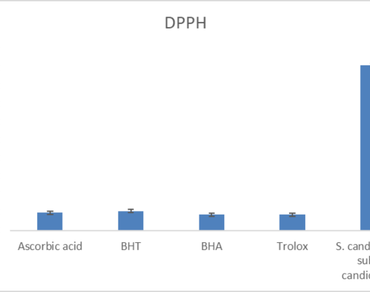
This study evaluated the methanolic extract of Salvia candidissima subsp. candidissima (Salvia candidissima) for its phenolic composition, total phenolics content and total flavonoid content (TPC and TFC), antioxidant capacity, and antifungal potential. UHPLC-LC–MS/MS screening identified 11 phenolic compounds (out of 29 analyzed), with luteolin-7-glucoside (1578.279 µg/g extract), rosmarinic acid (388.674 µg/g), apigenin (118.250 µg/g), and luteolin (41.267 µg/g) being the most abundant. The extract contained 61.38 ± 0.97 mg GAE/g extract of TPC and 40.57 ± 1.03 mg QE/g extract of TFC. In the DPPH assay, the extract exhibited strong free radical scavenging with an IC50 of 91.79 ± 1.12 µg/mL, while FRAP indicated substantial reducing power at 88.41 ± 1.17 mg TE/g extract. Antifungal activity was tested against several phytopathogens, including Phytophthora infestans (FF), Sclerotinia sclerotiorum (SS), Rhizoctonia solani (RS), Fusarium oxysporum f. sp. melonis (FOM), Fusarium oxysporum f. sp. niveum (FON), Verticillium dahliae (VD), and Monilinia fructigena (MF). At 8 mg/mL, growth inhibition varied: FF 75.26%, FON 56.65%, RS 52.26%, MF 49.16%, VD 47.28%, FOM 27.16%. The antifungal effects were linked to the presence of phenolics and flavonoids such as luteolin-7-glucoside, rosmarinic acid, and apigenin, which are known for antifungal activity. Overall, the methanolic extract of S. candidissima emerges as a promising candidate for developing plant-derived natural antifungal agents.
References
Adimcilar V, Kalaycioğlu Z, Aydoğdu N, Dirmenci T, Kahraman A, Erim FB (2019) Rosmarinic and carnosic acid contents and correlated antioxidant andantidiabetic activities of 14 Salvia species from Anatolia. J Pharm Biomed Anal 175:112763–112768
Akman TC, Simsek S, Kayir Ö, Aksit Z, Aksit H, Genç N (2023) LC-ESI-MS/MS chemical characterization, antioxidant and antidiabetic properties of propolis extracted with organic solvents from Eastern Anatolia Region. Chem Biodivers 20(5):e202201189. https://doi.org/10.1002/cbdv.202201189
Bakoglu A, Kilic O, Kokten K (2016) Fatty acid composition of the leaves of some Salvia taxa from Turkey. Chem Nat Compd 52(4):676–678
Bayar Y, Genç N (2018) Determination of the chemical components, antioxidant and antifungal activities of essential oil and plant extract of Salvia candidissima Vahl. Mediterranean Agricultural Sci 31(2):93–99
Celep F, Doğan M, Duran A (2009) A new record for the flora of Turkey: Salvia viscosa Jacq. (Labiatae). Türk J Bot 32:57–60
Davis PH (1982) Flora of Turkey and the east Aegeans islands. The University Press. Edinburg, pp 1–11
Demirci B, Baser KHC, Yıldız B, Bahçecioglu Z (2003) Composition of the essential oils of six endemic Salvia spp. from Turkey. Flavour Fragr J 18:116–121
Doğan M, Pehlivan S, Akaydın G, Bağcı E, Uysal İ, Doğan HM (2008) Türkiye’de Yayılış Gösteren Salvia L. (Labiatae) Cinsinin Taxonomik Revizyonu. Tübitak Proje No: 104 T 450
Emre İ, Kurşat M, Kırbag S, Erecevit Sönmez P (2021) The antioxidant and antimicrobial capacities of phenolic profiles of some Salvia L. seeds grown in Turkey. Int J Secondary Metabolite 8(1):20–30. https://doi.org/10.21448/ijsm.780232
Topcu G, Tan N, Ulubelen A, Sun D, Watson WH (1995) Terpenoids and flavonoids from the aerial parts of Salvia candidissima. Phytochemistry, 40(2):501–504. https://doi.org/10.1016/0031-9422(95)00245-3
Güzel Kara S, Öksüz Z, Güngör ŞSU, Belveren S, Kahraman A (2023) Phytochemical analysis and biological activities of Salvia candidissima subsp. candidissima mericarps. Bot Serbica 47(1):19–29. https://doi.org/10.2298/BOTSERB2301019G
Hitokato H, Morozumi S, Wauke T, Saiki S, Kurata H (1980) Inhibitory effects of species on growth and toxin production of toxigenic fungi. Appl Environ Microbiol 39(4):818–822
Karabacak E (2009) Türkiye’nin Avrupa-Sibirya fitocoğrafik bölgesindeki Salvia L. (Lamiaceae) cinsinin revizyonu. (Doktora Tezi). Çanakkale Onsekiz Mart Üniversitesi. Fen Bilimleri Enstitüsü, Çanakkale, s. 205
Llorent-Martínez EJ, Sinan KI, Darendelioglu E, Bahsi M, Polat R, Cakilcioglu U, Orlando G, Ferrante C, Zengin G (2025) Incorporating the HPLC-ESI-Q-TOF-MS profiles with the biochemical properties of eight Salvia species. eFood 6(1):e70021. https://doi.org/10.1002/efd2.70021
Marin PD, Duletic S, Petkovic B (1996) Nutlet ornamentation in selected Salvia L. species (Lamiaceae). Fl Medit 6:203–211
Özer H (2016) Erzurum çevresinde doğal yayılış gösteren Salvia türleri ve tıbbi özellikleri. Tarla Bitkileri Merkez Araştırma Enstitüsü Dergisi 25(–zel say––2):340–345
Özler H, Pehlivan S, Celep F, Doğan M, Kahraman A, Fişne AY, Başer B, Bagherpour S (2013) Pollen morphology of Hymenosphace and Aethiopis sections of the genus Salvia (Lamiaceae) in Turkey. Turkish J Bot 37:1070–1084
Poyraz İE, Koca F (2006) Morphological investigations on some medicinal Salvia L. species in Eskişehir. Anadolu Univ J Sci Technol 7(2):443–450
Stankov S, Fidan H, Petkova N, Dincheva I, Stoyanova A, Senkal BC, Dogan H, Uskutoglu (2020) Phytochemical composition of Salvia candidissima Vahl. ssp. occidentalis From Turkey. J Essent Oil Bearing Plants 23(4):710–718. https://doi.org/10.1080/0972060X.2020.1824689
Şimşek S, Varol T, Akşit Z, Elveren M, Osma E (2025) Antioxidant and antimicrobial activities of plant flowers growing in distinct geological habitats (serpentine, gypsum, and limestone). N Z J Bot 63(4):609–626. https://doi.org/10.1080/0028825X.2025.2454591
Tepe B, Sokmen M, Akpulat HA, Sokmen A (2006) Screening of the antioxidant potentials of six Salvia species from Turkey. Food Chem 95:200–204
Tosun M, Ercisli S, Sengul M, Ozer H, Polat T, Ozturk E (2009) Antioxidant properties and total phenolic content of eight Salvia species from Turkey. Biol Res 42:175–181
Ulubelen A (2000) Chemical constituents terpenoids in the genus Salvias. In: Kintzios E (Ed) The genus Salvia, Harwood Academic Publisher, Sage, pp. 55–68
Ulubelen A, Tan N, Topcu G (1997) Terpenoids from Salvia candidissima subsp. candidissima. Phtyochemistry 45(6):1221–1223
Ulubelen A (2003) Cardioactive and antibacterial terpenoids from some Salvia species. Phytochemistry 64(2):395–399
Lee W, Woo ER, Lee DG (2019) Effect of apigenin isolated from Aster yomena against Candida albicans: apigenin-triggered apoptotic pathway regulated by mitochondrial calcium signaling. J Ethnopharmacol 231:19–28
Walker JB, Sytsma KJ (2007) Staminal evolution in the genus Salvia (Lamiaceae): molecular phylogenetic evidence for multiple origins of the staminal lever. Ann Botany 100:375–391
Yılar M, Bayar Y, Abacı-Bayar AA, Genç N (2020) Chemical composition of the essential oil of Salvia bracteata Banks and the biological activity of its extracts: antioxidant, total phenolic, total flavonoid, antifungal and allelopathic effects. Bot Serbica 44(1):71–79
Aydin M, Unusan N, Sumlu E, Korucu EN (2004) Rosmarinic Acid Exhibits Antifungal and Antibiofilm Activities Against Candida albicans: Insights into Gene Expression and Morphological Changes. J Fungi 10(11):751. https://doi.org/10.3390/jof10110751
Pandey DK, Tripathi NN, Tripathi RD, Dixit SN (1982) Fungitoxic and phytotoxic properties of the essential oil of Hyptis suaveolens/Fungitoxische und phytotoxische Eigenschaften des äätherischen ÖÖis von Hyptis suaveolens. Zeitschrift füür Pflanzenkrankheiten und Pflanzenschutz/Journal of Plant Diseases and Protection. 344–349
Kishore GK, Pande S, Harish S (2007) Evaluation of essential oils and their components for broad-spectrum antifungal activity and control of late leaf spot and crown rot diseases in peanut. Plant Dis 91:375–379
Diri AH (2006) Characterization of volatile sesquiterpenes and determination of antioxidant activities in Salvia candidissima Vahl. Master's thesis at Muğğla University Institute of Science 2006
Author Information
Department of Plant Protection, Faculty of Agriculture, Kırşehir Ahi Evran University, Kirsehir, Turkey