Vegetos

(An International Journal of Plant Research & Biotechnology)
(eISSN: 2229-4473)
Molecular cloning and recombinant protein expression of 9-LOX gene from Solanum tuberosum in Pichia pastoris yeast cells
*Article not assigned to an issue yet
Research Articles | Published: 06 May, 2026
First Page: 0
Last Page: 0
Views: 85
Keywords: 9-Lipoxygenase, Golden gate cloning, n Pichia pastorisn , Oxylipins, n Solanum tuberosumn
Abstract
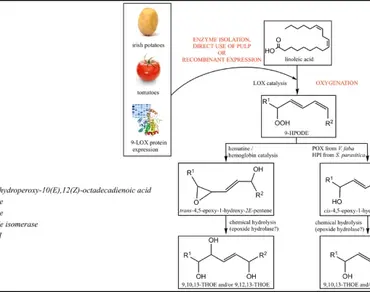
Synthetic fungicides have effectively controlled crop pathogenic fungi, but their continued use has been detrimental to natural biological systems, and sometimes resulted in development of fungal resistance. They also have undesirable effects on non-target organisms and foster environmental and human health concerns, thus, new biodegradable natural alternatives have to be investigated. Lipoxygenases (LOX) are ubiquitous non-heme iron containing dioxygenases that catalyze the addition of molecular oxygen to polyunsaturated fatty acids (PUFAs) such as linoleic acid to form oxylipins that possess anti-microbial activity. The aim of this study was to generate a recombinant 9-Lipoxygenase protein for the chemo-enzymatic synthesis of oxylipin-based biodegradable fungicides. Golden gate assembly, a molecular cloning method that allows assembly of various DNA fragments into a complete piece using Type IIs restriction enzymes, and T4 DNA ligase was used to clone the complete 9-LOX gene into the expression plasmid vector pPICZαB. Protein expression in Pichia pastoris yeast cells was induced by addition of absolute methanol after every 24 h for up to four days. Analysis of protein expression from cell lysates was achieved by SDS-PAGE and Western blotting probed with anti-histidine antibodies, which showed putative protein bands of 97 kDa representing recombinant 9-LOX protein. In the future, optimization studies on the yeast kex2 convertase and the α- secretion factor need to be performed in order to enable the secretion of recombinant Solanum tuberosum 9-LOX protein, since the protein in this study was recovered from cell lysates.
References
Adigun OA, Pham TH, Grapov D, Nadeem M, Jewell LE, Cheema M, Galagedara L, Thomas R (2023) Phyto-oxylipin mediated plant immune response to colonization and infection in the soybean-Phytophthora sojae pathosystem. Front Plant Sci 14(May):1–20. https://doi.org/10.3389/fpls.2023.1141823
Andreou A, Brodhun F, Feussner I (2009) Biosynthesis of oxylipins in non-mammals. Prog Lipid Res 48(3–4):148–170. https://doi.org/10.1016/j.plipres.2009.02.002
Barone GD, Emmerstorfer-Augustin A, Biundo A, Pisano I, Coccetti P, Mapelli V, Camattari A (2023) Industrial production of proteins with Pichia pastoris—Komagataella phaffii. Biomolecules 13(3):441
Brash AR (1999) Lipoxygenases: occurence, functions, catalysis and acquisition of substrate. J Biol Chem 274:23679–23682. https://doi.org/10.1074/jbc.274.34.23679
Byrne B (2015) Pichia pastoris as an expression host for membrane protein structural biology. Curr Opin Struct Biol. https://doi.org/10.1016/j.sbi.2015.01.005
Carvalho FP (2017) Pesticides, environment, and food safety. Food Energy Secur 6(2):48–60. https://doi.org/10.1002/fes3.108
Conconi A, Miquel M, Browse JA, Ryan CA (1996) Intracellular levels of free Linolenic and Linoleic acids increase in tomato leaves in response to wounding. Plant Physiol 111(3):797–803. https://doi.org/10.1104/PP.111.3.797
Corona G, Skaper SD, Callegaro L (1993) Purification of different biologically active forms of mouse β-nerve growth factor by immobilized metal ion affinity chromatography. In: Techniques in Protein Chemistry IV, Elsevier, pp 343–351
Dean R, Van Kan JAL, Pretorius ZA, Hammond-Kosack KE, Di Pietro A, Spanu PD, Rudd JASONJ, Dickman MARTY, Kahmann REGINE, Ellis JEFF, Foster GD (2012) The top 10 fungal pathogens in molecular plant pathology. Mol Plant Pathol 13(4):414–430. https://doi.org/10.1111/j.1364-3703.2011.00783.x
Deutscher MP (1990) Guide to protein purification. Academic Press. Retrieved from https://books.google.co.ug/books?id=kIuQMQEACAAJ
Falke JJ, Corbin JA (2004) Affinity tags for protein purification. In: Lennarz WJ, MDBT-E of Lane BC (Eds.) Elsevier, New York, pp 57–63. https://doi.org/10.1016/B0-12-443710-9/00234-9
Feussner I, Wasternack C (2002) The lipoxygenase pathway. Annu Rev Plant Biol 53(1):275–297. https://doi.org/10.1146/annurev.arplant.53.100301.135248
Garbe L, Hübke H, Tressl R (2005) Enantioselective formation pathway of a trihydroxy fatty acid during mashing. J Am Soc Brew Chem 63(4):157–162. https://doi.org/10.1094/ASBCJ-63-0157
Göbel C, Feussner I, Hamberg M, Rosahl S (2002) Oxylipin profiling in pathogen-infected potato leaves. Biochimica Et Biophysica Acta (BBA) 1584(1):55–64
Guo B, Gao W, Lü H, Zhang X, Yao X, Yao L (2016) Expression and antigen activity determination of human thyroid peroxidase in silkworm and yeast. Wuhan Univ J Nat Sci 21(6):531–536. https://doi.org/10.1007/s11859-016-1206-1
El Hajj S, Sepulveda-Rincon T, Paris C, Giraud T, Csire G, Stefan L, Bouhallab S (2021) Application in nutrition: mineral binding. In: Biologically Active Peptides, Elsevier, pp 455–494)
Hamberg M (1991a) Regio- and siereochemiccil stereochemical analysis analysis of trihydroxyociodecenoic trihydroxyoctadecenoic acids derived from from linoleic linoleic acid 9- and 13-hydroperoxides. Lipids 26(6):407–415
Hamberg M (1991b) Trihydroxyoctadecenoic acids in beer: qualitative and quantitative analysis. J Agric Food Chem 39(9):1568–1572
Han X, Ying X, Huang H, Zhou S, Huang Q (2012) Expression and purification of enterovirus type 71 polyprotein P1 using Pichia pastoris system. Virol Sin 27:254–258
Hu T, Qv X, Hu Z, Chen G, Chen Z (2011) Expression, molecular characterization and detection of lipoxygenase activity of tomloxD from tomato. Afr J Biotechnol 10(4):490–498. https://doi.org/10.5897/AJB10.1386
Huang F-C, Schwab W (2011) Cloning and characterization of a 9-lipoxygenase gene induced by pathogen attack from Nicotiana benthamiana for biotechnological application. BMC Biotechnol 11(1):30. https://doi.org/10.1186/1472-6750-11-30
Jacquet F, Jeuffroy M-H, Jouan J, Le Cadre E, Litrico I, Malausa T, Reboud X, Huyghe C (2022) Pesticide-free agriculture as a new paradigm for research. Agron Sustain Dev 42(1):8. https://doi.org/10.1007/s13593-021-00742-8
Jeong JY, Yim HS, Ryu JY, Lee HS, Lee JH, Seen DS, Kang SG (2012) One-step sequence-and ligation-independent cloning as a rapid and versatile cloning method for functional genomics studies. Appl Environ Microbiol 78(15):5440–5443. https://doi.org/10.1128/AEM.00844-12
Juturu V, Wu JC (2018) Heterologous protein expression in Pichia pastoris: latest research progress and applications. ChemBioChem 19(1):7–21. https://doi.org/10.1002/cbic.201700460
Karbalaei M, Rezaee SA, Farsiani H (2020) Pichia pastoris: A highly successful expression system for optimal synthesis of heterologous proteins. J Cell Physiol. https://doi.org/10.1002/jcp.29583
Kelle S, Zelena K, Krings U, Linke D, Berger RG (2014) Expression of soluble recombinant lipoxygenase from Pleurotus sapidus in Pichia pastoris. Protein Expr Purif 95:233–239. https://doi.org/10.1016/j.pep.2014.01.004
Kim KR, An JU, Lee SH, Oh DK (2015) Selective production of 9R-Hydroxy-10E,12Z,15Z-octadecatrienoic acid from α-Linolenic acid in Perilla seed oil hydrolyzate by a lipoxygenase from Nostoc Sp. SAG 25.82. PLoS ONE 10(9):1–20. https://doi.org/10.1371/journal.pone.0137785
Koutz P, Davis GR, Stillman C, Barringer K, Cregg J, Thill G (1989) Structural comparison of the Pichia pastoris alcohol oxidase genes. Yeast 5(3):167–177. https://doi.org/10.1002/yea.320050306
Lončarić M, Strelec I, Moslavac T, Šubarić D, Pavić V, Molnar M (2021) Lipoxygenase inhibition by plant extracts. Biomolecules 11(2):1–17. https://doi.org/10.3390/biom11020152
Lykogianni M, Bempelou E, Karamaouna F, Aliferis KA (2021) Do pesticides promote or hinder sustainability in agriculture? The challenge of sustainable use of pesticides in modern agriculture. Sci Total Environ 795:148625. https://doi.org/10.1016/j.scitotenv.2021.148625
Marillonnet S, Grützner R (2020) Synthetic DNA assembly using Golden Gate cloning and the hierarchical modular cloning pipeline. Curr Protoc Mol Biol 130(1):1–33. https://doi.org/10.1002/cpmb.115
Muller BL, Dean C, Whitehead IM (1995) The industrial use of plant enzymes for the production of natural “green note” flavour compounds. Colloques de l’INRA (France).
Newcomer ME, Brash AR (2015) The structural basis for specificity in lipoxygenase catalysis. Protein Sci 24(3):298–309. https://doi.org/10.1002/pro.2626
Parveen S, Raja WH, Nabi SU, Manzoor S, Nazir G (2023) Plant oxylipins: an emerging advance to study their role in plant defence against diseases incited by various plant pathogens plant oxylipins: an emerging advance to study their role in plant defence against diseases incited by various plant pathogens
Polkowska-Kowalczyk L, Montillet JL, Agnel JP, Triantaphylidès C, Wielgat B, Maciejewska U (2008) Changes in the initial phase of lipid peroxidation induced by elicitor from Phytophthora infestans in Solanum species. J Plant Physiol 165(18):1929–1939. https://doi.org/10.1016/j.jplph.2008.04.010
Rahbarizadeh F, Rasaee MJ, Forouzandeh M, Allameh A-A (2006) Over expression of anti-MUC1 single-domain antibody fragments in the yeast Pichia pastoris. Mol Immunol 43(5):426–435
Reddy RG, Yoshimoto T, Yamamoto S, Marnett LJ (1994) Expression, purification, and characterization of porcine leukocyte 12-lipoxygenase produced in the methylotrophic yeast, Pichia pastoris. Biochem Biophys Res Commun 205(1):381–388
Righetti L, Vanara F, Bruni R, Sardella C, Blandino M, Dall’Asta C (2023) Investigating metabolic plant response toward deoxynivalenol accumulation in four winter cereals. J Agric Food Chem. https://doi.org/10.1021/acs.jafc.3c06111
Rodrigo WW, Dassanayake RS, Weerasena SJ, Karunanayake EH (2013) Heterologous expression of uncharacterized parasitic nematode-specific growth factor-like protein of Setaria digitata in Pichia pastoris expression systems. Trop Biomed 30(2):181–192
Roque ACA, Silva CSO, Taipa MÂ (2007) Affinity-based methodologies and ligands for antibody purification: advances and perspectives. J Chromatogr A 1160(1–2):44–55
Royo J, Vancanneyt G, Pérez AG, Sanz C, Störmann K, Rosahl S, Sánchez-Serrano JJ (1996) Characterization of three potato lipoxygenases with distinct enzymatic activities and different organ-specific and wound-regulated expression patterns *. J Biol Chem 271(35):21012–21019. https://doi.org/10.1074/jbc.271.35.21012
Ruh L (2023) Expression of recombinant proteins in pichia pastoris and their purification. Retrieved from https://reposit.haw-hamburg.de/bitstream/20.500.12738/14550/1/Ruh_MA.pdf
Sinha J, Plantz BA, Meagher M (2004) DigitalCommons @ University of Nebraska—Lincoln causes of proteolytic degradation of secreted recombinant proteins produced in methylotrophic yeast Pichia pastoris: case study with recombinant ovine interferon-T. Biotechnol Bioeng 89(1):102–112
Stevens TH, Rothman JH, Payne GS, Schekman R (1986) Gene dosage-dependent secretion of yeast vacuolar carboxypeptidase Y. J Cell Biol 102(5):1551–1557
Tachioka M, Sugimoto N, Nakamura A, Sunagawa N, Ishida T, Uchiyama T, Igarashi K, Samejima M (2016) Development of simple random mutagenesis protocol for the protein expression system in Pichia pastoris. Biotechnol Biofuels 9:1–10
Terfrüchte M, Joehnk B, Fajardo-somera R, Braus GH, Riquelme M, Schipper K, Feldbrügge M (2014) Establishing a versatile golden gate cloning system for genetic engineering in fungi. Fungal Genet Biol 62:1–10. https://doi.org/10.1016/j.fgb.2013.10.012
Thieme F, Engler C, Kandzia R, Marillonnet S (2011) Quick and clean cloning: a ligation-independent cloning strategy for selective cloning of specific PCR products from non-specific mixes. PLoS ONE. https://doi.org/10.1371/journal.pone.0020556
Toffolatti SL, Davillerd Y, Isita ID, Facchinelli C, Germinara GS, Ippolito A, Romanazzi G (2023) Are basic substances a key to sustainable pest and disease management inC? An Open Field Perspective. Plants 12(17):3152
Vieira SM, da Rocha SLG, Neves-Ferreira AGdaC, Almeida RV, Perales J (2017) Heterologous expression of the antimyotoxic protein DM64 in Pichia pastoris. PLoS Negl Trop Dis 11(7):1–20. https://doi.org/10.1371/journal.pntd.0005829
Werner S, Engler C, Weber E, Gruetzner R, Marillonnet S (2012) And the MoClo system. Structure 3(February):1–6
Author Information
Ethnopharmacology and Zoopharmacognosy, Bernhard Nocht Institute for Tropical Medicine, Hamburg, Germany