Vegetos

(An International Journal of Plant Research & Biotechnology)
(eISSN: 2229-4473)
Antidiabetic-relevant and differential Nrf2-modulatory activities of Uvaria valderramensis leaf extracts
*Article not assigned to an issue yet
Ang-Santo Mia Lynelle R., Asilo Gaea Felize Anne M., Fuentes Beatrice Alexa N., Lalican Meriel Frangelea L., Sanchez Sheanne Audrey R., Abellanosa Elian
Research Article | Published: 30 July, 2026
First Page: 0
Last Page: 0
Views: 25
Keywords: n Uvaria valderramensisn , Antidiabetic, α-glucosidase, α-amylase, Antiglycation, Nrf2
Abstract
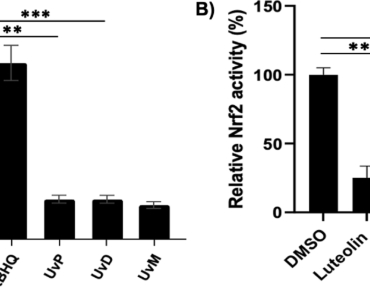
Uvaria valderramensis, an endemic Philippine species, has not previously been evaluated for antidiabetic activity. This study evaluated the antidiabetic-relevant and Nrf2-modulatory activities of its leaf extracts using in vitro assays for α-glucosidase and α-amylase inhibition, antiglycation activity, and Nrf2 reporter modulation. Petroleum ether (UvP), dichloromethane (UvD), and methanol (UvM) extracts were obtained by cold percolation. UvM exhibited significant α-glucosidase inhibition (IC50 = 44.21 µg/mL), whereas none of the extracts inhibited α-amylase. UvP demonstrated moderate inhibition of advanced glycation end-product formation (IC50 = 333.6 µg/mL). In luciferase reporter assays, UvP increased Nrf2 activity in HaCaT keratinocytes (111.22% vs. DMSO control; p < 0.05), while UvP and UvM reduced Nrf2 activity in Huh7 hepatocellular carcinoma cells (24.7% and 67.6%, respectively; p < 0.05). The extracts also did not promote cytotoxicity. These findings demonstrate extract-specific bioactivities involving carbohydrate-digestive enzyme inhibition, antiglycation activity, and context-dependent Nrf2 modulation. This study provides the first in vitro evidence of antidiabetic-relevant and Nrf2-modulatory bioactivities of U. valderramensis leaf extracts and supports further chemical, mechanistic, cellular, and in vivo investigations.
References
Ajaykumar AP, Mathew A, Chandni AP, Varma SR, Jayaraj KN, Sabira O, Rasheed VA, Binitha VS, Swaminathan TR, Chatterjee S (2023) Green synthesis of silver nanoparticles using the leaf extract of the medicinal plant Uvaria narum and its antibacterial, antiangiogenic, anticancer and catalytic properties. Antibiotics 12(3):564. https://doi.org/10.3390/antibiotics12030564
Alsawalha M, Janardhana PB, Padma KR, Reddy SS, Al-Subaie AM, Bolla SR, Veeraraghavan VP, Joseph JP, Mohan SK (2019) Study of antidiabetic properties of Uvaria narum leaf extract through glucose uptake and glucose transporter 4 expression studies in 3T3L1 cell line model. Pharmacogn Res 11(3):304. https://doi.org/10.4103/pr.pr_7_19
Altemimi A, Lakhssassi N, Baharlouei A, Watson DG, Lightfoot DA (2017) Phytochemicals: extraction, isolation, and identification of bioactive compounds from plant extracts. Plants 6(4):42. https://doi.org/10.3390/plants6040042
Anshika, Pandey RK, Singh L, Kumar S, Singh P, Pathak M, Jain S (2022) Plant bioactive compounds and their mechanistic approaches in the treatment of diabetes: a review. Future J Pharm Sci 8(1):52. https://doi.org/10.1186/s43094-022-00443-3
Azwanida NN (2015) A review on the extraction methods use in medicinal plants, principle, strength and limitation. Med Aromat Plants 4(196):2167–0412. https://doi.org/10.4172/2167-0412.1000196
Behl T, Kaur I, Sehgal A, Sharma E, Kumar A, Grover M, Bungău S (2021) Unfolding Nrf2 in diabetes mellitus. Mol Biol Rep 48(1):927–939. https://doi.org/10.1007/s11033-020-06081-3
Cabuang P, Exconde B, Lim V, Padilla D, Salas S, Lemana BO, Macabeo AP, Alejandro GJ (2012) A novel species of Uvaria (Annonaceae) based on cpDNA markers with potential medicinal properties. Philipp J Syst Biol 6:1–16
Cando LFT, Quebral EPB, Ong EP, Catral CDM, Relador RJL, Velasco AJD, Alcazar RMU, Reyes NAL, Pilotin EJB, Ornos EDB, Paz-Pacheco E, Tantengco OAG (2024) Current status of diabetes mellitus care and management in the Philippines. Diabetes Metab Syndr Clin Res Rev 18(2):102951. https://doi.org/10.1016/j.dsx.2024.102951
Christopher R (2022) Plant species of the genus Uvaria: ethnobotanical uses, biological activities and phytochemistry. Nat Prod Res 36(11):2946–2961. https://doi.org/10.1080/14786419.2021.1929972
Davies MJ, D’Alessio DA, Fradkin J, Kernan WN, Mathieu C, Mingrone G, Rossing P, Tsapas A, Wexler DJ, Buse JB (2018) Management of hyperglycemia in type 2 diabetes, 2018. Diabetes Care 41(12):2669–2701. https://doi.org/10.2337/dci18-0033
DeFronzo RA, Eldor R, Abdul-Ghani M (2013) Pathophysiologic approach to therapy in patients with newly diagnosed type 2 diabetes. Diabetes Care 36(Supplement2):S127–S138. https://doi.org/10.2337/dcS13-2011
Eddouks M, Bidi A, El Bouhali B, Hajji L, Zeggwagh NA (2014) Antidiabetic plants improving insulin sensitivity. J Pharm Pharmacol 66(9):1197–1214. https://doi.org/10.1111/jphp.12243
Emordi JE, Agbaje EO, Oreagba IA, Iribhogbe OI (2018) Antidiabetic effects of Uvaria chamae P. Beauv (Annonaceae) in alloxan-induced diabetic rats: a potential alternative treatment for diabetes mellitus. Adv Pharmacol Sci 2018:1314941. https://doi.org/10.1155/2018/1314941
Garcia KYM, Manzano JAH, Macabeo APG (2023) An α-Glucosidase and pancreatic lipase inhibitory cytochalasan derivative from the Dothideomycetes fungus, Sparticola triseptata. Acta Manil 71:97–109. https://doi.org/10.53603/actamanil.71.2023.adzs2369
Governa P, Baini G, Borgonetti V, Cettolin G, Giachetti D, Magnano AR, Miraldi E, Baigi M (2018) Phytotherapy in the management of diabetes. Molecules 23(1):105. https://doi.org/10.3390/molecules23010105
Hammad M, Raftari M, Cezario R, Salma R, Godoy PRDV, Emami SN, Haghdoost S (2023) Roles of oxidative stress and NRF2 signaling in pathogenic and non-pathogenic cells: a possible general mechanism of resistance to therapy. Antioxidants 12(7):1371. https://doi.org/10.3390/antiox12071371
Kashtoh H, Baek K (2022) Recent updates on phytoconstituent alpha-glucosidase inhibitors: an approach towards the treatment of type two diabetes. Plants 11(20):2722. https://doi.org/10.3390/plants11202722
López AJ, Lau H, Li S, Ichii H (2020) Potential benefits of Nrf2/Keap1 targeting in pancreatic islet cell transplantation. Antioxidants 9(4):321. https://doi.org/10.3390/antiox9040321
López-García J, Lehocký M, Humpolíček P, Sáha P (2014) HaCaT keratinocytes response on antimicrobial atelocollagen substrates: extent of cytotoxicity, cell viability and proliferation. J Funct Biomater 5(2):43–57. https://doi.org/10.3390/jfb5020043
Lunceford N, Gugliucci A (2005) Ilex paraguariensis extracts inhibit AGE formation more efficiently than green tea. Fitoterapia 76(5):419–427. https://doi.org/10.1016/j.fitote.2005.03.021
Macabeo AP, Martinez FP, Kurtán T, Tóth L, Mándi A, Schmidt S, Heilmann J, Alejandro GJD, Knorn M, Dahse HM, Franzblay SG (2014) Tetrahydroxanthene-1,3(2H)-dione derivatives from Uvaria valderramensis. J Nat Prod 77(12):2711–2715. https://doi.org/10.1021/np500538c
Macabeo AP, Rubio PY, Higuchi T, Umezawa N, Faderl C, Budde S, Bangcaya PS, Alejandro GJD (2017) Polyoxygenated seco-cyclohexenes and other constituents from Uvaria valderramensis. Biochem Syst Ecol 71:200–204. https://doi.org/10.1016/j.bse.2017.02.013
Macabeo APG, Pilapil LAE, Garcia KYM, Quimque MTJ, Phukhamsakda C, Cruz AJC, Hyde KD, Stadler M (2020) Alpha-glucosidase- and lipase-inhibitory phenalenones from a new species of Pseudolophiostoma originating from Thailand. Molecules 25(4):965. https://doi.org/10.3390/molecules25040965
Manzano JAH, Llames LCJ, Macabeo APG (2024) Tetrahydrobisbenzylisoquinoline alkaloids from Phaeanthus ophthalmicus inhibit target enzymes associated with type 2 diabetes and obesity. J Appl Pharm Sci 14(1):230–237. https://doi.org/10.7324/JAPS.2023.154518
Meenatchi P, Purushothaman A, Maneemegalai S (2015) Antioxidant, antiglycation and insulinotrophic properties of Coccinia grandis (L.) in vitro: possible role in prevention of diabetic complications. J Tradit Complement Med 7(1):54–64. https://doi.org/10.1016/j.jtcme.2016.01.002
Meesakul P, Pyne SG, Laphookhieo S (2020) Potent α-glucosidase inhibitory activity of compounds isolated from the leaf extracts of Uvaria hamiltonii. Nat Prod Res 34(17):2495–2499. https://doi.org/10.1080/14786419.2018.1538996
Mirzaei S, Mohammadi AT, Gholami M, Hashemi F, Zarrabi A, Zabolian A, Hushmandi K, Makvandi P, Samec M, Líšková A, Kubatka P, Nabavi N, Aref AR, Ashrafizadeh M, Khan H, Najafi M (2021) Nrf2 signaling pathway in cisplatin chemotherapy: potential involvement in organ protection and chemoresistance. Pharmacol Res 167:105575. https://doi.org/10.1016/j.phrs.2021.105575
Nguyen NH, Vuong BP, Nguyen CH, Huynh AD, Nguyen D-M, Duong T-H, Kpa H-T, Le T-K-D, Nguyen T-N-D, Nguyen HT, Sichaem J (2024) Antimicrobial and α-Glucosidase Inhibitory Compounds from the Branches of Uvaria siamensis. Rec Nat Prod 18(3):331–338. https://doi.org/10.25135/rnp.452.2402.3145
Ononamadu C, Ezeigwe O, Owolarafe T, Ihegboro GO, Lawal TA, Salawu K, Umeoguaju UF, Aminu I (2020) Starch-iodine assay method underestimates α-amylase inhibitory potential of antioxidative compounds and extracts. BioTechnologia 101(1):45–54. https://doi.org/10.5114/bta.2020.93103
Patil J, Tatiya A, Wadekar R, Girase T, Patel K (2022) Phytochemistry of Uvaria narum: a multifaceted perspective and ethnopharmacological potential. Chem Proc 12(1):18. https://doi.org/10.3390/ecsoc-26-13670
Pelser PB, Barcelona JF, Nickrent DL (2020) Annonaceae. In: Co’s digital flora of the Philippines. Available via https://www.philippineplants.org/Families/Annonaceae.html
Piipponen M, Li D, Landén NX (2020) The immune functions of keratinocytes in skin wound healing. Int J Mol Sci 21(22):8790. https://doi.org/10.3390/ijms21228790
Popoola TD, Guetchueng ST, Ritchie KJ, Awodele O, Dempster NM, Akinloye O, Sarker SD, Fatokun AA (2021) Potent Nrf2-inducing, antioxidant, and anti-inflammatory effects and identification of constituents validate the anti-cancer use of Uvaria chamae and Olax subscorpioidea. BMC Complement Med Ther. https://doi.org/10.1186/s12906-021-03404-0
Quimque MT, Magsipoc RJ, Llames LC, Flores AIG, Garcia KYM, Ratzenbock A, Hussain H, Macabeo APG (2022) Cyclohexenes from Uvaria grandiflora. ACS Omega 7(41):36856–36864. https://doi.org/10.1021/acsomega.2c05544
Taguchi K, Fukami K (2023) RAGE signaling regulates the progression of diabetic complications. Front Pharmacol 14:1128872. https://doi.org/10.3389/fphar.2023.1128872
Tan MA, Manzano JAH, Ishikawa H (2024) Amyloid-beta aggregation and advanced glycation end-products inhibitory activities of Pandanus amaryllifolius Roxb. alkaloids: insights from in vitro and computational investigations. Chem Pap 78:9359–9367. https://doi.org/10.1007/s11696-024-03747-1
Telagari M, Hullatti K (2015) In vitro α-amylase and α-glucosidase inhibitory activity of Adiantum caudatum Linn. and Celosia argentea Linn. extracts and fractions. Indian J Pharmacol 47(4):425–431. https://doi.org/10.4103/0253-7613.161270
Tran N, Pham B, Le L (2020) Bioactive compounds in anti-diabetic plants: from herbal medicine to modern drug discovery. Biology 9(9):252. https://doi.org/10.3390/biology9090252
Uruno A, Furusawa Y, Yagishita Y, Fukutomi T, Muramatsu H, Negishi T, Sugawara A, Kensler TW, Yamamoto M (2013) The Keap1–Nrf2 system prevents onset of diabetes mellitus. Mol Cell Biol 33(15):2996–3010. https://doi.org/10.1128/MCB.00225-13
Wang H, Liu X, Long M, Huang Y, Zhang L, Zhang R, Zheng Y, Liao X, Wang Y, Liao Q, Li W, Tang Z, Tong Q, Wang X, Fang F, de la Rojo M, Ouyang Q, Zhang DD, Yu S, Zheng H (2016) NRF2 activation by antioxidant antidiabetic agents accelerates tumor metastasis. Sci Transl Med 8(334):334ra51. https://doi.org/10.1126/scitranslmed.aad6095
Wang SH, Chen YS, Lai KH, Lu CK, Chang HS, Wu HC, Yen FL, Chen LY, Lee JC, Yen CH (2022) Prinsepiae nux extract activates NRF2 activity and protects UVB-induced damage in keratinocyte. Antioxidants 11(9):1755. https://doi.org/10.3390/antiox11091755
Zhang M, An C, Gao Y, Leak RK, Chen J, Zhang F (2013) Emerging roles of Nrf2 and phase II antioxidant enzymes in neuroprotection. Prog Neurobiol 100:30–47. https://doi.org/10.1016/j.pneurobio.2012.09.003
Zhang QW, Lin LG, Ye WC (2018) Techniques for extraction and isolation of natural products: a comprehensive review. Chin Med 13(1):20. https://doi.org/10.1186/s13020-018-0177-x
Author Information
Department of Biological Sciences, College of Science, University of Santo Tomas, Manila, Philippines