Vegetos

(An International Journal of Plant Research & Biotechnology)
(eISSN: 2229-4473)
Comparative assessment of the phytochemical constituents and in vitro antioxidant activities of Hunteria umbellata exocarp and mesocarp extracts
*Article not assigned to an issue yet
Anadozie Scholastica O., Owoyomi Olubusola T., Adewale Olusola B.
Research Article | Published: 09 June, 2026
First Page: 0
Last Page: 0
Views: 100
Keywords: Antioxidant, Fruit, n Hunteria umbellatan , Mesocarp, Scavenging ability
Abstract
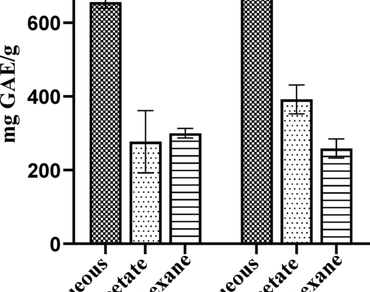
Free radicals are highly reactive and unstable molecules that arise as by-products of cellular metabolism. Medicinal plants have the ability to scavenge free radicals because of their antioxidant properties. Hunteria umbellata ((H. umbellata), (K.Schum.)) Hallier f. fruit has been used in managing diabetes and inducing labor. This study assessed the comparative phytochemical constituents, and antioxidant activities of H. umbellata fruit exocarp and mesocarp using three extraction solvents (aqueous, ethyl acetate, and n-hexane). Qualitative phytochemical screening was determined using standard procedures. Quantitative phytochemicals (total phenol content (TPC) and total flavonoid content (TFC)) and the in vitro antioxidant activities (2, 2-diphenyl-1-picrylhydrazyl (DPPH), iron (II) Fe2+ chelating ability and potassium ferricyanide reducing power) of the extracts were determined against standard antioxidants using a colorimetric method. Results showed the presence of phenols, flavonoids, tannins, saponins, terpenoids, cardiac glycosides, steroids, alkaloids and carbohydrates in the various extracts. The aqueous extract had the highest TPC in the exocarp, while the ethyl acetate extract had the highest TPC in the mesocarp. The aqueous extract had the highest TFC in both exocarp and mesocarp extracts. All extracts showed good scavenging ability in a concentration-dependent manner. However, the aqueous extract scavenged DPPH free radicals better, with an IC50 of 0.47 ± 0.01 and 0.19 ± 0.02 for exocarp and mesocarp, respectively, and a Fe2+ chelating ability of < 0.01 in both exocarp and mesocarp extracts compared to other solvent extracts. The extracts demonstrated excellent reducing power. This study revealed that H. umbellata fruit exocarp and mesocarp extracts possessed antioxidant activities and could serve as potential therapeutic agents for managing oxidative stress-related diseases.
References
Adeneye AA, Adeyemi OO, Agbaje EO (2010) Anti-obesity and antihyperlipidaemic effect of Hunteria umbellate seed extract in experimental hyperlipidaemia. J Ethnopharmacol 130(2):307–314
Adewale OB, Onasanya A, Fadaka AO, Iwere H, Anadozie SO, Osukoya OA, Olayide II (2014) In vitro antioxidant effect of aqueous extract of Solanum macrocarpon leaves in rat liver and brain. Oxid Antioxid Med Sci 3(3):225–229
Afsar T, Razak S, Khan MR, Mawash S, Almajwal A, Shabir M, Haq IU (2016) Evaluation of antioxidant, antihemolytic and anticancer activity of various solvent extracts of Acacia hydaspica R. Parker aerial parts. BMC Complement Altern Med 16:258
Ajiboye T, Hussaini A, Nafiu B, Ibitoye O (2017) Aqueous seed extract of Hunteria umbellata (K. Schum.) Hallier f. (Apocynaceae) palliates hyperglycemia, insulin resistance, dyslipidemia, inflammation and oxidative stress in high-fructose diet-induced metabolic syndrome in rats. J Ethnopharmacol 198:184–193
Akullo JO, Kiage-Mokua BN, Nakimbugwe D, Kinyuru J (2023) Phytochemical profile and antioxidant activity of various solvent extracts of two varieties of ginger and garlic. Heliyon. https://doi.org/10.1016/j.heliyon.2023.e18806
Anadozie SO, Adewale OB, Sibuyi NR, Fadaka AO, Isitua CC, Davids H, Roux S (2023) One-pot synthesis, characterisation and biological activities of gold nanoparticles prepared using aqueous seed extract of Garcinia kola. Process Biochem 128:49–57
Bao J, Cai Y, Sun M, Wang G, Corke H (2005) Anthocyanins, flavonols, and free radical scavenging activity of Chinese bayberry (Myrica rubra) extracts and their color properties and stability. J Agric Food Chem 53(6):2327–2332
Borokini TI, Omotayo FO (2012) Phytochemical and ethnobotanical study of some selected medicinal plants from Nigeria. J Med Plant Res 6(7):1106–1118
Chaachouay N, Zidane L (2024) Plant-derived natural products: a source for drug discovery and development. Drugs Drug Candidates 3(1):184–207
Chatepa LEC, Mwamatope B, Chikowe I, Masamba KG (2024) Effects of solvent extraction on the phytoconstituents and in vitro antioxidant activity properties of leaf extracts of the two selected medicinal plants from Malawi. BMC Complement Med Ther 24(1):317
Chedea VS, Pop RM (2019) Chapter 11 - total polyphenols content and antioxidant DPPH assays on biological samples. In: Watson RR (ed) Polyphenols in plants, Second Edition. Academic Press, London, pp 169–183
Di Meo S, Venditti P (2020) Evolution of the knowledge of free radicals and other oxidants. Oxid Med Cell Longev 2020(1):9829176
Effiong ME, Umeokwochi CP, Afolabi IS, Chinedu SN (2024) Comparative antioxidant activity and phytochemical content of five extracts of Pleurotus ostreatus (oyster mushroom). Sci Rep 14(1):3794
Fan R, Zhu C, Qiu D, Zeng J (2019) Comparison of the bioactive chemical components and antioxidant activities in three tissues of six varieties of Citrus grandis ‘Tomentosa’fruits. Int J Food Prop 22(1):1848–1862
Gulcin İ, Alwasel SH (2023) DPPH radical scavenging assay. Processes 11(8):2248
Igbe I, Ching FP, Eromon A (2010) Anti-inflammatory activity of aqueous fruit pulp extract of Hunteria umbellata K. Schum in acute and chronic inflammation. Acta Pol Pharm 67(1):81–85
Illés E, Patra SG, Marks V, Mizrahi A, Meyerstein D (2020) The FeII(citrate) Fenton reaction under physiological conditions. J Inorg Biochem 206:111018
Kaczorová D, Karalija E, Dahija S, Bešta-Gajević R, Parić A, Ćavar Zeljković S (2021) Influence of extraction solvent on the phenolic profile and bioactivity of two Achillea species. Molecules. https://doi.org/10.3390/molecules26061601
Khalid M, Hassani S, Abdollahi M (2020) Metal-induced oxidative stress: an evidence-based update of advantages and disadvantages. Curr Opin Toxicol 20–21:55–68
Kıran TR, Otlu O, Karabulut AB (2023) Oxidative stress and antioxidants in health and disease. J Lab Med 47(1):1–11
Lobo V, Patil A, Phatak A, Chandra N (2010) Free radicals, antioxidants and functional foods: impact on human health. Pharmacogn Rev 4(8):118–126
Manye SJ, Saleh JS, Ishaya HB, Chiroma SM, Attah MOO, Dibal NI (2023) Phytochemical screening and in vitro antioxidant activities of aqueous and methanol extracts of Aloe vera. Pharmacol Res - Mod Chin Med 8:100291
Momodu O, Enogieru A, Omoruyi S, OmIniabohs F (2014) Extracts of Hunteria umbellata reverses the effect of streptozotocin-induced pancreatic islet-cell destruction. J Exp Clin Anat 13(12):66–73
Nawaz H, Shad MA, Rehman N, Andaleeb H, Ullah N (2020) Effect of solvent polarity on extraction yield and antioxidant properties of phytochemicals from bean (Phaseolus vulgaris) seeds. Braz J Pharm Sci 56:e17129
Nwozo OS, Effiong EM, Aja PM, Awuchi CG (2023) Antioxidant, phytochemical, and therapeutic properties of medicinal plants: a review. Int J Food Prop 26(1):359–388
Oboh G, Ademosun AO, Odubanjo OV, Akinbola IA (2013) Antioxidative properties and inhibition of key enzymes relevant to type‐2 diabetes and hypertension by essential oils from black pepper. Adv Pharmacol Pharm Sci 2013(1):926047
Onygeme-Okerenta BM, Minadoki MD, Amadi BA (2023) Phytochemical composition and antiplasmodial potential of fruit extract of Hunteria umbellata on chloroquine-sensitive Plasmodium berghei berghei (NK65)-infected Albino Mice. Asian J Emerg Res 5:9–21
Oseyomon J, Ilodigwe E (2021) Toxicological evaluation of methanol seed extract of Hunteria umbellata on reproductive functions of treated Wistar rats. AJHSE 2(2):71–88
Parcheta M, Świsłocka R, Orzechowska S, Akimowicz M, Choińska R, Lewandowski W (2021) Recent developments in effective antioxidants: the structure and antioxidant properties. Materials (Basel) 14(8):1984
Salisu TF, Fowora MA, Yahaya TO, Aina SA, Thomas BT, Ademola LA, Jimoh PO (2024) Phytochemical screening, gas chromatograph/mass spectrometer (GCMS) analysis and molecular toxicological potential of Hunteria umbellata aqueous fruit extract against Staphylococcus aureus in accessory gene regulators (AGRs). Future J Pharm Sci 10(1):49
Shodehinde SA, Adefegha SA, Oboh G, Oyeleye SI, Olasehinde TA, Nwanna EE, Boligon AA (2016) Phenolic composition and evaluation of methanol and aqueous extracts of bitter gourd (Momordica charantia L) leaves on angiotensin-I-converting enzyme and some pro-oxidant-induced lipid peroxidation in vitro. J Evid Based Complement Altern Med 21(4):NP67–NP76
Singleton VL, Orthofer R, Lamuela-Raventós RM (1999) Analysis of total phenols and other oxidation substrates and antioxidants by means of Folin-Ciocalteu reagent. Methods Enzymol, vol 299. Elsevier, Amsterdam, pp 152–178
Sofowora A (1982) Medicinal plants and traditional medicine in West Arica. Wily, New York, p 256
Trease G, Evans W (1983) Text book of pharmacognosy london. Bailliare Tindall 12(193):336
Velu G, Palanichamy V, Rajan AP (2018) Phytochemical and pharmacological importance of plant secondary metabolites in modern medicine. Bioorganic phase in natural food: an overview. Springer, Cham, pp 135–156
Author Information
Biochemistry Program, Department of Chemical Sciences, Afe Babalola University, Ado-Ekiti, Nigeria