Vegetos

(An International Journal of Plant Research & Biotechnology)
(eISSN: 2229-4473)
Epidermal structure and its systematic significance of the genus Thunbergia (Family-Acanthaceae) distributed in Assam, India
*Article not assigned to an issue yet
Research Article | Published: 30 July, 2026
First Page: 0
Last Page: 0
Views: 20
Keywords: n Thunbergian , Epidermal micromorphology, Trichomes, Stomatal architecture, SEM analysis
Abstract
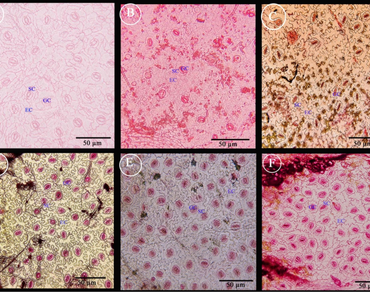
Epidermal micromorphology of leaf offers a consistent and taxonomically informative combination of traits to separate closely related plant species. Although Thunbergia has ecological and medicinal implications, there is a lack of systematic comparative epidermal research of Thunbergia. This study examines the epidermal structure of the leaf of six species of Thunbergia that are found in Assam, India, through Light Microscopy (LM) and Scanning Electron Microscopy (SEM). Close examination of epidermal cell patterns, stomatal structure, trichome richness and cuticular ornamentation showed a great deal of interspecific variation with high diagnostic power. Thunbergia coccinea had significantly sinuous anticlinal walls and Thunbergia grandiflora and Thunbergia laurifolia had more or less straight epidermal boundaries with similar stomatal organization, suggesting that they could be closely related. Thunbergia coccinea had the greatest stomatal index and had the most structurally complex trichome assemblage, with papillate glandular trichomes that are similar to specialized secretory structures found in model taxa. The echinate trichomes were abundant in Thunbergia alata, which is a unique diagnostic characteristic. The papillae on trichome surface in T. grandiflora, T. laurifolia, T. fargrans and T. alata show a promising character to this genus. The micromorphology of the cuticle, between rugose and folded structures and finely striated textures, also enhanced the differentiation of species. These characters can be used in combination to create a coherent set of micromorphological markers that can be of great use in delimiting species within the genus. It is also found that the specialized trichome structures have potential ecological and pharmacological implications, which should be investigated further in terms of biochemistry.
References
Abid A, Ahmad M, Zafar M, Zafar S, Ramadan MF, Althobaiti AT, Majeed S (2023) Foliar epidermal and trichome micromorphological diversity among poisonous plants and their taxonomic significance. Folia Horticulturae 35(2):243–274. https://doi.org/10.2478/fhort-1023-0019
Bahadur S, Ahmad M, Long W, Yaseen M, Hanif U (2022) Leaf epidermal traits of selected Euphorbiaceae and Phyllanthaceae taxa of Hainan Island and their taxonomic relevance. Diversity 14(10):881. https://doi.org/10.3390/d14100881
Blaschek L (2024) Well prepared: How trichome polymorphism creates an early-warning system against herbivory. https://doi.org/10.1093/plcell/koae253
Caedo C, CARLOS M, CAGANDE S (2014) Foliar anatomy of Thunbergia grandiflora Roxb. 10(21):1356–5124. https://doi.org/10.13140/2.1.1356.5124. DOI
Gang Z, Liu B, Rohwer JG, Ferguson DK, Yang Y (2021) Leaf epidermal micromorphology defining the clades in Cinnamomum (Lauraceae). PhytoKeys 182:125. https://doi.org/10.3897/phytokeys.182.67289
Fornero C, Suo B, Zahde M, Juveland K, Kirik V (2017) Papillae formation on trichome cell walls requires the function of the mediator complex subunit Med25. Plant Mol Biol 95(4):389–398. https://doi.org/10.1007/s11103-017-0657-x
Hadi F, Dost S, Khan MN, Ullah B, Razzaq A, Hayat K, Alkahtani J (2025) Foliar LM and SEM Insights: investigating epidermal features and its taxonomic implications in some verbenaceae taxa. Pol J Environ Stud 34(3):2673. https://doi.org/10.15244/pjoes/188235
Hao N, Kamiya T, Wu T (2025) Morphology of glandular trichome and lignin-based structure for its function. Fundamental Res. https://doi.org/10.1016/j.fmre.2025.02.014
James OE, Green BO, Ajuru MG, Wilson V (2021) Foliar epidermal anatomy and its taxonomic implications within the family Euphorbiaceae in The Niger Delta region of Nigeria. J Front Life Sci Res 1(1):48–55. https://doi.org/10.53294/ijflsr.2021.1.1.0036
Jia W, Wang Y, Qi Q, He S, Mi Z, Zhu X (2022) Leaf epidermal morphology of ten wild tree Peonies in China and its taxonomic significance. Horticulturae 8(6):502. https://doi.org/10.3390/horticulturae8060502
Kakkar RA, Haneen MA, Parida AC, Sharma G (2023) The known, unknown, and the intriguing about members of a critically endangered traditional medicinal plant genus Aconitum. Front Plant Sci 14:1139215. https://doi.org/10.3389/fpls.2023.1139215
Kim K, Oak MK, Ji H, Yang S, Choi G, Song JH (2025) Leaf epidermal micromorphology of Peucedanum (Apiaceae) and related genera as per large-scale automated scanning electron microscopy. Bot J Linn Soc 211(2):061. https://doi.org/10.1093/botlinnean/boaf061
Qiu J, Lin M, Tan D (2023) Taxonomic implications of leaf morphology and epidermal anatomy for 14 species of Gagea (Liliaceae) from Xinjiang, China. Bot Stud 64(1):33. https://doi.org/10.1186/s40529-023-00405-9
Roth-Nebelsick A, Krause M (2023) The plant leaf: a biomimetic resource for multifunctional and economic design. Biomimetics 8(2):145. https://doi.org/10.3390/biomimetics8020145
Situngu S, Barker NP (2022) A comparative study of the anatomy of leaf Domatia in Gardenia thunbergia Thunb., Rothmannia capensis Thunb., and Rothmannia globosa (Hochst.) Keay (Rubiaceae). Plants 11(22):3126. https://doi.org/10.3390/plants11223126
Srivastava N (2020) Role of epidermal micromorphology in delimitation of taxa in genus Andrographis (Acanthaceae) in India. https://doi.org/10.22271/tpr.2020.v7.i2.058
Wang X, Shen C, Meng P, Tan G, Lv L (2021) Analysis and review of trichomes in plants. BMC Plant Biol 21(1):70. https://doi.org/10.1186/s12870-021-02840-x
Author Information
Department of Botany, Assam down town University, Panikhaiti, Guwahati, India