Vegetos

(An International Journal of Plant Research & Biotechnology)
(eISSN: 2229-4473)
Fungal fermentation of underutilized legumes: global bibliometric mapping and functional properties insights
*Article not assigned to an issue yet
Krisnawati Ririn, Damayanti Ema, Rosyida Vita Taufika, Fitrianto Nur, Wanita Yeyen Prestyaning, Widada Jaka
Review Article | Published: 25 May, 2026
First Page: 0
Last Page: 0
Views: 234
Keywords: Bibliometric, Bioactive compound, Functional food, Legume, Non-soybean
Abstract
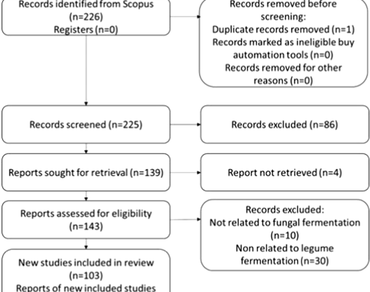
Legumes are recognized as plant-based protein sources, but are dominated by soybeans. The need for healthier foods has stimulated growing interest in exploring non-soybean legumes as alternative functional food sources. Fermentation has emerged as a promising approach to enhance the functional properties of legumes. Various fermented legumes also produce bioactive compounds that contribute to their health effects. This study conducted a bibliometric analysis to evaluate the current research trends, publication patterns of fermented non-soybean legumes, and the bioactive compounds produced that have health effects. A total of 226 publications published between 2002 and 2025 were identified from the scientific literature and analyzed using Biblioshiny and VOSviewer software. The analysis revealed that fungal fermentation of legumes other than soybeans provides bioactive compounds with antioxidant, antihypertensive, antidiabetic, anticholesterol, anticancer, and improved gut health effects. These findings indicate a growing interest in their use as functional foods because non-soybean legumes offer health advantages beyond basic nutrition requirements. This study explores non-soybean fermented legumes through the lens of functional food potential, mapping their functional properties and research evolution. In conclusion, fungal fermentation substantially enhances the nutritional and functional properties of legumes, demonstrating the strong potential of fermented non-soy legumes as functional foods.
References
Aguilar CH, Pires D, Cortaga C et al (2025) Harnessing legume productivity in tropical farming systems by addressing challenges posed by legume diseases. Nitrogen 6:65. https://doi.org/10.3390/NITROGEN6030065
Ahnan-Winarno AD, Cordeiro L, Winarno FG et al (2021) Tempeh: a semicentennial review on its health benefits, fermentation, safety, processing, sustainability, and affordability. Compr Rev Food Sci Food Saf 20:1717–1767. https://doi.org/10.1111/1541-4337.12710
Alryalat SAS, Malkawi LW, Momani SM (2019) Comparing bibliometric analysis using PubMed, Scopus, and Web of Science databases. J vis Exp 2019:58494. https://doi.org/10.3791/58494
Andriati N, Anggrahini S, Setyaningsih W et al (2018) Physicochemical characterization of jack bean (Canavalia ensiformis) tempeh. Food Res 2:481–485. https://doi.org/10.26656/fr.2017.2(5).300
Astawan M, Faishal MA, Prayudani APG et al (2023) Effects of seed germination on physicochemical and bioactive compounds characteristics of velvet bean tempe. Curr Res Nutr Food Sci J 11:808–821. https://doi.org/10.12944/CRNFSJ.11.2.30
Balogun OI, Epriliati I, Otunola ET, Agboola HA (2017) Rhizopus oryzae FNCC 6010, Rhizopus oligosporus FNCC 6011, and their hybrid lowered antioxidant capacity in velvet beans compared to germination. Int Food Res J 24:1606–1613
Blanco Mejia S, Messina M, Li SS et al (2019) A meta-analysis of 46 studies identified by the FDA demonstrates that soy protein decreases circulating LDL and total cholesterol concentrations in adults. J Nutr 149:968–981. https://doi.org/10.1093/JN/NXZ020
Budiari S, Devi AF, Mulyani H, et al (2023) Effect of solid-state fermentation using strains of Rhizopus oligospo rus C1 on chemical characteristics and antioxidant activity of Peas. In: Dahnum D, Null I, S.T.C.L. N, et al. (eds) AIP Conference Proceedings. American Institute of Physics Inc.
Chou S-T, Chang C-T, Chao W-W, Chung Y-C (2002) Evaluation of antioxidative and mutagenic properties of 50% ethanolic extract from red beans fermented by Aspergillus oryzae. J Food Prot 65:1463–1469. https://doi.org/10.4315/0362-028X-65.9.1463
Chou S-T, Chao W-W, Chung Y-C (2008) Effect of fermentation on the antioxidant activity of red beans (Phaseolus radiatus L. var. Aurea) ethanolic extract. Int J Food Sci Technol 43:1371–1378. https://doi.org/10.1111/j.1365-2621.2007.01626.x
Christensen LF, García-Béjar B, Bang-Berthelsen CH, Hansen EB (2022) Extracellular microbial proteases with specificity for plant proteins in food fermentation. Int J Food Microbiol 381:109889. https://doi.org/10.1016/j.ijfoodmicro.2022.109889
Deveci G, Çelik E, Ağagündüz D et al (2023) Certain fermented foods and their possible health effects with a focus on bioactive compounds and microorganisms. Fermentation 9:923. https://doi.org/10.3390/fermentation9110923
Dhull SB, Punia S, Kidwai MK et al (2020) Solid-state fermentation of lentil (Lens culinaris L.) with Aspergillus awamori: effect on phenolic compounds, mineral content, and their bioavailability. Legume Sci. https://doi.org/10.1002/leg3.37
Drabo MS, Savadogo A, Raes K (2023) Effects of tempeh fermentation using Rhizopus oryzae on the nutritional and flour technological properties of Zamnè (Senegalia macrostachya seeds): Exploration of processing alternatives for a hard-to-cook but promising wild legume. Food Biosci 54:102823. https://doi.org/10.1016/j.fbio.2023.102823
Duhan JS, Chawla P, Kumar S et al (2021) Proximate composition, polyphenols, and antioxidant activity of solid state fermented peanut press cake. Prep Biochem Biotechnol 51:340–349. https://doi.org/10.1080/10826068.2020.1815060
Espinosa Páez E, Hernández-Luna CE, Longoria-García S et al (2023) Improving nutritional and functional quality characteristics in bread by using flours obtained from fermentation of kidney beans and oats with Pleurotus ostreatus. CYTA - J Food 21:151–158. https://doi.org/10.1080/19476337.2023.2173305
Fadhilah F, Lestari TD, Damayanti R et al (2023) Antioxidant activity of fermented red bean extract on sperm quality of mice exposed to cigarette smoke. Worlds Vet J 13:365–372. https://doi.org/10.54203/SCIL.2023.WVJ40
Frediansyah A (2024) Growth in traditional fermented soybeans-related research (Tempeh, Natto, Doenjang, Chungkookjang, Douchi, Meju, Kinema, Oncom, and Tauco) from 1928 to 2024, following the omics emergence and trend in functional food. Process Biochem 147:600–624
Gamboa-Gómez CI, Muñoz-Martínez A, Rocha-Guzmán NE et al (2016) Changes in phytochemical and antioxidant potential of Tempeh common bean flour from two selected cultivars influenced by temperature and fermentation time. J Food Process Preserv 40:270–278. https://doi.org/10.1111/jfpp.12604
Gbedo C, Arnaud E, Strub C (2025) Traditional legume seed fermentation processes: what is the individual impact of the cooking and fermentation stages on the degradation of anti-nutritional factors? Food Rev Int 41:1290–1320. https://doi.org/10.1080/87559129.2024.2430653
Gbenle J, Mert M, Phasha NN et al (2025) Fungal-mediated solid-state fermentation ameliorates antinutritional factors but does not improve in vitro digestibility of marama (Tylosema esculentum) beans. Future Foods 11:100664. https://doi.org/10.1016/J.FUFO.2025.100664
Günal-Köroğlu D, Karabulut G, Ozkan G et al (2025) Allergenicity of alternative proteins: reduction mechanisms and processing strategies. J Agric Food Chem 73:7522–7546. https://doi.org/10.1021/ACS.JAFC.5C00948
Hsu CS, Chiu WC, Yeh SL (2003) Effects of soy isoflavone supplementation on plasma glucose, lipids, and antioxidant enzyme activities in streptozotocin-induced diabetic rats. Nutrition Res 23:67–75. https://doi.org/10.1016/S0271-5317(02)00386-X
Ito M, Ito T, Aoki H et al (2020) Isolation and identification of the antimicrobial substance included in Tempeh using Rhizopus stolonifer NBRC 30816 for fermentation. Int J Food Microbiol 325:108645. https://doi.org/10.1016/j.ijfoodmicro.2020.108645
Jena S, Panda SH (2023) Asian fermented legumes, pulses, and oil seed-based products. Indigenous Fermented Foods for the Tropics, pp 85–95. https://doi.org/10.1016/B978-0-323-98341-9.00024-4
Joshi M, Bose I, Tyagi A, Sharma S (2024) Global perspectives on fungal fermented foods: Nutritional benefits, microbial diversity and sustainability. In: Fungal Biotechnology: Industrial Applications and Market Potential. Elsevier, pp 223–251
Ketemepi HK, Mohd Amin SFB, Julmohammad N et al (2025) Protein hydrolysates as functional food ingredients: a bibliometric analysis from inception to 2023. Food Hum 5:100691. https://doi.org/10.1016/J.FOOHUM.2025.100691
Khosravi A, Razavi SH (2021) Therapeutic effects of polyphenols in fermented soybean and black soybean products. J Funct Foods 81:104467. https://doi.org/10.1016/J.JFF.2021.104467
Kumitch HM, Stone A, Nosworthy MG et al (2020) Effect of fermentation time on the nutritional properties of pea protein-enriched flour fermented by Aspergillus oryzae and Aspergillus niger. Cereal Chem 97:104–113. https://doi.org/10.1002/cche.10234
Lee I-H, Chou C-C (2006) Distribution profiles of isoflavone isomers in black bean kojis prepared with various filamentous fungi. J Agric Food Chem 54:1309–1314. https://doi.org/10.1021/jf058139m
Lee I-H, Hung Y-H, Chou C-C (2007) Total phenolic and anthocyanin contents, as well as antioxidant activity, of black bean koji fermented by Aspergillus awamori under different culture conditions. Food Chem 104:936–942. https://doi.org/10.1016/j.foodchem.2006.12.049
Lee I-H, Hung Y-H, Chou C-C (2008) Solid-state fermentation with fungi to enhance the antioxidative activity, total phenolic and anthocyanin contents of black bean. Int J Food Microbiol 121:150–156. https://doi.org/10.1016/j.ijfoodmicro.2007.09.008
Lee YH, Lee N-R, Lee CH (2022) Comprehensive metabolite profiling of four different beans fermented by Aspergillus oryzae . Molecules 27:7917. https://doi.org/10.3390/molecules27227917
Lee HY, Kim HS, Kim MJ et al (2024) Comparison of primary and secondary metabolites and antioxidant activities by solid-state fermentation of Apios americana Medikus with different fungi. Food Chem 461:140808. https://doi.org/10.1016/j.foodchem.2024.140808
Magro AEA, Silva LC, Rasera GB, de Castro RJS (2019) Solid-state fermentation as an efficient strategy for the biotransformation of lentils: enhancing their antioxidant and antidiabetic potentials. Bioresour Bioprocess. https://doi.org/10.1186/s40643-019-0273-5
Massmann CM, Berhow M, Gibbons WR, Karki B (2025) Enhanced nutritional profile of dehulled peas through fungal fermentation: impacts on protein, starch, saponins, and total phenolic content. JAOCS J Am Oil Chemists Soc 102:587–597. https://doi.org/10.1002/AOCS.12912
Massmann CM, Berhow M, Gibbons WR, Karki B (2022) The effects of fungal bioprocessing on air-classified pea protein concentrates. LWT 154:112686. https://doi.org/10.1016/j.lwt.2021.112686
Moyo SM, Famuyide OY, Kayitesi E (2024) Urging bioactive peptide exploration in African fermented legumes: insights from microbial proteolysis to gastrointestinal stability. Food Product Process Nutrition 6:90. https://doi.org/10.1186/s43014-024-00265-1
Muawanah A, Chalid SY, Hatiningsih F, et al (2022) Angiotensin converting enzyme (ACE) inhibitory activity and extract protein profiles of Mung Beans (Vigna radiata L.) Tempeh which fermented by Rhizopus sp. In: Joweria N, Adzitey F, Rachmawati SH, et al. (eds) IOP Conference Series: Earth and Environmental Science. IOP Publishing Ltd
Mushollaeni W, Tantalu L (2021) Food properties of lebui bean powder extract fermented by Rhizopus sp. Curr Res Nutr Food Sci J 9:338–345. https://doi.org/10.12944/CRNFSJ.9.1.32
Mushollaeni W, Kumalaningsih S, Santoso I (2017) Effect of solid-state fermentation on anthocyanin and physicochemical content of Lebui bean (Cajanus sp.). Biosci Res 14:1096–1102
Mushollaeni W, Tantalu L (2020) Anthocyanin and nutritional contents of fermented Lebui Bean (Cajanus sp.) through SSF method and induced by Rhizopus sp. and Saccharomyces sp. In: IOP Conference Series: Earth and Environmental Science. Institute of Physics Publishing
Nawaz KAA, David SM, Murugesh E et al (2017) Identification and in silico characterization of a novel peptide inhibitor of angiotensin converting enzyme from pigeon pea (Cajanus cajan). Phytomedicine 36:1–7. https://doi.org/10.1016/j.phymed.2017.09.013
Niveditha VR, Sridhar KR (2014) Antioxidant activity of raw, cooked and Rhizopus oligosporus fermented beans of Canavalia of coastal sand dunes of Southwest India. J Food Sci Technol 51:3253–3260. https://doi.org/10.1007/s13197-012-0830-9
Niveditha VR, Krishna Venkatramana D, Sridhar KR (2013) Cytotoxic effects of methanol extract of raw, cooked and fermented split beans of Canavalia on cancer cell lines MCF-7 and HT-29. IIOAB J 4:20–23
Niveditha VR, Sridhar KR, Tomita-Yokotani K (2014) Improvement of bioactive potential of Canavalia beans of coastal sand dunes by solid-substrate fermentation using Rhizopus oligosporus. Curr Nutr Food Sci 10:308–313. https://doi.org/10.2174/1573401311666141204221630
Nurkolis F, Qhabibi FR, Yusuf VM et al (2022) Anticancer properties of soy-based tempe: A proposed opinion for future meal. Front Oncol 12:1054399
Nurmilah S, Frediansyah A, Cahyana Y et al (2025) Exploring microbial dynamics and metabolomic profiling of isoflavone transformation in black and yellow soybean tempe for sustainable functional foods. Food Chem Mol Sci 11:100279. https://doi.org/10.1016/J.FOCHMS.2025.100279
Oliveira JP, Silva IB, Costa J et al (2024) Bibliometric study and potential applications in the development of starch films with nanocellulose: a perspective from 2019 to 2023. Int J Biol Macromol 277:133828. https://doi.org/10.1016/J.IJBIOMAC.2024.133828
Ouoba LII, Diawara B, Jespersen L, Jakobsen M (2007) Antimicrobial activity of Bacillus subtilis and Bacillus pumilus during the fermentation of African locust bean (Parkia biglobosa) for Soumbala production. J Appl Microbiol 102:963–970. https://doi.org/10.1111/j.1365-2672.2006.03156.x
Pertiwi MGP, Marsono Y, Indrati R (2020) In vitro gastrointestinal simulation of tempe prepared from koro kratok (Phaseolus lunatus L.) as an angiotensin-converting enzyme inhibitor. J Food Sci Technol 57:1847–1855. https://doi.org/10.1007/s13197-019-04219-1
Popova A, Mihaylova D (2019) Antinutrients in plant-based foods: a review. Open Biotechnol J 13:68–76. https://doi.org/10.2174/1874070701913010068
Prativi MBN, Astuti DI, Putri SP et al (2023) Metabolite changes in Indonesian tempe production from raw soybeans to over-fermented tempe. Metabolites 13:1–16. https://doi.org/10.3390/metabo13020300
Purwandari FA, Annisa EDN, Rachmawati AT et al (2021) Effect of different cooking methods on chemical composition, nutritional values, and sensory properties of Jack bean (Canavalia ensiformis) tempe. Food Res Int 5:327–333. https://doi.org/10.26656/fr.2017.5(3).530
Purwandari FA, Fogliano V, Capuano E (2024) Tempeh fermentation improves the nutritional and functional characteristics of Jack beans (Canavalia ensiformis (L.) DC). Food Funct 15:3680–3691. https://doi.org/10.1039/d3fo05379b
Puspitasari E, Imansari F, Kusumawardani B, Sutejo IR (2023) The effect of Aspergillus oryzae and Rhizopus aspergillus fermentation on daidzein content in edamame (Glycine max). Pharm Educ 23:14–18. https://doi.org/10.46542/pe.2023.232.1418
Rahmawati D, Astawan M, Putri SP, Fukusaki E (2021) Gas chromatography-mass spectrometry-based metabolite profiling and sensory profile of Indonesian fermented food (tempe) from various legumes. J Biosci Bioeng 132:487–495. https://doi.org/10.1016/J.JBIOSC.2021.07.001
Rai AK, Jeyaram K (2017) Legume-based food fermentation: Biochemical aspects. In: Fermented Foods: Part II: Technological Interventions. CRC Press, pp 74–96
Rochín-Medina JJ, Gutiérrez-Dorado R, Sánchez-Magaña LM et al (2015) Enhancement of nutritional properties, and antioxidant and antihypertensive potential of black common bean seeds by optimizing the solid state bioconversion process. Int J Food Sci Nutr 66:498–504. https://doi.org/10.3109/09637486.2015.1052377
Sadh PK, Saharan P, Duhan S et al (2022) Assessment of fermentation processing effect on phenolic, flavonoids contents and antioxidant activity of commonly used pulses. Res J Biotechnol 17:184–191. https://doi.org/10.25303/1705rjbt184191
Saharan P, Sadh PK, Duhan S, Duhan JS (2020) Bio-enrichment of phenolic, flavonoids content and antioxidant activity of commonly used pulses by solid-state fermentation. J Food Meas Charact 14:1497–1510. https://doi.org/10.1007/s11694-020-00399-z
Sánchez-García J, Asensio-Grau A, García-Hernández J et al (2022) Nutritional and antioxidant changes in lentils and quinoa through fungal solid-state fermentation with Pleurotus ostreatus. Bioresour Bioprocess. https://doi.org/10.1186/s40643-022-00542-2
Sánchez-García J, Muñoz-Pina S, García-Hernández J et al (2023) Impact of air-drying temperature on antioxidant properties and ACE-inhibiting activity of fungal fermented lentil flour. Foods 12:999. https://doi.org/10.3390/foods12050999
Sánchez-Magaña LM, Cuevas-Rodríguez EO, Gutiérrez-Dorado R et al (2014) Solid-state bioconversion of chickpea (Cicer arietinum L.) by Rhizopus oligosporus to improve total phenolic content, antioxidant activity and hypoglycemic functionality. Int J Food Sci Nutr 65:558–564. https://doi.org/10.3109/09637486.2014.893284
Shi D, Stone AK, Jafarian Z et al (2024) Submerged fermentation of lentil protein isolate and its impact on protein functionality, nutrition, and volatile profiles. J Food Sci 89:3412–3429. https://doi.org/10.1111/1750-3841.17111
Starzyńska-Janiszewska A, Stodolak B, Jamróz M (2008) Antioxidant properties of extracts from fermented and cooked seeds of Polish cultivars of Lathyrus sativus. Food Chem 109:285–292. https://doi.org/10.1016/j.foodchem.2007.12.028
Starzyńska-Janiszewska A, Stodolak B, Mickowska B (2014) Effect of controlled lactic acid fermentation on selected bioactive and nutritional parameters of tempeh obtained from unhulled common bean (Phaseolus vulgaris) seeds. J Sci Food Agric 94:359–366. https://doi.org/10.1002/jsfa.6385
Starzyńska-Janiszewska A, Stodolak B, Wikiera A (2015) Antioxidant potential and α-galactosides content of unhulled seeds of dark common beans subjected to tempe-type fermentation with Rhizopus microsporus var. chinensis and Lactobacillus plantarum. Food Sci Technol Res 21:765–770. https://doi.org/10.3136/fstr.21.765
Stephanie A, Kartawidjajaputra F, Silo W et al (2019) Tempeh consumption enhanced beneficial bacteria in the human gut. Food Res 3:57–63
Stodolak B, Grabacka M, Starzyńska-Janiszewska A, Duliński R (2024) Effect of fungal and fungal-bacterial tempe-type fermentation on the bioactive potential of grass pea seeds and flaxseed oil cake mix. Int J Food Sci. https://doi.org/10.1155/2024/5596798
Stone AK, Shi D, Liu E et al (2024) Effect of solid-state fermentation on the functionality, digestibility, and volatile profiles of pulse protein isolates. Food Biosci 61:104580. https://doi.org/10.1016/j.fbio.2024.104580
Surya R (2024) Fermented foods of Southeast Asia other than soybean- or seafood-based ones. J Ethn Foods 11(1):11:27-. https://doi.org/10.1186/S42779-024-00241-7
Suryanti V, Marliyana SD, Rohana GL, Trisnawati EW (2021) Bioactive compound contents and antioxidant activity of fermented lead tree (Leucaena leucocephala (lmk.) de wit) seeds. Molekul 16:192–199. https://doi.org/10.20884/1.jm.2021.16.3.756
Tan ZJ, Abu Bakar MF, Lim SY, Sutimin H (2024) Nutritional composition and sensory evaluation of tempeh from different combinations of beans. Food Res 8:138–146. https://doi.org/10.26656/FR.2017.8(2).088
Tawalbeh D, Al-U’datt MH, Wan Ahmad WAN et al (2023) Recent advances in in vitro and in vivo studies of antioxidant, ACE-inhibitory and anti-inflammatory peptides from legume protein hydrolysates. Molecules 28:2423. https://doi.org/10.3390/MOLECULES28062423
Tonini S, Tlais AZA, Galli BD et al (2024) Lentils protein isolate as a fermenting substrate for the production of bioactive peptides by lactic acid bacteria and neglected yeast species. Microb Biotechnol 17:e14387. https://doi.org/10.1111/1751-7915.14387
Toor BS, Kaur A, Sahota PP, Kaur J (2021) Antioxidant potential, antinutrients, mineral composition and FTIR spectra of legumes fermented with Rhizopus oligosporus. Food Technol Biotechnol 59:530–542. https://doi.org/10.17113/ftb.59.04.21.7319
Tsalissavrina I, Murdiati A, Raharjo S, Lestari LA (2023) The effects of duration of fermentation on total phenolic content, antioxidant activity, and isoflavones of the germinated jack bean tempeh (Canavalia ensiformis). Indones J Pharm 34:460–470
Vellozo-Echevarría T, Barrett K, Vuillemin M, Meyer AS (2024) Mini-review: the distinct carbohydrate active enzyme secretome of Rhizopus spp. represents fitness for mycelium remodeling and solid-state plant food fermentation. ACS Omega 9:34185–34195. https://doi.org/10.1021/ACSOMEGA.4C04378
Verni M, Verardo V, Rizzello CG (2019) How fermentation affects the antioxidant properties of cereals and legumes. Foods 8:362. https://doi.org/10.3390/foods8090362
Villacrés E, Quelal MB, Fernández E et al (2020) Impact of debittering and fermentation processes on the antinutritional and antioxidant compounds in Lupinus mutabilis sweet. LWT. https://doi.org/10.1016/j.lwt.2020.109745
Wu Q, Xu Z, Feng S et al (2024) Correlation analysis between microbial communities and flavor compounds during the post-ripening fermentation of traditional chili bean paste. Foods 13:1209. https://doi.org/10.3390/foods13081209
Xiao Y, Zhang B, Chen Y et al (2017) Solid-state bioprocessing with Cordyceps militaris enhanced antioxidant activity and DNA damage protection of red beans (Phaseolus angularis). Cereal Chem 94:177–184. https://doi.org/10.1094/CCHEM-03-16-0046-R
Yarlina VP, Andoyo R, Djali M, Lani MN (2022) Metagenomic analysis for indigenous microbial diversity in soaking process of making tempeh jack beans (Canavalia ensiformis). Curr Res Nutrition Food Sci J 10:620–632. https://doi.org/10.12944/CRNFSJ.10.2.18
Yarlina VP, Djali M, Andoyo R et al (2024) Metagenomic insights into enhancing protein content and digestibility in Jack Bean (Canavalia ensiformis) tempeh: unraveling microbial dynamics during fermentation. Appl Food Res 4:100588. https://doi.org/10.1016/J.AFRES.2024.100588
Yeap SK, Mohd Ali N, Mohd Yusof H et al (2012) Antihyperglycemic effects of fermented and nonfermented mung bean extracts on alloxan-induced-diabetic mice. J Biomed Biotechnol. https://doi.org/10.1155/2012/285430
Yeo J, Tsao R, Sun Y, Shahidi F (2021) Liberation of insoluble-bound phenolics from lentil hull matrices as affected by Rhizopus oryzae fermentation: Alteration in phenolic profiles and their inhibitory capacities against low-density lipoprotein (LDL) and DNA oxidation. Food Chem 363:130275. https://doi.org/10.1016/j.foodchem.2021.130275
Zhang H, Chen C-J, Chen B-Y (2022) Response surface methodology-optimized co-fermentation of pigeon pea okara by Rhizopus oligosporus and Yarrowia lipolytica and its application for vegetable paste. JSFA Rep 2:236–246. https://doi.org/10.1002/jsf2.43
Author Information
Postdoctoral of Research Center for Food Technology and Processing, National Research and Innovation Agency, Yogyakarta, Indonesia