Vegetos

(An International Journal of Plant Research & Biotechnology)
(eISSN: 2229-4473)
Integrating artificial intelligence (AI) based models for yield prediction in tomato (Solanum lycopersicum L.)
*Article not assigned to an issue yet
Research Article | Published: 27 May, 2026
First Page: 0
Last Page: 0
Views: 77
Keywords: Multilayer perceptron, Multiple linear regression, Decision tree, Data-driven phenotyping, Yield enhancement
Abstract
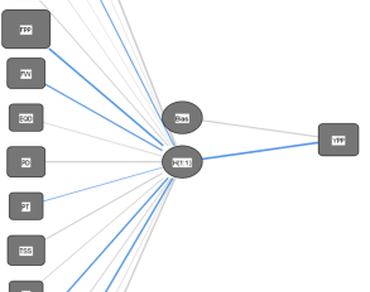
Tomato (Solanum lycopersicum L.) is the second most widely grown vegetable crop globally. Enhancing yield is still a challenge due to the complexity of yield-attributing characters. Fourteen tomato genotypes were tested across four seasons (2016–2020) under open field conditions for 18 quantitative characters. Three prediction models viz., multilayer perceptron (MLP), multiple linear regression (MLR), and Classification and Regression Tree (decision tree, CART algorithm) were used to identify the most important characters influencing yield per plant (YPP). The MLP identified fruits/plant (FPP) and ascorbic acid (AC) as important yield determinants with low training and testing errors, reflecting high prediction quality. The MLR analysis also validated significant positive influence of FPP and fruit weight (FW) towards yield/plant with an adjusted R2 value of 0.95. The contribution of fruits/plant towards yield/plant alone was 74%. Titrable acidity (TA), lycopene content (LC), total sugar content (TS) and polar diameter (PD) showed negative influence, indicating trade-offs between yield and some quality characters. The Decision Tree model determined threshold-based character splits, validating FPP, flowers/cluster (FC), and FW as the most important factors contributing to YPP. This research illustrated the promise of AI-based phenotyping in trait prioritization and pre-emptive breeding, providing a solid, data-driven platform to expedite genetic gain in tomato.
References
Acharya B, Kumar PP, Hazra S, Dutta S, Saha S, Roy S, Maji A, Chakraborty I, Chattopadhyay A, Hazra P (2024) Genetic control of important yield attributing characters predicted through machine learning in segregating generations of interspecific crosses of tomato (Solanum lycopersicum L). Acta Physiol Plant. https://doi.org/10.1007/s11738-024-03702-3
Akbar S, Wei Y, Yuan Y, Khan MT, Qin L, Powell CA, Chen B, Zhang M (2020) Gene expression profiling of reactive oxygen species (ROS) and antioxidant defense system following Sugarcane mosaic virus (SCMV) infection. BMC Plant Biol 20:1–12. https://doi.org/10.1186/s12870-020-02737-1
Ansari R, Manna A, Hazra S, Bose S, Chatterjee A, Sen P (2024) Breeding 4.0 vis-à-vis application of artificial intelligence (AI) in crop improvement: an overview. NZ J Crop Hortic Sci 5:1–43. https://doi.org/10.1080/01140671.2024.2409775
Ariizumi T, Shinozaki Y, Ezura H (2013) Genes that influence yield in tomato. Breed Sci 63(1):3–13. https://doi.org/10.1270/jsbbs.63.3
Bose S, Banerjee S, Kumar S, Saha A, Nandy D, Hazra S (2024) Review of applications of artificial intelligence (AI) methods in crop research. J Appl Genet 65(2):225–240. https://doi.org/10.1007/s13353-023-00826-z
Caliman FR, Silva DJ, Stringheta PC, Fontes PC, Moreira GR, Mattedi AP (2007) Relation between plant yield and fruit quality characteristics of tomato. Biosci J 24:46–52
Campestrini LH, Melo PS, Peres LE, Calhelha RC, Ferreira IC, Alencar SM (2019) A new variety of purple tomato as a rich source of bioactive carotenoids and its potential health benefits. Heliyon 5:e02831. https://doi.org/10.1016/j.heliyon.2019.e02831
Chaudhary J, Alisha A, Bhatt V, Chandanshive S, Kumar N, Mir Z, Kumar A, Yadav SK, Shivaraj SM, Sonah H, Deshmukh R (2019) Mutation breeding in tomato: advances, applicability and challenges. Plants 8:128. https://doi.org/10.3390/plants8050128
Donoso A, Salazar E (2023) Yield components and development in indeterminate tomato landraces: an agromorphological approach to promoting their utilization. Agronomy 13(2):434. https://doi.org/10.3390/agronomy13020434
Ene CO, Ogbonna PE, Agbo CU, Chukwudi UP (2016) Studies of phenotypic and genotypic variation in sixteen cucumber genotypes. Chil J Agric Res 76(3):307–313. https://doi.org/10.4067/S0718-58392016000300007
Fernie AR, Martinez-Rivas F (2025) Br(e)aking the tomato fruit size–sweetness trade-off. Trends Plant Sci 30(2):101–103. https://doi.org/10.1016/j.tplants.2024.12.015
Gong T, Brecht JK, Koch KE, Hutton SF, Zhao X (2022) A systematic assessment of how rootstock growth characteristics impact grafted tomato plant biomass, resource partitioning, yield, and fruit mineral composition. Front Plant Sci 13:948656. https://doi.org/10.3389/fpls.2022.948656
Hazra P, Chattopadhyay A, Karmakar K, Dutta S (2011) Modern Technology for Vegetable Production. New India Publishing Agency, New Delhi, India
Hazra P, Nath S (2008) Source of resistance in tomato and inheritance of host resistance for tomato leaf curl virus disease. Indian J Agric Sci 78:690–694
Hazra S, Gorai S, Roy S, Bose S, Hazra P, Chattopadhyay A, Ali MN, Jambhulkar S, Maji A (2024) Isolation of yellow vein mosaic virus (YVMV)-resistant mutants of okra (Abelmoschus esculentus L.) through applied mutagenesis. Plant Breed 143(2):232–245. https://doi.org/10.1111/pbr.13151
Mishra A, Singh R, Singh P (2019) Correlation and Path Analysis Studies for Yield in Tomato (Solanum lycopersicum L). Int J Curr Microbiol Appl Sci 8:1640–1647. https://doi.org/10.20546/ijcmas.2019.809.059
Seth T, Chattopadhyay A, Dutta S, Hazra P, Singh B (2017) Genetic control of yellow vein mosaic virus disease in okra and its relationship with biochemical parameters. Euphytica 213:1–13. https://doi.org/10.1007/s10681-016-1789-9
Smirnoff N, Conklin PL, Loewus FA (2001) Biosynthesis of ascorbic acid in plants. Ann Rev Pl Physiol Pl Mol Biol 52:437–467. https://doi.org/10.1146/annurev.arplant.52.1.437
Strobl C, Malley J, Tutz G (2009) An introduction to recursive partitioning: rationale, application, and characteristics of classification and regression trees, bagging, and random forests. Psychol methods 14(4):323–348. https://doi.org/10.1037/a0016973
Author Information
Department of Agriculture, Brainware University, Barasat, India