Vegetos

(An International Journal of Plant Research & Biotechnology)
(eISSN: 2229-4473)
Morphological plasticity and threat assessment of primitive pteridophytes in Palakkad gap of Western Ghats, India
*Article not assigned to an issue yet
Alen Alex Philip, Abhilash Kalathil Sethumadhavan, Gayathri Thekkekara Suresh, Leeja Lakshmanan
Research Article | Published: 15 June, 2026
First Page: 0
Last Page: 0
Views: 98
Keywords: Pteridophytes, Ferns, Lycophytes, Palakkad, Western Ghats
Abstract
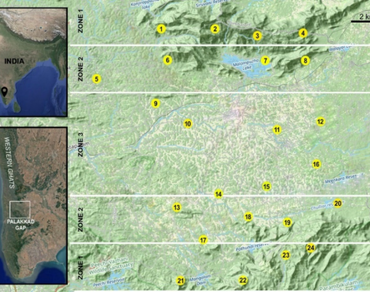
The Palakkad Gap, a crucial geological feature in India's southern Western Ghats, is home to seventeen primitive pteridophytes, which are the most ancestral forms of vascular cryptogams. These pteridophytes are singularly and variably dispersed among the many ecological niches. Intense anthropogenic habitat fragmentation in this area is made worse by challenging climate factors such as extended dry spells and fluctuating temperature regimes. Because of their severe habitat sensitivity and limited reproductive success in disturbed habitats, these forces increase the survival risk of primitive pteridophytes. To accurately estimate the extinction risk and assess the adaptive morphological responses of these ancestral species inside the Palakkad Gap, a Rapid Threat Assessment (RTA) was carried out alongside a morphometric analysis. In species occurring in the adverse environmental zone, morphometric studies showed a constant drop in plant dimensions (such as frond length) along with an increase in strobili length, suggesting adaptive morphological alterations towards reproductive prioritisation under stress. The prioritisation of asexual reproduction under environmental stress was confirmed by morphometric analysis, which showed a measurable adaptive shift in the severe environmental zone. This shift was characterised by a continuous decrease in vegetative dimensions and an increase in reproductive allocation. Six species were classified under very high threat in RTA due to their acute habitat specificity and extremely low plant population densities. The findings show that these environmentally fragile species in the Palakkad gap of the southern Western Ghats need immediate conservation attention.
References
Abhilash KS, Alen AP, Gayathri TS, Leeja L (2025) Rapid threat assessment of ethnomedicinal pteridophytes used among tribals of Attappady, Palakkad, Southern Western Ghats, India. Vegetos 38(4):1523–1532. https://doi.org/10.1007/s42535-024-00920-5
Abhilash KS, Alen AP, Arya S, Sojan J, Suresh V (2026). Abelmoschus ficulneus (L.) Wight & Arn.(Malvaceae), a new addition to the flora of Kerala, India. Vegetos, 1–7. https://doi.org/10.1007/s42535-026-01674-y
Alen AP, Abhilash KS, Gayathri TS, Sojan J, Suresh V, Leeja L, Madhusoodhanan PV (2024a) Morphological variations along altitudinal gradients: a case study using Selaginella tenera (Hook. & Grev.) Spring. Indian Fern J 41(2):173–184
Alen AP, Abhilash KS, Gayathri TS, Leeja L (2024b) Micromorphological studies on selected species of Selaginella P. Beav. occurring in South India. Indian Fern J 41(1):131–144
Bateman RM, DiMichele WA, Willard DA (1992) Experimental cladistic analysis of anatomically preserved arborescent lycopsids from the Carboniferous of Euramerica: an essay on paleobotanical phylogenetics. Ann Missouri Bot Gard 79(3):500–559. https://doi.org/10.2307/2399752
BCGI (2025) Threat search. https://tools.bgci.org/ threat_search.php Accessed 14 July 2025
Bower FO (1891) Is the eusporangiate or the leptosporangiate the more primitive type in the ferns? Ann Bot 5(18):109–134. https://doi.org/10.1093/oxfordjournals.aob.a090629
Cunningham AB (1996) People, park and plant use: recommendations for multiple-use zones and development alternatives around Bwindi Impenetrable National Park Uganda. United Nations Educational, Scientific and Cultural Organization, France
Dixit RD (2000) Conspectus of pteridophytic diversity in India. Indian Fern J 17:77–91
Fraser-Jenkins CR (2008) Taxonomic revision of three hundred Indian subcontinental pteridophytes: with a revised census list; a new picture of fern-taxonomy and nomenclature in the Indian subcontinent. Bishen Singh Mahendra Pal Singh, Dehra Dun
Fraser-Jenkins CR, Gandhi KN, Kholia BS, Benniamin A (2017) An annotated checklist of Indian pteridophytes. Bishen Singh Mahendra Pal Singh, Dehra Dun
Ghimire SK, Aumeeruddy Thomas Y (2005) Approach to in-situ conservation of threatened Himalayan medicinal plants: a case study from Shey Phoksundo National Park, Dolpa. In: Thomas Y, Karki M, Gurung K, Parajuli D (eds) Himalayan medicinal and aromatic plants: balancing use and conservation. His Majesty’s Government of Nepal, Nepal
Halloy SRP, Mark AF (1996) Comparative leaf morphology spectra of plant communities in New Zealand, the Andes and the European Alps. J R Soc N Z 26:41–78. https://doi.org/10.1080/03014223.1996.9517504
IUCN (2025) The IUCN Red List of Threatened Species, Version 2022.2. https://www.iucnredlist.org/. Accessed 14 July 2025
Madhusoodanan PV (2015) Handbook of ferns and fern allies of Kerala. Prasad Printers, Kozhikode
Manickam VS (1986) Fern flora of the Palni Hills (South India). Today and Tomorrow’s Printers and Publishers, New Delhi
Manickam VS, Irudayaraj V (1992) Pteridophyte flora of the Western Ghats – South India. B. I. Publications, New Delhi
Manickam VS, Ninan CA (1984) Ecological studies on the fern flora of the Palni Hills S. India. Today and Tomorrow’s Printers and Publishers, New Delhi
Mehta P, Sekar KC, Bhatt D, Tewari A, Bisht K, Upadhyay S, Negi VS, Soragi B (2020) Conservation and prioritization of threatened plants in Indian Himalayan Region. Biodiver Conserv 29(6):1723–1745. https://doi.org/10.1007/s10531-020-01959-x
Mehta P, Bisht K, Sekar KC, Tewari A (2023) Mapping biodiversity conservation priorities for threatened plants of Indian Himalayan Region. Biodiver Conserv 32(7):2263–2299. https://doi.org/10.1007/s10531-023-02604-z
Pandey A, Chandra Sekar K, Joshi B, Rawal RS (2019) Threat assessment of high-value medicinal plants of cold desert areas in Johar valley, Kailash Sacred Landscape India. Plant Biosyst 153(1):39–47. https://doi.org/10.1080/11263504.2018.1448010
Reejo RJ, Soumya M (2025) Climate change and temporal analysis of temperature and rainfall variability in Kerala. J Geogr Res Area Stud 1(1):1–12
Rokaya MB (2002) Ethnoecology of Medicinal Plants in Dho-Tarap Area in Buffer Zone of Shey-Phoksundo National Park. Tribhuvan University, Nepal (Dolpa, Nepal. Dissertation, Central Department of Botany)
Ruggiero MA, Gordon DP, Orrell TM, Bailly N, Bourgoin T, Brusca RC, Cavalier-Smith T, Guiry MD, Kirk PM (2015) A higher level classification of all living organisms. PLoS ONE 10(4):e0119248. https://doi.org/10.1371/journal.pone.0119248
Santosh M, Kagami H, Yoshida M, Nanda-Kumar V (1992) Pan-African charnockite formation in East Gondwana: geochronologic (Sm-Ndand Rb-Sr) and petrogenetic constraints. Bull Indian Geol Assoc 25:1–10
Shrestha N, Shrestha KK (2012) Vulnerability assessment of high valued medicinal plants in Langtang National Park. Biodiversity 13(1):24–36. https://doi.org/10.1080/14888386.2012.666715
Soman K, Thara KG, Arakelyants MM, Golubyev VN (1990) Mineral ages of pegmatites from the Palghat gap region in Kerala and their tectonic significance. J Geol Soc India 35(1):82–86
Suissa JS, Barkoff N, Watkins JE (2024) Extreme functional specialization of fertile leaves in a widespread fern species and its implications on the evolution of reproductive dimorphism. Ecol Evol 14(7):e11552. https://doi.org/10.1002/ece3.11552
Wagner A, Kriechbaum M, Koch MA (2008) Applied vulnerability assessment of useful plants: a case study of Tibetan medicinal plants from Nepal. Bot Jahrb Syst Pflanzengesch Pflanzengeogr 127(3):359–387. https://doi.org/10.1127/0006-8152/2008/0127-0359
Zhang FP, Brodribb TJ (2017) Are flowers vulnerable to xylem cavitation during drought? Proc Biol Sci 284(1854):20162642. https://doi.org/10.1098/rspb.2016.2642
Author Information
Department of Botany, Government Victoria College, Palakkad, University of Calicut, India