Vegetos

(An International Journal of Plant Research & Biotechnology)
(eISSN: 2229-4473)
Pharmacognostic and phytochemical analysis of Premna integrifolia L. plant parts
*Article not assigned to an issue yet
Research Article | Published: 23 May, 2026
First Page: 0
Last Page: 0
Views: 84
Keywords: Premna integrifolia, Pharmacognosy, Powder microscopy, Pharmacopoeia, Heavy metals, Trichome, Organoleptic, Macroscopic
Abstract
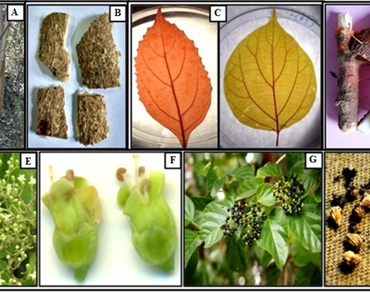
The current study uncovered significant characteristics in the organoleptic macroscopic and microscopic properties of plant parts, phytochemical content, histochemical localization, and physicochemical properties of Premna integrifolia drugs, which can aid in species identification, taxonomy, and quality control of plant-based herbal formulations. The odour of the root and leaves is very specifically helpful in the characterization of ingredients. The presence of yellow, green, and red fluorescence in root and leaf powder, respectively, under UV (365 nm) is a characteristic of this species. Determination of total ash value and moisture content was maximum in leaf samples. Extractive values of drugs in ethyl acetate (8.41%) and ethanol (7.56%) were higher in leaf powder than in stem and root. Leaves and root ethanol extracts showed green and orange fluorescence, respectively, under UV (365) light. Similarly, stem and root ethyl acetate extract showed orange and red fluorescence, respectively, under similar UV light. Important secondary metabolites like phenol, flavonoid, glycoside, and coumarin were present in both ethyl acetate and ethanol extracts of stem, leaf, and root. Phlobatanin, saponin, and terpenoids were totally absent in both extracts of all parts of the plant. Powder microscopy of drugs confirmed the presence of three-celled hooked trichomes. Small-sized glandular trichomes present on the leaf surface are a unique feature of this species and will be helpful in the authentication of Premna-based drugs. Heavy metals (Pb, Hg, As, Ni, Cd, Cr, Fe, Zn, Cu, and Mn) analysis in stem, root, and leaf samples suggested that the content of these metals in tissues was below the permissible limit as suggested by WHO. Various pharmacognostical and phytochemical features found in this plant could aid in the standardization, identification, and further research of P. integrifolia plant-based medications utilized in Ayurveda and modern pharmacopoeia.
References
AOAC (1995) Official Methods of Analysis of AOAC International, 16th ed. AOAC international, Arlington, VA
Alamgir A (2017) Pharmacognostical Botany: Classification of Medicinal and Aromatic Plants (MAPs), Botanical Taxonomy, Morphology, and Anatomy of Drug Plants. In: A.N.M. Alamgir (eds) Therapeutic Use of Medicinal Plants and Their Extracts: Volume 1 Pharmacognosy. Springer, New York, pp 177–293
Atanasov AG, Waltenberger B, Pferschy-Wenzig EM et al (2015) Discovery and resupply of pharmacologically active plant-derived natural products: a review. Biotechnol Adv 33(8):1582–1614. https://doi.org/10.1016/j.biotechadv.2015.08.001
Ayinde BA, Omogbai E, Amaechina FC (2007) Pharmacognosy and hypotensive evaluation of Ficus exasperata Vahl (Moraceae) leaf. Acta Pol Pharm 64(6):543–546
Azad R, Babu NK, Gupta AD, Reddanna P (2018) Evaluation of anti-inflammatory and immunomodulatory effects of Premna integrifolia extracts and assay-guided isolation of a COX-2/5-LOX dual inhibitor. Fitoterapia 131:189–199
Baldwin IT, Halitschke R, Paschold A, Von Dahl CC, Preston CA (2006) Volatile signaling in plant-plant interactions: talking trees in the genomics era. Science 311(5762):812–815
Balunas MJ, Kinghorn AD (2005) Drug discovery from medicinal plants. Life Sci 78(5):431–441
Bose LV, George K, Iyer RS, Deepa T (2012) Identification of novel cardiac principle in the roots of Premna serratifolia. L J Pharm Res 5:3261–3264
Chaachouay N, Zidane L (2024) Plant-derived natural products: a source for drug discovery and development. Drugs Drug Candidates 3(1):184–207
Gershenzon J (2017) The cost of plant chemical defense against herbivory: a biochemical perspective. In: Jonathan Gershenzon (eds) Insect-Plant Interactions (1993). CRC Press, Florida, p 121–190
Gupta MK, Sharma P, Ansari S, Lagarkha R (2006) Pharmacognostical evaluation of Grewia asiatica fruits. Int J Plant Sci 1(2):249–251
Jyoti P, Ankita K, Hemali P, Sumitra C (2018) Physicochemical, phytochemical and pharmacognostic evaluation of a halophytic plant, Trianthema portulacastrum L. Int J Curr Microbiol App Sci 7(5):1486–1502
Majumder R, Akter S, Naim Z, Al-Amin M, Alam MB (2014) Antioxidant and anti-diabetic activities of the methanolic extract of Premna integrifolia bark. Adv Biol Res 8(1):29–36
Mukherjee PK, Bahadur S, Chaudhary SK, Kar A, Mukherjee K (2015) Quality related safety issue-evidence-based validation of herbal medicine farm to pharma. In: Pulok K. Mukherjee (eds) Evidence-Based Validation of Herbal Medicine. Elsevier, Europe, pp 1–28
Nagore D (2018) Development And Quality Control Of Natural Products, vol 1. Evincepub Publishing, India
Reinhardt U, Cheng T, The world health report 2000: health systems: improving performance. Bull World Health Organ 78:1064.
Organization WH (2004) WHO guidelines on safety monitoring of herbal medicines in pharmacovigilance systems. World Health Organization
Patel MJ, Patel J (2012) Evaluation of the anti–hyperlipidaemic activity of Premna integrifolia on nicotine induced hyperlipidaemia in rats. Int J Pharma Biosci 3:226–232
Author Information
Department of Biotechnology, School of Research and Technology, People’s University, Bhopal, India