Vegetos

(An International Journal of Plant Research & Biotechnology)
(eISSN: 2229-4473)
Qualitative, quantitative and GC-MS based phytochemical profiling of Aristolochia rethyae leaves: a newly discovered species from Arunachal Pradesh, India
*Article not assigned to an issue yet
Research Article | Published: 17 August, 2026
First Page: 0
Last Page: 0
Views: 31
Keywords: n Aristolochia rethyaen , Bioactive compounds, Extraction, GC-MS analyses
Abstract
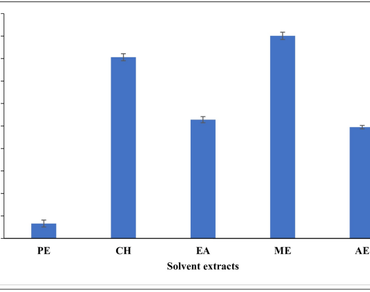
Aristolochia rethyae Kashung, Barman & Gajurel (Aristolochiaceae) is a recently discovered plant species from Arunachal Pradesh, India, with a climbing habit. Since, this is a newly introduced species to the world flora, and no studies have been conducted on the phytochemical properties of the species earlier. Therefore, the present study was aimed to explore the presence of dominant phytochemical compounds in the leaves of this plant and further evaluate them for human utilisation. Preliminary qualitative screening of secondary metabolites using five different solvent extracts viz., petroleum ether, chloroform, ethyl acetate, methanol and aqueous, shows the presence of alkaloids, carbohydrates, proteins, phenolics, flavonoids, saponins, terpenoids and steroids, with maximum occurrence in the methanolic extract.The quantitative estimation revealed that the methanolic extract exhibited the highest total phenolic (45.06 ± 0.81 mg GAE/g extract) and total flavonoid (137.97 ± 0.43 mg QE/g extract) contents among all the solvent extracts. The phytochemical composition of the plant leaf extracts was determined by GC-MS analysis using four different solvents, viz., petroleum ether, chloroform, ethyl acetate, and methanol. The results revealed the presence of 109 phytochemical compounds across 23 classes of functional groups. The major compounds obtained from the A. rethyae were Nonacosan-14-one (41.51%), n-Tridecan-1-ol (13.94%),1-Tridecene (13.07%), 1-Octadecene (11.33%), 9-Eicosene, (E)- (11.14%), n-Heptadecanol-1(10.88%), 1-Heneicosanol (10.46%), 2,4-Di-tert-butylphenol (9.73%), 2-(2-methoxyethoxy) propanoic acid (8.97%), Cyclopropane, nonyl- (8.43%), Trifluoroacetic acid, pentadecyl ester (7.57%), Octacosanal (5.31%), dl-α-Tocopherol (4.94%), Dodecane (4.69%), Cholest-4-en-3-one (4.6%), Acetic acid, butyl ester (4.21%), Benzene,1,3-bis(1,1-dimethylethyl)- (3.93%), n-Hexadecanoic acid (3.75%), Phytol (3.55%), Octadecanoic acid (3.32%) and Squalene (3.07%). Among these identified compounds, n-Tridecan-1-ol, 1-Tridecene, 1-Octadecene, 2-(2-methoxyethoxy) propanoic acid and Benzene-1,3-bis(1,1-dimethylethyl) are being reported for the first time from a plant source; whereas Trifluoroacetic acid, pentadecyl ester, are new compounds identified from the genus Aristolochia. Further research work on this plant species is expected to validate and establish its bioactive and therapeutic significance, thereby contributing to the development of novel drug discovery approaches.
References
Amann K, Törnig J, Buzello M, Kuhlmann A, Gross ML, Adamczak M, Buzello M, Ritz E (2002) Effect of antioxidant therapy with dl-α-tocopherol on cardiovascular structure in experimental renal failure. Kidney Int 62(3):877–884
Ansari N, Agrawal M, Agrawal SB (2021) An assessment of growth, floral morphology, and metabolites of a medicinal plant Sida cordifolia L. under the influence of elevated ozone. Environ Sci Pollut Res 28(1):832–845. https://doi.org/10.1016/j.indcrop.2023.11626
Awari VS, Barvkar VT, Ade AB, Borde MY (2024) Endophytic fungi from Cissus quadrangularis plant: a promising source of bioactive compounds. Braz J Microbiol 55(4):3733–3750
Baas JMA, Van Bekkum H, Hoefnagel MA, Wepster BM (1969) A note on the selective t-butylation of benzene and alkylbenzenes. Recl Trav Chim Pays-Bas 88(9):1110–1114. https://doi.org/10.1002/recl.19690880913
Bharath B, Perinbam K, Devanesan S, AlSalhi MS, Saravanan M (2021) Evaluation of the anticancer potential of hexadecanoic acid from brown algae Turbinaria ornata on HT-29 colon cancer cells. J Mol Struct 1235:130229. https://doi.org/10.1016/j.molstruc.2021.130229
Borah PJ, Borah D, Sarma R (2021) A review on ethnopharmacological utility, traditional knowledge, and phytochemistry of Aristolochia species in Assam, India. Not Sci Biol 13(3):1102. https://doi.org/10.15835/nsb1331102
Borah PJ, Sarma R (2022) GC-MS analysis and qualitative phytochemical screening of Aristolochia assamica, a newly discovered rare medicinal plant species of India. Indian J Nat Prod Resour 13(4):552–558
Chen CL, Wu DC, Liu MY, Lin MW, Huang HT, Huang YB, Chen PY (2017) Cholest-4-en-3-one attenuates TGF-β responsiveness by inducing TGF-β receptor degradation in Mv1Lu and colorectal adenocarcinoma cells. J Recept Signal Transduct 37(2):189–199. https://doi.org/10.1080/10799893.2016.1203944
Das TS, Ramesh L, Agastian P (2016) GC-MS analysis of bioactive constituents of Aristolochia bracteolata Linn. with in-vitro antioxidant properties. J Appl Pharm Sci 6(12):61–66. https://doi.org/10.7324/japs.2016.601209
Geiselhardt S, Ockenfels P, Peschke K (2008) 1-Tridecene—male-produced sex pheromone of the tenebrionid beetle Parastizopus transgariepinus. Naturwissenschaften 95:247–251. https://doi.org/10.1007/s00114-007-0312-5
Hadida S, Van Goor F, Zhou J, Arumugam V, McCartney J, Hazlewood A, Grootenhuis PD (2014) Discovery of N-(2,4-di-tert-butyl-5-hydroxyphenyl)-4-oxo-1,4-dihydroquinoline-3-carboxamide (VX-770, ivacaftor), a potent and orally bioavailable CFTR potentiator. J Med Chem 57(23):9776–9795. https://doi.org/10.1021/jm5012808
Harborne AJ (1998) Phytochemical methods: a guide to modern techniques of plant analysis. Springer Science & Business Media
Hongal AM, Shettar AK, Hoskeri JH, Vedamurthy AB (2024) GC-MS-based phytochemical profiling and in-vitro pharmacological activities of Alangium salviifolium (L.f.) Wang. Fut J Pharm Sci 10:61. https://doi.org/10.1186/s43094-024-00631-3
Islam MT, Ali ES, Uddin SJ, Shaw S, Islam MA, Ahmed MI, Atanasov AG (2018) Phytol: a review of biomedical activities. Food Chem Toxicol 121:82–94. https://doi.org/10.1016/j.fct.2018.08.032
Jetter R, Kunst L, Samuels AL (2006) Composition of plant cuticular waxes. Annu Plant Rev 23:145–181. https://doi.org/10.1002/9780470988718.ch4
Jones WP, Kinghorn AD (2012) Extraction of plant secondary metabolites. Natural Products Isolation. Totowa, Humana, pp 341–366
Kashung S, Gajurel PR, Singh B, Barman R, Yakang T (2022) Aristolochia rethyae, a new species from Arunachal Pradesh, North-East India. Phytotaxa 564(1):1–7. https://doi.org/10.11646/phytotaxa.564.1.1
Kushveer JS, Sharma R, Samantaray M, Amutha R, Sarma VV (2023) Purification and evaluation of 2,4-di-tert-butylphenol (DTBP) as a biocontrol agent against phyto-pathogenic fungi. Fungal Biol 127(6):1067–1074. https://doi.org/10.1016/j.funbio.2023.05.002
Lou-Bonafonte JM, Martínez-Beamonte R, Sanclemente T, Surra JC, Herrera-Marcos LV, Sanchez-Marco J, Osada J (2018) Current insights into the biological action of squalene. Mol Nutr Food Res 62:1800136. https://doi.org/10.1002/mnfr.201800136
Mangalgikar P, Belavadi V, Kumar VPK, Muniyappa C, Ammagarahalli B (2023) 1-Octadecene, a female-produced aggregation pheromone of the coffee white stem borer (Xylotrechus quadripes). Horticulturae 9:173. https://doi.org/10.3390/horticulturae9020173
Mariyammal V, Sathiageetha V, Amalraj S, Gurav SS, Amiri-Ardekani E, Jeeva S, Ayyanar M (2023) Chemical profiling of Aristolochia tagala Cham. leaf extracts by GC-MS and evaluation of antibacterial activity. J Indian Chem Soc 100:100807. https://doi.org/10.1016/j.jics.2022.100807
Sharma GS, Rajanna L (2021) GC-MS phytochemical profiling of leaf extracts of Aristolochia tagala Cham., a rare ethnomedicinal plant. Indian J Nat Prod Resour 12(1):145–152
Sigounas G, Anagnostou A, Steiner M (1997) dl-α-Tocopherol induces apoptosis in erythroleukemia, prostate, and breast cancer cells. J Nutr Oncol 28(1):30–35. https://doi.org/10.1080/01635589709514549
Suzuki K, Shimizu T, Nakata T (1998) The cholesterol metabolite cholest-4-en-3-one and its 3-oxo derivatives suppress body weight gain, fat accumulation, and serum lipid levels in mice. Bioorg Med Chem Lett 8(16):2133–2138. https://doi.org/10.1016/s0960-894x(98)00362-x
Taylor JC, Rapport L, Lockwood GB (2003) Octacosanol in human health. Nutrition 19(2):192–195. https://doi.org/10.1016/S0899-9007(02)00869-9
Varsha KK, Devendra L, Shilpa G, Priya S, Pandey A, Nampoothiri KM (2015) 2, 4-Di-tert-butyl phenol as the antifungal, antioxidant bioactive purified from a newly isolated Lactococcus sp. Int J Food Microbiol 211:44–50. https://doi.org/10.1016/j.ijfoodmicro.2015.06.025
Wagner ST, Rowe NP, Samain MS, Neinhuis C, Wanke S (2012) Evolution of shrub-like growth forms in Aristolochia subgenus Isotrema (Aristolochiaceae). Am J Bot 99(10):1609–1629. https://doi.org/10.3732/ajb.1200244
Wen M, Jetter R (2009) Composition of secondary alcohols, ketones, and related compounds in Arabidopsis thaliana cuticular waxes. J Exp Bot 60:1811–1821
Wood PM (1936) Clinical use of cyclopropane and tribrom-ethanol in amylene hydrate anesthesia. JAMA 106(4):275–279. https://doi.org/10.1001/jama.1936.02770040015004
Zhou Y, Cao F, Luo F, Lin Q (2022) Octacosanol and its health benefits: biological functions and mechanisms. Food Biosci 47:101632. https://doi.org/10.1016/j.fbio.2022.101632
Siddiqui N, Rauf A, Latif, A, Mahmood, Z (2017). Spectrophotometric determination of the total phenolic content, spectral and fluorescence study of the herbal Unani drug Gul-e-Zoofa (Nepeta bracteata Benth). Journal of Taibah University Medical Sciences, 12(4): 360-363.
Chang CC, Yang MH, Wen HM, Chern JC (2002) Estimation of total flavonoid content in propolis by two complementary colorimetric methods. Journal of food and drug analysis 10(3):178-182.
Ncongwane TB, Ndinteh DT, Smit E (2023). Automated silylation of flavonoids using 3D printed microfluidics prior to chromatographic analysis: system development. Analytical and Bioanalytical Chemistry, 415(29-30): 7151–7160.
Author Information
Plant Microbe Interaction and Biotechnology Laboratory, Department of Forestry, North Eastern Regional Institute of Science & Technology, Nirjuli, India