Vegetos

(An International Journal of Plant Research & Biotechnology)
(eISSN: 2229-4473)
Salinity stress responses of bread wheat (Triticum aestivum L.) genotypes under controlled conditions
*Article not assigned to an issue yet
Research Articles | Published: 17 October, 2026
First Page: 0
Last Page: 0
Views: 79
Keywords: Salinity, Genotypes, Salinity tolerance
Abstract
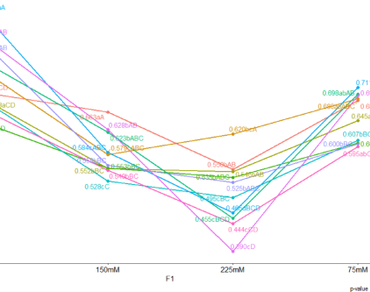
Ethiopia started dry season wheat production recently on previously salt-affected areas and expanding the sector quickly. However, soil salinity poses major limitation to bread wheat production especially in irrigated lands. For better utilization of such soils, salt tolerant wheat genotypes play paramount importance. This study was initiated to screen bread wheat genotypes for salt tolerance using phenotypic analyses at shade house condition. For this, 198 bread wheat genotypes were sown on polyethylene bag of 0, 75, 150 and 225 millimolar (mM) Sodium Chloride (NaCl) concentrations according to Split Plot Design with two replications and grown in shade house of Oda Bultum University in 2025. NaCl concentrations constituted main plots, while genotypes formed subplots. Data were collected on days to germination, germination percentage, days to heading, plant height, shoot fresh and dry weights; and subjected to analysis of variance (ANOVA) using R software. Means of salt levels were separated by Least Significant Difference (LSD) while means of genotypes and interaction were separated using Duncan’s Multiple Range Test (DMRT) at 0.05 probability level. The analysis revealed highly significant (p?
References
Abbas G, Saqib M, Rafique Q, Rahman M, Akhtar J, Haq M, Nasim M (2013) Effect of salinity on grain yield and grain quality of wheat (Triticum aestivum L.). Pak. J Agric Sci 50(2):185–189
Ahmadi J, Pour-Aboughadareh A, Fabriki Ourang S, Khalili P, Poczai P (2020) Unraveling salinity stress responses in ancestral and neglected wheat species at early growth stage. A baseline for utilization in future wheat improvement programs. Physiol Mol Biol Plants 26:537–549
Chaurasia S, Kumar A, Singh AK (2022) Comprehensive evaluation of morpho-physiological and ionic traits in wheat (Triticum aestivum L.) genotypes under salinity stress. Agriculture 12(11):1765. https://doi.org/10.3390/agriculture12111765
Chen F, Guo M, Zhang J, Xu A, Shang X, Cui D (2013) Molecular characterization of vernalization and response genes in bread wheat from the Yellow and Huai Valley of China. BMC Plant Biol 13:199. https://doi.org/10.1186/1471-2229-13-199
Daba AW, Qureshi AS (2021) Review of soil salinity and sodicity challenges to crop production in the lowland irrigated areas of Ethiopia and its management strategies. Land 10(12):1377. https://doi.org/10.3390/land10121377
Debez A, Ben Slimen ID, Bousselmi S, Atia A, Farhat N, El Kahoui S, Abdelly C (2020) Comparative analysis of salt impact on sea barley from semi-arid habitats in Tunisia and cultivated barley with special emphasis on reserve mobilization and stress recovery aptitude. Plant Biosyst - Int J Dealing All Aspects Plant Biology 154(4):544–552. https://doi.org/10.1080/11263504.2019.1651777
Eagles HA, Cane K, Kuchel H, Hollamby GJ, Vallance N, Eastwood RF, Gororo NN, Martin PJ (2010) Photoperiod and vernalization gene effects in southern Australian wheat. Crop Pasture Sci 61:721–730. https://doi.org/10.1071/CP10121
Effa K, Fana DM, Nigussie M, Geleti D, Abebe N, Dechassa N, Anchala C, Gemechu G, Bogale T, Girma D, Berisso FE (2025) The irrigated wheat initiative of Ethiopia: A new paradigm emulating Asia’s green revolution in Africa. Environ Dev Sustain 27:2161–2186. https://doi.org/10.1007/s10668-023-03961-z
Sabagh EL, Islam A, Skalicky S, Ali M, Singh M, Anwar K, Hossain M, Mahboob A, Iqbal W, Ratnasekera A, Singhal D, Ahmed K, Kumari S, Wasaya A, A (2021) Salinity Stress in wheat (Triticum aestivum L.) in the changing climate: adaptation and management strategies. Front Agron 3:661932.
El-Hendawy H, Yakout A, Hafiz and Schmidhalter (2005) Evaluating salt tolerance of wheat genotypes using multiple parameters. Eur J Agron 22(3):243–253. https://doi.org/10.1016/j.eja.2004.03.002
Fernandez, GCJ (1992) Effective selection criteria for assessing plant stress tolerance. In: Proceedings of the International Symposium on Adaptation of Vegetables and Other Food Crops to Temperature and Water Stress, Shanhua, Taiwan, 257–270.
Genc Y, Taylor J, Lyons G, Li Y, Cheong J, Appelbee M, Oldach K, Sutton T (2019) Bread wheat with high salinity and sodicity tolerance. Front Plant Sci 10:1280. https://doi.org/10.3389/fpls.2019.01280
Haile LM (2019) Soil salinity and irrigation water quality status in selected areas of Awash basin of Ethiopia. Rev Greener J Soil Sci Plant Nutr 6(1):25–32. https://doi.org/10.15580/GJSSPN.2019.1.090319166
Ibrahim MEH, Zhu X, Zhou G, Nimir NEA (2016) Comparison of germination and seedling characteristics of wheat varieties from China and Sudan under salt stress. Agron J 108:85–92
Khan MM, Rahman MM, Hasan MM, Amin MF, Matin MQ, Faruq G, Alkeridis LA, Gaber A, Hossain A (2024) Assessment of the salt tolerance of diverse bread wheat (Triticum aestivum L.) genotypes during the early growth stage under hydroponic culture conditions. Heliyon 10(7). https://doi.org/10.1016/j.heliyon.2024.e29042
Munns R, James RA, Gilliham M, Flowers TJ, Colmer TD (2016) Tissue tolerance: an essential but elusive trait for salt-tolerant crops. Funct Plant Biol 43(12):1103–1113
Negrao S, Schmockel SM, Tester M (2017) Evaluating physiological responses of plants to salinity stress. Ann Bot 119:1–11
Otu H, Celiktas V, Duzenli S, Hossain A, El Sabagh A (2018) Germination and early seedling growth of five durum wheat cultivars (Triticum durum Desf.) is affected by different levels of salinity. Fresen Environ Bull 27:7746–7757
Pitman G, Lauchli A (2002) Global impact of salinity and agricultural ecosystems. In: Lauchli A, Luttge U (eds) Salinity: environment – plants – molecules. Kluwer, Dordrecht, pp 3–20
Rahman M, Soomro U, Zahoor-ul-Haq M, Gul S (2008) Effects of NaCl Salinity on Wheat (Triticum aestivum L.) Cultivars. World J Agric Sci 4(3):398–403
Robi F, Kuma Y, Alemayehu S, Mengistu H (2025) Review on opportunities and challenges of low land irrigated wheat production in Ethiopia: in the case of Afar region. Sci Fron 6(1):1–8. https://doi.org/10.11648/j.sf.20250601.11
Sadak MS (2019) Physiological role of trehalose on enhancing salinity tolerance of wheat plant. Bull Natl Res Cent. https://doi.org/10.1186/s42269-019-0098-6
Sadrarhami A, Khoshgoftarmanesh AH, Sharifi HR (2010) Using stress tolerance indicator (STI) to select high grain yield iron-deficiency tolerant wheat genotypes in calcareous soils. Field Crops Res 119(1):12–19. https://doi.org/10.1016/j.fcr.2010.06.008
Seleiman MF, Aslam MT, Alhammad AA, Hassan MU, Maqbool R, Chattha MU, Khan I, Gitari HI, Uslu OS, Roy R, Battaglia ML (2021) Salinity stress in wheat: effects, mechanisms and management strategies. Phyton – Int J Experimental Bot 91(4):667–694. https://doi.org/10.32604/phyton.2022.017365
Shao HB, Chu LY, Lu ZH, Chang CM (2007) Primary antioxidant free radical scavenging and redox signaling pathways in higher plant cells. Int J Biol Sci 4:8–14
Traye ID, Oli NM, Weng X, Li K, Suliman MSE, Guo X, Zhou G, Zhu G, Xu Y (2025) Salinity tolerance in wheat: mechanisms and breeding approaches. Plants 14(11):1641. https://doi.org/10.3390/plants14111641
Turki N, Shehzad T, Elbok S, Kazutoshi O (2024) The impact of salinity on the productivity and quality of durum and bread wheat. J Oasis Agric Sustain Dev 6(02):56–60. https://doi.org/10.56027/JOASD212024
United States Department of Agriculture (USDA) (2026) Foreign Agricultural Service. Circular Series. WAP 01–26. World Agricultural Production. https://www.fas.usda.gov/sites/default/files/2026-01/production.pdf accessed on January 12, 2026.
Yadav AK, Devate NB, Barpete S, Singh V, Basarahalli S, Das A, Gebregziabher BS, Patidar J, Namdeo R, Kumar S (2026) An integrated phenotypic and molecular approach to identify salinity-tolerant lentil (Lens culinaris Medik) genotypes. Front Genet 17:1863296. https://doi.org/10.3389/fgene.2026.1863296
Yadav NM, Bagdi DL, Kakralya BL (2026) Effect of salt stress on physiological, biochemical, growth and yield variables of wheat (Triticum aestivum L). Agric Sci Dig 31(4):247–253
Zhang Y, Ni Z, Yao Y, Nie X, Qixin Sun (2007) Gibberellins and heterosis of plant height in wheat (Triticum aestivum L). BMC Genet 8:40. https://doi.org/10.1186/1471-2156-8-40
Author Information
Department of Applied Biology, Adama Science and Technology University, Adama, Ethiopia