Vegetos

(An International Journal of Plant Research & Biotechnology)
Refining steviol glycoside production in Stevia rebaudiana via elicitors under sodium stress
*Article not assigned to an issue yet
Research Articles | Published: 14 December, 2025
First Page: 0
Last Page: 0
Views: 138
Keywords: Putrescine, Salinity stress, Secondary metabolite, Sodium nitroprusside, n Stevia rebaudianan
Abstract
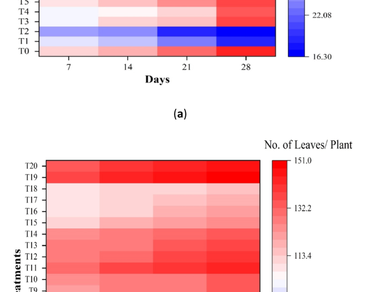
Stevia rebaudiana Bertoni, a natural sweetener plant, could be a potential wholesome replacement for the harmful artificial sweeteners available in market. It also has a significant commercial potential due to the presence of plant specialized metabolites or secondary metabolites like stevioside (stev) and rebaudioside A (reb A). In this study, a novel technique was devised to optimize the secondary metabolite content in Stevia by integrated application of salinity (NaCl), putrescine (PUT) and sodium nitroprusside (SNP). Stevia plants were grown at two different salinity levels (15 mM and 30 mM) under polyhouse conditions. PUT and SNP were applied as exogenous foliar treatments at two different concentrations each i.e., PUT (1 mM and 2 mM) and SNP (150 µM and 200 µM). Our results demonstrated that salinity stress significantly impaired the growth and development of Stevia rebaudiana Bertoni, evidenced by reduced stev, reb A, plant height, number of leaves, leaf area, chlorophyll content, relative water content, and K+ concentration. The exogenous application of PUT and SNP neutralized the adverse consequences of salinity stress and enhanced the concentration of these parameters significantly. Optimum concentrations of these parameters (except steviol glycosides) were noticed for 1 mM PUT and 150 µM SNP under 15 mM salinity stress. The highest amount of stevioside (15.44%) was obtained for 200 µM SNP spray under 30 mM salt stress condition, which was nearly three times higher than the control (5.66%) whereas optimum reb A (8.20%) was found in plants treated with 2 mM PUT under 30 mM NaCl stress, representing a substantial increase compared to the control (1.46%). These results indicate the potential of SNP and PUT as efficient elicitors for enhancing steviol glycoside production under salt stress.
References
Ahmad N, Rab A, Ahmad N (2016) Light-induced biochemical variations in secondary metabolite production and antioxidant activity in callus cultures of Stevia rebaudiana (Bert). J Photochem Photobiol B 154:51–56
Banchio E, Bogino PC, Santoro M, Torres L, Zygadlo J, Giordano W (2010) Systemic induction of monoterpene biosynthesis in Origanum× majoricum by soil bacteria. J Agric Food Chem 58:650–654
Barrs HD, Weatherley PE (1962) A re-examination of the relative turgidity technique for estimating water deficits in leaves. Aust J Biol Sci 15(3):413–428
Bhardwaj S, Kapoor D, Singh S, Gautam V, Dhanjal DS, Jan S, Ramamurthy PC, Prasad R, Singh J (2021) Nitric oxide: a ubiquitous signal molecule for enhancing plant tolerance to salinity stress and their molecular mechanisms. J Plant Growth Regul 40(6):2329–2341
Cantabella C, Piqueras A, Acosta-Motos JR, Bernal-Vicente A, Hernandez JA, Diaz-Vivancos P (2017) Salt-tolerance mechanisms induced in Stevia rebaudiana Bertoni: effects on mineral nutrition, antioxidative metabolism and steviol glycoside content. Plant Physiol Biochem 115:484–496
Ceunen S, Geuns JM (2013) Steviol glycosides: chemical diversity, metabolism, and function. J Nat Prod 76(6):1201–1228
Chakraborty K, Mondal S, Ray S, Samal P, Pradhan B, Chattopadhyay K, Sarkar RK (2020) Tissue tolerance coupled with ionic discrimination can potentially minimise the energy cost of salinity tolerance in rice. Front Plant Sci 11:265
Çoban Ö, Baydar NG (2016) Brassinosteroid effects on some physical and biochemical properties and secondary metabolite accumulation in peppermint (Mentha piperita L.) under salt stress. Ind Crop Prod 86:251–258
Debnath M, Ashwath N, Hill CB, Callahan DL, Dias DA, Jayasinghe NS, Midmore DJ, Roessner U (2018) Comparative metabolic and ionomic profiling of two cultivars of Stevia rebaudiana Bert. (Bertoni) grown under salinity stress. Plant Physiol Biochem 129:56–70
Debnath M, Ashwath N, Midmore DJ (2019) Physiological and morphological responses to abiotic stresses in two cultivars of Stevia rebaudiana (Bert.) Bertoni. S Afr J Bot 123:124–132
Garg N, Sharma A (2019) Role of putrescine (Put) in imparting salt tolerance through modulation of Put metabolism, mycorrhizal and rhizobial symbioses in Cajanus cajan (L.) Millsp. Symbiosis 79(1):59–74
Gerami M, Majidian P, Ghorbanpour A, Alipour Z (2020) Stevia rebaudiana Bertoni responses to salt stress and chitosan elicitor. Physiol Mol Biol Plants 26(5):965–974
Gohari G, Alavi Z, Esfandiari E, Panahirad S, Hajihoseinlou S, Fotopoulos V (2020) Interaction between hydrogen peroxide and sodium nitroprusside following chemical priming of Ocimum basilicum L. against salt stress. Physiol Plant 168(2):361–373
González-Hernández AI, Scalschi L, Vicedo B, Marcos-Barbero EL, Morcuende R, Camañes G (2022) Putrescine: a key metabolite involved in plant development, tolerance and resistance responses to stress. Int J Mol Sci 23(6):2971
Guru A, Dwivedi P (2023) Optimizing growth through systematic evaluation of salinity, putrescine, and sodium nitroprusside levels in Stevia rebaudiana. Int J Environ Clim Change 13(11):406–414
Haider MZ, Ashraf MA, Rasheed R, Hussain I, Riaz M, Qureshi FF, Iqbal M, Hafeez A (2023) Impact of salinity stress on medicinal plants. In: Medicinal plants: their response to abiotic stress, Springer Nature Singapore, Singapore, pp 199–239
Hashem MM, Ashry HA, ElShahed ES, Ebid MH, AlAchtar MA, ElDoliefy AE (2024) Differential expression of steviol glycoside pathway genes in NaCl-treated stevia genotypes with varied SG contents. Disc Plants 1(1):42
Hussain S, Shaukat M, Ashraf M, Zhu C, Jin Q, Zhang J (2019) Salinity stress in arid and semi-arid climates: effects and management in field crops. Clim Change Agric 13:201–226
Hussin S, Geissler N, El-Far MM, Koyro HW (2017) Effects of salinity and short-term elevated atmospheric CO2 on the chemical equilibrium between CO2 fixation and photosynthetic electron transport of Stevia rebaudiana Bertoni. Plant Physiol Biochem 118:178–186
Isayenkov SV, Maathuis FJM (2019) Plant salinity stress: many unanswered questions remain. Front Plant Sci 10:1–11
Kahromi S, Khara J (2021) Chitosan stimulates secondary metabolite production and nutrient uptake in medicinal plant Dracocephalum kotschyi. J Sci Food Agric 101(9):3898–3907
Kapoor RT, Hasanuzzaman M (2020) Exogenous kinetin and putrescine synergistically mitigate salt stress in Luffa acutangula by modulating physiology and antioxidant defense. Physiol Mol Biol Plants 26:2125–2137
Kazmi A, Khan MA, Mohammad S, Ali A, Kamil A, Arif M, Ali H (2019) Elicitation directed growth and production of steviol glycosides in the adventitious roots of Stevia rebaudiana Bertoni. Ind Crops Prod 139:111530
Khoshbakht D, Asghari MR, Haghighi M (2018) Influence of foliar application of polyamines on growth, gas-exchange characteristics, and chlorophyll fluorescence in Bakraii citrus under saline conditions. Photosynthetica 56(2):731–742
Kong X, Wang T, Li W, Tang W, Zhang D, Dong H (2016) Exogenous nitric oxide delays salt-induced leaf senescence in cotton (Gossypium hirsutum L.). Acta Physiol Plant 38:61
Kurita T (2019) Principal component analysis (PCA). Computer Vision: A Reference Guide, 1–4
Libik-Konieczny M, Capecka E, Tuleja M, Konieczny R (2021) Synthesis and production of steviol glycosides: recent research trends and perspectives. Appl Microbiol Biotechnol 105(10):3883–3900
Lucho SR, do Amaral MN, Milech C, Ferrer MÁ, Calderón AA, Bianchi VJ, Braga EJB (2018) Elicitor-induced transcriptional changes of genes of the steviol glycoside biosynthesis pathway in Stevia rebaudiana Bertoni. J Plant Growth Regul 37:971–985
Moradi Peynevandi K, Razavi SM, Zahri S (2018) The ameliorating effects of polyamine supplement on physiological and biochemical parameters of Stevia rebaudiana Bertoni under cold stress. Plant Prod Sci 21(2):123–131
Munns R, Tester M (2008) Mechanisms of salinity tolerance. Annu Rev Plant Biol 59:651–681
Mustafavi SH, Naghdi Badi H, Sękara A, Mehrafarin A, Janda T, Ghorbanpour M, Rafiee H (2018) Polyamines and their possible mechanisms involved in plant physiological processes and elicitation of secondary metabolites. Acta Physiol Plant 40:1–19
Nawaz S, Kaur P, Konjengbam M, Kumar V, Gupta RC, Dwivedi P, Patni B, Pandey B, Dey A, Pandey DK (2022) Screening of elite germplasms for industrially valuable medicinal crop Stevia rebaudiana for stevioside and rebaudioside A production: an HPTLC-linked chemotaxonomic assessment. S Afr J Bot 150:1159–1167
Pal PK, Kumar R, Guleria V, Mahajan M, Prasad R, Pathania V, Ahuja PS (2015) Crop-ecology and nutritional variability influence growth and secondary metabolites of Stevia rebaudiana Bertoni. BMC Plant Biol 15:1–16
Pradhan N, Singh P, Dwivedi P, Pandey DK (2020) Evaluation of sodium nitroprusside and putrescine on polyethylene glycol induced drought stress in Stevia rebaudiana Bertoni under in vitro condition. Ind Crops Prod 154:112754. https://doi.org/10.1016/j.indcrop.2020.112754
Ramirez-Estrada K, Vidal-Limon H, Hidalgo D (2016) Elicitation, an effective strategy for the biotechnological production of bioactive high-added value compounds in plant cell factories. Molecules 21(2):182–206
Samuel P, Ayoob KT, Magnuson BA, Wölwer-Rieck U, Jeppesen PB, Rogers PJ, Rowland I, Mathews R (2018) Stevia leaf to stevia sweetener: exploring its science, benefits, and future potential. J Nutr 148(7):1186S-1205S
Santisree P, Sanivarapu H, Gundavarapu S, Sharma KK, Bhatnagar-Mathur P (2020) Nitric oxide as a signal in inducing secondary metabolites during plant stress. In: Co-evolution of secondary metabolites, pp 593–621
Saravi HB, Gholami A, Pirdashti H, Firouzabadi MB, Asghari H, Yaghoubian Y (2022) Improvement of salt tolerance in Stevia rebaudiana by co-application of endophytic fungi and exogenous spermidine. Ind Crops Prod 177:114443
Shahverdi MA, Omidi H, Tabatabaei SJ (2019) Stevia (Stevia rebaudiana Bertoni) responses to NaCl stress: growth, photosynthetic pigments, diterpene glycosides and ion content in root and shoot. J Saudi Soc Agric Sci 18(4):355–360
Shahverdi MA, Omidi H, Damalas CA (2020) Foliar fertilisation with micronutrients improves Stevia rebaudiana tolerance to salinity stress by improving root characteristics. Braz J Bot 43:55–65
Sharifi-Rad R, Esmaeilzadeh Bahabadi S, Samzadeh-Kermani A, Gholami M (2020) The effect of non-biological elicitors on physiological and biochemical properties of medicinal plant Momordica charantia L. Iran J Sci Technol, Trans a: Sci 44:1315–1326
Singh M, Poddar NK, Singh D, Agrawal S (2020) Foliar application of elicitors enhanced the yield of withanolide contents in Withania somnifera (L.) Dunal (variety, Poshita). 3 Biotech 10:1–8
Singhal RK, Jatav HS, Aftab T, Pandey S, Mishra UN, Chauhan J, Chand S, Indu, Saha D, Dadarwal BK, Chandra K (2021) Roles of nitric oxide in conferring multiple abiotic stress tolerance in plants and crosstalk with other plant growth regulators. J Plant Growth Regul 40:1–26
Situ Y, Yang Y, Huang C, Liang S, Mao X, Chen X (2023) Effects of several superabsorbent polymers on soil exchangeable cations and crop growth. Environ Technol Innov 30:103126
Talei D, Nekouei MK, Mardi M, Kadkhodaei S (2020) Improving productivity of steviol glycosides in Stevia rebaudiana via induced polyploidy. J Crop Sci Biotechnol 23:301–309
Tehranian AS, Askari H, Rezadoost H (2023) The effect of alginate as an elicitor on transcription of steviol glycosides biosynthesis pathway related key genes and sweeteners content in in vitro cultured Stevia rebaudiana. Mol Biol Rep 50(3):2283–2291
Tian X, He M, Wang Z, Zhang J, Song Y, He Z, Dong Y (2015) Application of nitric oxide and calcium nitrate enhances tolerance of wheat seedlings to salt stress. Plant Growth Regul 77:343–356
Wang Y, Luo Z, Mao L, Ying T (2016) Contribution of polyamines metabolism and GABA shunt to chilling tolerance induced by nitric oxide in cold-stored banana fruit. Food Chem 197:333–339
Wu H (2018) Plant salt tolerance and Na + sensing and transport. Crop J 6:215–225
Xiong F, Liao J, Ma Y, Wang Y, Fang W, Zhu X (2018) The protective effect of exogenous putrescine in the response of tea plants (Camellia sinensis) to salt stress. Hortic Sci 53:1640–1646
Xu Z, Zhou J, Ren T, Du H, Liu H, Li Y, Zhang C (2020) Salt stress decreases seedling growth and development but increases quercetin and kaempferol content in Apocynum venetum. Plant Biol 22(5):813–821
Yasir TA, Khan A, Skalicky M, Wasaya A, Rehmani MIA, Sarwar N, Mubeen K, Aziz M, Hassan MM, Hassan FAS, Iqbal MA, Brestic M, Islam MS, Danish S, El Sabagh A (2021) Exogenous sodium nitroprusside mitigates salt stress in lentil (Lens culinaris Medik.) by affecting the growth, yield, and biochemical properties. Molecules 26(9):2576
Zhao C, Zhang H, Song C, Zhu JK, Shabala S (2020) Mechanisms of plant responses and adaptation to soil salinity. The Innovation. https://doi.org/10.1016/j.xinn.2020.100017
Zhou X, Joshi S, Khare T, Patil S, Shang J, Kumar V (2021) Nitric oxide, crosstalk with stress regulators and plant abiotic stress tolerance. Plant Cell Rep 40(8):1395–1414
Author Information
Department of Plant Physiology, Institute of Agricultural Sciences, Banaras Hindu University, Varanasi, India