Vegetos

(An International Journal of Plant Research & Biotechnology)
An insight into crop diversity, productivity and economics of shifting cultivation in Eastern India
*Article not assigned to an issue yet
Bhol Nirakar, Choudhury Swati, Parida Subhasmita, Sahoo Uttam Kumar
Research Articles | Published: 02 March, 2026
First Page: 0
Last Page: 0
Views: 102
Keywords: Shifting cultivation, Crop diversity, Indigenous knowledge, Food sovereignity, Economic challenges, Sustainable development
Abstract
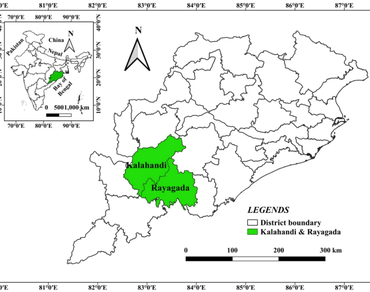
Shifting cultivation (popularly known as ‘podu’ in Eastern India) is widely practiced by indigenous hill tribes in tropical and subtropical areas of world. An inventory into crop diversification, productivity potential and economics of shifting cultivation was studied in Niyamgiri hill slope of Kalahandi and Rayagada district of Odisha located in eastern India during 2022–2023 under different land holding sizes from 0.2 ha to more than 0.8 ha. The results found that traditional methods are still in use for land allotment with cultivators receiving verbal ownership of the land. allotted by the village headmen based on family size and available workforce. This practice historically supported indigenous food security, cultural identity, and livelihood resilience for tribal communities. Traditional podu fields host a diverse suite of crops rather than monocultures, including rain-fed rice, millets, legumes, root/tuber crops, vegetables, spices, and sometimes horticultural species. This diversity reflects both dietary needs and adaptation to varied micro-ecosystems in forest and hill slopes, also complemented by wild edible plants from fallow and secondary forests. The results have also shown that podu system boosts soil fertility through addition of ash but soil organic carbon (SOC), nitrogen and other key nutrients decline rapidly after crop harvest. The overall yield of major crops recorded was 775 kg/ha in Kalahandi district while 765 kg/ha in Rayagada district. Arhar yield was maximum (979 kg/ha in Rayagada and 758 kg/ha in Kalahandi) followed by finger millet (834 kg/ha in Rayagada and 817 kg/ha in Kalahandi). The productivity of small size holdings was comparatively more than big holdings because of better care. Net income was maximum by growing arhar (Rs 39272/ha in Rayagada, Rs 38558/ha in Kalahandi) followed by finger millet (Rs 17527/ha in Kalahandi, Rs 17082/ha in Rayagada). The results recommend introduction of indigenous innovations and modifications at different stages and aspects of jhum cultivation to achieve greater sustainability. In summary, pody system remains vital for livelihoods, but its sustainability can be strengthened through suitable indigenous innovations and improved management practices.
References
Anonymous (1987) Basic statistics for North Eastern Region. Shillong – North Eastern Council), India
Barbhuiya A, Sahoo UK, Upadhyaya K (2016) Plant diversity in the indigenous homegardens of eastern Himalayan region of Mizoram, India. Econ Bot 70(2):115–131
Bhagawati K, Bhagawati G, Das R, Bhagawati R (2015) The structure of jhum (Traditional shifting cultivation system): Prospects or Threat to climate. Int Letter Nat Sci 46:16–30
Bhat V, Hariprasanna K, Sooganna, Ratnavathi CV (2023) Global and Indian scenario of millets. Indian Farm 73(01):16–18
Certini G (2005) Effects of fire on properties of forest soils: a review. Oecologia 143(1):1–10
Dash B (2006) Shifting cultivation among the tribes of Orissa. Orissa Review. 76–84
Das CR, Hota NK, Lenka S (2020) Mid Term Evaluation. Special Programme for Promotion of Millets in Tribal Areas of Odisha. Odisha Millets Mission, OMM) Phase-I Blocks
Ekde S, Natori Y, Shaw AK, Tiwari BK, Sahoo UK, Arunachalam A (2022) A synthesis of understanding the role of shifting cultivation for the sustainable development of northeast India. In: Shaw et al (eds) A Tradition to Transition: Understanding the Role of Shifting Cultivation for Sustainable Development of Northeast India. Tata Energy and Resources Institute, New Delhi, pp 274–287
Effendi MBW, Tanaka S, Joseph JK, Logie S, Brangking U, Jonathan LAT (2009) Vegetation conditions and soil fertility of fallow lands under intensified shifting cultivation systems in Sarawak, Malaysia. Trop Ecol 18(3):115–126
Fox J, Truong DM, Rambo AT, Tuyen NP, Cuc LT, Leisz S (2000) Shifting cultivation: A new old paradigm for managing tropical forests. Bioscience 50(6):521–528
Gogoi A, Sahoo UK, Saikia H (2020) Vegetation and ecosystem carbon recovery following shifting cultivation in Mizoram-Manipur-Kachin ecoregion, Southern Aisa. Ecol Process. https://doi.org/10.1186/s13717-020-00225-w
GoI (2011) Wasteland Atlas of India. Department of land resources. National Remote Sensing Centre.http//:www.dolr.nic.in/dolr/wasteland_atlas.asp
http://krishi.icar.gov.in/jspui/handle/123456789/33458
Jackson ML (1973) Soil chemical analysis. Pentice Hall of India Pvt. Ltd., New Delhi
Jeeceelee L, Sahoo UK (2021) Mizo homegardens promote biodiversity conservation, nutritional security and environmental development in northeast India. Acta Ecol Sinica. https://doi.org/10.1016/j.chnaes.2021.12.005
Kong JJ, Yang J, Cai W (2019) Topography controls post-fire changes in soil properties in a Chinese boreal forest. Sci Total Environ 651:2662–2670
Layek JA, Das Ramkrushna GI, Panwar AS, Verma BC, Roy A (2018) Improving rice production under shifting cultivation: a case study. Conservation Agriculture for Advancing Food Security in Changing Climate (Crop Production, Farming System and Soil Health), vol 1. Today & Tomorrow’s Printers and,, Book, pp 143–153. New Delhi – 110 002, India pp
Mishra G, Giri K, Jangir A, Vasu D, Comino JR (2021) Understanding the effect of shifting cultivation practice (slash-burncultivation-abandonment) on soil physicochemical properties in the Northeastern Himalayan region. Investigaciones Geograficas (Espana 76:243–261
Najafi GM, Boostani HR, Hardie AG (2021) Release of potassium from some heated calcareous soils to different solutions. Arch Agron Soil Sci 1–14
Nayak BK, Mishra MK, Upadhyay VP (2023) Evaluation of Productivity and Sustainability of Niyamgiri Village Agroecosystem, Eastern Region India. J Agric Earth Environ Sci. 22:1–17
Nath AJ, Sahoo UK, Giri K, Sileshi W, Das AK (2020) Incentivizing hill farmers for promoting agroforestry as an alternative to shifting cultivation in Northeast India. In: Dagar JC et al (eds) Agroforestry for Degraded Landscape. Springer, Singapore,. https://doi.org/10.1007/978-989-15-4136-0_14.
Panda BK, Alam Md A, Sarkar S (2017) Shifting cultivation in North east India: Trend, benefits and challenges. IUT J Adv Res Dev 2(2):69–102
Punitha P, Ansari MA, Dileep P, Dayaram, Datt S, Sharma PK, Aheibam M, Jyothi S, Prakash N (2018) Shifting cultivation in Northeast India: social dimension, cross cultural reflection and strategies for improvement. Ind J Agric Sci 88(6):811–819
Sahoo UK (2009) Traditional homegardens and livelihood security in northeast India. J Food Agric Environ 7(2):665–670
Sahoo UK, Rocky P (2010) Species composition and plant diversity as influenced by altitude and size of homegardens in Mizoram, northeast India. Int J Ecol Environ Sci 41(3–4):195–215
Sahoo UK, Rocky P (2019) Proximate constituents of some homegarden food crops and household food security in Mizoram, Northeast India. Ind J Hill Farm 32(1):76–78
Sahoo UK, Rocky P, Vanlahriatpuia K, Upadhyaya K (2010) Structural diversity and functional dynamism of traditional homegardens of northeast India. Bioscan SI 1: 159–171
Sahoo UK, Rocky P, Vanlahriatpuia K, Upadhyaya K (2012) Species composition, production and energetic sustainability of homegardens in northeast India. In: Xi W (ed) Tree and Forestry Science and Biotechnology 6. Global Science Books, pp 81–92. SI
Senotsu M, Kinny A (2016) Shifting cultivation in Nagaland: Prospects and Challenges. ENVIS Centre Himal Ecol 24:122–124
Sethi S, Naik P (2020) Cultural perspective on shifting cultivation: A case study of Dongria Kandha in South Odisha. Inter J Appl Res 6(2):145–148
Singh J, Bora IP, Baruah A (2003) Changes in the physico-chemical properties of soil under shifting cultivation with special references to Karbi Anglong district of Assam. Ind J For 26(2):116–122
Singh S, Purohit JK, Bhaduri A (2016) Shifting cultivation in Odisha and Chhattisgarh: rich agro-biodiverse systems under risk. Jharkhand J Dev Manage Stud 14(2):7023–7036
Singh SL, Sahoo UK (2019) Socioeconomic and demographic factors influencing farmers decision on homegarden management practices and carbon storage in Mizoramm, northeast India. Int J Ecol Environ Sci 45(1):59–69
Thong P, Pebam R, Sahoo UK (2016) Recovery pattern of vegetation along succession following slash and burn agriculture in Mizoram, northeast India. J Plant Biol Soil Health 3(2):1–8
Thong P, Pebam R, Sahoo UK (2018a) A geospatial approach to understand the dynamics of shifting cultivation in Champhai district of Mizoram, North-east India. J Indian Soc Remote Sen 46(10), 1713-1723
Thong P, Pebam R, Thangjam U, Sahoo UK (2018b) Influence of socioeconomic factors on the existing shifting cultivation practice in Champhai district of Mizoram. J Hill Agric 9(3):325–330. https://doi.org/10.5958/2230-7338.2019.00013.2
Thong P, Sahoo UK, Pebam R, Thangjam U (2019a) Changing trends of shifting cultivation and its drivers in Champhai, Northeast India. Indian J Hill Farming32(1):1–4
Thong P, Sahoo UK, Pebam R, Thangjam U (2019b) Spatial and temporal dynamics of shifting cultivation in Manipur, Northeast India based on time-series satellite data. Rem Sens Appl: Soc Environ 14:126–137. https://doi.org/10.1016/j.rssase.2019.03.001
Thong P, Sahoo UK, Thangjam U, Rocky P (2020) Pattern of forest recovery and carbon stock following shifting cultivation in Manipur, northeast India. PLoS ONE 15(11):0239906. https://doi.org/10.1371/journal.pone.0239906
Tripathi SK, Brearley F (2024) Shifting Cultivation Systems: From Indigenous Practices to Soil Fertiliry in North East India. Springer Publication. https://doi.org/10.1007/978-3-031-70388-1_1
Tripathi SK, Vanlalfakawma DC, Lalnunmawia F (2017) Shifting cultivation on steep slopes of Mizoram, India. In: Cairns M (Ed.), Shifting Cultivation Policies: Balancing Environmental and Social Sustainability, CAB International Wallingford, UK: 393–413
Venkatesh MS, Mishra AK, Satapathy KK, Patiram (2001) Effect of burning on soil properties under bun cultivation in Meghalaya. J Hill Res 14(1):21–25
Yadav PK (2013) Slash-and-burn agriculture in north-east India. J Expert Opin Environ Biol 2:2–5
Yang JC, Huang JH, Pan QM, Tang JW, Han XG (2004) Long-term impacts of land-use change on dynamics of tropical soil carbon and nitrogen pools. J Environ Sc 16:256–261
Das S, Das M (2014) Shifting cultivation in Tripura-A critical analysis. J Agric Life Sci 1(1):48–54
Author Information
College of Forestry, Odisha University of Agriculture & Technology, Bhubaneswar, India