Vegetos

(An International Journal of Plant Research & Biotechnology)
(eISSN: 2229-4473)
Pentacyclic triterpenoids isolated from Carissa carandas as potential inhibitors of Klebsiella pneumoniae carbapenemase and β-Lactamase enzymes: a molecular docking study
*Article not assigned to an issue yet
Pallem Kasturi, Botcha Satyanarayana, Amajala Krishna Chaitanya, Prattipati Subhashini Devi
Research Articles | Published: 17 August, 2026
First Page: 0
Last Page: 0
Views: 13
Keywords: n Carissa carandasn , Triterpenoids, n Klebsiella pneumoniaen , Carbapenemase, Beta-lactamase
Abstract
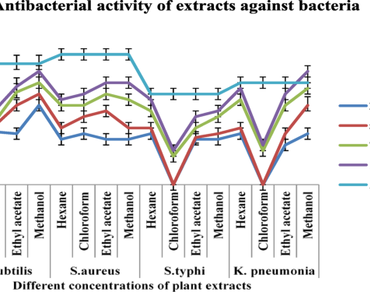
The present study explores the antibacterial potential of C. carandas leaf extracts and isolated pentacyclic triterpenoids against Staphylococcus aureus, Bacillus subtilis, Klebsiella pneumoniae, and Salmonella typhi. The methanol extract showed high antibacterial activity, which might be due to its high phenolic and terpenoid content. Five isolated triterpenoids (CC2 to CC6) exhibited varying degrees of antibacterial activity on Klebsiella pneumoniae, with compounds CC4 (18.00 ± 1.00), CC5 (20.00 ± 1.00), and CC6 (23.00 ± 0.5) showing promising potential. Molecular docking studies targeting β-lactamase and carbapenemase enzymes of K. pneumoniae expressed potential inhibitory activity, suggesting their potential as novel therapeutic agents against antibiotic-resistant bacteria. Our findings highlight the potential of C. carandas leaf-derived triterpenoids as promising antibacterial agents, warranting further research to explore their clinical applications.
References
Banik BC, Ghosh SN, Singh SR (2012) Research and development in Karonda (Carissa carandas), a semi wild fruit in India. Acta Hortic 948:61–66. https://doi.org/10.17660/ActaHortic.2012.948.5
Blanco P, Polyakov P, Bou-Ali MM, Wiegand S (2008) Thermal diffusion and molecular diffusion values for some alkane mixtures: a comparison between thermogravitational column and thermal diffusion forced rayleigh scattering. J Phys Chem B 112(28):8340–8345
Fartyal M, Kumar P (2014) Bioactivity of crude extracts of Nerium oleander Linn. extracted in polar and non-polar solvents. J Sci Innov Res 3(4):426–432
Gong Y, Liu X, He WH, Xu HG, Yuan F, Gao YX (2012) Investigation into the antioxidant activity and chemical composition of extracts from medicinal plants collected from the Tibetan Plateau (Himalayan region). J Agric Food Chem 60(29):7290–7296
Hegde K, Thakker SP, Joshi AB, Shastry CS, Chandrashekhar KS (2009) Anticonvulsant activity of Carissa carandas Linn. root extract in experimental mice. Trop J Pharm Res 8(2):117–125
Hua W, Dong GX, Chao ZG, Lei C, Bing YW (2008) In vitro and in vivo antioxidant activity of aqueous extract from Chobrospondias axillaris. Food Chem 106:888–895
Jesus JA, Lago JH, Laurenti MD, Yamamoto ES, Passero LF (2015) Antimicrobial activity of Oleanolic and Ursolic acids: an update. Evid Based Complement Altern Med 2015:1–14
Kasturi P, Satyanarayana B, Subhashini Devi P (2018) Phytochemical studies and TLC finger print profiling of different bioactive compounds from Carissa carandas L. A medicinally important plant. Int Res J Pharm 9(10):115–120
Kasturi P, Satyanarayana B, Chrisolite R, Subhashini Devi P (2025) Anticancer and antioxidant potential of pentacyclic triterpenoids isolated from C. carandas a medicinally important plant. Res J Biotechnol 19(2):235–245
Khatun M, Habib MR, Rabbi MA, Amin R, Islam MF, Nurujjaman M, Karim MR, Rahman MH (2017) Antioxidant, cytotoxic and antineoplastic effects of Carissa carandas Linn. leaves. Exp Toxicol Pathol 69(7):469–476
Kurek A, Nadkowska P, Pliszka S, Wolska KI (2012) Modulation of antibiotic resistance in bacterial pathogens by oleanolic acid and ursolic acid. Phytomedicine 19:515–519
Logan LK, Weinstein RA (2017) The epidemiology of carbapenem-resistant Enterobacteriaceae: the impact and evolution of a global menace. J Infect Dis 215:S28–S36
Loza-Mejía MA, Salazar JR (2015) Sterols and triterpenoids as potential anti-inflammatories: molecular docking studies for binding to some enzymes involved in inflammatory pathways. J Mol Graph Model 62:18–25
Neimkhum W, Anuchapreeda S, Lin WC, Lue SC, Lee KH, Chaiyana W (2021) Effects of Carissa carandas Linn. fruit, pulp, leaf, and seed on oxidation, inflammation, tyrosinase, matrix metalloproteinase, elastase, and hyaluronidase inhibition. Antioxidants 10(9):1345
Pilasombut K, Laosinwattana C, Tuyen Nguyen TK, Ngamyeeesoon N, Teerarak M (2019) Antimicrobial properties of extracts from Carissa carandas L. fruits and its application in chilled and frozen ground pork. Int J Agric Technol 15(1):91–102
Qian W, Liu M, Fu Y, Wang T, Zhang J, Yang M, Sun Z, Li X, Li Y (2020) Antimicrobial and antibiofilm activities of citral against carbapenem-resistant Enterobacter cloacae. Foodborne Pathog Dis 17(7):459–465
Quave CL, Lyles JT, Kavanaugh JS, Nelson K, Parlet CP, Crosby HA, Heilmann KP, Horswill AR (2015) Castanea sativa (European chestnut) leaf extracts rich in ursene and oleanene derivatives block Staphylococcus aureus virulence and pathogenesis without detectable resistance. PLoS ONE 10(8):e0136486
Ravi Kumar A, Subhashini Devi P (2023) Anticancer and antimicrobial activity of three different seaweed extracts. Res J Biotechnol 18(7):75–80
Ravi Kumar A, Subhashini Devi P (2024) Antioxidant potential of three different seaweeds from Visakhapatnam Coast, India. Res J Pharm Technol 17(5):2018–2024
Saeed W, Ismail T, Qamar M, Esatbeyoglu T (2024) Bioactivity profiling and phytochemical analysis of Carissa carandas extracts: antioxidant, anti-inflammatory, and anti-urinary tract infection properties. Antioxidants 13(9):1037
Satyanarayana B, Kasturi P, Subhashini Devi P (2018) Phytochemical and HPTLC studies on three medicinally important plants Rauvolfia tetraphylla, Phyllanthus niruri and Carissa carandas. Int J Res Pharm Chem 8(1):44–51
Singh B, Katiyar D, Tilak R, Srivastava RK (2015) In vitro assessment of antimicrobial potency and synergistic effects of three medicinal plants (Mentha arvensis, Carissa carandas and Calendula officinalis) extract against pathogenic bacteria. Afr J Microbiol Res 9:286–293
Singh S, Bajpai M, Mishra P (2020) Pharmacognostical evaluation of indigenous herbal drug: Carissa carandas L. fruit. Ann Phytomed 9(2):263–270. https://doi.org/10.21276/ap.2020.9.2.25
Sudjaroen Y, Suwannahong K (2017) In vitro antioxidant, antibacterial, and cytotoxicity activities from Karanda (Carissa carandas L.) fruit extracts. Int J Green Pharm 11(1):S189–S193
Sundar AN, Jawahar M (2013) Screening of antibacterial activity of leaf and root extracts of Carissa carandas L.: An important traditional medicinal plant. Int J Agric Technol 9(1):95–102
Sycz Z, Tichaczek-Goska D, Wojnicz D (2022) Anti-planktonic and anti-biofilm properties of pentacyclic triterpenes-asiatic acid and ursolic acid as promising antibacterial future pharmaceuticals. Biomol Ther 12(98):1–29
Truong D-H, Nguyen DH, Ta NTA, Bui AV, Do TH, Nguyen HC (2019) Evaluation of the use of different solvents for phytochemical constituents, antioxidants, and in vitro anti-inflammatory activities of Severinia buxifolia. J Food Qual 2019:1–9
Zhou Y, Guo Y, Sun X, Ding R, Wang Y, Niu X, Wang J, Deng X (2020) Application of oleanolic acid and its analogues in combating pathogenic bacteria in vitro/vivo by a two-pronged strategy of β-lactamases and hemolysins. ACS Omega 5(20):11424–11438
Author Information
Department of Biochemistry, Andhra University, Visakhapatnam, India