Vegetos

(An International Journal of Plant Research & Biotechnology)
(eISSN: 2229-4473)
Diversity and distribution patterns of arbuscular mycorrhizal fungi of Dactylorhiza hatagirea (D. Don) Soo in Kashmir Himalaya
*Article not assigned to an issue yet
Dar Bilal Ahmad, Yousuf Humeera, Qadir Rukhsana, Wani Abdul Hamid, Bhat Mohd Yaqub
Research Article | Published: 07 August, 2026
First Page: 0
Last Page: 0
Views: 14
Keywords: Arbuscular mycorrhizal fungi, Mycorrhizal specificity, Kashmir Himalaya
Abstract
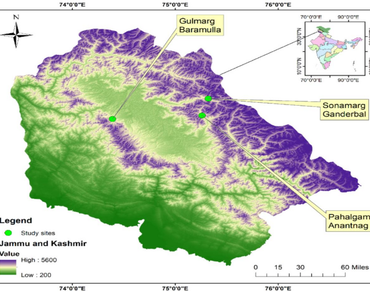
Orchids establish symbiotic relationships with fungi through mycorrhizal interactions, in their natural environments, influencing processes such as seed sprouting, protocorm development, and adult nourishment. A growing body of research highlights the significance of interactions with Arbuscular Mycorrhizal Fungi (AMF), through which orchids acquire mineral nutrients and, in some instances, even organic compounds. Consequently, AMF demonstrate considerable diversity and play a pivotal role in the orchid life cycle. This reveals a dynamic interplay influenced by various factors, including ecological filtering, dispersal limitations, spatiotemporal factors, biogeographic history, and the dispersal, diversity, and phylogenetic breadth of host orchids. The majority of outcomes reveal consistent emerging patterns, although challenges persist in generalizing them across all orchid species or geographical regions. To a certain extent, these patterns align with the natural principle of “everything is everywhere, but the environment selects.” Study was carried out to isolate and characterize Arbuscular Mycorrhizal (AM) fungal species associated with Dactylorhiza hatagirea (D. Don) Soo in the surveyed areas of Kashmir Himalaya, which include Glomus aggregatum, Glomus ambisporum, Glomus fasciculatum, Glomus mosseae, Glomus clarum, Gigaspora albida, Gigaspora sp. 1, Gigaspora sp. 2, Scutellospora biornata, and Scutellospora sp. 1, belonging to 3 genera were identified. This investigation enhances our comprehensive understanding of the diversity and taxonomic categorization of Arbuscular Mycorrhizal (AM) fungal species associated with D. hatagirea across different sites in the Kashmir Himalaya region and allies for resource conservation and the rejuvenation of rare or endangered orchid populations. This study furnishes a thorough exploration, systematically detailing three different research sites investigating AM fungal diversity and specificitsy in orchids. It investigates into variations and adaptability of AMF across these sites, along with a comparative analysis of AMF within orchid soil.
References
Bascompte J, Jordano P (2007) Plant-animal mutualistic networks: the architecture of biodiversity. Annu Rev Ecol Evol Syst 38:567–593. https://doi.org/10.1146/annurev.ecolsys.38.091206.095818
Berdeni D, Cotton TEA, Daniell TJ, Bidartondo MI, Cameron DD, Evans KL (2018) The effects of arbuscular mycorrhizal fungal colonisation on nutrient status, growth, productivity and canker resistance of apple (Malus pumila). Front Microbiol 9:1461. https://doi.org/10.3389/fmicb.2018.01461
Bonfante P, Anca IA (2009) Plants, mycorrhizal fungi, and bacteria: a network of interactions. Annu Rev Microbiol 63:363–383. https://doi.org/10.1146/annurev.micro.091208.073504
Brundrett MC, Tedersoo L (2018) Evolutionary history of mycorrhizal symbioses and global host plant diversity. New Phytol 220:1108–1115. https://doi.org/10.1111/nph.14976
Chase MW, Cameron KM, Freudenstein JV, Pridgeon AM, Salazar G, van den Berg C, Schuiteman A (2015) An updated classification of Orchidaceae. Bot J Linn Soc 177:151–174. https://doi.org/10.1111/boj.12234
Collobert G, Perez-Lamarque B, Dubuisson JY (2023) Gains and losses of the epiphytic lifestyle in epidendroid orchids: review and new analyses of succulence traits. Ann Bot 132:787–803. https://doi.org/10.1093/aob/mcad137
Daniels BA, Skipper HD (1982) Methods for the recovery and quantitative estimation of propagules from soil. In: Schenck NC (ed) Methods and Principles of Mycorrhizal Research. American Phytopathological Society, St. Paul, Minnesota, pp 29–35
Dearnaley JDW, Perotto S, Selosse MA (2016) Structure and development of orchid mycorrhizas. In: Martin F (ed) Molecular Mycorrhizal Symbiosis. Wiley, Hoboken, NJ, pp 63–86. https://doi.org/10.1002/9781118951446.ch4
Delaeter M, Magnin-Robert M, Randoux B, Lounès-Hadj Sahraoui A (2024) Arbuscular mycorrhizal fungi as biostimulant and biocontrol agents: a review. Microorganisms 12:1281. https://doi.org/10.3390/microorganisms12071281
Gerdemann JW, Nicolson TH (1963) Spores of mycorrhizal Endogone species extracted from soil by wet sieving and decanting. Trans Br Mycol Soc 46:235–244. https://doi.org/10.1016/S0007-1536(63)80079-0
Givnish TJ, Spalink D, Ames M, Lyon SP, Hunter SJ, Zuluaga A, Iles WJD, Clements MA, Arroyo MTK, Leebens-Mack J et al (2016) Orchid historical biogeography, diversification, Antarctica and the paradox of orchid dispersal. J Biogeogr 43:1905–1916. https://doi.org/10.1111/jbi.12854
Givnish TJ, Spalink D, Ames M, Lyon SP, Hunter SJ, Zuluaga A, Iles WJD, Clements MA, Arroyo MTK, Leebens-Mack J et al (2015) Orchid phylogenomics and multiple drivers of their extraordinary diversification. Proc R Soc B Biol Sci 282:20151553. https://doi.org/10.1098/rspb.2015.1553
Heijden MGA, Martin FM, Selosse MA, Sanders IR (2015) Mycorrhizal ecology and evolution: the past, the present, and the future. New Phytol 205:1406–1423. https://doi.org/10.1111/nph.13288
Hoeksema JD, Bever JD, Chakraborty S, Chaudhary VB, Gardes M, Gehring CA et al (2018) Evolutionary history of plant hosts and fungal symbionts predicts the strength of mycorrhizal mutualism. Commun Biol 1:116. https://doi.org/10.1038/s42003-018-0111-0
Huang M, Gao D, Lin L, Wang S, Xing S (2022) Spatiotemporal dynamics and functional characteristics of the composition of the main fungal taxa in the root microhabitat of Calanthe sieboldii (Orchidaceae). BMC Plant Biol 22:556. https://doi.org/10.1186/s12870-022-03940-y
Köhler J, Yang N, Pena R, Raghavan V, Polle A, Meier IC (2018) Ectomycorrhizal fungal diversity increases phosphorus uptake efficiency of European beech. New Phytol 220:1200–1210. https://doi.org/10.1111/nph.15208
Kuyper TW, Jansa J (2023) Arbuscular mycorrhiza: advances and retreats in our understanding of the ecological functioning of the mother of all root symbioses. Plant Soil 489:41–88. https://doi.org/10.1007/s11104-023-06045-z
Li T, Yang W, Wu S, Selosse MA, Gao J (2021) Progress and prospects of mycorrhizal fungal diversity in orchids. Front Plant Sci 12:646325. https://doi.org/10.3389/fpls.2021.646325
Liu H, Liu ZJ, Jin XH, Gao JY, Chen YY, Liu Q (2020) Assessing conservation efforts against threats to wild orchids in China. Biol Conserv 243:108484. https://doi.org/10.1016/j.biocon.2020.108484
Liu Q, Chen J, Corlett RT, Fan XL, Yu DL, Yang HP, Gao JY (2015) Orchid conservation in the biodiversity hotspot of southwestern China. Conserv Biol 29:1563–1572. https://doi.org/10.1111/cobi.12584
Martos F, Munoz F, Pailler T, Kottke I, Gonneau C, Selosse MA (2012) The role of epiphytism in architecture and evolutionary constraint within mycorrhizal networks of tropical orchids. Mol Ecol 21:5098–5109. https://doi.org/10.1111/j.1365-294X.2012.05693.x
McCormick MK, Jacquemyn H (2014) What constrains the distribution of orchid populations? New Phytol 202:392–400. https://doi.org/10.1111/nph.12639
McCormick MK, Whigham DF, Canchani-Viruet A (2018) Mycorrhizal fungi affect orchid distribution and population dynamics. New Phytol 219:1207–1215. https://doi.org/10.1111/nph.15223
Mennicken S, de Paula CCP, Vogt-Schilb H, Jersáková J (2024) Diversity of mycorrhizal fungi in temperate orchid species: comparison of culture-dependent and culture-independent methods. J Fungi 10:92. https://doi.org/10.3390/jof10020092
Raman N, Mohankumar V (1988) Techniques in Mycorrhizal Research. University of Madras, Madras, India
Rimington WR, Duckett JG, Field KJ, Pressel S, Bidartondo MI (2020) The distribution and evolution of fungal symbioses in ancient lineages of land plants. Mycorrhiza 30:23–49. https://doi.org/10.1007/s00572-020-00938-y
Schenck NC, Perez Y (1990) Manual for the Identification of VA Mycorrhizal Fungi, 3rd edn. Synergistic, Gainesville, Florida, USA
Schweiger JMI, Bidartondo MI, Gebauer G (2018) Stable isotope signatures of underground seedlings reveal the organic matter gained by adult orchids from mycorrhizal fungi. Funct Ecol 32:870–881. https://doi.org/10.1111/1365-2435.13032
Seeliger M, Hilton S, Muscatt G, Walker C, Bass D, Albornoz F, Standish RJ, Gray ND, Mercy L, Rempelos L, Schneider C (2024) New fungal primers reveal the diversity of Mucoromycotinian arbuscular mycorrhizal fungi and their response to nitrogen application. Environ Microbiome 19:71. https://doi.org/10.1186/s40793-024-00595-5
Selosse MA, Le Tacon F (1998) The land flora: a phototroph-fungus partnership? Trends Ecol Evol 13:15–20. https://doi.org/10.1016/S0169-5347(97)01230-5
Selosse MA, Martos F (2014) Do chlorophyllous orchids heterotrophically use mycorrhizal fungal carbon? Trends Plant Sci 19:683–685. https://doi.org/10.1016/j.tplants.2014.09.005
Shefferson RP, Kull T, Hutchings MJ, Selosse MA, Jacquemyn H, Kellett KM, Menges ES, Primack RB, Tuomi J, Alahuhta J (2018) Drivers of vegetative dormancy across herbaceous perennial plant species. Ecol Lett 21:724–733. https://doi.org/10.1111/ele.12940
Shefferson RP, Taylor DL, Weiß M, Garnica S, McCormick MK, Adams S, Gray HM, McFarland JW, Kull T (2007) The evolutionary history of mycorrhizal specificity among lady’s slipper orchids. Evolution 61:1380–1390. https://doi.org/10.1111/j.1558-5646.2007.00112.x
Smith SE, Read DJ (2008) Mycorrhizal Symbiosis, 3rd edn. Academic, London. https://doi.org/10.1016/B978-0-12-370526-6.X5001-6
Srednick G, Swearer SE (2024) Understanding diversity–synchrony–stability relationships in multitrophic communities. Nat Ecol Evol 8:1259–1269. https://doi.org/10.1038/s41559-024-02419-3
Tedersoo L, Bahram M (2019) Mycorrhizal types differ in ecophysiology and alter plant nutrition and soil processes. Biol Rev 94:1857–1880. https://doi.org/10.1111/brv.12538
Tedersoo L, Bahram M, Zobel M (2020) How mycorrhizal associations drive plant population and community biology. Science 367:eaba1223. https://doi.org/10.1126/science.aba1223
The Plant List (2013) Version 1.1. Published on the Internet. Available at: http://www.theplantlist.org/ (accessed 1 April 2020)
Wang Y, Liu H, Zhang S, Zhang Y (2024) Orchids acquire fungal carbon for seed germination: pathways and players. Trends Plant Sci 29:733–741. https://doi.org/10.1016/j.tplants.2024.02.001
Wani AH, Qadir R, Bhat MY, Dar BA (2025) Effect of different mycobionts on growth parameters of Dactylorhiza hatagirea (D. Don) Soo: implications for conservation strategies. Front Conserv Sci 6:1470018. https://doi.org/10.3389/fcosc.2025.1470018
Waterman RJ, Bidartondo MI, Stofberg J, Combs JK, Gebauer G, Savolainen V, Barraclough TG, Pauw A (2011) The effects of above- and belowground mutualisms on orchid speciation and coexistence. Am Nat 177:E54–E68. https://doi.org/10.1086/658906
Zhang GQ, Liu KW, Li Z, Lohaus R, Hsiao YY, Niu SC, Wang JY, Lin YC, Xu Q, Chen LJ et al (2017) The Apostasia genome and the evolution of orchids. Nature 549:379–383. https://doi.org/10.1038/nature23897
Zhang YB, Du HD, Jin XH, Ma KP (2015) Species diversity and geographic distribution of wild Orchidaceae in China. Chin Sci Bull 60:179–188. https://doi.org/10.1007/s11434-014-0603-y
Author Information
Section of Plant Pathology, Mycology and Microbiology, Department of Botany, University of Kashmir, Srinagar, India