Vegetos

(An International Journal of Plant Research & Biotechnology)
(eISSN: 2229-4473)
Microbial empowerment of rice (Oryza sativa L.) seeds: biopolymer-based PGPR biopriming for enhanced shelf life and growth promotion
*Article not assigned to an issue yet
Deepna Eliya Poyil, Panchami Pottekkat Sidharthan, Gopal Kulkarni Surendra, Girija Devaki, Vasudevan Namboodiri Raji
Research Articles | Published: 17 August, 2026
First Page: 0
Last Page: 0
Views: 141
Keywords: n Azospirillum zeaen , n Bacillus subtilisn , Biopolymers, Biopriming, Rice
Abstract
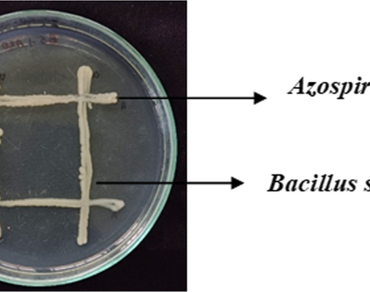
This study evaluated seed biopriming with plant growth-promoting rhizobacteria (PGPR) Bacillus subtilis and Azospirillum zeae and different biopolymers to improve germination, seedling vigor, and storage performance in rice. Five biopolymers—chitosan, sodium alginate, lignosulfonate, maltodextrin, and guar gum, were evaluated for their compatibility with microbial inoculants and rice seeds. All biopolymers supported bacterial viability without inhibiting seed germination. Optimization identified 0.5% sodium alginate and 1% lignosulfonate, combined with a 1-h imbibition period, as the most effective treatments. Coating efficiency, assessed by colony-forming unit (CFU) counts and microscopy, revealed uniform microbial adhesion and stable retention on seed surfaces. Under pot culture conditions, seeds bioprimed with 1% lignosulfonate and 0.5% sodium alginate significantly enhanced rice growth and yield compared with the uninoculated control. Lignosulfonate-based formulations maintained higher microbial populations and seed viability for up to six months, indicating superior storage stability among the biopolymers tested.
References
Abdukerim R, Li L, Li JH, Xiang S, Shi YX, Xie XW, Chai AL, Fan TF, Li BJ (2024) Coating seeds with biocontrol bacteria-loaded sodium alginate/pectin hydrogel enhances the survival of bacteria and control efficacy against soil-borne vegetable diseases. Int J Biol Macromol 279:135317. https://doi.org/10.1016/j.ijbiomac.2024.135317
Anukam A, Berghel J, Henrikson G, Frodeson S, Stahl M (2021) A review of the mechanism of bonding in densified biomass pellets. Renew Sustain Energy Rev 148:111249. https://doi.org/10.1016/j.rser.2021.111249
Bashan Y, De-Bashan LE (2010) How the plant growth promoting bacterium Azospirillum promotes plant growth a critical assessment. Adv Agron 108:77–136. https://doi.org/10.1016/S0065-2113(10)08002-8
Biswas D, Chakraborty AK, Srivastava V, Mandal A (2024) Plant growth promoting rhizobacteria (PGPR): reports on their colonization, beneficial activities, and use as bioinoculant. Adv Agric 1:8173024. https://doi.org/10.1155/2024/8173024
Chin JM, Lim YY, Ting ASY (2021) Biopolymers for biopriming of Brassica rapa seeds: a study on coating efficacy, bioagent viability and seed germination. J Saudi Soc Agric Sci 20:198–207. https://doi.org/10.1016/j.jssas.2021.01.006
Chin JM, Lim YY, Ting ASY (2022) Biopriming Pseudomonas fluorescens to vegetable seeds with biopolymers to promote coating efficacy, seed germination. J Saudi Soc Agric Sci 21:493–505. https://doi.org/10.1016/j.jssas.2022.02.002
Das S, Park SY, Seo YH, Kim PJ (2024) The need for holistic approaches to climate-smart rice production. NPJ Sustain Agric. https://doi.org/10.1038/s44264-024-00023-3
Gil-Ortiz R, Naranjo MA, Atares S, Vicente O, Morillon R (2023) Micronutrient fertilizer reinforcement by fulvate–lignosulfonate coating improves physiological responses in tomato. Agronomy 13(8):2013. https://doi.org/10.3390/agronomy13082013
Giri D, Dhital M, Chaudhary B, Pandey R, Bastakoti B, Shrestha S (2022) Effect of different nitrogen levels on yield and yield attributes of different rice varieties in DDSR condition at Kanchanpur. Nepal Arch Agric Environ Sci 7:310–317. https://doi.org/10.26832/24566632.2022.070302
Gopinath PP, Parsad R, Joseph B and Adarsh VS 2020. GRAPES: General rshiny based analysis platform empowered by statistics [online]
Iwai R, Uchida S, Yamaguchi S, Sonoda F, Tsunoda K, Nagata H, Nagata D, Koga A, Goto M, Maki TA, Hayashi S (2022) Effects of seed biopriming by purple non-sulfur bacteria (PNSB) on the root development of rice. Microorganisms 10:2197. https://doi.org/10.3390/microorganisms10112197
Jha R, Manonmani V, Sundaralingam K, Vanitha S, Gnanachitra M, Kalaiselvi T (2026) Synergistic role of biopriming in boosting legume crop performance: a review. Physiol Mol Plant Pathol 142:103038. https://doi.org/10.1016/j.pmpp.2025.103038
Priyadharshini C, Gnanachitra M, Balachandar D, Jayanthi D (2022) Assessment of shelf-life and efficacy of the seed-coating delivery system of biofertilizers in maize. Int J Plant Soil Sci 34:548–558. https://doi.org/10.9734/ijpss/2022/v34i2231409
Santiago CD, Yagi S, Ijima M, Nashimoto T, Sawada M, Ikeda S, Asano K, Orikasa Y, Ohwada T (2017) Bacterial compatibility in combined inoculations enhances the growth of potato seedlings. Microbes Environ 32:14–23. https://doi.org/10.1264/jsme2.ME16127
Singh A, Gupta R, Pandey R (2016) Rice seed priming with picomolar rutin enhances rhizospheric Bacillus subtilis CIM colonization and plant growth. PLoS ONE 11:e0146013. https://doi.org/10.1371/journal.pone.0146013
Sukanya TS, Anand MR, Chaithra C (2023) Finger millet system productivity as influenced by liquid biofertilizer consortium. Indian J Ecol 50:1647–1652. https://doi.org/10.55362/IJE/2023/4111
Szemruch C, Astiz Gasso MM, Garcia F, Sanchez S, Martinez PM, Cerda M (2022) Biopolymer and Trichoderma harzianum compatibility for sunflower seed coating. J Exp Res 10:203–212
Tarquis AM, Bradford KJ (1992) Prehydration and priming treatments that advance germination also increase the rate of deterioration of lettuce seeds. J Exp Bot 43:307–317. https://doi.org/10.1093/JXB/43.3.307
Tiwari P, Adil M, Park KI (2025) Biopriming with endophytes improves plant resilience to develop climate-smart, futuristic agricultural crops. World J Microbiol Biotechnol 41(8):272. https://doi.org/10.1007/s11274-025-04485-6
Author Information
Department of Agricultural Microbiology, College of Agriculture, Kerala Agricultural University, Vellanikkara, Thrissur, India