Vegetos

(An International Journal of Plant Research & Biotechnology)
(eISSN: 2229-4473)
Physiological and biochemical responses of hydroponically grown Catharanthus roseus to mild dehydration stress
*Article not assigned to an issue yet
Chu Ha Duc, Doan Phuong Mai, Nguyen Anh Duc, Dong Gioi Huy, Tran Huyen Thanh Thi
Research Article | Published: 07 August, 2026
First Page: 0
Last Page: 0
Views: 19
Keywords: n Catharanthus roseusn , Polyethylene glycol 6000, Hydroponics, Mild dehydration stress, Osmotic adjustment
Abstract
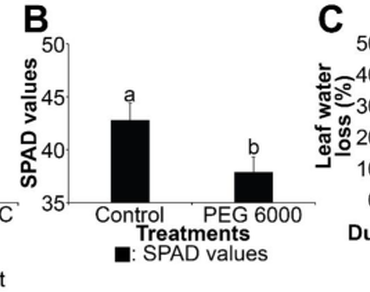
Mild water limitation can alter physiological performance and biochemical metabolism in medicinal plants, but the response pattern depends strongly on species, stress intensity, and growth system. This study evaluated the effects of mild dehydration stress on hydroponically grown Catharanthus roseus using an integrated assessment of growth, water-related traits, and biochemical responses. Uniform 45-day-old plants were transferred to a hydroponic system for 15 days of acclimation, after which mild dehydration was induced by 5% (w/v) polyethylene glycol (PEG) 6000 for 5 days. Each treatment included five biological replicates, with three plants per replicate. PEG 6000 caused limited growth inhibition, as plant height, shoot length, root length, leaf number, shoot dry weight, root dry weight, and total dry biomass were not significantly affected. However, leaf area decreased from 156.3 to 141.8 cm2 plant−1, and shoot fresh weight (FW) decreased from 12.4 to 11.2 g plant−1. Leaf and root relative water content decreased from 86.4% to 78.2% and from 90.1% to 82.7%, respectively, while Soil Plant Analysis Development values declined from 42.8 to 37.9. Detached leaf water loss after 6 h increased from 31.9% to 40.8%. PEG treatment also increased proline from 2.84 to 4.96 µmol g−1 FW, soluble sugars from 18.6 to 24.9 mg g−1 FW, and malondialdehyde content from 12.4 to 16.3 nmol g−1 FW. Total phenolics, flavonoids, vitamin C, total protein, and soluble solids also increased under PEG treatment. These findings indicate that hydroponically grown C. roseus activates osmotic and antioxidant-related biochemical responses under mild PEG-induced dehydration while maintaining total dry biomass during short-term stress.
References
Ahmad MA, Javed R, Adeel M, Rizwan M, Yang Y (2020) PEG 6000-stimulated drought stress improves the attributes of in vitro growth, steviol glycosides production, and antioxidant activities in Stevia rebaudiana Bertoni. Plants 9:1552. https://doi.org/10.3390/plants9111552
Akram NA, Shafiq F, Ashraf M (2017) Ascorbic acid—a potential oxidant scavenger and its role in plant development and abiotic stress tolerance. Front Plant Sci 8:613. https://doi.org/10.3389/fpls.2017.00613
Almagro L, Fernández-Pérez F, Pedreño MA (2015) Indole alkaloids from Catharanthus roseus: bioproduction and their effect on human health. Molecules 20:2973–3000. https://doi.org/10.3390/molecules20022973
Bates LS, Waldren RP, Teare ID (1973) Rapid determination of free proline for water-stress studies. Plant Soil 39:205–207. https://doi.org/10.1007/BF00018060
Cannea FB, Padiglia A (2025) Antioxidant defense systems in plants: mechanisms, regulation, and biotechnological strategies for enhanced oxidative stress tolerance. Life 15:1293. https://doi.org/10.3390/life15081293
Cao Y, Yang W, Ma J, Cheng Z, Zhang X, Liu X, Wu X, Zhang J (2024) An integrated framework for drought stress in plants. Int J Mol Sci 25:9347. https://doi.org/10.3390/ijms25179347
ElSayed AI, El-Hamahmy MAM, Rafudeen MS, Mohamed AH, Omar AA (2019) The impact of drought stress on antioxidant responses and accumulation of flavonolignans in milk thistle (Silybum marianum (L.) Gaertn). Plants 8:611. https://doi.org/10.3390/plants8120611
Haghpanah M, Hashemipetroudi S, Arzani A, Araniti F (2024) Drought tolerance in plants: physiological and molecular responses. Plants 13:2962. https://doi.org/10.3390/plants13212962
Hayat S, Hayat Q, Alyemeni MN, Wani AS, Pichtel J, Ahmad A (2012) Role of proline under changing environments: a review. Plant Signal Behav 7:1456–1466. https://doi.org/10.4161/psb.21949
Jaleel CA, Manivannan P, Kishorekumar A, Sankar B, Gopi R, Somasundaram R, Panneerselvam R (2007a) Alterations in osmoregulation, antioxidant enzymes and indole alkaloid levels in Catharanthus roseus exposed to water deficit. Colloids Surf B Biointerfaces 59:150–157. https://doi.org/10.1016/j.colsurfb.2007.05.001
Jaleel CA, Manivannan P, Sankar B, Kishorekumar A, Gopi R, Somasundaram R, Panneerselvam R (2007b) Water deficit stress mitigation by calcium chloride in Catharanthus roseus: effects on oxidative stress, proline metabolism and indole alkaloid accumulation. Colloids Surf B Biointerfaces 60:110–116. https://doi.org/10.1016/j.colsurfb.2007.06.006
Jeandet P, Formela-Luboinska M, Labudda M, Morkunas I (2022) The role of sugars in plant responses to stress and their regulatory function during development. Int J Mol Sci 23:5161. https://doi.org/10.3390/ijms23095161
Kumar S, Singh B, Singh R (2022) Catharanthus roseus (L.) G. Don: a review of its ethnobotany, phytochemistry, ethnopharmacology and toxicities. J Ethnopharmacol 284:114647. https://doi.org/10.1016/j.jep.2021.114647
Kylyshbayeva G, Bishimbayeva N, Jatayev S, Eliby S, Shavrukov Y (2024) Polyethylene glycol (PEG) application triggers plant dehydration but does not accurately simulate drought. Plants 14:92. https://doi.org/10.3390/plants14010092
Liang X, Zhang L, Natarajan SK, Becker DF (2013) Proline mechanisms of stress survival. Antioxid Redox Signal 19:998–1011. https://doi.org/10.1089/ars.2012.5074
Meher SP, Ashok Reddy K, Manohar Rao D (2018) Effect of PEG-6000 imposed drought stress on RNA content, relative water content (RWC), and chlorophyll content in peanut leaves and roots. Saudi J Biol Sci 25:285–289. https://doi.org/10.1016/j.sjbs.2017.04.008
Mendonce KC, Palani N, Rajadesingu S, Radhakrishnan K, Ayyar M, Priya LS (2025) Pharmacological potential of bioactive compounds in Catharanthus roseus extract: a comprehensive review. Toxicol Rep 14:101998. https://doi.org/10.1016/j.toxrep.2025.101998
Mexal J, Fisher JT, Osteryoung J, Reid CPP (1975) Oxygen availability in polyethylene glycol solutions and its implications in plant-water relations. Plant Physiol 55:20–24. https://doi.org/10.1104/pp.55.1.20
Michel BE, Kaufmann MR (1973) The osmotic potential of polyethylene glycol 6000. Plant Physiol 51:914–916. https://doi.org/10.1104/pp.51.5.914
Mohagheghian B, Saeidi G, Arzani A (2025) Phenolic compounds, antioxidant enzymes, and oxidative stress in barley (Hordeum vulgare L.) genotypes under field drought-stress conditions. BMC Plant Biol 25:709. https://doi.org/10.1186/s12870-025-06750-0
Nielsen SS (2024) Total carbohydrate by phenol-sulfuric acid method. In: Ismail BP, Nielsen SS (eds) Nielsen’s food analysis laboratory manual. Springer International Publishing, Cham, pp 147–151
Qiao M, Hong C, Jiao Y, Hou S, Gao H (2024) Impacts of drought on photosynthesis in major food crops and the related mechanisms of plant responses to drought. Plants 13:1808. https://doi.org/10.3390/plants13131808
Rosa M, Prado C, Podazza G, Interdonato R, Gonzalez JA, Hilal M, Prado FE (2009) Soluble sugars—metabolism, sensing and abiotic stress: a complex network in the life of plants. Plant Signal Behav 4:388–393. https://doi.org/10.4161/psb.4.5.8294
Schneider CA, Rasband WS, Eliceiri KW (2012) NIH image to ImageJ: 25 years of image analysis. Nat Methods 9:671–675. https://doi.org/10.1038/nmeth.2089
Shomali A, Das S, Arif N, Sarraf M, Zahra N, Yadav V, Aliniaeifard S, Chauhan DK, Hasanuzzaman M (2022) Diverse physiological roles of flavonoids in plant environmental stress responses and tolerance. Plants 11:3158. https://doi.org/10.3390/plants11223158
Taulavuori E, Hellström EK, Taulavuori K, Laine K (2001) Comparison of two methods used to analyse lipid peroxidation from Vaccinium myrtillus (L.) during snow removal, reacclimation and cold acclimation. J Exp Bot 52:2375–2380. https://doi.org/10.1093/jexbot/52.365.2375
Verslues PE, Sharma S (2010) Proline metabolism and its implications for plant - environment interaction. Arabidopsis Book 8:e0140. https://doi.org/10.1199/tab.0140
Wahab NZA, Azizul A, Ibrahim N (2020) Phytochemistry, cytotoxicity and antiviral activity of Catharanthus roseus. Iran J Microbiol 12:460–465. https://doi.org/10.18502/ijm.v12i5.4608
Wang C, He J, Zhao TH, Cao Y, Wang G, Sun B, Yan X, Guo W, Li MH (2019) The smaller the leaf is, the faster the leaf water loses in a temperate forest. Front Plant Sci 10:58. https://doi.org/10.3389/fpls.2019.00058
Author Information
Faculty of Agricultural Technology, University of Engineering and Technology, Vietnam National University Hanoi, Hanoi, Vietnam