Vegetos

(An International Journal of Plant Research & Biotechnology)
(eISSN: 2229-4473)
Survey of mushroom diversity near Shivalik foot-hills and discovery of an edible mushroom isolate of Macrocybe crassa cultivable on wheat straw substrate
*Article not assigned to an issue yet
Research Articles | Published: 11 August, 2026
First Page: 0
Last Page: 0
Views: 2
Keywords: Fungal diversity, n Macrocyben , Wild mushrooms, Shivalik foothills microflora, Mushroom cultivation
Abstract
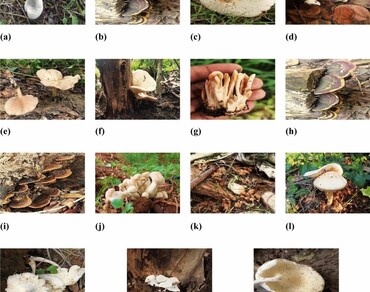
An extensive survey of macrofungal diversity was conducted in the Shivalik foothill region of Punjab (2022–2023), during which fifteen wild mushroom specimens were collected and morphologically identified. Based on resemblance to edible taxa, five isolates were shortlisted for in vitro evaluation of radial growth, biomass production, and lignocellulolytic enzyme activities. Among these, Lentinus concavus and Macrocybe crassa displayed the most promising physiological and enzymatic profiles and were selected for cultivation trials. While L. concavus failed to fruit under the tested conditions, M. crassa successfully produced fruiting bodies on wheat straw and sawdust substrates. Molecular identification using 18S rRNA sequencing confirmed the isolate as M. crassa. Owing to its adaptability to high summer temperatures and compatibility with local agro-residues, M. crassa emerges as a promising candidate for seasonal mushroom diversification in Punjab.
References
Atri NS, Saini SS, Gupta AK, Kaur A, Kour H, Saini SS (2010) Documentation of wild edible mushrooms and their seasonal availability in Punjab. Taxon Ecol Indian Fungi. 161–9
Barros L, Ferreira MJ, Queiros B, Ferreira I, Baptista P (2007) Total phenols, ascorbic acid, beta-carotene and lycopene in Portuguese wild edible mushrooms and their antioxidant activities. Food Chem 103:413–419. https://doi.org/10.1016/2006.07.038
Chang ST, Miles PG (2004) Mushrooms- cultivation, nutritional value, medicinal effect and environmental impact. CRC Press, Washington, D.C., p 451
Dhaliwal RP, Garcha HS, Khanna PK (1991) Regulation of lignocellulytic enzyme system in P. ostreatus. Indian J Microbiol 31:181–184
Inyod T, Sassanarakit S, Payapanon A, Keawsompong S (2016) Selection of Macrocybe crassa mushroom for commercial production. Agric Nat Resour 50:186–191
Kalač P (2009) Chemical composition and nutritional value of European species of wild growing mushrooms: a review. Food Chem 113:9–16
Khatun S, Islam A, Cakilcioglu U, Chatterje NC (2011) Research on the mushroom as a potential source of nutraceuticals: a review on Indian perspective. Am J Exp Agric 2:47
Khund P, Joshi SR (2014) DNA barcoding of wild edible mushrooms consumed by the ethnic tribes of India. Gene 550:123–130
Ma G, Yang W, Zhao L, Pei F, Fang D, Hu Q (2018) A critical review on the health-promoting effects of mushrooms nutraceuticals. Food Sci Hum Wellness 7:125–133
Manavalan T, Manavalan A, Heese K (2015) Characterization of lignocellulolytic enzymes from white-rot fungi. Curr Microbiol 70:485–498
Rodriguez G, Lama A, Rodríguez R, Jiménez A, Guillén R, Fernández-Bolaños J (2008) Olive stone is an attractive source of bioactive and valuable compounds. J Bioresour Technol 99:5261–5269
Sambrook J, Fritsch EF, Maniatis T (1989) Molecular cloning: a laboratory manual. Cold spring harbour laboratory press
Sandhu DK, Kalra MK (1982) Production of cellulase, xylanase and pectinase by Trichoderma longibrachiatum on different substrates. Trans Br Mycol Soc 79:409–413
Shahriarinour M, Wahab MNA, Arif A, Mohamad R (2011) Screening, isolation and selection of cellulolytic fungi from oil palm empty fruit bunch fiber. Biotechnol 10:108–113
Singh M, Kamal S, Sharma VP (2020) Status and trends in world mushroom production-part III-world production of different mushroom species in 21st century. Mushroom Res. https://doi.org/10.36036/mr.29.2.2020.113703
Teke NA, Kinge TR, Bechem E, Nji TM, Ndam LM, Mih AM (2018) Ethnomycological study in the kilum-ijim mountain forest, northwest region, cameroon. J Ethnobiol Ethnomedi 14:1–12
Stamets P E (2000). Techniques for the cultivation of the medicinal mushroom royal sun Agaricus-Agaricus blazei Murr.(Agaricomycetideae). International Journal of Medicinal Mushrooms, 2(2).
Author Information
Department of Microbiology, College of Basic Sciences and Humanities, Punjab Agricultural University, Ludhiana, India