Vegetos

(An International Journal of Plant Research & Biotechnology)
Novel insights of bioinoculants on augmented productivity of Andrographis paniculata Wall. ex Nees
*Article not assigned to an issue yet
Research Articles | Published: 01 February, 2026
First Page: 0
Last Page: 0
Views: 80
Keywords: Plant growth promoting bacteria, Andrographis paniculata, Nitrogen fixing bacteria, Phosphate solubilizing bacteria, Potassium solubilizing bacteria
Abstract
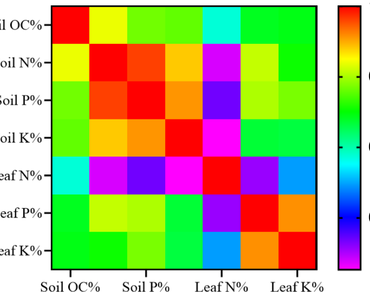
The objective of this study was to investigate the impact of three plant growth promoting bacteria (PGPB), Bacillus subtilis (MTCC 736), Azospirillum brasilense (MTCC 4037) and Pseudomonas fluorescens (MTCC 666) on soil parameters (micro and macro nutrients) and also to evaluate their ability in promoting the growth and nutrients of Andrographis paniculata (CIM “Megha”) plants, grown in that soil. Under this study, positive effects of PGPB strains on Sulfur (S), Zinc (Zn), Boron (B), Iron (Fe), Manganese (Mn), Copper (Cu), Nitrogen (N), Phosphorus (P) and Potassium (K) contents of the soil were evaluated. These PGPB significantly decreased the pH of the soil, resulting in elicitation of the nitrification and organic acid production, in order to increase nitrogen fixation, P and K solubilization. Among all the treatments, dual inoculations of B. subtilis + P. fluorescens increased plant height, number of leaf, number of lateral branches, fresh and dry herbal yield in a pot experiment, as well as N, P and K uptake in the leaf, when compared to the control. The NPK results of both, soil and plants indicate that the values of all measured parameters were higher, when (A) paniculata was dually inoculated with (B) subtilis + P. fluorescens. Based on our results, these PGPB can be used as Nitrogen Fixing Bacteria (NFB), Phosphate Solubilizing Bacteria (PSB) and Potassium Solubilizing Bacteria (KSB) to enhance growth and also can be worthy for commercial development and sustainable production.
References
Adebayo E, Ishola O (2009) Phytochemical and antimicrobial screening of the crude extracts from the root, stem bark and leaves of Bridelia ferruginea. Afri J Biotech 8(4):650–653
Adetunji CO, Anani OA, Olaniyan OT et al (2022) Chap. 14 Sustainability of biofertilizers and other allied products from genetically modified microorganisms. In: Varjani S, Pandey A, Bhaskar T et al (eds) Biomass, Biofuels, biochemicals. Elsevier, pp 363–393
Ahmad HM, Fiaz S, Hafeez S, Zahra S, Shah AN, Gul B, Aziz O, Mahmood-Ur-Rahman, Fakhar A, Rafique M, Chen Y, Yang SH, Wang X (2022) Plant growth-promoting rhizobacteria eliminate the effect of drought stress in plants: a review. Front Plant Sci 13:875774. https://doi.org/10.3389/fpls.2022.875774
Angelina E, Papatheodorou EM, Demirtzoglou T, Monokrousos N (2020) Effects of Bacillus subtilis and Pseudomonas fluorescens inoculation on attributes of the lettuce (Lactuca sativa L.) soil rhizosphere microbial community: the role of the management system. Agronomy 10(9):1428. https://doi.org/10.3390/agronomy10091428
Arbab AH, Parvez MK, Al–Dosari MS, Al–Rehaily AJ (2017) In vitro evaluation of novel antiviral activities of 60 medicinal plants extracts against hepatitis B virus. Experimental Therapeutic Med 14(1):626–634. https://doi.org/10.3892/etm.2017.4530
Arnold S, Schepers Js (2004) A simple Roller-Mill grinding procedure for plant and soil samples. Commun Soil Sci Plant Anal 35:537–545. https://doi.org/10.1081/CSS-120029730
Aydinoglu F, Iltas O, Akkaya O (2020) Inoculation of maize seeds with Pseudomonas Putida leads to enhanced seedling growth in combination with modified regulation of MiRNAs and antioxidant enzymes. Symbiosis 81:271–285. https://doi.org/10.1007/s13199-020-00703-x
Backer R, Rokem JS, Ilangumaran G et al (2018) Plant growth-promoting rhizobacteria: context, mechanisms of action, and roadmap to commercialization of biostimulants for sustainable agriculture. Front Plant Sci 9:1473. https://doi.org/10.3389/fpls.2018.01473
Bagyalakshmi B, Ponmurugan P, Balamurugan A (2017) Potassium solubilization, plant growth promoting substances by potassium solubilizing bacteria (KSB) from Southern Indian tea plantation soil. Biocatal Agric Biotechnol 12:116–124. https://doi.org/10.1016/j.bcab.2017.09.011
Bashir Z, Zargar M, Husain M, Kousar S, Zahra SB, Ahmad A, Rathore JP (2017) Potassium solubilizing microorganisms: mechanism and diversity. Int J Pure App Biosci 5:653–660. https://doi.org/10.18782/2320-7051.5446
Bhattacharyya PN, Jha DK (2012) Plant growth-promoting rhizobacteria (PGPR): emergence in agriculture. World J Microbio Biotechnol 28:1327–1350. https://doi.org/10.1007/s11274-011-0979-9
Bray RH, Kurtz LT (1945) Determination of total, organic, and available forms of phosphorus in soils. Soil Sci 59:39–46. https://doi.org/10.1097/00010694-194501000-00006
Bremner J, Mulvaney C (1982) Total Nitrogen. In methods of soil analysis, part 2. Madison WI, ASA-SSSA 595–624. https://doi.org/10.2134/agronmonogr9.2.2ed.c31
Caglayan MO, Mindivan F, Şahin S (2022) Sensor and bioimaging studies based on carbon quantum dots: the green chemistry approach. Crit Rev Anal Chem 52:814–847. https://doi.org/10.1080/10408347.2020.1828029
Chabbi N, Chafiki S, Telmoudi M, Labbassi S, Bouharroud R, Tahiri A, Mentag R, El Amri M, Bendiab K, Hsissou D, Mimouni A, Ait Aabd N, Qessaoui R (2024) Plant-growth-promoting rhizobacteria improve seeds germination and growth of Argania spinosa. Plants 13(15):2025. https://doi.org/10.3390/plants13152025
Chandran H, Meena M, Swapnil P (2021) Plant growth-promoting rhizobacteria as a green alternative for sustainable agriculture. Sustainability 13(19):10986. https://doi.org/10.3390/su131910986
Chang C-C, Yang M-H, Wen H-M, Chern J-C (2002) Estimation of total flavonoid content in propolis by two complementary colorimetric methods. J Food Drug Anal 10(3):178–182. https://doi.org/10.38212/2224-6614.2748
Chapman HD, Brown SM (1950) Analysis of orange leaves for diagnosing nutrient status with reference to potassium. Hilgardia 19:501–539. https://doi.org/10.3733/hilg.v19n17p501
Chiappero J, del Rosario Cappellari L, Alderete LGS, Palermo TB, Banchio E (2019) Plant growth promoting rhizobacteria improve the antioxidant status in Mentha Piperita grown under drought stress leading to an enhancement of plant growth and total phenolic content. Ind Crops Prod 139:111553. https://doi.org/10.1016/j.indcrop.2019.111553
Choudhary S, Singh V, Bhogal N (2012) Status of total and available manganese in soils of Agra. JISSS 60:68–70
Dehsheikh AB, Sourestani MM, Zolfaghari M, Enayatizamir N (2020) Changes in soil microbial activity, essential oil quantity, and quality of Thai Basil as response to biofertilizers and humic acid. J Clean Prod 256:120439. https://doi.org/10.1016/j.jclepro.2020.120439
del Rosario Cappellari L, Chiappero J, Santoro MV, Giordano W, Banchio E (2017) Inducing phenolic production and volatile organic compounds emission by inoculating Mentha Piperita with plant growth-promoting rhizobacteria. Sci Hort 220:193–198. https://doi.org/10.1016/j.scienta.2017.04.002
del Rosario Cappellari L, Santoro MV, Nievas F, Giordano W, Banchio E (2013) Increase of secondary metabolite content in marigold by inoculation with plant growth-promoting rhizobacteria. App Soil Ecol 70:16–22. https://doi.org/10.1016/j.apsoil.2013.04.001
del Rosario Cappellari L, Santoro MV, Schmidt A et al (2019) Induction of essential oil production in Mentha x Piperita by plant growth promoting bacteria was correlated with an increase in jasmonate and salicylate levels and a higher density of glandular trichomes. Plant Physiol Biochem 141:142–153. https://doi.org/10.1016/j.plaphy.2019.05.030
Emmanuel OC, Akintola OA, Tetteh FM, Babalola OO (2020) Combined application of inoculant, phosphorus and potassium enhances Cowpea yield in savanna soils. Agronomy 11(1):15. https://doi.org/10.3390/agronomy11010015
Erb M, Kliebenstein DJ (2020) Plant secondary metabolites as defenses, regulators, and primary metabolites: the blurred functional trichotomy. Plant Physiol 184(1):39–52. https://doi.org/10.1104/pp.20.00433
Etesami H, Emami S, Alikhani HA (2017) Potassium solubilizing bacteria (KSB): Mechanisms, promotion of plant growth, and future prospects a review. J Soil Sci Plant nutr17:897–911. https://doi.org/10.4067/S0718-95162017000400005
Fatima B, Nayak S, Singh A, Das P (2023) Antibacterial photodynamic inactivation with elicited Andrographis paniculata (Burm. f.) Wall. Ex Nees plant Extract derived carbonaceous nanoparticle. Phytomed Plus 100512. https://doi.org/10.1016/j.phyplu.2023.100512
Ferreira CM, Soares HM, Soares EV (2019) Promising bacterial genera for agricultural practices: an insight on plant growth-promoting properties and microbial safety aspects. Sci Total Environ 682:779–799. https://doi.org/10.1016/j.scitotenv.2019.04.225
Fieldes M, King P, Richardson J, Swindale L (1951) Estimation of exchangeable cations in soils with the Beckman flame spectrophotometer. Soil Sci 72(3):219–232
Filipini L, Pilatti F, Meyer E, Ventura BS, Lourenzi CR, Lovato PE (2021) Application of Azospirillum on seeds and leaves, associated with Rhizobium inoculation, increases growth and yield of common bean. Arch Microbiol 203(3):1033–1038. https://doi.org/10.1007/s00203-020-02092-7
Gerdel R (1928) The colorimetric determination of total phosphorous in plant solutions. Soil Sci 28(4):229–234
Glick BR (2012) Plant growth-promoting bacteria: mechanisms and applications. Scientifica 2012(963401). https://doi.org/10.6064/2012/963401
Gupta UC (1967) A simplified method for determining hot-water soluble Boron in podzol soils. Soil Sci 103:424–428. https://doi.org/10.1097/00010694-196706000-00009
Harborne JB (1973) Phenolic compounds. In: phytochemical methods: A guide to modern techniques of plant analysis. Springer Dordrecht 33–88. https://doi.org/10.1007/978-94-009-5921-7_2
Helaly A, Hassan S, Craker L, Mady E (2020) Effects of growth-promoting bacteria on growth, yield and nutritional value of collard plants. AOAS 65(1):77–82. https://doi.org/10.1016/j.aoas.2020.01.001
Kaminsky LM, Trexler RV, Malik RJ, Hockett KL, Bell TH (2019) The inherent conflicts in developing soil microbial inoculants. Trends Biotechnol 37(2):140–151. https://doi.org/10.1016/j.tibtech.2018.11.011
Kandoudi W, Németh-Zámboriné É (2022) Stimulating secondary compound accumulation by elicitation: is it a realistic tool in medicinal plants in vivo? Phytochem Rev 21:2007–2025. https://doi.org/10.1007/s11101-022-09822-3
Khabbaz SE, Ladhalakshmi D, Babu M, Kandan A, Ramamoorthy V, Saravanakumar D, Al-Mughrabi T, Kandasamy S (2019) Plant growth promoting bacteria (PGPB)—a versatile tool for plant health management. Can J Pestic Pest Manag 1(1):1–25. https://doi.org/10.34195/can.j.ppm.2019.05.001
Khan H, Akbar WA, Shah Z, Rahim HU, Taj A, Alatalo JM (2022) Coupling phosphate-solubilizing bacteria (PSB) with inorganic phosphorus fertilizer improves Mungbean (Vigna radiata) phosphorus acquisition, nitrogen fixation, and yield in alkaline-calcareous soil. Heliyon 8(3):e09081. https://doi.org/10.1016/j.heliyon.2022.e09081
Khoso MA, Wagan S, Alam I, Hussain A, Ali Q, Saha S, Poudel TR, Manghwar H, Liu F (2024) Impact of plant growth-promoting rhizobacteria (PGPR) on plant nutrition and root characteristics: current perspective. Plant Stress 11:100341. https://doi.org/10.1016/j.stress.2023.100341
Kumar S, Diksha, Sindhu SS, Kumar R (2022) Biofertilizers: an ecofriendly technology for nutrient recycling and environmental sustainability. Curr Res Microb Sci 3:100094. https://doi.org/10.1016/j.crmicr.2021.100094
Kumar S, Kumar A (2013) Spatial and harvesting influence on growth, yield, quality and economic potential of Kalmegh (Andrographis paniculata wall ex. Nees) JARTS 114(1):69–76. http://nbn-resolving.de/urn:nbn:de:hebis:34–2013030542629
Kussmann M, Abe Cunha DH, Berciano S (2023) Bioactive compounds for human and planetary health. Front Nutr 10:1193848. https://doi.org/10.3389/fnut.2023.1193848
Lindsay WL, Norvell W (1978) Development of a DTPA soil test for zinc, iron, manganese, and copper. SSSA J 42(3):421–428. https://doi.org/10.2136/sssaj1978.03615995004200030009x
Mącik M, Gryta A, Frąc M (2020) Chapter Two - Biofertilizers in agriculture: an overview on concepts, strategies and effects on soil microorganisms. Adv Agron 12(8):31–87. https://doi.org/10.1016/bs.agron.2020.02.001
Maitra S, Hossain A, Brestic M, Skalicky M, Ondrisik P, Gitari H, Brahmachari K, Shankar T, Bhadra P, Palai JB, Jena J, Bhattacharya U, Duvvada SK, Lalichetti S, Sairam M (2021) Intercropping—A low input agricultural strategy for food and environmental security. Agronomy 11(2):343. https://doi.org/10.3390/agronomy11020343
Masood S, Zhao XQ, Shen RF (2019) Bacillus pumilus increases Boron uptake and inhibits rapeseed growth under Boron supply irrespective of phosphorus fertilization. AoB Plants 11(4):plz036. https://doi.org/10.1093/aobpla/plz036
Neina D (2019) The role of soil pH in plant nutrition and soil remediation. App Environ Soil Sci 2019(1):5794869. https://doi.org/10.1155/2019/5794869
Olaniyan F, Alori E, Aruna Olasekan A, Ayorinde B, Daramola FY, Osemwegie O, Oluranti O (2022) The use of soil microbial potassium solubilizers in potassium nutrient availability in soil and its dynamics. Ann Microbio 72:45. https://doi.org/10.1186/s13213-022-01701-8
Pagnani G, Pellegrini M, Galieni A, D’Egidio S, Matteucci F, Ricci A, Stagnari F, Sergi M, Lo Sterzo C, Pisante M, Del Gallo M (2018) Plant growth-promoting rhizobacteria (PGPR) in Cannabis sativa ‘Finola’cultivation: an alternative fertilization strategy to improve plant growth and quality characteristics. Ind Crops Prod 123:75–83. https://doi.org/10.1016/j.indcrop.2018.06.033
Pietri JA, Brookes P (2008) Relationships between soil pH and microbial properties in a UK arable soil. Soil Bio Biochem 40:1856–1861. https://doi.org/10.1016/j.soilbio.2008.03.020
Polash SA, Saha T, Hossain MS, Sarker SR (2017) Investigation of the phytochemicals, antioxidant, and antimicrobial activity of the Andrographis paniculata leaf and stem extracts. Adv Biosci Biotechnol 8:149–162. https://doi.org/10.4236/abb.2017.85012
Premalatha K, Botlagunta N, Santhosh D, Hiremath C, Rajesh KV, Shanker K, Sundaresan V, Kalra A (2021) Enhancement of soil health, germination and crop productivity in Andrographis paniculata (Burm. f.) Nees, an important medicinal crop by using a composite bio inoculant. J Plant Nutr 44:2331–2346. https://doi.org/10.1080/01904167.2021.1899207
Qian X, Li Q, Chen H, Zhao L, Wang F, Zhang Y, Zhang J, Müller C, Yi Z (2023) Enhancing soil nitrogen retention capacity by Biochar incorporation in the acidic soil of pomelo orchards: the crucial role of pH. Agronomy 13(8):2110. https://doi.org/10.3390/agronomy13082110
Ramluckan K, Moodley KG, Bux F (2014) An evaluation of the efficacy of using selected solvents for the extraction of lipids from algal biomass by the Soxhlet extraction method. Fuel 116:103–108. https://doi.org/10.1016/j.fuel.2013.07.118
Ran L, Wu H, Xia F, Xue Y, Wei W, Wang J, Wang J, Zhao S, Yan S, Shi H, Zheng S, Zhang Y, Qiu X (2025) Effect of PGPR on growth and nutrient utilization of Elymus nutans Griseb at different temperatures. PLoS ONE 20(5):e0323613. https://doi.org/10.1371/journal.pone.0323613
Roy S, Roy M (2019) Characterization of plant growth promoting feature of a neutromesophilic, facultatively chemolithoautotrophic, sulphur oxidizing bacterium Delftia sp. strain SR4 isolated from coal mine spoil. Int J Phytorem 21(6):531–540. https://doi.org/10.1080/15226514.2018.1537238
Saeed Q, Xiukang W, Haider FU, Kučerik J, Mumtaz MZ, Holatko J, Naseem M, Kintl A, Ejaz M, Naveed M, Brtnicky M, Mustafa A (2021) Rhizosphere bacteria in plant growth promotion, biocontrol, and bioremediation of contaminated sites: a comprehensive review of effects and mechanisms. Int J Mol Sci 22(19):10529. https://doi.org/10.3390/ijms221910529
Samantaray A, Chattaraj S, Mitra D, Ganguly A, Kumar R, Gaur A, Das P, Mohapatra K, Sergio Villalobos S, Rani A, Thatoi H (2024) Advances in microbial based bio-inoculum for amelioration of soil health and sustainable crop production. Curr Res Microb Sci 7:100251. https://doi.org/10.1016/j.crmicr.2024.100251
Samtiya M, Aluko RE, Dhewa T, Moreno-Rojas JM (2021) Potential health benefits of plant food-derived bioactive components: an overview. Foods 10(4):839. https://doi.org/10.3390/foods10040839
Sattar A, Naveed M, Zahir MA, Sajid M, Nadeem M, Meena V, Farooq M, Singh R, Meena HR (2019) Perspectives of potassium solubilizing microbes in sustainable food production system: a review. App Soil Eco 133:146–159. https://doi.org/10.1016/j.apsoil.2018.09.012
Shahwar D, Mushtaq Z, Mushtaq H, Alqarawi AA, Park Y, Alshahrani TS, Faizan S (2023) Role of microbial inoculants as bio fertilizers for improving crop productivity: a review. Heliyon 9(6):e16134. https://doi.org/10.1016/j.heliyon.2023.e16134
Sharma S, Sharma YP, Bhardwaj C (2018) HPLC quantification of Andrographolide in different parts of Andrographis paniculata (Burm. f.) Wall. Ex Nees. J Pharmacogn Phytochem 7(3):168–171
Singh M, Singh D, Gupta A et al (2019) Plant growth promoting rhizobacteria: application in biofertilizers and biocontrol of phytopathogens. PGPR amelioration in sustainable agriculture. Elsevier, pp 41–66. https://doi.org/10.1016/B978-0-12-815879-1.00003-3
Singleton VL, Rossi JA (1965) Colorimetry of total phenolics with phosphomolybdic-phosphotungstic acid reagents. Am J Enol Vitic 16:144–158
Sultana S, Alam S, Karim MM (2021) Screening of siderophore-producing salt-tolerant rhizobacteria suitable for supporting plant growth in saline soils with iron limitation. J Agric Food Res 4:100150. https://doi.org/10.1016/j.jafr.2021.100150
Tsotetsi T, Nephali L, Malebe M, Tugizimana F (2022) Bacillus for plant growth promotion and stress resilience: what have we learned? Plants 11(19):2482. https://doi.org/10.3390/plants11192482
van Loon LC (2007) Plant responses to plant growth-promoting rhizobacteria. Eur J Plant Pathol 119:243–254. https://doi.org/10.1007/s10658-007-9165-1
Vincze É-B, Becze A, Laslo É, Mara G (2024) Beneficial soil microbiomes and their potential role in plant growth and soil fertility. Agriculture 14(1):152. https://doi.org/10.3390/agriculture14010152
Walkley A, Black IA (1934) An examination of the Degtjareff method for determining soil organic matter, and a proposed modification of the chromic acid Titration method. Soil Sci 37:29–38
Wang X-S, Wu Y-F, Dai S-L et al (2012) Ultrasound-assisted extraction of Geniposide from Gardenia jasminoides. Ultrason Sonochem 19(6):1155–1159
Williams C, Steinbergs A (1959) Soil sulphur fractions as chemical indices of available sulphur in some Australian soils. Aust J Agri Res 10:340–352
Zhao Q, Wu Y-N, Fan Q, Han QQ, Paré PW, Xu R, Wang YQ, Wang SM, Zhang JL (2016) Improved growth and metabolite accumulation in Codonopsis pilosula (Franch.) Nannf. By inoculation of Bacillus amyloliquefaciens GB03. J Agric Food Chem 64:8103–8108. https://doi.org/10.1021/acs.jafc.6b03390
Author Information
Microbial Biodiversity Laboratory, Department of Botany, Patna University, Patna, Bihar, India