Vegetos

(An International Journal of Plant Research & Biotechnology)
(eISSN: 2229-4473)
Metabolite profiling and evaluation of anti-oxidant and immunomodulatory activity of Aswagandha Tablet, an Ayurvedic proprietary herbal preparation
*Article not assigned to an issue yet
Research Articles | Published: 22 April, 2026
First Page: 0
Last Page: 0
Views: 89
Keywords: n Withania somniferan , Aswagandha Tablet, Ayurveda, LC-MS, Immunomodulatory activity, Antioxidant activity
Abstract
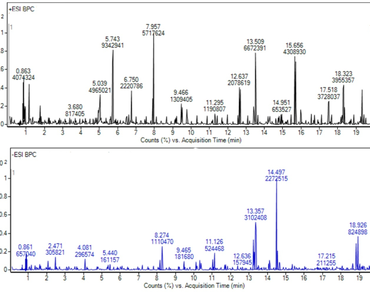
Aswagandha Tablet is a proprietary herbal formulation prepared using root of Withania somnifera (L.) Dunal, an important medicinal plant used in Ayurveda. It is a rich source of many bioactive constituents mainly withanolides, a group of steroidal lactones with numerous biological activities. Pharmacological properties of W. somnifera have been extensively studied worldwide. However, phytochemical and pharmacological properties of finished herbal products of this species are not much explored. In this study, Metabolite profiling of Aswagandha Tablet (AT), has been carried out by liquid chromatography and tandem mass spectrometry analysis. Antioxidant activity was evaluated by various in-vitro studies such as DPPH radical scavenging activity, nitric oxide radical scavenging activity, hydroxyl radical scavenging activity and reducing power assay. Immunomodulatory activity of AT by mast cell degranulation assay in Wistar rats was also studied. Tandem Mass spectroscopic evaluation and subsequent data analysis led to the identification of several bioactive components belonging to various classes of metabolites like steroidal lactones, polyphenolics, phenolic glycosides, flavonoids and alkaloids. Pharmacological evaluation showed that AT possesses good antioxidant activity and dose-dependent immunomodulatory effect.
References
Agarwal R, Diwanay S, Patki P, Patwardhan B (1999) Studies on immunomodulatory activity of Withania somnifera (Ashwagandha) extracts in experimental immune inflammation. J Ethnopharmacol 67(1):27–35. https://doi.org/10.1016/s0378-8741(99)00065-3
Alam N, Hossain M, Mottalib Md A, Sulaiman SA, Gan SH , Khalil Md I (2012) Methanolic extracts of Withania somnifera leaves, fruits and roots possess antioxidant properties and antibacterial activities. MC Complement Altern Med 12:175
Alanazi HH, Elfaki E (2023) The immunomodulatory role of Withania somnifera (L.) dunal in inflammatory diseases. Front Pharmacol 14:1084757. https://doi.org/10.3389/fphar.2023.1084757
Alemu M, Lulekal E, Asfaw Z, Warkineh B, Debella A, Abebe A et al (2024) Antibacterial activity and phytochemical screening of traditional medicinal plants most preferred for treating infectious diseases in Habru District, North Wollo Zone, Amhara Region, Ethiopia. PLoS ONE 19(3):e0300060. https://doi.org/10.1371/journal.pone.0300060
Altemimi A, Lakhssassi N, Baharlouei A, Watson DG, Lightfoot DA (2017) Phytochemicals: extraction, isolation, and identification of bioactive compounds from plant extracts. Plants (Basel) 6(4):42. https://doi.org/10.3390/plants6040042
Bashir A, Nabi M, Tabassum N, Afzal S, Ayoub M (2023) An updated review on phytochemistry and molecular targets of Withania somnifera (L.) Dunal (Ashwagandha). Front Pharmacol 14:1049334. https://doi.org/10.3389/fphar.2023.1049334
Daniela Carlos A, Sá-Nunes Lúcia, de Paula C, Matias-Peres Maria Célia, Jamur C, Oliver Magda Fraguas, Serra M, Lúcia Helena Faccioli (2006) Histamine modulates mast cell degranulation through an indirect mechanism in a model IgE-mediated reaction. Eur J Immunol 36:1494–1503. https://doi.org/10.1002/eji.200535464
Faboro EO, Adekunle DO, Obisesan IA et al (2023) Optimization of extraction conditions for phytochemicals from Senna fistula using cheminformatics. SN Appl Sci 5:209. https://doi.org/10.1007/s42452-023-05421-9
Singh G, Sharma PK, Dudhe R, Singh S (2010) Biological activities of Withania somnifera. Ann Biol Res 1(3):56–63
Girme A, Saste G, Pawar S, Balasubramaniam AK, Musande K, Darji B, Satti NK, Verma MK, Anand R, Singh R, Ram A (2020) Vishwakarma, and Lal Hingorani, Investigating 11 Withanosides and Withanolides by UHPLC –PDA and mass fragmentation studies from Ashwagandha (Withania somnifera), ACS Omega. 5:27933–27943. https://doi.org/10.1021/acsomega.0c03266
Ha JW, Yu JS, Lee BS, Kang DM, Ahn MJ, Kim JK, Kim KH (2022) Structural characterization of withanolide glycosides from the Roots of Withania somnifera and their potential biological activities. Plants 11:767. https://doi.org/10.3390/plants11060767
Iloki-Assanga SB, Lewis-Luján LM, Lara-Espinoza CL et al (2015) Solvent effects on phytochemical constituent profiles and antioxidant activities, using four different extraction formulations for analysis of Bucida buceras L. and Phoradendron californicum. BMC Res Notes 8:396. https://doi.org/10.1186/s13104-015-1388-1
Kumar D, Arya V, Kaur R, Bhat ZA, Gupta VK, Kumar V (2012) A review of immunomodulators in the Indian traditional health care system. J Microbiol Immunol Infect 45(3):165–184. https://doi.org/10.1016/j.jmii.2011.09.030
Kurapati KRV, Atluri VSR, Samikkannu T, Nair MPN (2013) Ashwagandha (Withania somnifera) reverses β-amyloid1-42 induced toxicity in human neuronal cells: Implications in HIV-associated neurocognitive disorders (HAND). PLoS ONE 8:e77624. https://doi.org/10.1371/journal.pone.0077624
Manwar J, Mahadik K, Sathiyanarayanana L, Paradkar A, Patil S (2013) Comparative antioxidant potential of Withania somnifera based herbal formulation prepared by traditional and non-traditional fermentation processes. Integr Med Res 2(2):56–61. https://doi.org/10.1016/j.imr.2013.04.002
Mikulska P, Malinowska M, Ignacyk M, Szustowski P, Nowak J, Pesta K, Szeląg M, Szklanny D, Judasz E, Kaczmarek G, Ejiohuo OP, Paczkowska-Walendowska M, Gościniak A, Cielecka-Piontek J (2023) Ashwagandha (Withania somnifera)-Current research on the health-promoting activities: a narrative review. Pharmaceutics 24;15(4):1057. https://doi.org/10.3390/pharmaceutics15041057
Mirjalili MH, Moyano E, Bonfill M, Cusido RM, Palazón J (2009) Steroidal lactones from Withania somnifera, an ancient plant for novel medicine. Mol 14:2373–2393. https://doi.org/10.3390/molecules14072373
Ziauddin M, Phansalkar N, Patki P, Diwanay S, Bhushan Patwardhan (1996) Studies on the immunomodulatory effects of Ashwagandha. J Ethnopharmacol 50:2:69–76. https://doi.org/10.1016/0378-8741(95)01318-0
Pal A, Kumar KH, Bhushan B, Saharan V (2017) Ashwagandha root extract inhibits acetylcholine esterase, protein modification and ameliorates H2O2-induced oxidative stress in rat lymphocytes. Pharmacogn J 9(3):302–309. https://doi.org/10.5530/pj.2017.3.52
Pal A, Kumar M, Saharan V, Bhushan B, CCS HAU H (2015) Anti-oxidant and free radical scavenging activity of ashwagandha (Withania somnifera L.) leaves. J Glob Biosci 4(1):1127–1137
Pandey A, Bani S, Dutt P, Satti NK, Suri KA, Qazi GN (2018) Multifunctional neuroprotective effect of Withanone, a compound from Withania somnifera roots in alleviating cognitive dysfunction. Cytokine 102:211–221. https://doi.org/10.1016/j.cyto.2017.10.019
Patil D, Gautam M, Mishra S, Karupothula S, Gairola S, Jadhav S, Pawar S, Patwardhan B (2013) Determination of withaferin A and withanolide A in mice plasma using high-performance liquid chromatography-tandem mass spectrometry: Application to pharmacokinetics after oral administration of Withania somnifera aqueous extract. J Pharm Biomed Anal 80:203–212. https://doi.org/10.1016/j.jpba.2013.03.001
Paul S, Chakraborty S, Anand U, Dey S, Nandy S, Ghorai M, Saha SC, Patil MT, Kandimalla R, Proćków J, Dey A (2021)Withania somnifera (L.) Dunal (Ashwagandha): a comprehensive review on ethnopharmacology, pharmacotherapeutics, biomedicinal and toxicological aspects. Biomed Pharmacother 143:112175. https://doi.org/10.1016/j.biopha.2021.112175
Rajani J, Ashok BK, Galib, Patgiri BJ, Prajapati PK, Ravishankar B (2012) Immunomodulatory activity of Āmalaki Rasāyana: an experimental evaluation. Anc Sci Life 32(2):93–98. https://doi.org/10.4103/0257-7941.118546
Shamsa F, Monsef H, Ghamooshi R, Verdian-rizi M (2008) Spectrophotometric determination of total alkaloids in some Iranian medicinal plants. Thai J Pharm Sci 32:17–20
Singirala SK, Dubey PK , Swarup Roy (2025) Extraction of bioactive compounds from Withania somnifera: the biological activities and potential application in the food industry: A Review. Int J Food Sci 30. https://doi.org/10.1155/ijfo/9922626
Sulaiman CT, Ramesh PR, Mahesh K, Anandan EM, Praveen M, Balachandran I (2021) Metabolite profiling of Cyanthillium cinereum (L.) H. Rob. and its herbal formulation by tandem mass spectroscopic analysis. Nat Prod Res 143726–3730. https://doi.org/10.1080/14786419.2020.1869972
Sulaiman CT, Thushar KV, George S, Balachandran I (2014) Phenolic characterisation of selected Salacia species using LC-ESI-MS/MS analysis. Nat Prod Res 28:1021–1024
Sulaiman CT, Balachandran I (2012) Total phenolics and total flavonoids in selected Indian medicinal plants. Indian J Pharm Sci 74(3):258–260. https://doi.org/10.4103/0250-474X.106069
Suresh Gupta M, Shivaprasad HN, Kharya MD, Rana AC (2006) Immunomodulatory activity of the ayurvedic formulation Ashwagandha Churna. Pharm Biol 44(4):263–265. https://doi.org/10.1080/13880200600713949
Trivedi MK, Panda P, Sethi KK, Jana S (2017) Metabolite profiling of Withania somnifera Roots hydroalcoholic extract using LC/MS, GC-MS and NMR spectroscopy. Chem Biodivers 14(3). https://doi.org/10.1002/cbdv.201600280
Author Information
Phytochemistry Division, Centre for Medicinal Plants Research, Arya Vaidya Sala, Kottakkal, India