Vegetos

(An International Journal of Plant Research & Biotechnology)
(eISSN: 2229-4473)
In silico analysis of cliotides from Clitoria ternatea: a step towards identification of cliotides with antibacterial potential
*Article not assigned to an issue yet
Research Articles | Published: 29 April, 2026
First Page: 0
Last Page: 0
Views: 67
Keywords: Antibacterial, CCK, Cliotides, n Clitoria ternatean , Hydrophobic patch, Physicochemical
Abstract
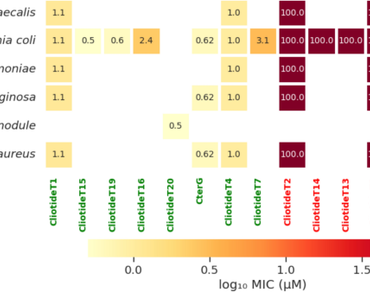
Cliotides are cyclic peptides reported in Clitoria ternatea, and belong to the class of cyclotides. Cliotides are ultrastable due to their cyclic cystine knot (CCK) motif and possess biological activities, including antibacterial, pesticidal, hemolytic and anticancer properties. In the present study, in silico analysis of 69 cliotides was performed for understanding their sequence diversity, physicochemical properties, phylogeny, bioactivity and to evaluate potent antibacterial cliotides based on physiochemical parameters and membrane interaction studies. Of the 69 cliotides, only 17 have been screened for bioactivities, with 15 cliotides experimentally tested for antibacterial properties. These 15 cliotides were classified into potent and non-potent groups based on their Minimum Inhibitory Concentration (MIC) values. Analysis of physicochemical parameters suggests that cliotides with higher net charge, isoelectric point and, number of basic amino acids exhibit potent antibacterial activity. Further, these three physicochemical properties are shown to have positive correlation. Membrane-cliotide interactions revealed that potent antibacterial cliotides (cliotide T1, cliotide T4) had lower ΔG and deeper membrane penetration than non-potent ones (cliotide T2, cliotide T3). The potent cliotides exhibited more hydrophobic amino acids with larger hydrophobic surface than non-potent ones. The analysis of surface structure models of these cliotides aligned with membrane-peptide studies. Thus, in silico studies can aid in identification of cliotides with potent antibacterial activity for prioritizing their in vitro/in vivo investigations, with a therapeutic perspective.
References
Ahad MA, Chear NJY, Abdullah MH et al (2024) Effects of clitorienolactones from clitoria ternatea root on calcium channel mediating hippocampal long-term potentiation in rats induced chronic cerebral hypoperfusion. Ageing Res Rev 96:102252. https://doi.org/10.1016/j.arr.2024.102252
Ashraf K, Adlin NF, Basri AN et al (2024) The traditional uses, phytochemistry, and pharmacological effects of Clitoria ternatea: a review. Indian J Pharm Educ Res 58(1):1–14
Azmi S, Mustafa M, Shoaib S, Hussain MK (2022) Structures, functions and therapeutic potential of cyclotides. J Explor Res Pharmacol 7(4):234–242. https://doi.org/10.14218/JERP.2022.00029
Balamurugan S, Vijayakumar S, Prabhu S, Yabesh JM (2018) Traditional plants used for the treatment of gynaecological disorders in Vedaranyam Taluk, South India—an ethnomedicinal survey. J Tradit Complement Med 8(2):308–323. https://doi.org/10.1016/j.jtcme.2017.06.009
Cândido EDS, Gasparetto LS, Luchi LV, Pimentel JPF, Cardoso MH, Macedo MLR, Franco OL (2025) Small and versatile cyclotides as anti-infective agents. ACS Infect Dis. https://doi.org/10.1021/acsinfecdis.4c00957
Clark RJ, Daly NL, Craik DJ (2006) Structural plasticity of the cyclic-cystine-knot framework: implications for biological activity and drug design. Biochem J 394(1):85–93. https://doi.org/10.1042/BJ20051691
Craik DJ, Daly NL, Bond T, Waine C (1999) Plant cyclotides: a unique family of cyclic and knotted proteins that defines the cyclic cystine knot structural motif. J Mol Biol 294(5):1327–1336. https://doi.org/10.1006/jmbi.1999.3383
De Veer SJ, Kan MW, Craik DJ (2019) Cyclotides: from structure to function. Chem Rev 119(24):12375–12421. https://doi.org/10.1021/acs.chemrev.9b00402
Devi BP, Boominathan R, Mandal SC (2003) Anti-inflammatory, analgesic and antipyretic properties of clitoria ternatea root. Fitoterapia 74(4):345–349. https://doi.org/10.1016/S0367-326X(03)00057-1
Felsenstein J (1985) Confidence limits on phylogenies: An approach using the bootstrap. Evolution 39(4):783–791. https://doi.org/10.1111/j.1558-5646.1985.tb00420.x
Ginting EE, Rumanti RM, Savira D, Ginting P et al (2022) In vivo study of antidiabetic activity from ethanol extract of Clitoria ternatea L. flower. J Drug Deliv Ther 12(6):4. https://doi.org/10.22270/jddt.v12i6.5759
Henriques ST, Huang YH, Castanho MA, Bagatolli LA, Sonza S, Tachedjian G, Craik DJ (2012) Phosphatidylethanolamine binding is a conserved feature of cyclotide-membrane interactions. J Biol Chem 287(40):33629–33643. https://doi.org/10.1074/jbc.M112.372011
Hernandez JF, Gagnon J, Chiche L, Nguyen TM, Andrieu JP, Heitz A, Le Nguyen D (2000) Squash trypsin inhibitors from momordica cochinchinensis exhibit an atypical macrocyclic structure. Biochemistry 39(19):5722–5730. https://doi.org/10.1021/bi9929756
Islam MA, Mondal SK, Islam S et al (2023) Antioxidant, cytotoxicity, antimicrobial activity, and in silico analysis of the methanolic leaf and flower extracts of Clitoria ternatea. Biochem Res Int 2023:8847876. https://doi.org/10.1155/2023/8847876
Jeyaraj EJ, Lim YY, Choo WS (2022) Antioxidant, cytotoxic, and antibacterial activities of Clitoria ternatea flower extracts and anthocyanin-rich fraction. Sci Rep 12(1):14890. https://doi.org/10.1038/s41598-022-19146-z
Jiji KN, Muralidharan P (2022) Evaluation of the protective effect of Clitoria ternatea L. against propionic acid induced autistic spectrum disorders in rat model. Bull Natl Res Cent 46(1):71. https://doi.org/10.1186/s42269-022-00738-8
Jindal MH, Le CF, Mohd Yusof MY et al (2014) Net charge, hydrophobicity and specific amino acids contribute to the activity of antimicrobial peptides. J Health Transl Med 17:1–7
Kalmankar NV, Balaram P, Venkatesan R (2021) Mass spectrometric analysis of cyclotides from Clitoria ternatea: Xxx-Pro bond fragmentation as convenient diagnostic of Pro residue positioning. Chem Asian J 16(19):2920–2931. https://doi.org/10.1002/asia.202100585
Kalmankar NV, Venkatesan R, Balaram P, Sowdhamini R (2020) Transcriptomic profiling of the medicinal plant Clitoria ternatea: identification of potential genes in cyclotide biosynthesis. Sci Rep 10:12658. https://doi.org/10.1038/s41598-020-69452-7
Kamimori H, Hall K, Craik DJ, Aguilar MI (2005) Studies on the membrane interactions of the cyclotides Kalata B1 and Kalata B6 on model membrane systems by surface plasmon resonance. Anal Biochem 337(1):149–153. https://doi.org/10.1016/j.ab.2004.10.028
Karmakar S, Das S, Banerjee KK (2024) Interaction of antimicrobial peptides with model membranes: a perspective towards new antibiotics. Eur Phys J Spec Top 233:2981–2996. https://doi.org/10.1140/epjs/s11734-024-01105-6
Kelemu S, Cardona C, Segura G (2004) Antimicrobial and insecticidal protein isolated from seeds of Clitoria ternatea, a tropical forage legume. Plant Physiol Biochem 42(11):867–873. https://doi.org/10.1016/j.plaphy.2004.10.013
Kumar S, Stecher G, Li M, Knyaz C, Tamura K (2018) MEGA X: molecular evolutionary genetics analysis across computing platforms. Mol Biol Evol 35(6):1547–1549. https://doi.org/10.1093/molbev/msy096
Lijon MB, Meghla NS, Jahedi E et al (2017) Phytochemistry and pharmacological activities of clitoria ternatea. Int J Nat Soc Sci 4(1):1–10
Lomize AL, Pogozheva ID, Lomize MA, Mosberg HI (2007) The role of hydrophobic interactions in positioning of peripheral proteins in membranes. BMC Struct Biol 7:44. https://doi.org/10.1186/1472-6807-7-44
Lomize MA, Pogozheva ID, Joo H, Mosberg HI, Lomize AL (2012) OPM database and PPM web server: resources for positioning of proteins in membranes. Nucleic Acids Res 40(Database issue):D370–D376. https://doi.org/10.1093/nar/gkr703
Mahmad N, Taha RM, Othman R et al (2018) Anthocyanin as potential source for antimicrobial activity in Clitoria ternatea L. and Dioscorea alata L. Pigment Resin Technol 47:490–495
Maneesai P, Iampanichakul M, Chaihongsa N et al (2021) Butterfly pea flower (Clitoria ternatea Linn.) extract ameliorates cardiovascular dysfunction and oxidative stress in nitric oxide-deficient hypertensive rats. Antioxidants (Basel) 10(4):523. https://doi.org/10.3390/antiox10040523
Mehta L, Shambhawi, Kumar S, Mohanty A (2022) In silico analysis of native cyclotides with antibacterial activity against gram-negative bacteria. Appl Biochem Microbiol 58(6):715–725. https://doi.org/10.1134/S0003683822060096
Morris JB (2009) Characterization of butterfly pea (Clitoria ternatea L.) accessions for morphology, phenology, reproduction and potential nutraceutical, pharmaceutical trait utilization. Genet Resour Crop Evol 56:421–427. https://doi.org/10.1002/jcc.21256
Mukherjee PK, Kumar V, Kumar NS, Heinrich M (2008) The Ayurvedic medicine Clitoria ternatea—from traditional use to scientific assessment. J Ethnopharmacol 120(3):291–301. https://doi.org/10.1016/j.jep.2008.09.009
Neda GD, Rabeta MS, Ong MT (2013) Chemical composition and anti-proliferative properties of flowers of Clitoria ternatea. Int Food Res J 20:1229–1234
Nguyen GKT, Zhang S, Nguyen NTK, Nguyen PQT, Chiu MS, Hardjojo A, Tam JP (2011) Discovery and characterization of novel cyclotides originated from chimeric precursors consisting of Albumin-1 Chain A and cyclotide domains in the Fabaceae family. J Biol Chem 286(27):24275–24287. https://doi.org/10.1074/jbc.M111.229922
Nguyen KNT, Nguyen GKT, Nguyen PQT, Ang KH, Dedon PC, Tam JP (2016) Immunostimulating and gram-negative-specific antibacterial cyclotides from the butterfly pea (Clitoria ternatea). FEBS J 283(11):2067–2090. https://doi.org/10.1111/febs.13720
Oguis GK, Gilding EK, Huang YH, Poth AG, Jackson MA, Craik DJ (2020) Insecticidal diversity of butterfly pea (Clitoria ternatea) accessions. Ind Crops Prod 147:112214. https://doi.org/10.1016/j.indcrop.2020.112214
Oguis GK, Gilding EK, Jackson MA, Craik DJ (2019) Butterfly pea (Clitoria ternatea), a cyclotide-bearing plant with applications in agriculture and medicine. Front Plant Sci 10:645. https://doi.org/10.3389/fpls.2019.00645
Park S, Strömstedt AA, Göransson U (2014) Cyclotide structure-activity relationships: qualitative and quantitative approaches linking cytotoxic and anthelmintic activity to the clustering of physicochemical forces. PLoS ONE 9(3):e91430. https://doi.org/10.1371/journal.pone.0091430
Poth AG, Colgrave ML, Philip R, Kerenga B, Daly NL, Anderson MA, Craik DJ (2011) Discovery of cyclotides in the Fabaceae plant family provides new insights into the cyclization, evolution, and distribution of circular proteins. ACS Chem Biol 6(4):345–355. https://doi.org/10.1021/cb100388j
Purnamayanti A, Gondokesumo ME, Budipramana K (2022) Potential application of Clitoria ternatea in cancer treatment. Pharm Sci Res 9(3):109–124
Rosengren KJ, Daly NL, Harvey PJ, Craik DJ (2013) The self‐association of the cyclotide Kalata B2 in solution is guided by hydrophobic interactions. Pept Sci 100(5):453–460. https://doi.org/10.1093/oxfordjournals.molbev.a040454
Saitou N, Nei M (1987) The neighbor-joining method: a new method for reconstructing phylogenetic trees. Mol Biol Evol 4(4):406–425. https://doi.org/10.1093/oxfordjournals.molbev.a040454
Satpathy B, Sa N, Behera A, Sahu PK (2025) Dose-dependent attenuation of the efficacy of Clitoria ternatea by cobalt oxide nanoparticles against diabetes-induced cognitive impairment. Mol Neurobiol 62(2):2601–2616. https://doi.org/10.1007/s12035-024-04436-6
Sganzerla Martinez G, Dutt M, Kumar A, Kelvin DJ (2024) Multiple protein profiler 1.0 (MPP): a webserver for predicting and visualizing physiochemical properties of proteins at the proteome level. Protein J 43(4):711–717. https://doi.org/10.1007/s10930-024-10214-z
Sharma A, Butool B, Sahu P, Mishra R, Mohanty A (2024) In silico analysis of natural plant-derived cyclotides with antifungal activity against pathogenic fungi. Protein Pept Lett 31(3):247–260. https://doi.org/10.2174/0109298665295545240223114346
Singh A, Jain AK (2020) Biochemical and pharmacological aspects of Clitoria ternatea—a review. Indian J Agric Biochem 33(2):115–124
Strömstedt AA, Park S, Burman R, Göransson U (2017) Bactericidal activity of cyclotides where phosphatidylethanolamine-lipid selectivity determines antimicrobial spectra. Biochim Biophys Acta Biomembr 1859(10):1986–2000. https://doi.org/10.1016/j.bbamem.2017.06.018
Sulaiman CT, Jyothi CK, Unnithan GJK, Prabhukumar KM (2024) Phytochemical characterization and evaluation of anti-amnesic activity of two source plants of Shankhapushpi. Brain Behav Immun Health 8:100085. https://doi.org/10.1016/j.bbii.2024.100085
Tran TT, Tran GH, Cu ST, Pham SH, Nguyen TH, Dang TT (2023) Cyclotides, cyclic peptides derived from Clitoria ternatea Linn mature pods, hold promise as potential antimicrobial agent. ChemistrySelect 8(47):e202303969. https://doi.org/10.1002/slct.202303969
Troeira Henriques S, Craik DJ (2017) Cyclotide structure and function: the role of membrane binding and permeation. Biochemistry 56(5):669–682. https://doi.org/10.1021/acs.biochem.6b01212
Wang CK, Hu SH, Martin JL, Sjögren T, Hajdu J, Bohlin L, Craik DJ (2009) Combined X-ray and NMR analysis of the stability of the cyclotide cystine knot fold that underpins its insecticidal activity and potential use as a drug scaffold. J Biol Chem 284(16):10672–10683. https://doi.org/10.1074/jbc.M900021200
Wang CK, Kaas Q, Chiche L, Craik DJ (2007) CyBase: a database of cyclic protein sequences and structures, with applications in protein discovery and engineering. Nucleic Acids Res 36:D206–D210. https://doi.org/10.1093/nar/gkm953
Wang CK, Wacklin HP, Craik DJ (2012) Cyclotides insert into lipid bilayers to form membrane pores and destabilize the membrane through hydrophobic and phosphoethanolamine-specific interactions. J Biol Chem 287(52):43884–43898. https://doi.org/10.1074/jbc.M112.421198
Waskom ML (2021) Seaborn: statistical data visualization. J Open Source Softw 6(60):3021. https://doi.org/10.21105/joss.03021
Author Information
Department of Botany, Gargi College, University of Delhi, New Delhi, India