Vegetos

(An International Journal of Plant Research & Biotechnology)
(eISSN: 2229-4473)
Emerging molecules for drought resilience in plants
*Article not assigned to an issue yet
Editorial | Published: 08 August, 2026
First Page: 0
Last Page: 0
Views: 82
Keywords: Antioxidant defense, Climate resilience, Hormonal crosstalk, Osmotic adjustment, Photosynthesis, Stress signaling
Abstract
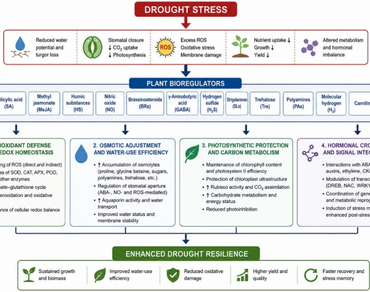
Drought is one of the most severe environmental constraints limiting agricultural productivity and is expected to intensify under ongoing climate change. Because endogenous plant defenses are often insufficient under prolonged or recurrent water deficit, exogenous bioregulators have emerged as a sustainable strategy to enhance stress resilience. This editorial summarizes recent advances in the use of phytohormones and hormone-related regulators, neurotransmitter-like signaling compounds, gaseous signaling molecules, and other emerging bioregulators to improve drought tolerance. Despite their diverse chemical nature and primary modes of action, these compounds converge on common physiological processes, including the maintenance of photosynthetic performance, redox homeostasis, plant water relations, and hormonal crosstalk, highlighting an integrated drought-response network. Finally, we discuss future perspectives, including combined bioregulator applications, integration with beneficial microorganisms, stress memory, and precision agriculture, as promising strategies for developing climate-resilient and sustainable cropping systems.
References
Abhari A, Gholinezhad E (2019) Effect of humic acid on grain yield and yield components in chickpea under different irrigation levels. J Plant Physiol Breed 9:19–29
Acosta-Pérez P, Camacho-Zamora BD, Espinoza-Sánchez EA et al (2020) Characterization of trehalose-6-phosphate synthase and trehalose-6-phosphate phosphatase genes and analysis of its differential expression in maize (Zea mays) seedlings under drought stress. Plants (Basel) 9(3):315. https://doi.org/10.3390/plants9030315
Ahmad J, Hayat F, Khan U et al (2025) Jasmonic acid as a regulator in plant stress tolerance: mechanisms and agricultural implications. J Crop Health 77:118. https://doi.org/10.1007/s10343-025-01163-3
Ahmad-Lone W, Majeed N, Yaqoob U, John R (2022) Exogenous brassinosteroid and jasmonic acid improve drought tolerance in Brassica rapa L. genotypes by modulating osmolytes, antioxidants and photosynthetic system. Plant Cell Rep 41(3):603–617. https://doi.org/10.1007/s00299-021-02763-9
Aktas N, Farouk S, Al-Ghamdi AAM, Alenazi AS, AlMalki MAL, Dinler BS (2025) Pipecolic acid, a drought stress modulator, boosts chlorophyll assimilation, photosynthetic performance, redox homeostasis, and osmotic adjustment of drought-affected Hordeum vulgare L. seedlings. Plants 14(13):1949. https://doi.org/10.3390/plants14131949
Akula R, Mukherjee S (2020) New insights on neurotransmitters signaling mechanisms in plants. Plant Signal Behav 15(6):1737450. https://doi.org/10.1080/15592324.2020.1737450
Aqaei P, Weisany W, Diyanat M et al (2020) Response of maize (Zea mays L.) to potassium nano-silica application under drought stress. J Plant Nutr 43(9):1205–1216. https://doi.org/10.1080/01904167.2020.1727508
Araujo DJ, Soares VA, Dantas EF et al (2026) The role of exogenous methyl jasmonate in the morphophysiology and postharvest attributes of drought-stressed radish. Plants (Basel) 15(3):397. https://doi.org/10.3390/plants15030397
Arnao M, Hernández-Ruiz J (2020) Is phytomelatonin a new plant hormone? Agronomy 10(1):95. https://doi.org/10.3390/agronomy10010095
Arnao MB, Hernández-Ruiz J (2021) Melatonin as a regulatory hub of plant hormone levels and action in stress situations. Plant Biol 23:7–19. https://doi.org/10.1111/plb.13202
Arnao MB, Cano A, Hernández-Ruiz J (2022) Phytomelatonin: an unexpected molecule with amazing performances in plants. J Exp Bot 73:5779–5800. https://doi.org/10.1093/jxb/erac009
Bansal S, Thakur V, Johar V (2026) Crosstalk of new class of phytohormones in mediating abiotic stress responses in vegetable crops. Vegetos 1–13. https://doi.org/10.1007/s42535-026-01632-8
Bhowal B, Bhattacharjee A, Goswami K et al (2021) Serotonin and melatonin biosynthesis in plants: genome-wide identification of the genes and their expression reveal a conserved role in stress and development. Int J Mol Sci 22(20):11034. https://doi.org/10.3390/ijms222011034
Canellas LP, Olivares FL, Okorokova-Façanha AL, Façanha AR (2002) Humic acids isolated from earthworm compost enhance root elongation, lateral root emergence, and plasma membrane H+-ATPase activity in maize roots. Plant Physiol 130(4):1951–1957. https://doi.org/10.1104/pp.007088
Canellas LP, Piccolo A, Dobbss LB et al (2010) Chemical composition and bioactivity properties of size-fractions separated from a vermicompost humic acid. Chemosphere 78(4):457–466. https://doi.org/10.1016/j.chemosphere.2009.10.018
Canellas LP, Olivares FL, Aguiar NO et al (2015) Humic and fulvic acids as biostimulants in horticulture. Sci Hortic 196:15–27. https://doi.org/10.1016/j.scienta.2015.09.013
Cannea FB, Padiglia A (2025) Antioxidant defense systems in plants: mechanisms, regulation, and biotechnological strategies for enhanced oxidative stress tolerance. Life (Basel) 15(8):1293. https://doi.org/10.3390/life15081293
Cao Y, Yang W, Ma J et al (2024) An integrated framework for drought stress in plants. Int J Mol Sci 25(17):9347. https://doi.org/10.3390/ijms25179347
Cao Y, Du P, Cheng F et al (2026) Dopamine-mediated plant stress tolerance: from physiological regulation to rhizosphere microbial shaping. Plant Soil 521(1):9–22. https://doi.org/10.1007/s11104-026-08417-7
Chen J, Shang Y-T, Wang W-H et al (2016) Hydrogen sulfide-mediated polyamines and sugar changes are involved in hydrogen sulfide-induced drought tolerance in Spinacia oleracea seedlings. Front Plant Sci 7:1173. https://doi.org/10.3389/fpls.2016.01173
Dalal B, Reena R, Baloda A, Saini S, Sharma P, Sharma A (2026). Nitric oxide and abscisic acid: two intimate collaborators regulating plant defense against drought. Protoplasma 1–30. https://doi.org/10.1007/s00709-026-02242-6
Deolu‐Ajayi AO, van der Meer IM, Van der Werf A, Karlova R (2022) The power of seaweeds as plant biostimulants to boost crop production under abiotic stress. Plant Cell Environ 45(9):2537–2553. https://doi.org/10.1111/pce.14391
Ebeed HT, Hassan NM, Aljarani AM (2017) Exogenous applications of polyamines modulate drought responses in wheat through osmolytes accumulation, increasing free polyamine levels and regulation of polyamine biosynthetic genes. Plant Physiol Biochem 118:438–448. https://doi.org/10.1016/j.plaphy.2017.07.014
El-Beltagi HS, Gad M, Khedr N et al (2026) Strigolactones as integrative regulators of plant adaptation and resilience to abiotic stress. Plant Cell Environ 49(8):4778–4802. https://doi.org/10.1111/pce.70490
Erland LA, Turi CE, Saxena PK (2019) Serotonin in plants: origin, functions, and implications. Serotonin 23–46. https://doi.org/10.1016/B978-0-12-800050-2.00002-4
Ferreira LM, Henschel JM, Mendes JJ et al (2024) Pre-harvest application of sodium nitroprusside enhances storage root quality in red beet cultivated under normal and drought conditions. J Sci Food Agric 104(15):9540–9547. https://doi.org/10.1002/jsfa.13778
Fugate KK, Lafta AM, Eide JD et al (2018) Methyl jasmonate alleviates drought stress in young sugar beet (Beta vulgaris L.) plants. J Agron Crop Sci 204(6):566–576. https://doi.org/10.1111/jac.12286
Gupta A, Rico-Medina A, Caño-Delgado AI (2020) The physiology of plant responses to drought. Science 368(6488):266–269. https://doi.org/10.1126/science.aaz7614
Hajihashemi S, Skalicky M, Brestic M, Pavla V (2021) Effect of sodium nitroprusside on physiological and anatomical features of salt-stressed Raphanus sativus. Plant Physiol Biochem 169:160–170. https://doi.org/10.1016/j.plaphy.2021.11.013
Hassan MU, Mahmood A, Awan MI et al (2022) Melatonin-induced protection against plant abiotic stress: mechanisms and prospects. Front Plant Sci 13:902694. https://doi.org/10.3389/fpls.2022.902694
Hassan MU, Nawaz M, Shah AN et al (2023) Trehalose: a key player in plant growth regulation and tolerance to abiotic stresses. J Plant Growth Regul 42:4935–4957. https://doi.org/10.1007/s00344-022-10851-7
Henschel JM, Dantas EFO, de Azevedo Soares V et al (2023) Drought stress mitigation by foliar application of L-carnitine and its effect on radish morphophysiology. Physiol Mol Biol Plants 29:579–590. https://doi.org/10.1007/s12298-023-01308-6
Herppich WB, Landahl S (2022) Physiological responses of radish (Raphanus sativus L.) to controlled water limitations–potential effects on tuber quality and shelf life. Acta Hortic 1335:163–170. https://doi.org/10.17660/ActaHortic.2022.1335.19
Horváth E, Brunner S, Bela K et al (2015) Exogenous salicylic acid-triggered changes in the glutathione transferases and peroxidases are key factors in the successful salt stress acclimation of Arabidopsis thaliana. Funct Plant Biol 42(12):1129–1140. https://doi.org/10.1071/FP15119
Hu H, Li P, Shen W (2021) Preharvest application of hydrogen-rich water not only affects daylily bud yield but also contributes to the alleviation of bud browning. Sci Hortic 287:110267. https://doi.org/10.1016/j.scienta.2021.110267
Jacques F, Rippa S, Perrin Y (2018) Physiology of L-carnitine in plants in light of the knowledge in animals and microorganisms. Plant Sci 274:432–440. https://doi.org/10.1016/j.plantsci.2018.06.020
Jafari M, Shahsavar AR, Talebi M, Hesami M (2022) Exogenous melatonin protects lime plants from drought stress-induced damage by maintaining cell membrane structure, detoxifying ROS and regulating antioxidant systems. Horticulturae 8(3):257. https://doi.org/10.3390/horticulturae8030257
Javadipour Z, Balouchi H, Movahhedi DM, Yadavi A (2022) Physiological responses of bread wheat (Triticum aestivum) cultivars to drought stress and exogenous methyl jasmonate. J Plant Growth Regul 41(8):3433–3448. https://doi.org/10.1007/s00344-021-10525-w
Jinhua SHAO, Weixiong WU, Tasahil,SA, Qiliang HU, Muhammad UH (2022) Trehalose induced drought tolerance in plants: physiological and molecular responses. Not Bot Horti Agrobo 50(1):12584. https://doi.org/10.15835/nbha50112584
Kagale S, Divi UK, Krochko JE, Keller WA, Krishna P (2007) Brassinosteroid confers tolerance in Arabidopsis thaliana and Brassica napus to a range of abiotic stresses. Planta 225(2):353–364. https://doi.org/10.1007/s00425-006-0361-6
Kamran M, Melville KT, Waters MT (2024) Karrikin signalling: impacts on plant development and abiotic stress tolerance. J Exp Bot 75(4):1174–1186. https://doi.org/10.1093/jxb/erad476
Kaur H, Chowrasia S, Gaur VS, Mondal TK (2021) Allantoin: emerging role in plant abiotic stress tolerance. Plant Mol Biol Rep 39(3):648–661. https://doi.org/10.1007/s11105-021-01280-z
Khan M, Ali S, Al Azzawi TNI, Yun BW (2023) Nitric oxide acts as a key signaling molecule in plant development under stressful conditions. Int J Mol Sci 24(5):4782. https://doi.org/10.3390/ijms24054782
Kolupaev YE (2022) Gasotransmitter carbon monoxide: synthesis and functions in plants. Russ J Plant Physiol 69:42. https://doi.org/10.1134/S1021443722030074
Kudo M, Kidokoro S, Yoshida T et al (2019) A gene-stacking approach to overcome the trade-off between drought stress tolerance and growth in Arabidopsis. Plant J 97:240–256. https://doi.org/10.1111/tpj.14110
Kumar D, Ohri P (2023) Say “NO” to plant stresses: unravelling the role of nitric oxide under abiotic and biotic stress. Nitric Oxide 130:36–57. https://doi.org/10.1016/j.niox.2022.11.004
Leifeld J, Walz I (2025) Pyroligneous acid effects on crop yield and soil organic matter in agriculture—a review. Agronomy 15(4):927. https://doi.org/10.3390/agronomy15040927
Li W, Nguyen KH, Chu HD et al (2017) The karrikin receptor KAI2 promotes drought resistance in Arabidopsis thaliana. PLoS Genet 13:e1007076. https://doi.org/10.1371/journal.pgen.1007076
Li L, Dou N, Zhang H, Wu C (2021) The versatile GABA in plants. Plant Signal Behav 16(3):1862565. https://doi.org/10.1080/15592324.2020.1862565
Liu Q, Gao T, Liu W (2020) Functions of dopamine in plants: a review. Plant Signal Behav 15(12):1827782. https://doi.org/10.1080/15592324.2020.1827782
Liu Y, Xu J, Lu X, Huang M, Mao Y, Li C, Yu W, Li C (2024) Carbon monoxide is involved in melatonin-enhanced drought resistance in tomato seedlings by enhancing chlorophyll synthesis pathway. BMC Plant Biol 24:97. https://doi.org/10.1186/s12870-024-04793-3
Liu CJ, Lyu CY, Ai XZ, Bi HG (2022) Effects of fulvic acid on photosynthetic characteristics, yield and quality of cucumber under drought stress. J. Appl. Ecol 33(5): 1300–1310. https://doi.org/10.13287/j.1001-9332.202205.014
Lopes AS, Dias TJ, Henschel JM et al (2024) Methyl jasmonate mitigates drought stress in purple basil by enhancing photosynthesis and secondary metabolism. J Plant Growth Regul 44:233–246. https://doi.org/10.1007/s00344-024-11392-x
Meng Y, Liao P, Chen Y et al (2023) Exogenous application of methyl jasmonate promotes yield and grain quality of rice under terminal drought stress. Agronomy 13(7):1903. https://doi.org/10.3390/agronomy13071903
Metwaly ESE, Al-Yasi HM, Ali EF, Farouk HA, Farouk S (2022) Deteriorating harmful effects of drought in cucumber by spraying glycinebetaine. Agriculture 12(12):2166. https://doi.org/10.3390/agriculture12122166
Min Z, Li R, Chen L et al (2019) Alleviation of drought stress in grapevine by foliar-applied strigolactones. Plant Physiol Biochem 135:99–110. https://doi.org/10.1016/j.plaphy.2018.11.037
Mohamed HI, Latif HH (2017) Improvement of drought tolerance of soybean plants by using methyl jasmonate. Physiol Mol Biol Plants 23(3):545–556. https://doi.org/10.1007/s12298-017-0451-x
Mohd Amnan MA, Teo WFA, Aizat WM, Khaidizar FD, Tan BC (2023) Foliar application of oil palm wood vinegar enhances Pandanus amaryllifolius tolerance under drought stress. Plants (Basel) 12(4):785. https://doi.org/10.3390/plants12040785
Moustafa-Farag M, Mahmoud A, Arnao MB et al (2020) Melatonin-induced water stress tolerance in plants: recent advances. Antioxidants (Basel) 9(9):809. https://doi.org/10.3390/antiox9090809
Mukarram M, Choudhary S, Kurjak D, Petek A, Khan MM (2021) Drought: sensing, signalling, effects and tolerance in higher plants. Physiol Plant 172(2):1291–1300. https://doi.org/10.1111/ppl.13423
Muller JD, Qubaja R, Koh E, Stern R, Bohak YL, Tatarinov F, Rotenberg E, Yakir D (2025) Leaf carbon monoxide emissions under different drought, heat, and light conditions in the field. New Phytol 245:2439–2450. https://doi.org/10.1111/nph.20424
Nardi S, Pizzeghello D, Muscolo A, Vianello A (2002) Physiological effects of humic substances on higher plants. Soil Biol Biochem 34(11):1527–1536. https://doi.org/10.1016/S0038-0717(02)00174-8
Nie S, Huang S, Wang S et al (2019) Enhanced brassinosteroid signaling intensity via SlBRI1 overexpression negatively regulates drought resistance in a manner opposite of that via exogenous BR application in tomato. Plant Physiol Biochem 138:36–47. https://doi.org/10.1016/j.plaphy.2019.02.014
Nolan T, Vukasinovic N, Liu D, Russinova E, Yin Y (2019) Brassinosteroids: multi-dimensional regulators of plant growth, development, and stress responses. Plant Cell 32(2):295–318. https://doi.org/10.1105/tpc.19.00335
Okuma E, Nozawa R, Murata Y, Miura K (2014) Accumulation of endogenous salicylic acid confers drought tolerance to Arabidopsis. Plant Signal Behav 9(3):e28085. https://doi.org/10.4161/psb.28085
Özmen S, Tabur S, Öney-Birol S, Özmen S (2022) Molecular responses of exogenous polyamines under drought stress in the barley plants. Cytologia 87(1):7–15. https://doi.org/10.1508/cytologia.87.7
Park WT, Kim YB, Seo JM et al (2013) Accumulation of anthocyanin and associated gene expression in radish sprouts exposed to light and methyl jasmonate. J Agric Food Chem 61(17):4127–4132. https://doi.org/10.1021/jf400164g
Pastacaldi C, Gaudioso D, Beltrami C, Gunnella B, Tegli S (2025) On the effectiveness of ozone treatments: a silver bullet for plant health? Agron 15(3):567. https://doi.org/10.3390/agronomy15030567
Poór P, Tari I (2012) Regulation of stomatal movement and photosynthetic activity in guard cells of tomato abaxial epidermal peels by salicylic acid. Funct Plant Biol 39(12):1028–1037. https://doi.org/10.1071/FP12187
Priya M, Sharma L, Kaur R et al (2019) GABA (γ-aminobutyric acid), as a thermo-protectant, to improve the reproductive function of heat-stressed mungbean plants. Sci Rep 9(1):7788. https://doi.org/10.1038/s41598-019-44163-w
Radha B, Sunitha NC, Sah RP et al (2023) Physiological and molecular implications of multiple abiotic stresses on yield and quality of rice. Front Plant Sci 13:996514. https://doi.org/10.3389/fpls.2022.996514
Rahman MM, Keya SS, Bulle M et al (2025) Past trauma, better future: how stress memory shapes plant adaptation to drought. Funct Plant Biol 52(6):FP24355. https://doi.org/10.1071/FP24355
Rathor P, Gorim LY, Thilakarathna MS (2023) Plant physiological and molecular responses triggered by humic based biostimulants-a way forward to sustainable agriculture. Plant Soil 492(1):31–60. https://doi.org/10.1007/s11104-023-06156-7
Raza A, Salehi H, Rahman MA, Zahid Z, Madadkar Haghjou M, Najafi-Kakavand S, Charagh S, Osman HS, Albaqami M, Zhuang Y, Siddique KHM, Zhuang W (2022) Plant hormones and neurotransmitter interactions mediate antioxidant defenses under induced oxidative stress in plants. Front Plant Sci 13:961872. https://doi.org/10.3389/fpls.2022.961872
Rehman M, Saeed MS, Fan X et al (2023) The multifaceted role of jasmonic acid in plant stress mitigation: an overview. Plants 12(23):3982. https://doi.org/10.3390/plants12233982
Ren J, Yang X, Zhang N et al (2022) Melatonin alleviates aluminum-induced growth inhibition by modulating carbon and nitrogen metabolism, and reestablishing redox homeostasis in Zea mays L. J Hazard Mater 423:127159. https://doi.org/10.1016/j.jhazmat.2021.127159
Sakamoto M, Suzuki T (2019) Methyl jasmonate and salinity increase anthocyanin accumulation in radish sprouts. Horticulturae 5(3):62. https://doi.org/10.3390/horticulturae5030062
Samanta S, Seth CS, Roychoudhury A (2024) The molecular paradigm of reactive oxygen species (ROS) and reactive nitrogen species (RNS) with different phytohormone signaling pathways during drought stress in plants. Plant Physiol Biochem 206:108259. https://doi.org/10.1016/j.plaphy.2023.108259
Santos LA, Guedes FRCM (2023) Interactions of gasotransmitters and plant growth regulators: current knowledge and future perspectives. In: Fuentes GT, Lobato AKS (eds) Batista BL. The Role of Gasotransmitters In the Amelioration of Arsenic Toxicity in Plants, Biology and Biotechnology, pp 207–218
Santos SK, da Silva Gomes D, dos Santos LWO et al (2023b) Exogenous carnitine mitigates the deleterious effects of mild-water stress on arugula by modulating morphophysiological responses. J Plant Growth Regul 42:4073–4082. https://doi.org/10.1007/s00344-022-10868-y
Santos SK, da Silva Gomes D, de Oliveira AFP et al (2023b) Water stress and exogenous carnitine on growth and essential oil profile of Eryngium foetidum L. 3 Biotech 13:328. https://doi.org/10.1007/s13205-023-03757-y
Sarangle Y, Bamel K, Purty RS (2024) Role of acetylcholine and acetylcholinesterase in improving abiotic stress resistance/tolerance. Commun Integr Biol 17(1):2353200. https://doi.org/10.1080/19420889.2024.2353200
Sato H, Mizoi J, Shinozaki K, Yamaguchi‐Shinozaki K (2024) Complex plant responses to drought and heat stress under climate change. Plant J 117(6):1873–1892. https://doi.org/10.1111/tpj.16612
Scimone G, Carucci MG, Risoli S, Pisuttu C, Cotrozzi L, Lorenzini G, Petersen M (2024) Ozone treatment as an approach to induce specialized compounds in Melissa officinalis plants. Plants 13(7):933. https://doi.org/10.3390/plants13070933
Sedaghat M, Tahmasebi-Sarvestani Z, Emam Y, Mokhtassi-Bidgoli A (2017) Physiological and antioxidant responses of winter wheat cultivars to strigolactone and salicylic acid in drought. Plant Physiol Biochem 119:59–69. https://doi.org/10.1016/j.plaphy.2017.08.015
Seleiman MF, Al-Suhaibani N, Ali N et al (2021) Drought stress impacts on plants and different approaches to alleviate its adverse effects. Plants 10(2):259. https://doi.org/10.3390/plants10020259
Song H, Zhu W, Guo Z et al (2025) The impact of fulvic acid on the growth physiology, yield, and quality of tomatoes under drought conditions. Agronomy 15(7):1528. https://doi.org/10.3390/agronomy15071528
Sun Z, Liu X, Ugya AY, Liu H, Sun L, Luo G (2026) Microalgae and cyanobacteria as a tool for agricultural sustainability: a review of biofertilizer and biostimulant potential. Front Plant Sci 16:1733394. https://doi.org/10.3389/fpls.2025.1733394
Tan Y, Wang X, Li L et al (2025) Postharvest combined chitosan and melatonin treatment maintain antioxidant capacity and cell membrane integrity of fresh-cut broccoli by inducing reactive oxygen species scavenging system. LWT 220:117572. https://doi.org/10.1016/j.lwt.2025.117572
Thatcher LF, Anderson JP, Singh KB (2005) Plant defence responses: what have we learnt from Arabidopsis? Funct Plant Biol 32(1):1–19. https://doi.org/10.1071/FB04135
Tiwari RK, Lal MK, Kumar R et al (2021) Mechanistic insights on melatonin-mediated drought stress mitigation in plants. Physiol Plant 172:1212–1226. https://doi.org/10.1111/ppl.13307
Ullah S, Ni J (2026) Harnessing engineered nanoparticles for enhancing plant resilience to abiotic stresses: mechanisms, applications, and future directions. J Soil Sci Plant Nutr 26:5256–5278. https://doi.org/10.1007/s42729-026-03189-6
Vangenechten B, De Coninck B, Ceusters J (2025) How to improve the potential of microalgal biostimulants for abiotic stress mitigation in plants? Front Plant Sci 16:1568423. https://doi.org/10.3389/fpls.2025.1568423
Wang Y, Niu Y, Ye L, Shi Y, Luo A (2023) Ozone treatment modulates reactive oxygen species levels in kiwifruit through the antioxidant system: insights from transcriptomic analysis. J Plant Physiol 291:154135. https://doi.org/10.1016/j.jplph.2023.154135
Wang L, Liu Y, Song X, Wang S, Zhang M, Lu J, Xu S, Wang H (2024) Ozone stress-induced DNA methylation variations and their transgenerational inheritance in foxtail millet. Front Plant Sci 15:1463584. https://doi.org/10.3389/fpls.2024.1463584
Wang YT, Chen ZY, Jiang Y, Duan BB, Xi ZM (2019) Involvement of ABA and antioxidant system in brassinosteroid-induced water stress tolerance of grapevine (Vitis vinifera L.). Sci Hortic 256:108596. https://doi.org/10.1016/j.scienta.2019.108596
Waseem M, Hasan MM, Hazzazi Y et al (2025) Potential mechanisms for the rapid post-drought reversal of ABA-induced stomatal closure by melatonin, 5-aminolevulinic acid, and brassinosteroids. Photosynthetica 63(2):104–115. https://doi.org/10.32615/ps.2025.011
Wu H, Wu X, Li Z, Duan L, Zhang M (2012) Physiological evaluation of drought stress tolerance and recovery in cauliflower (Brassica oleracea L.) seedlings treated with methyl jasmonate and coronatine. J Plant Growth Regul 31:113–123. https://doi.org/10.1007/s00344-011-9224-x
Wu Y, Wang X, Zhang L, Zheng Y, Liu X, Zhang Y (2023) The critical role of biochar to mitigate the adverse impacts of drought and salinity stress in plants. Front Plant Sci 14:1163451. https://doi.org/10.3389/fpls.2023.1163451
Xie H, Zhao W, Li W et al (2022) Small signaling peptides mediate plant adaptions to abiotic environmental stress. Planta 255:72. https://doi.org/10.1007/s00425-022-03859-6
Xie Y, Shan L, He P (2026) Cell surface receptors integrate plant immunity, stress adaptation, and nutrient acquisition. Trends Plant Sci 3007:1–18. https://doi.org/10.1016/j.tplants.2026.04.013
Xu X, Meng C, Zhan J, Wang Q, Zhang M, Wang C, Pan J, Cui H, Zhao X (2026) Nanoparticle-plant interactions: uptake, transport, physiological effects, and environmental implications. J Hazard Mater Adv 22:101123. https://doi.org/10.1016/j.hazadv.2026.101123
Yuan L, Yuan Y, Du J, Sun J, Guo S (2012) Effects of 24-epibrassinolide on nitrogen metabolism in cucumber seedlings under Ca(NO3)2 stress. Plant Physiol Biochem 61:29–35. https://doi.org/10.1016/j.plaphy.2012.09.004
Zahra N, Hafeez MB, Kausar A, Al Zeidi M, Asekova S, Siddique KH, Farooq M (2023) Plant photosynthetic responses under drought stress: effects and management. J Agron Crop Sci 209(5):651–672. https://doi.org/10.1111/jac.12652
Zandonadi DB, Canellas LP, Façanha AR (2007) Indolacetic and humic acids induce lateral root development through a concerted plasmalemma and tonoplast H+ pumps activation. Planta 225:1583–1595. https://doi.org/10.1007/s00425-006-0454-2
Zhang J, Zhou M, Zhou H et al (2021) Hydrogen sulfide, a signaling molecule in plant stress responses. J Integr Plant Biol 63(1):146–160. https://doi.org/10.1111/jipb.13022
Zhang Y, Xu J, Li R, Ge Y, Li Y, Li R (2023) Plants’ response to abiotic stress: mechanisms and strategies. Int J Mol Sci 24(13):10915. https://doi.org/10.3390/ijms241310915
Zhu SS, Mi JZ, Zhao BP, Wu JY, Wang Y, Liu JH (2022) Effect of fulvic acid on photosynthesis and antioxidant enzyme activities of Avena sativa under drought stress. Acta Bot Boreal-Occident Sin 42(11):1902–1909. https://doi.org/10.7606/j.issn.1000-4025.2022.11.1902
Zhumanova N, Akimbayeva N, Myrzakhmetova N et al (2024) A comprehensive review of new generation plant growth regulators. ES Food Agrofor 17:1190. https://doi.org/10.30919/esfaf1190
Zulfiqar F, Chen J, Finnegan PM et al (2021) Application of trehalose and salicylic acid mitigates drought stress in sweet basil and improves plant growth. Plants (Basel) 10(6):1078. https://doi.org/10.3390/plants10061078
Author Information
Departamento de Botânica E Zoologia, Universidade Federal Do Rio Grande Do Norte, Natal, Brazil